Numeracy skills Addition Worksheets for Ages 3-8
10 filtered results
-
From - To
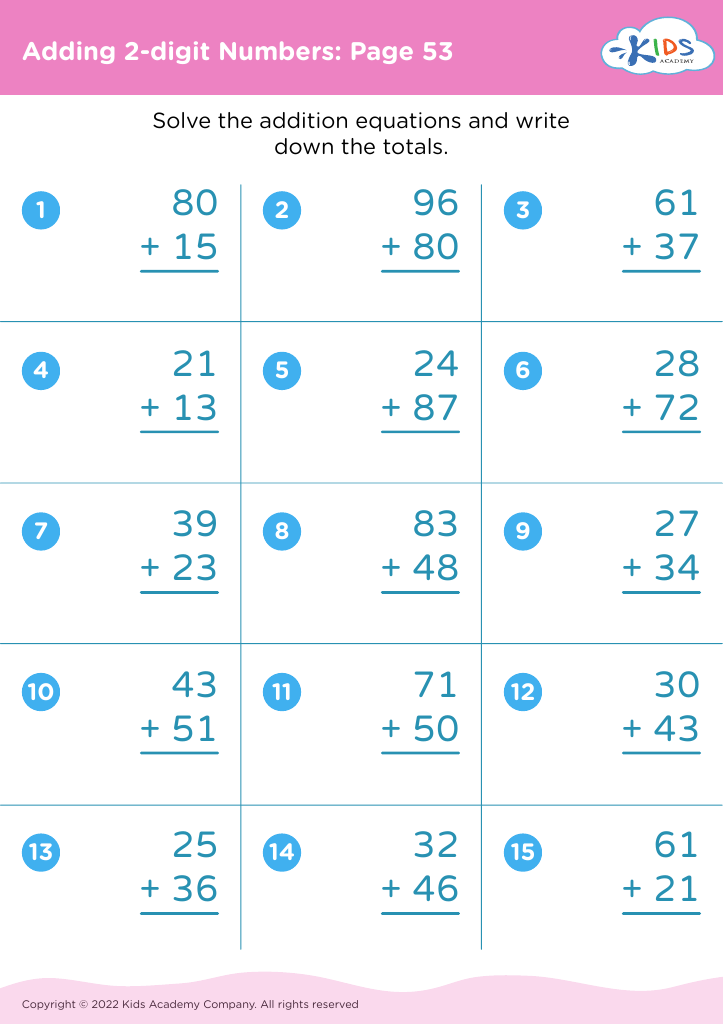
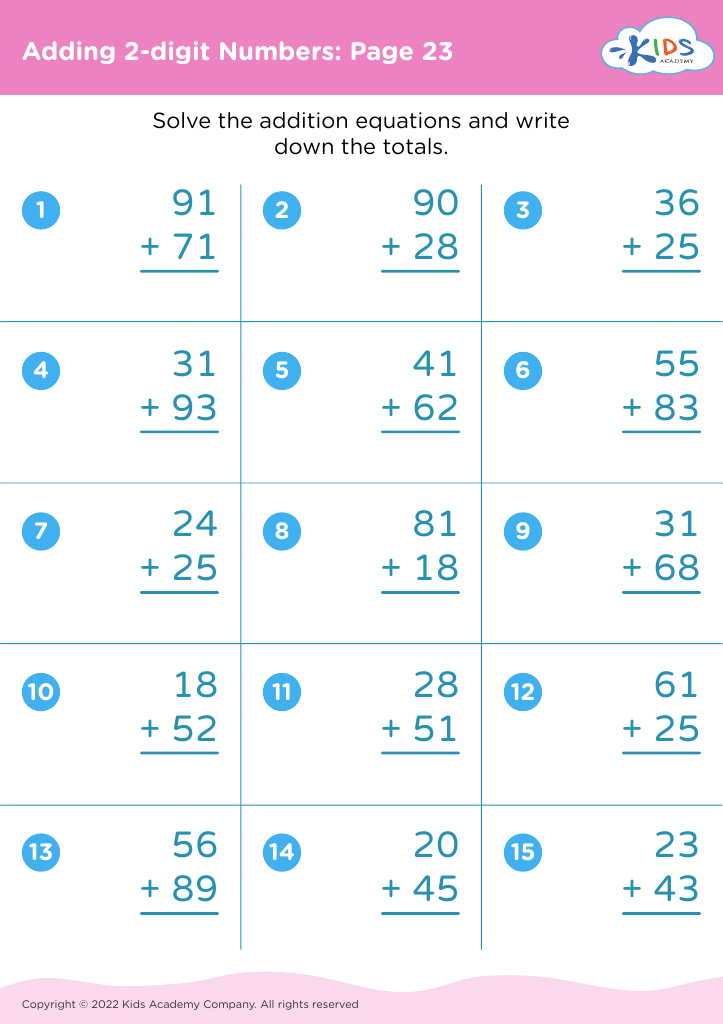
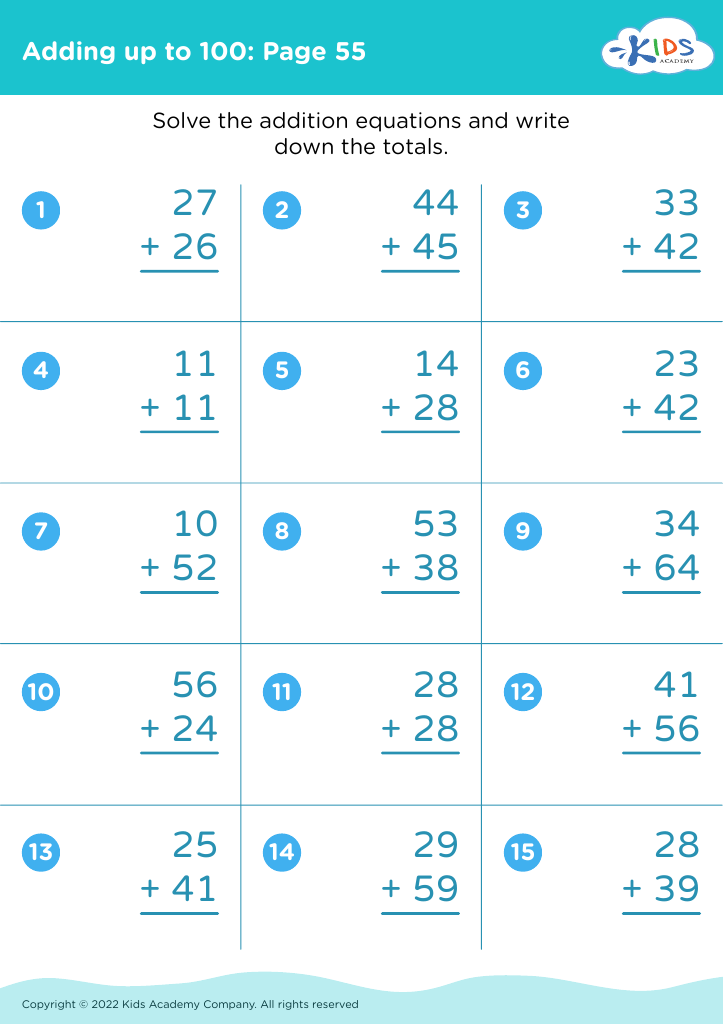
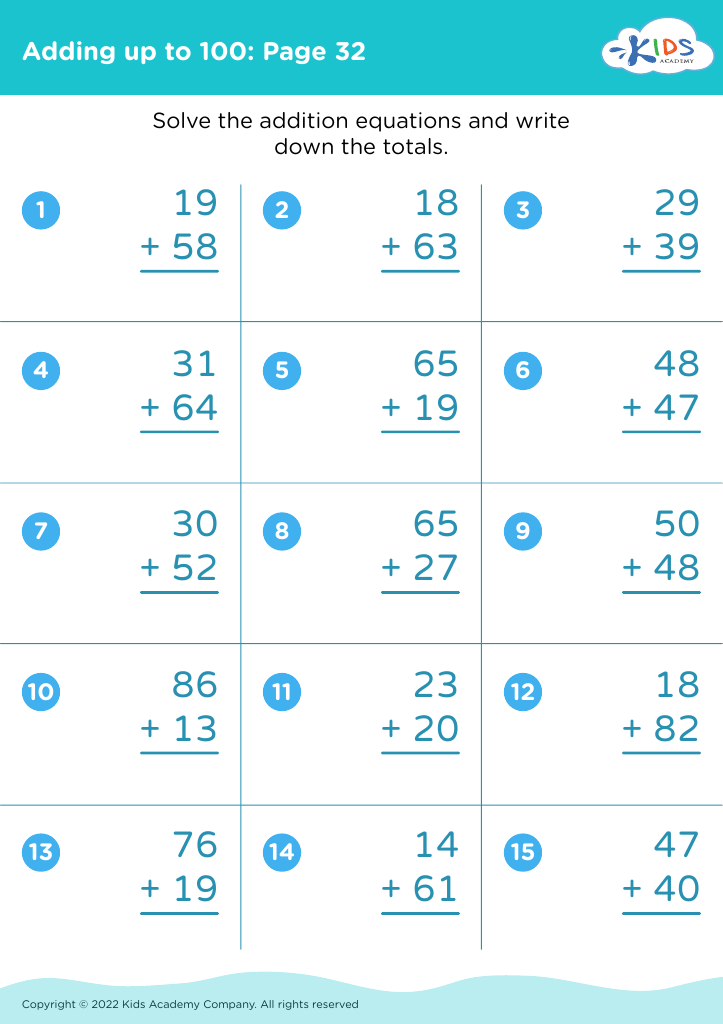
Discover our engaging numeracy skills addition worksheets designed for children aged 3-8! Tailored to foster early math skills, these worksheets provide a fun and interactive way for young learners to explore the world of addition. With colorful illustrations, simple instructions, and a variety of exercises, children will develop essential counting and problem-solving abilities in a playful manner. Our worksheets support early learners in building a strong foundation in mathematics, preparing them for future challenges. Whether at home or in the classroom, these resources make learning addition enjoyable and accessible. Start your child’s math journey today with our exciting addition worksheets!
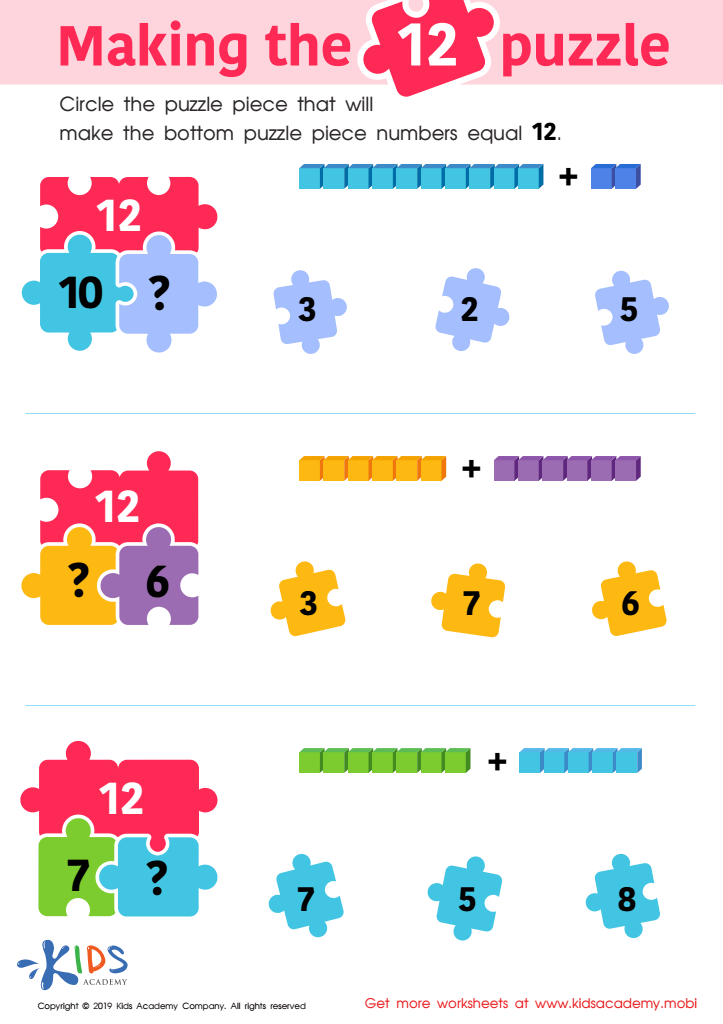
Making the 12 Puzzle Worksheet
 Assign to My Students
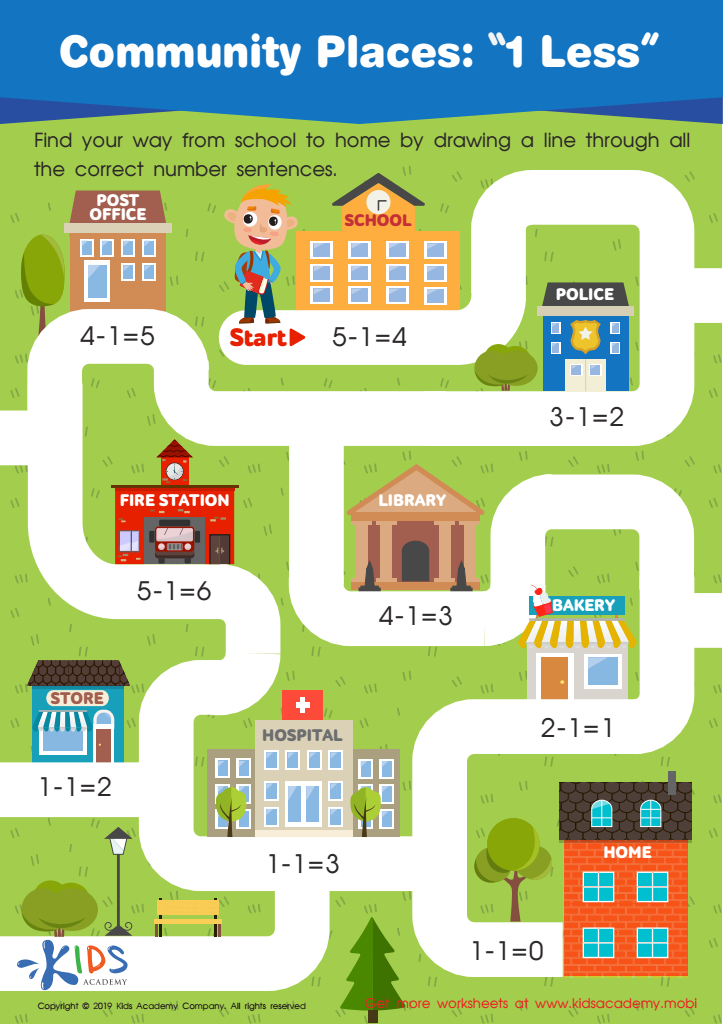
Community Places: 1 Less Worksheet
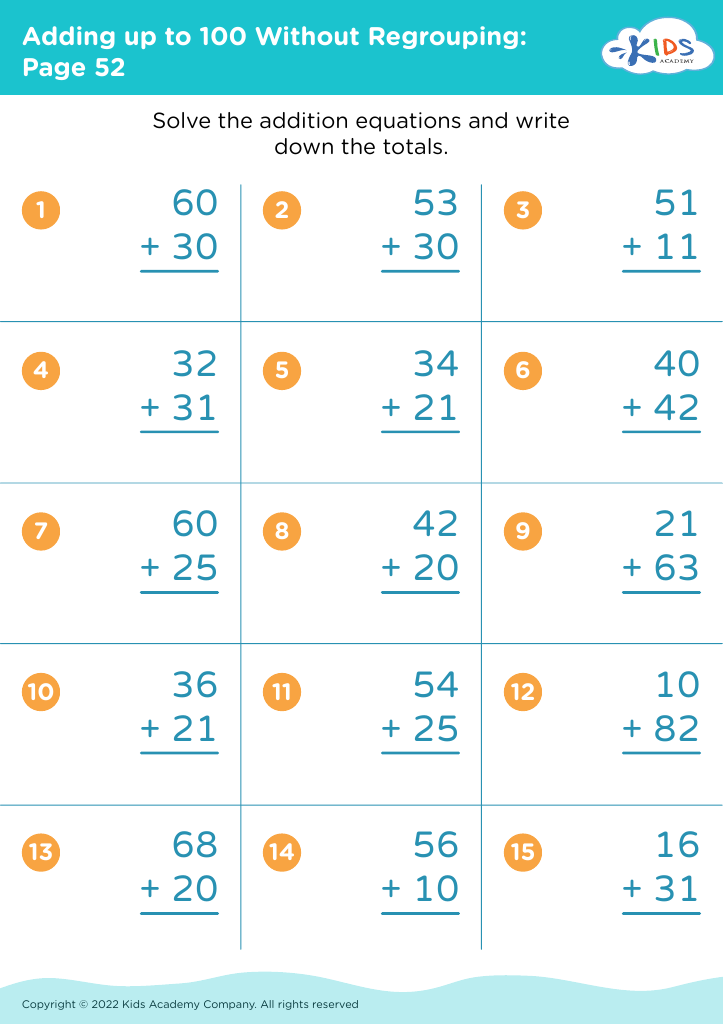








Numeracy skills, particularly addition, are fundamental to a child’s cognitive development and future academic success. For children ages 3-8, nurturing these skills lays the groundwork for more complex mathematical concepts and critical problem-solving abilities later on. Research has shown that early mastery of basic addition enhances not just math skills but also contributes to reasoning and logical thinking capabilities.
Parents and teachers should prioritize addition skills for several reasons. Firstly, early numeracy is linked to future performance in mathematics, making it a predictor of success in higher education and various career paths. Secondly, addition is frequently encountered in everyday situations, from counting change to measuring ingredients in cooking, helping children connect abstract concepts with real-world applications.
Furthermore, developing these skills fosters confidence in young learners, boosting their enthusiasm for school and learning. Engaging children with fun and interactive activities, such as games and storytelling, makes the learning process enjoyable and effective. By emphasizing addition during these formative years, parents and teachers can support children in becoming well-rounded, numerate individuals, able to navigate an increasingly data-driven world. Thus, investing time and creative efforts into teaching addition is crucial for a child’s overall development.








