Problem-solving abilities Addition Worksheets for Ages 3-8
29 filtered results
-
From - To
Unlock your child’s potential with our expertly designed Addition Worksheets centered around Problem-solving Abilities for Ages 3-8. Tailored to develop critical thinking and practical math skills, these engaging activities prompt young learners to tackle addition through a series of fun and interactive exercises. Perfect for both home and classroom settings, our worksheets combine colorful visuals and hands-on challenges to foster a deep understanding of mathematical concepts. By integrating puzzles and real-world scenarios, these resources aim to build a strong foundation in problem-solving, ensuring your child grows confident in their math abilities while enjoying the learning process.
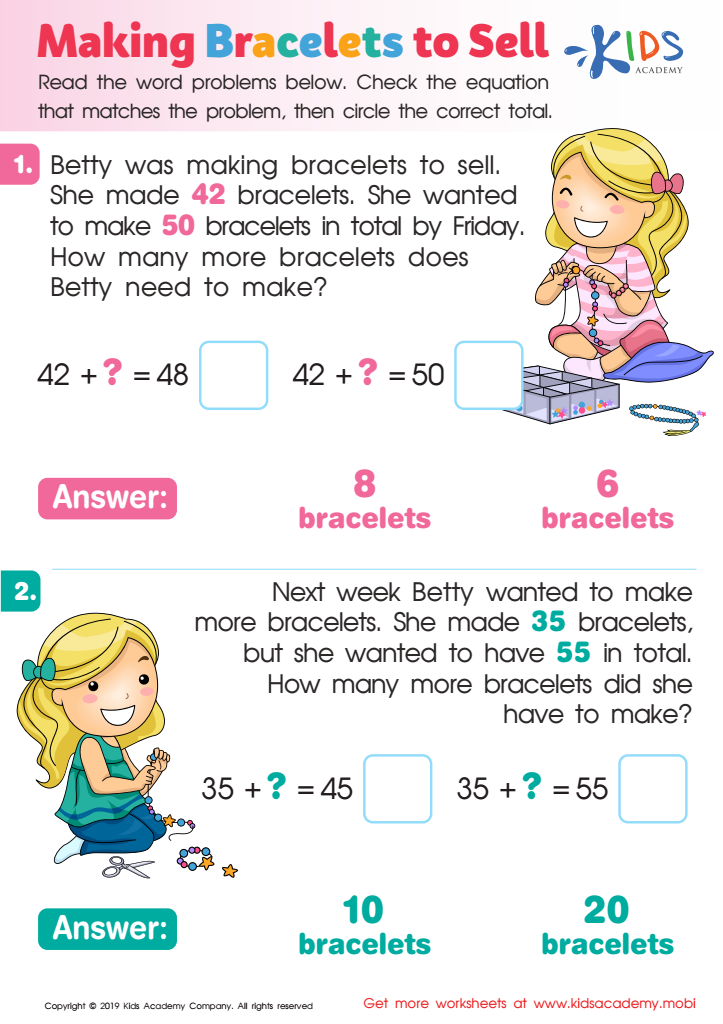
Making Bracelets to Sell Worksheet
 Assign to My Students
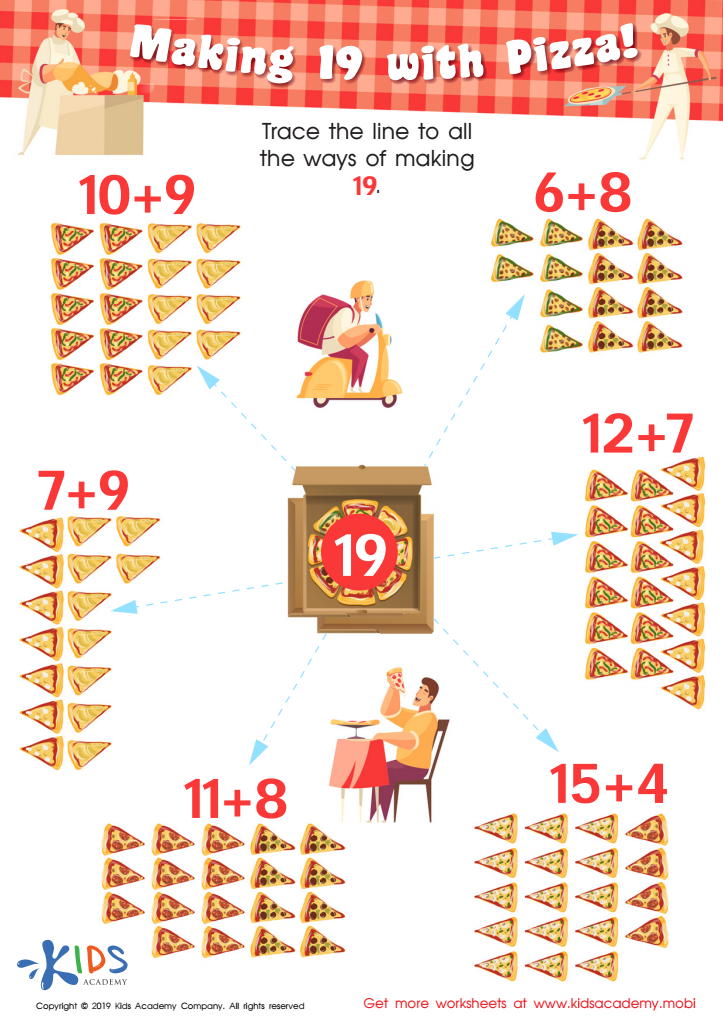
Making 19 with Pizza! Worksheet
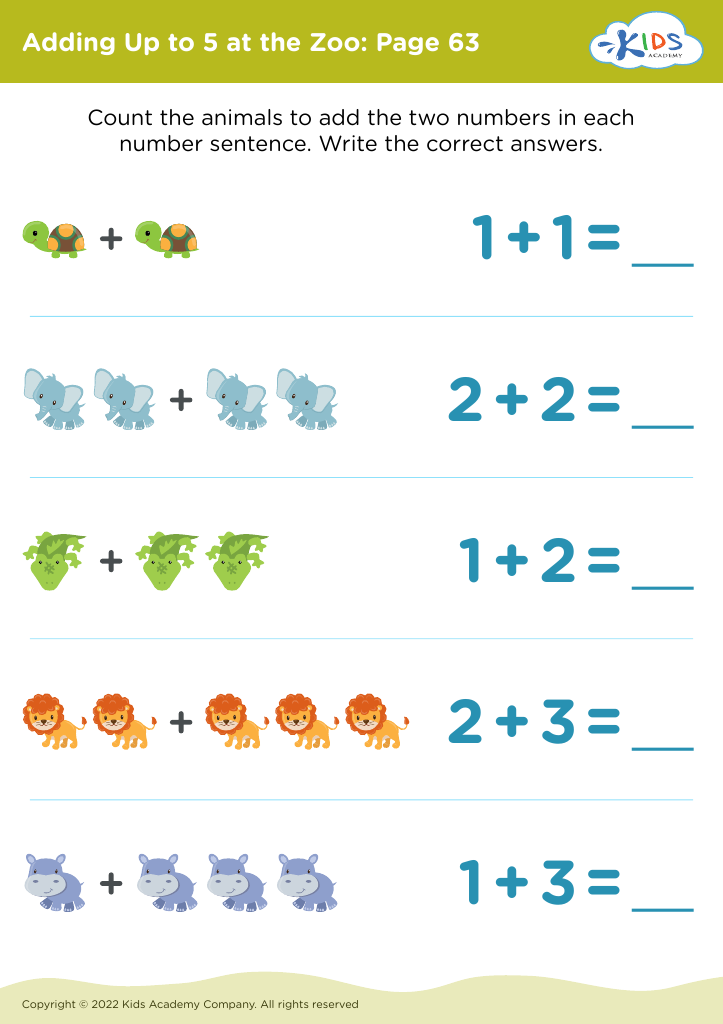
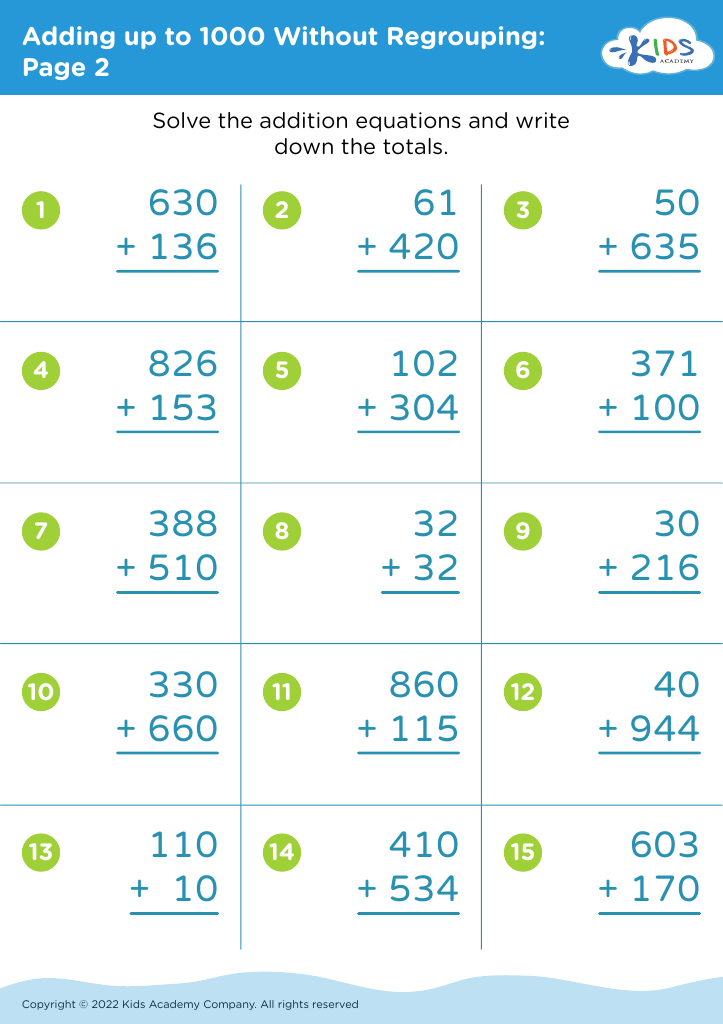
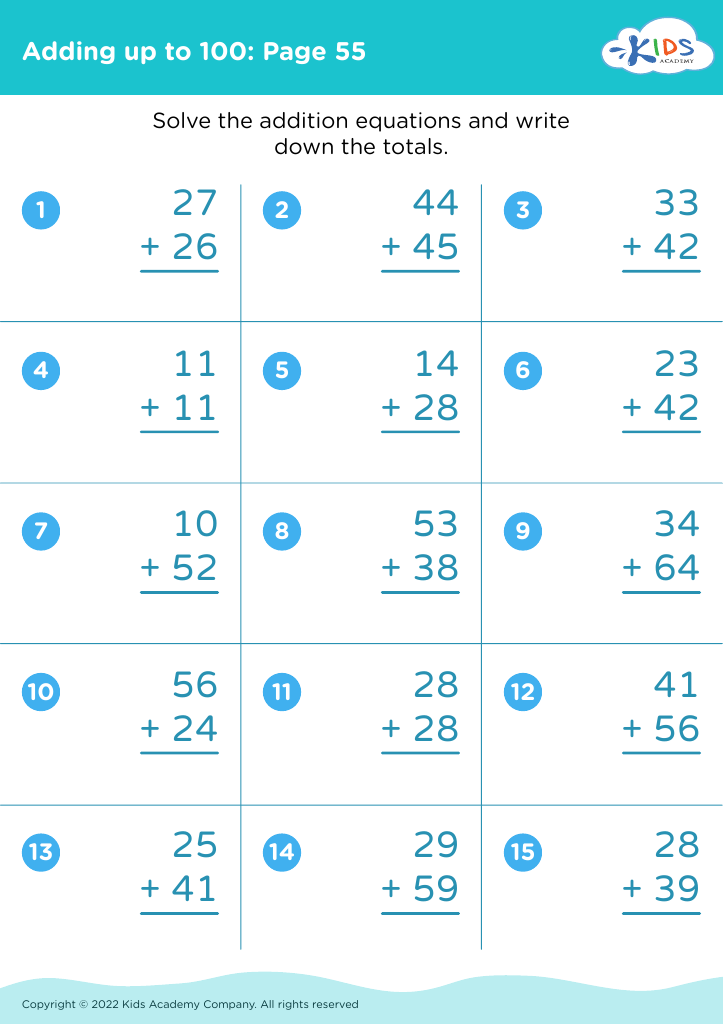
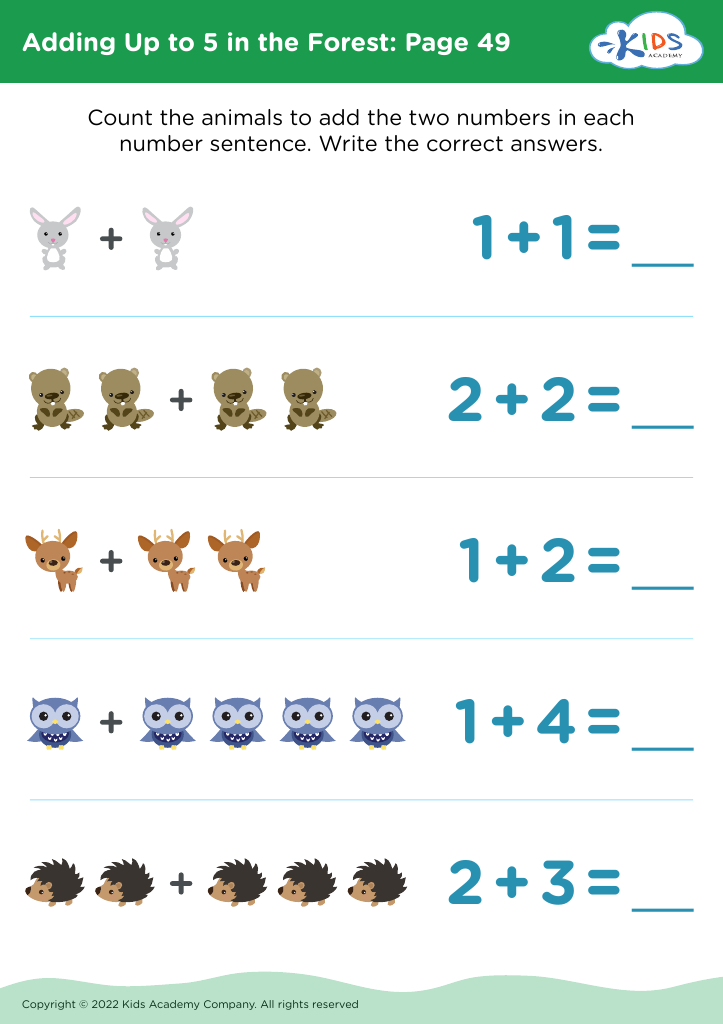
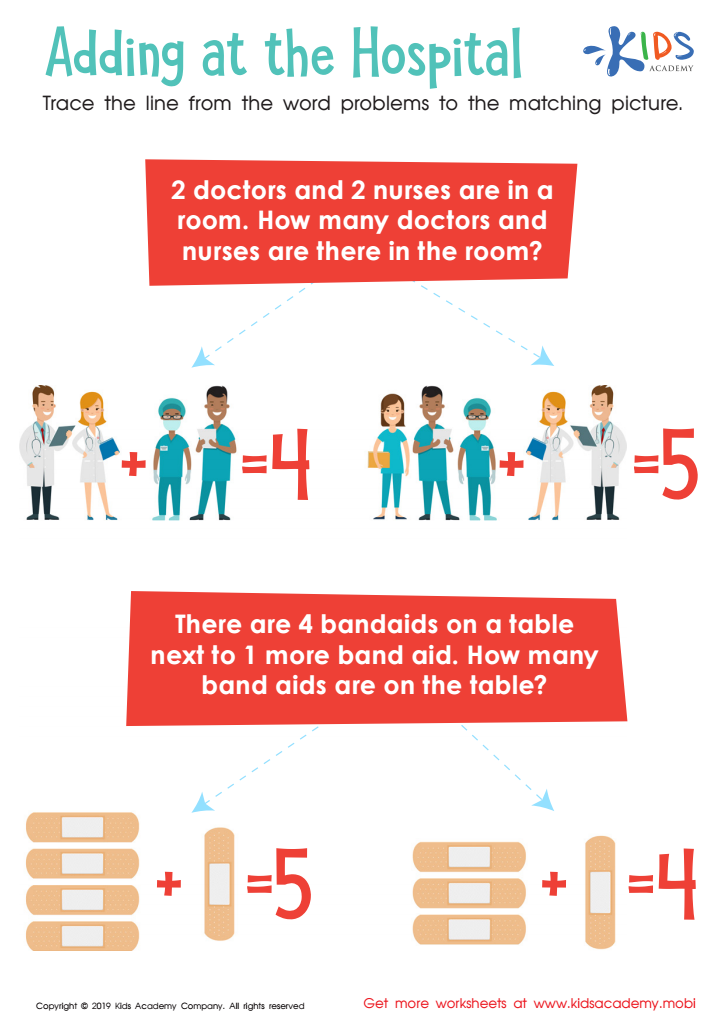
Adding at the Hospital Worksheet
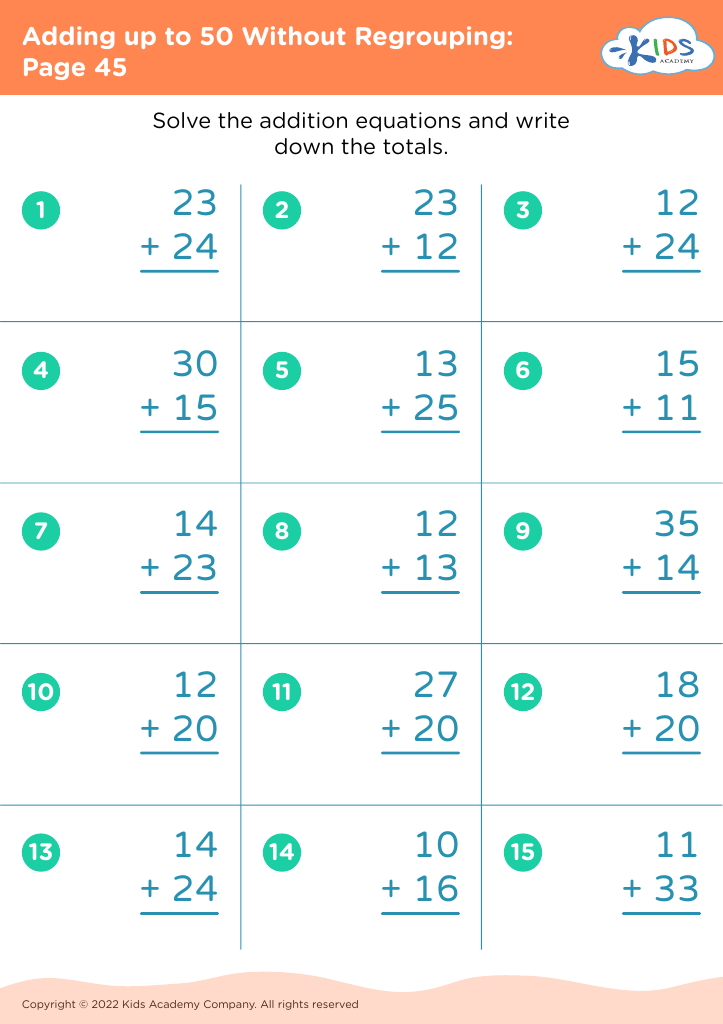
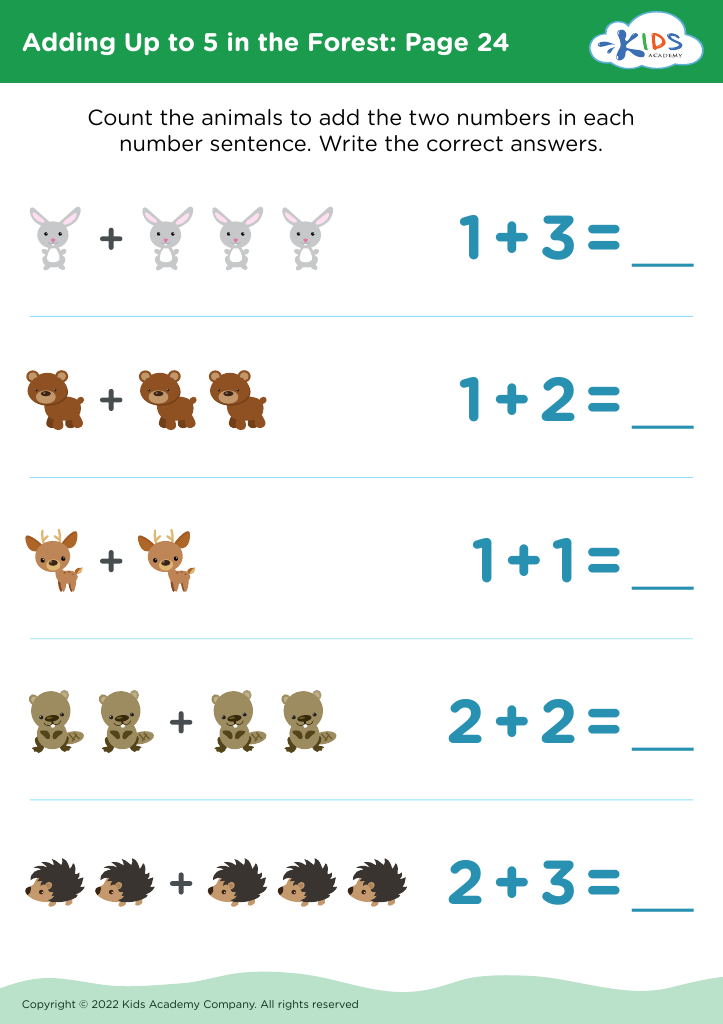
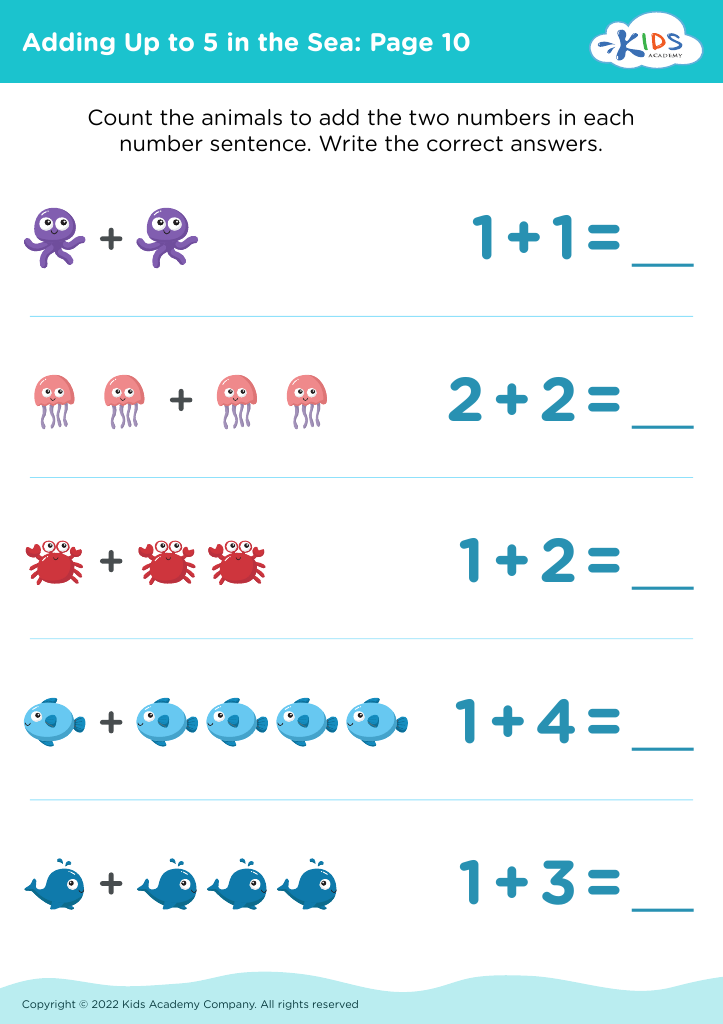
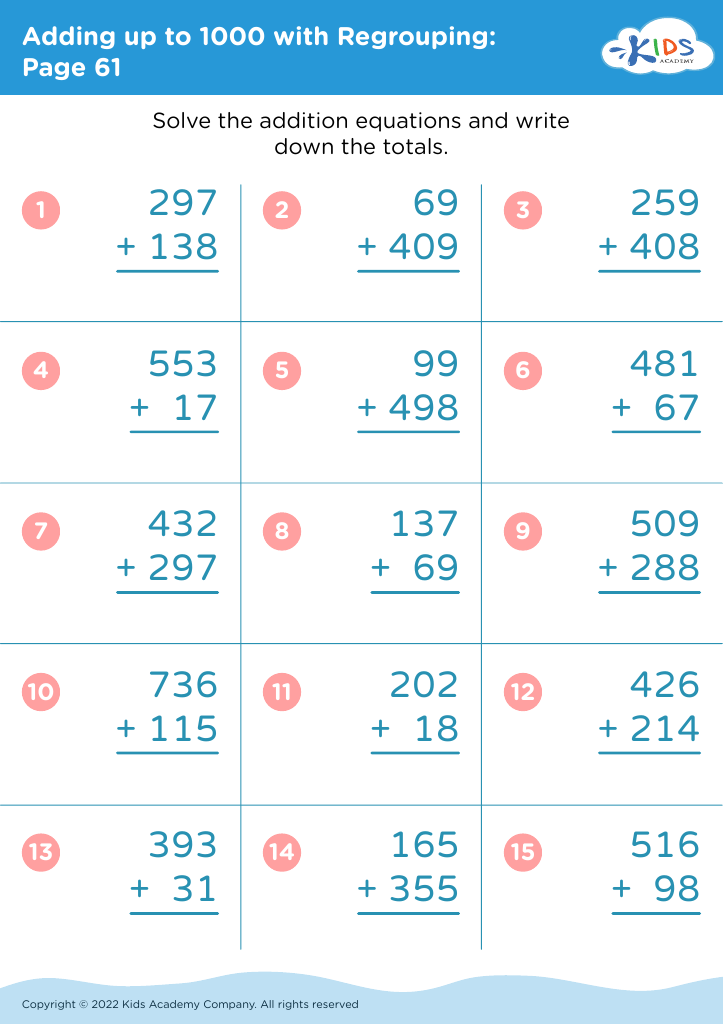
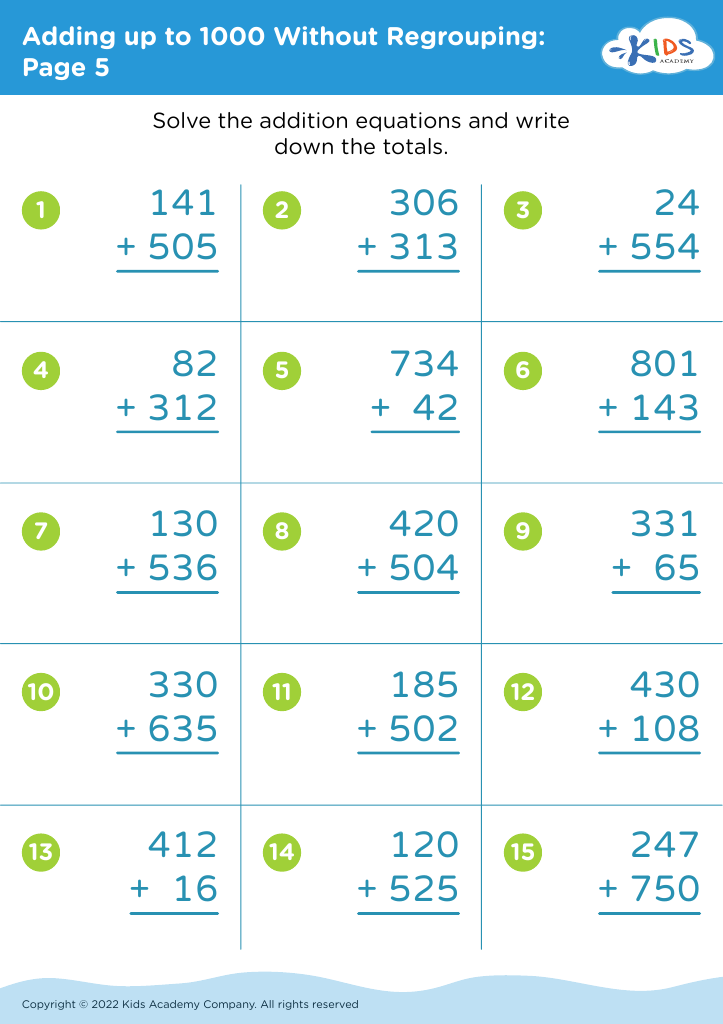
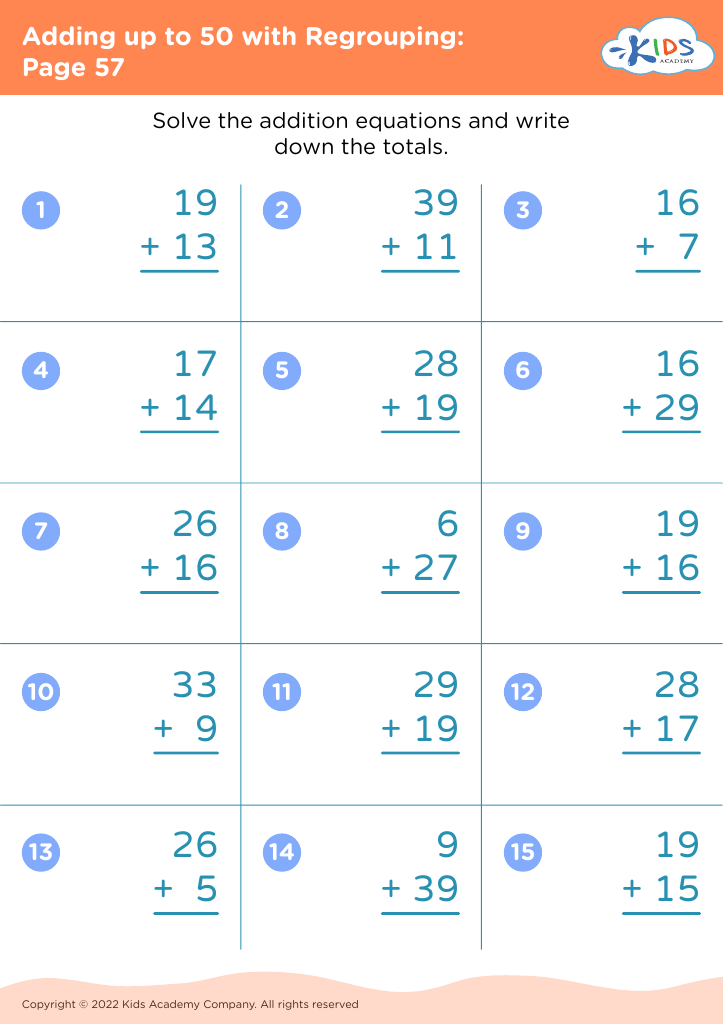
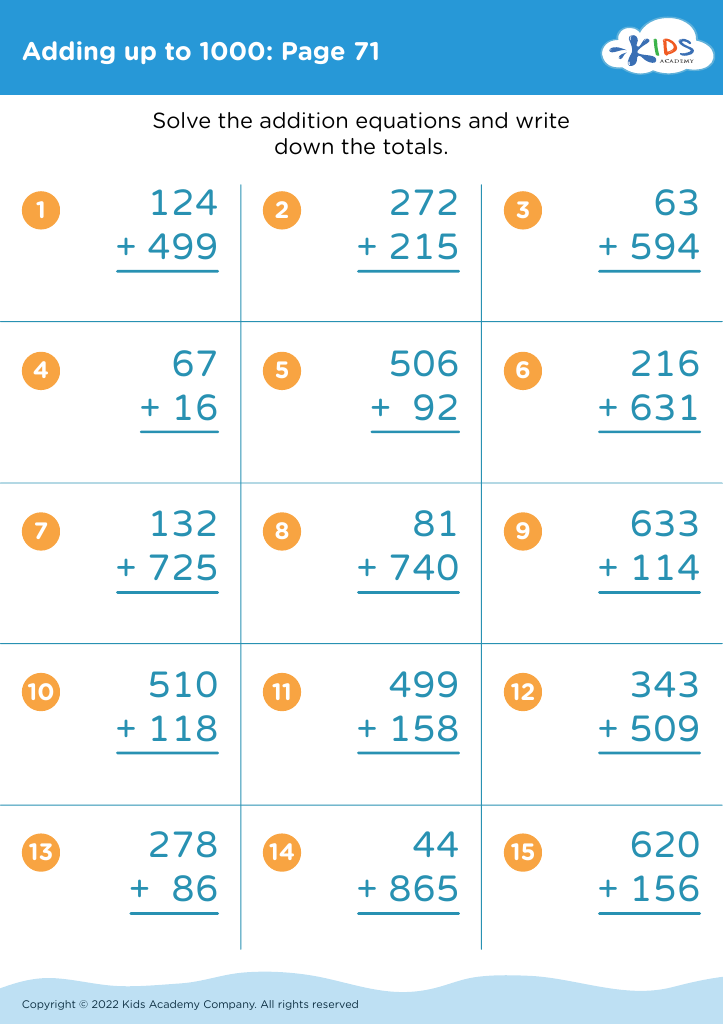







.jpg)
Problem-solving abilities in addition for children ages 3-8 are crucial because they lay the foundation for future mathematical understanding and cognitive development. Early exposure to addition fosters basic numerical comprehension, which is essential for navigating everyday life and more advanced math concepts later on.
For parents and teachers, emphasizing problem-solving in addition helps children develop a growth mindset. When children tackle addition problems, they learn to think critically, consider various solutions, and understand that persistence is key to overcoming challenges. These experiences bolster their confidence and willingness to engage with more complex tasks as they grow.
Furthermore, problem-solving in addition promotes logical thinking and improves memory retention. As young learners practice addition, they begin to recognize patterns and relationships between numbers, enhancing their overall number sense. This skill is crucial as it supports their ability to solve real-world problems, from managing money to understanding time.
In a classroom setting or at home, encouraging addition problem-solving through playful activities, such as counting games, puzzles, and interactive stories, makes learning enjoyable and meaningful. This approach not only improves math skills but also promotes social interaction, communication, and attention to detail. By nurturing these abilities early on, parents and teachers set the stage for lifelong learning and academic success.








