Understanding sequence Addition Worksheets for Ages 3-8
4 filtered results
-
From - To
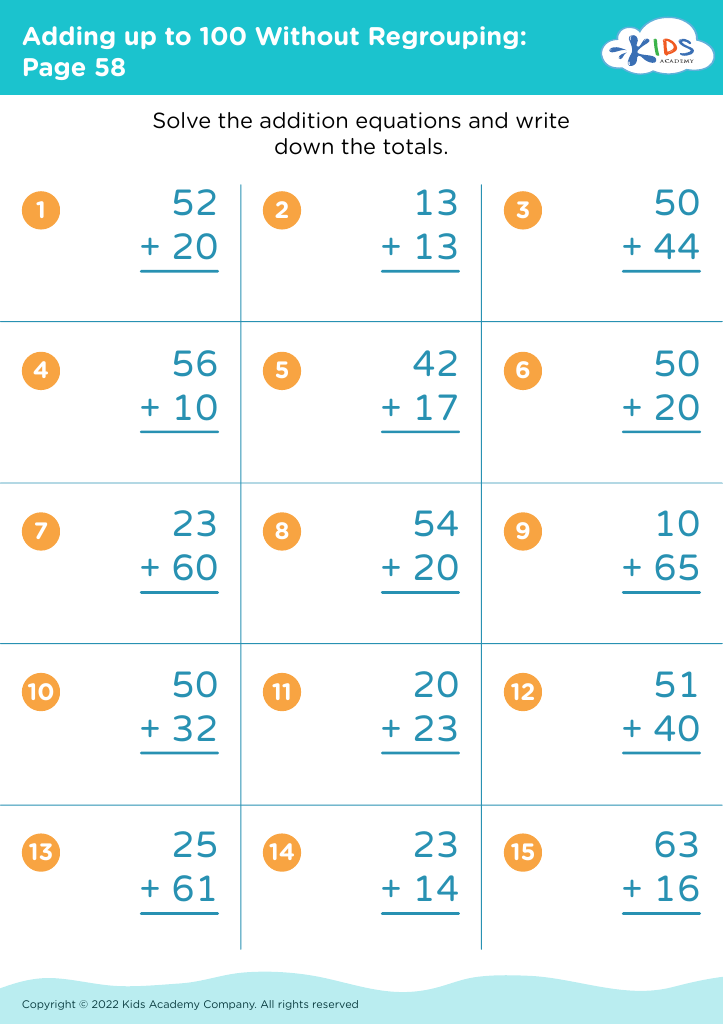
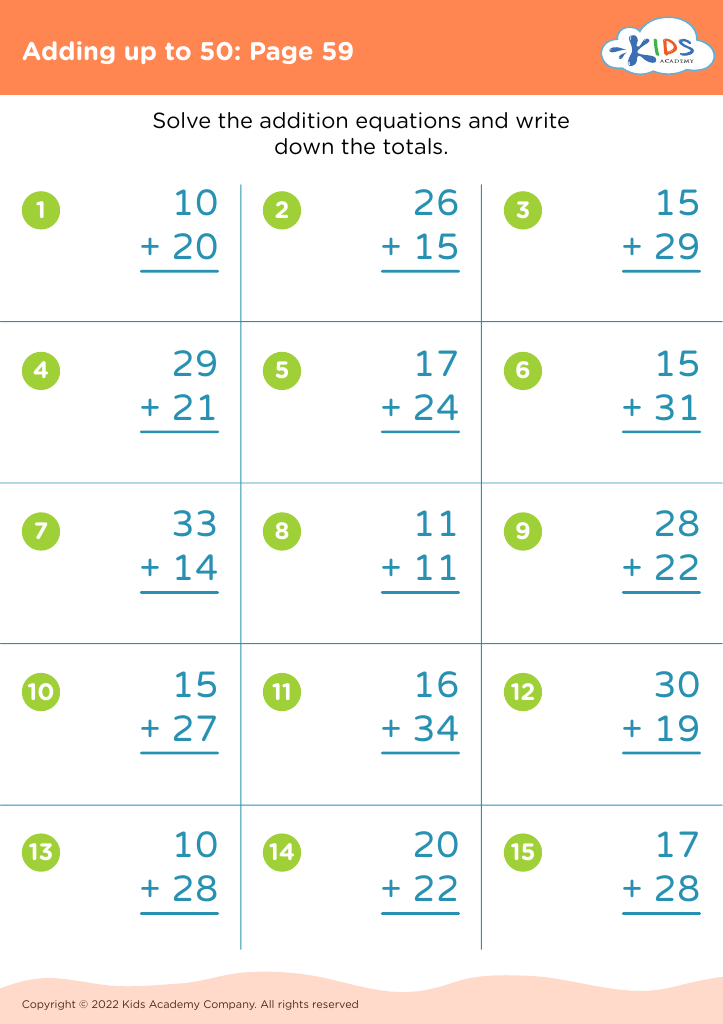
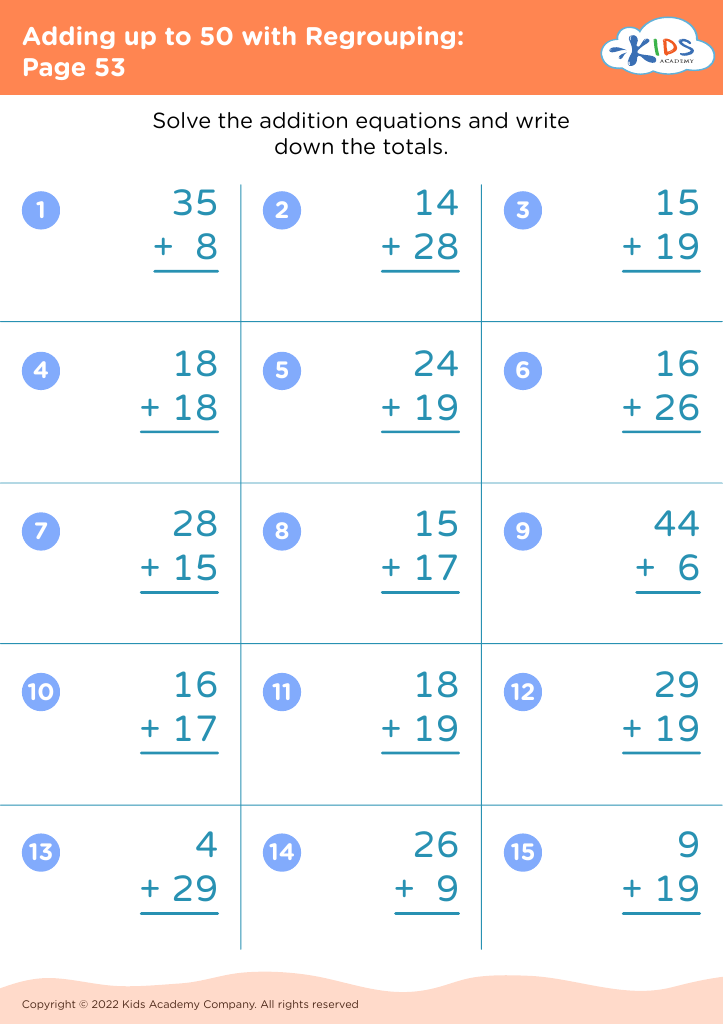
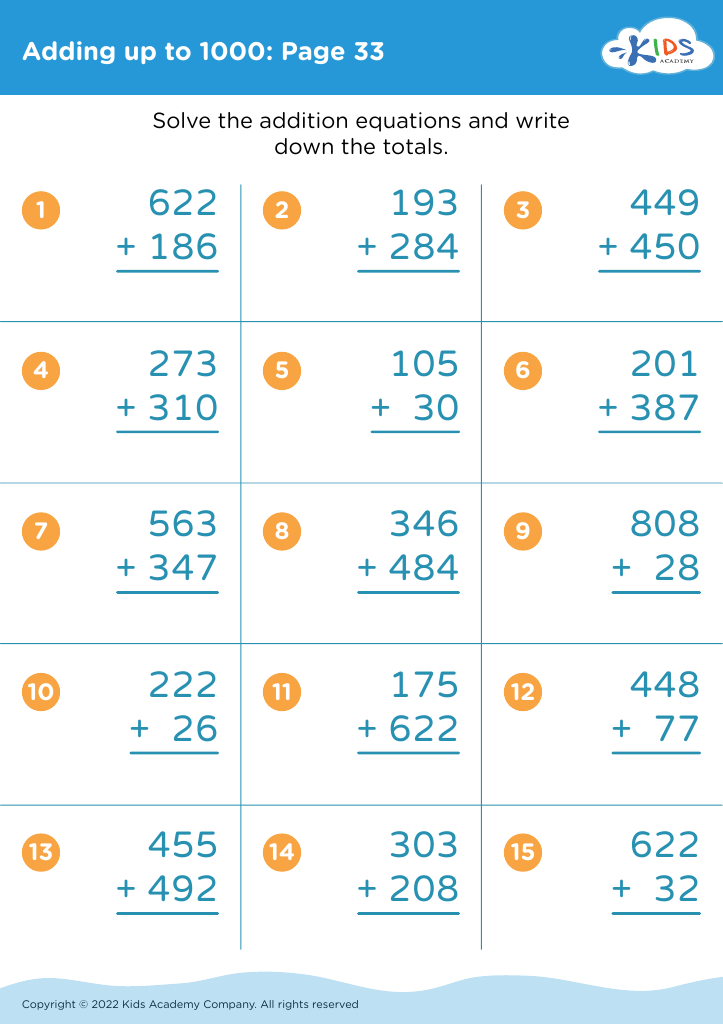
Elevate your child's understanding of math with our "Understanding Sequence Addition Worksheets for Ages 3-8." Designed to enhance young learners' abilities to recognize and follow numerical sequences, these worksheets provide a fun and engaging way to practice addition. Through colorful and interactive activities, children will build a solid foundation in math skills and improve their cognitive development. Perfect for preschool through early elementary grades, our worksheets make learning addition enjoyable and effective. Help your child gain confidence in math with our expert-crafted resources. Try them today and watch as their problem-solving skills thrive!








Understanding sequence addition is a crucial foundation for children aged 3-8 as it plays a significant role in their cognitive and academic development. At this formative stage, children are developing fundamental math skills that are integral to their overall learning. Sequence addition helps kids understand the concept of order, which is essential not only in mathematics but also in reading, writing, and daily routines.
When children grasp the concept of sequencing, they learn to follow logical steps and recognize patterns. This enhances their problem-solving abilities and critical thinking skills. In addition, mastering basic addition within sequences builds confidence and fosters a positive attitude towards math. Children are more likely to excel in higher-level math and other subjects if they establish a solid foundation early on.
For teachers, integrating sequence addition into the curriculum helps in creating engaging and interactive learning experiences. Activities like counting games, story problems, and visual aids can make learning enjoyable and effective. For parents, contributing to this learning process at home through simple activities, such as counting objects during playtime or cooking, reinforces these concepts and creates a collaborative learning environment.
Overall, focusing on sequence addition for early learners sets the stage for academic success and encourages lifelong learning habits.








