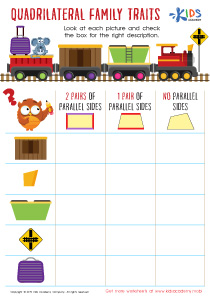
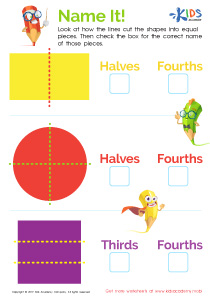
Understanding area Area and Perimeter Worksheets for Ages 3-8
3 filtered results
-
From - To
Discover a fun and engaging way for children ages 3-8 to learn about area and perimeter with our comprehensive worksheets! Designed to develop spatial awareness, our resources feature colorful visuals and interactive activities that make learning about measurement exciting. Kids will grasp fundamental concepts through practical examples and hands-on exercises. Our worksheets not only enhance math skills but also foster critical thinking and problem-solving. Perfect for home or classroom use, these materials align with early education standards, making math accessible for young learners. Dive into the world of shapes and measurements, and watch your child's confidence in math grow!
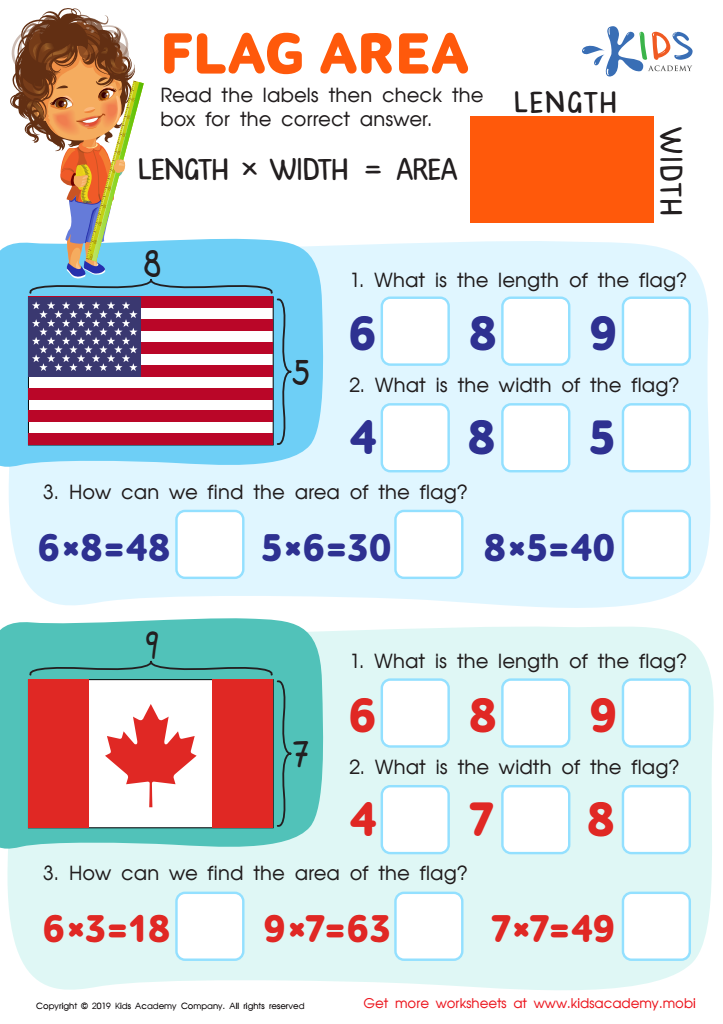
Flag Area Worksheet
 Assign to My Students
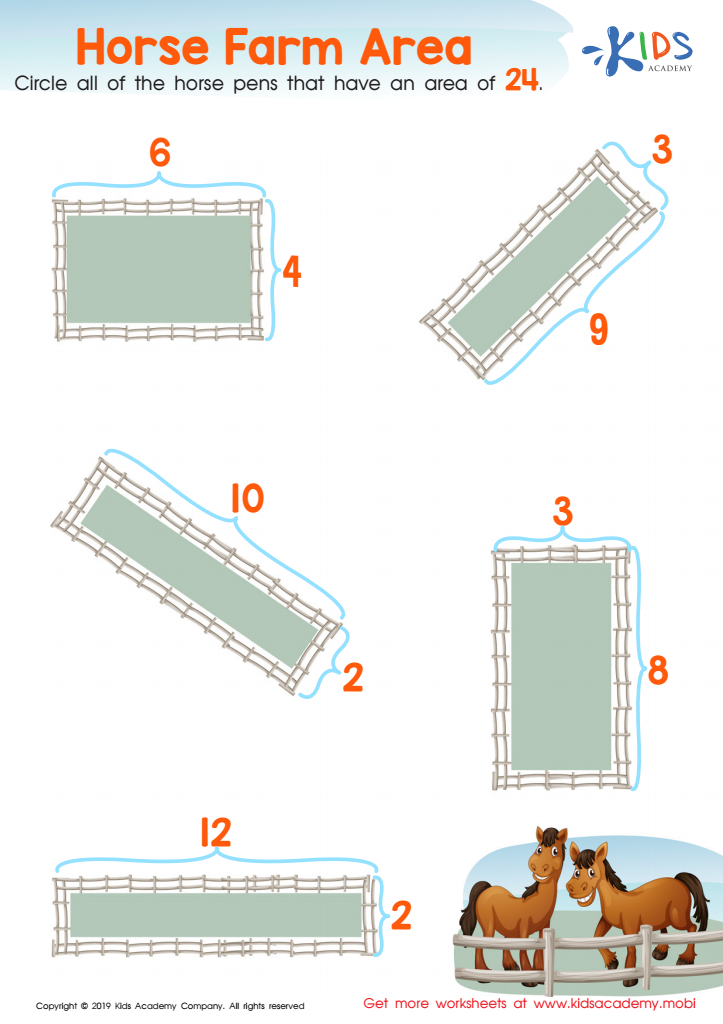
Horse Farm Area Worksheet
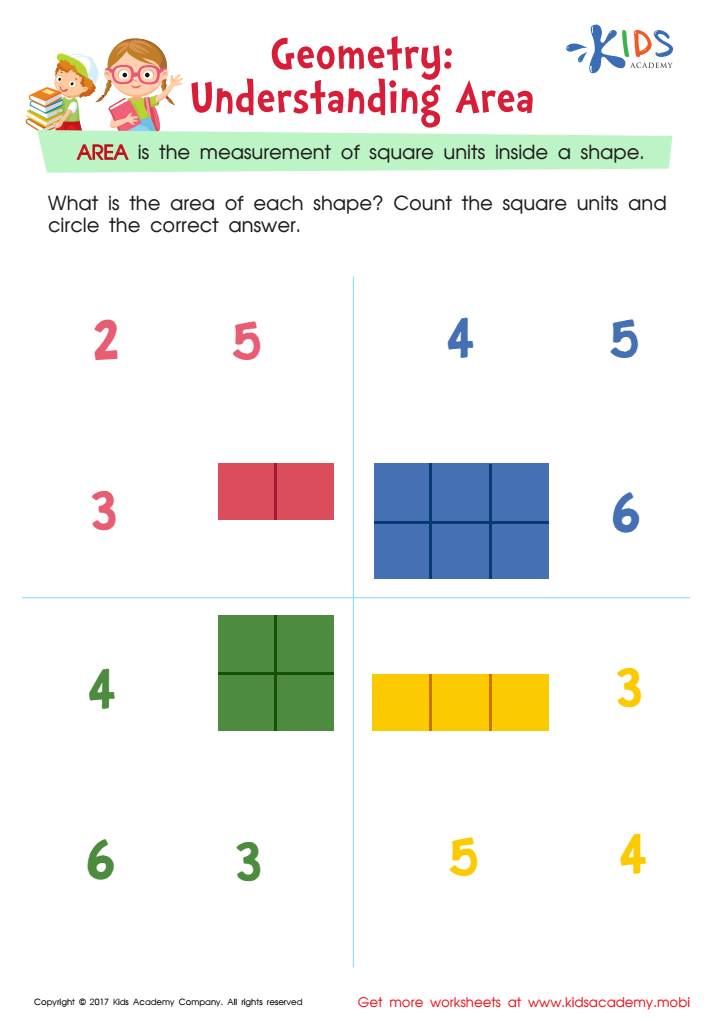
Understanding Area Worksheet








Understanding area and perimeter is essential for children aged 3-8 as these fundamental concepts are foundational to geometry and spatial reasoning. For teachers and parents, fostering this comprehension at an early age lays the groundwork for future math skills and real-world applications.
At this developmental stage, children are naturally curious and eager to explore their environment. Introducing area and perimeter through hands-on activities, such as measuring classroom or home spaces, helps to bridge the gap between abstract concepts and tangible understanding. It encourages critical thinking and problem-solving skills, as children learn to calculate the space within a shape (area) and the distance around it (perimeter).
Moreover, these concepts are closely related to everyday tasks—like gardening, cooking, and home design—making math relevant and fun. Engaging children in simple projects, such as creating shapes with blocks or art materials, can simultaneously enhance fine motor skills and stimulate mathematical thinking.
Ultimately, fostering an early comprehension of area and perimeter enriches children's learning experiences and builds their confidence in mathematics, promoting a positive attitude towards learning as they grow. This solid foundation will benefit them in more complex mathematical concepts in later years.