Basic geometry knowledge Geometry Worksheets for Ages 3-8
3 filtered results
-
From - To
Explore our engaging Basic Geometry Worksheets designed for children aged 3-8, perfect for introducing essential geometry concepts in a fun and interactive way. These worksheets help young learners develop critical skills such as shape recognition, spatial awareness, and basic measurements through vibrant illustrations and straightforward exercises. Focused on fostering creativity and problem-solving abilities, our resources are crafted to complement early math education, making learning enjoyable and effective. Whether at home or in the classroom, these printable worksheets will guide your child in mastering essential geometric principles, laying a solid foundation for their future math success. Start your geometry adventure today!
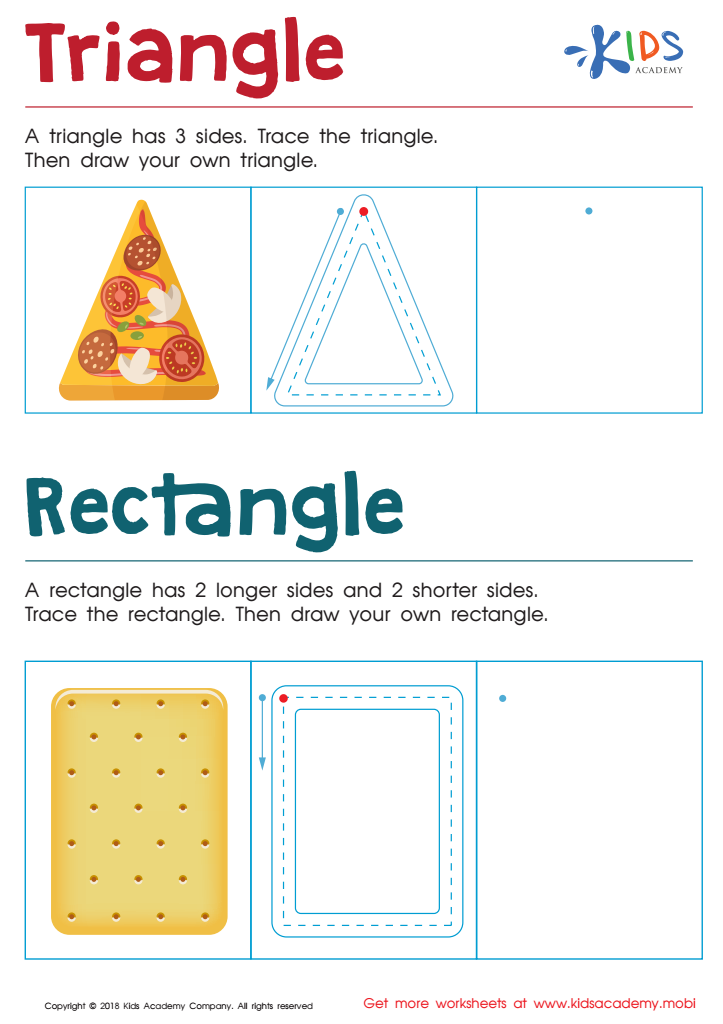
Triangle Rectangle Worksheet
 Assign to My Students











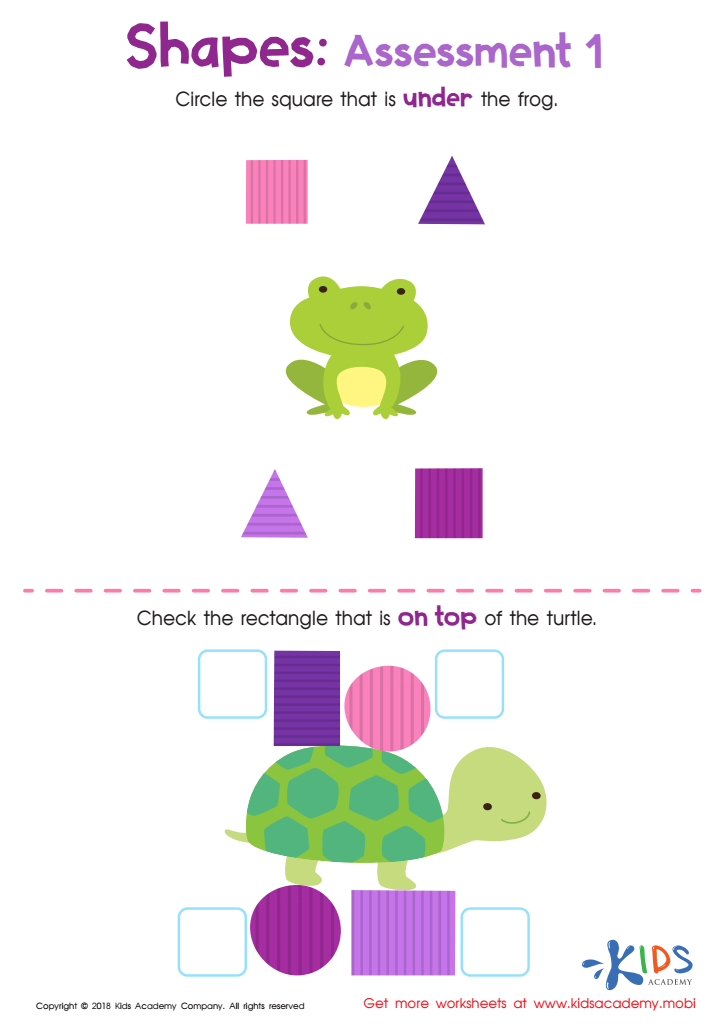
Geometry – Assessment 1 Worksheet
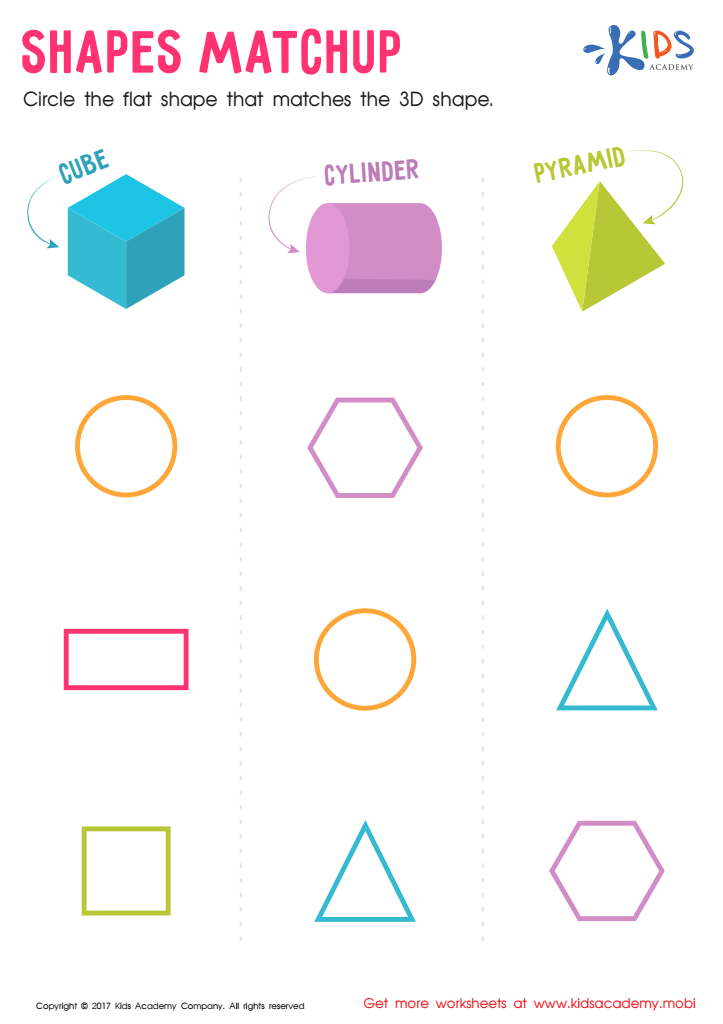
Shapes Matchup Worksheet








Basic geometry knowledge is foundational for children ages 3-8, significantly influencing their cognitive development and problem-solving skills. Understanding geometric concepts helps children recognize shapes, sizes, and spatial relationships, which are essential skills in daily life. Geometry lays the groundwork for critical thinking and enhances mathematical reasoning, empowering children to make sense of the world around them.
Moreover, geometry encourages creativity and imagination through activities like drawing, building, and exploring shapes. These hands-on experiences not only make learning enjoyable but also foster fine motor skills and spatial awareness. For example, when children learn to identify and manipulate shapes, they develop a more profound understanding of size, symmetry, and balance, which can translate into real-world applications like art and design.
For teachers and parents, nurturing a child's geometry knowledge can lead to improved academic performance in mathematics and related subjects. By integrating geometry into early learning environments, adults can help cultivate a love for math, laying the foundation for lifelong learning. Additionally, fostering a curiosity about shapes and spatial relationships can support future skills in areas such as science, engineering, and technology, thus preparing children for a promising future in an ever-evolving world.








