Color differentiation Geometry Worksheets for Ages 3-8
3 filtered results
-
From - To
Unlock your child's potential with our Color Differentiation Geometry Worksheets designed for ages 3-8. These engaging and educational worksheets introduce young learners to the fascinating world of shapes and colors through fun, interactive activities. With a focus on building color recognition, geometry skills, and critical thinking, each worksheet offers hands-on opportunities for children to differentiate, match, and categorize shapes by color. Perfect for both classroom and at-home learning, our expertly crafted worksheets help children develop essential foundational skills while keeping them entertained and motivated. Explore our vibrant collection and watch your young learner thrive!
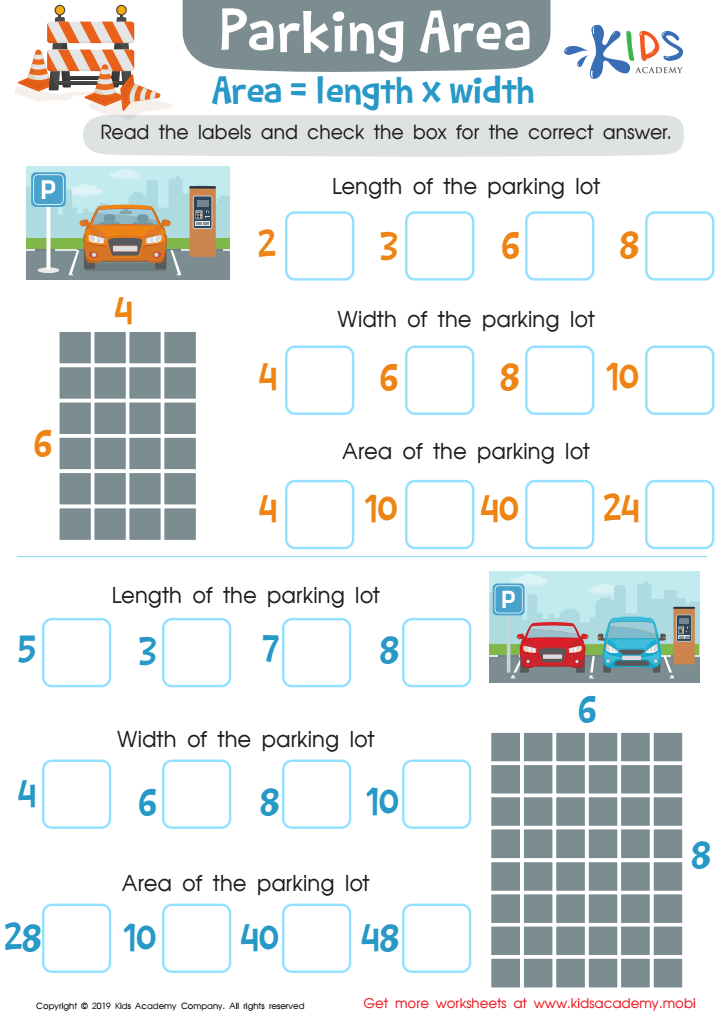
Parking Area Worksheet
 Assign to My Students











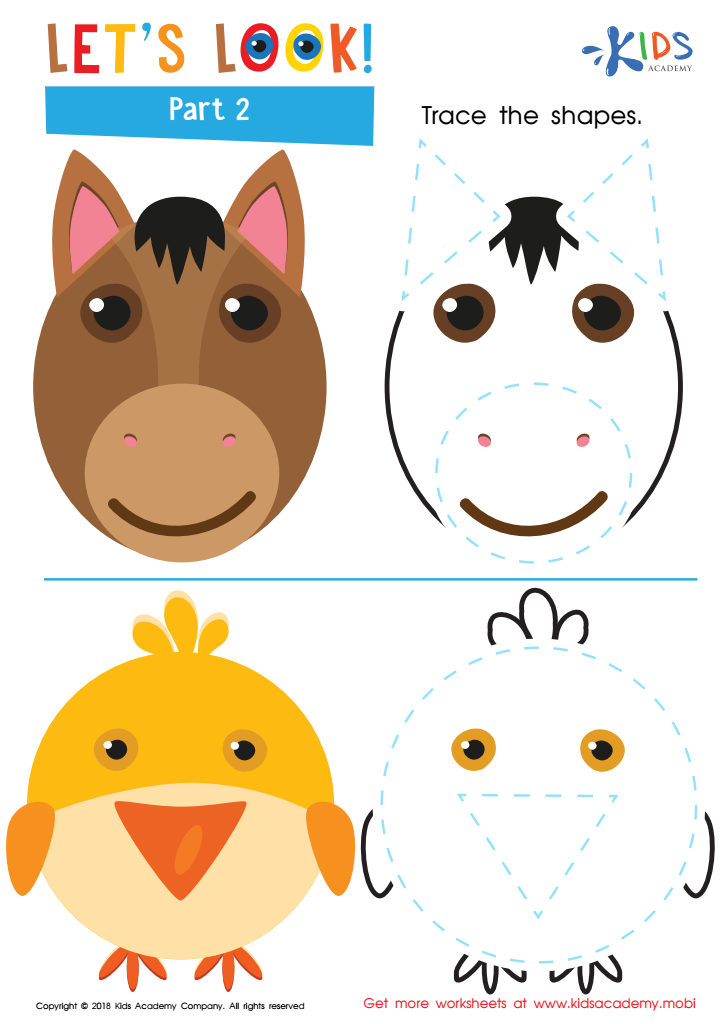
Let's Look! Part 2 Worksheet
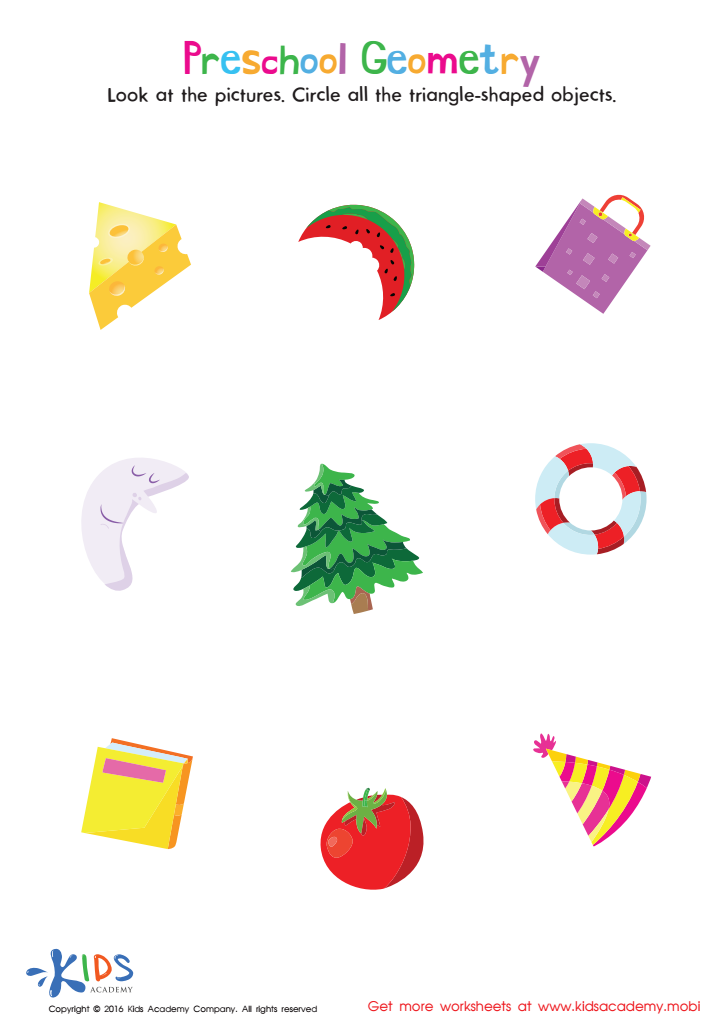








Understanding color differentiation and basic geometry at an early age is crucial for children's cognitive and perceptual development, making it essential for both parents and teachers to emphasize these skills. At ages 3-8, children's brains are exceptionally receptive to learning and development. Engaging them in activities that involve distinguishing colors and shapes fosters essential skills such as pattern recognition, visual-spatial awareness, and categorization, which form the backbone of more advanced mathematical and logical thinking.
Color differentiation helps young children improve their visual perception and heightens their awareness of the world around them. It extends beyond mere academic skills; recognizing and naming colors can also aid in improving communication skills and vocabulary. Furthermore, children’s ability to distinguish colors can have practical applications in daily life, helping them understand traffic signals, identify objects, and even enhance their artistic creativity.
Geometry introduces foundational concepts about shapes and spatial relationships, laying groundwork for later complex mathematical concepts. Manipulating shapes through play—be it through building blocks, puzzles, or drawing—causes children to develop hand-eye coordination and fine motor skills. This early exposure also fosters problem-solving abilities as children learn to navigate space and construct patterns or structures.
In essence, nurturing skills in color differentiation and basic geometry sets a robust foundation for a child’s academic journey and everyday problem-solving abilities, therefore meriting attention from both parents and teachers.








