Comparing Fractions Geometry Worksheets for Ages 3-8
5 filtered results
-
From - To
Introduce young learners to the world of fractions with our "Comparing Fractions Geometry Worksheets" designed for ages 3-8. These engaging worksheets combine colorful visuals and easy-to-follow instructions, helping children grasp the basics of comparing fractions through shapes and geometry. Our expertly crafted activities foster critical thinking and foundational math skills, ensuring that your child not only understands fractions but also enjoys the learning process. Ideal for both classroom and home use, these worksheets are perfect for laying the groundwork for future math success. Download today and watch your child's math confidence soar!
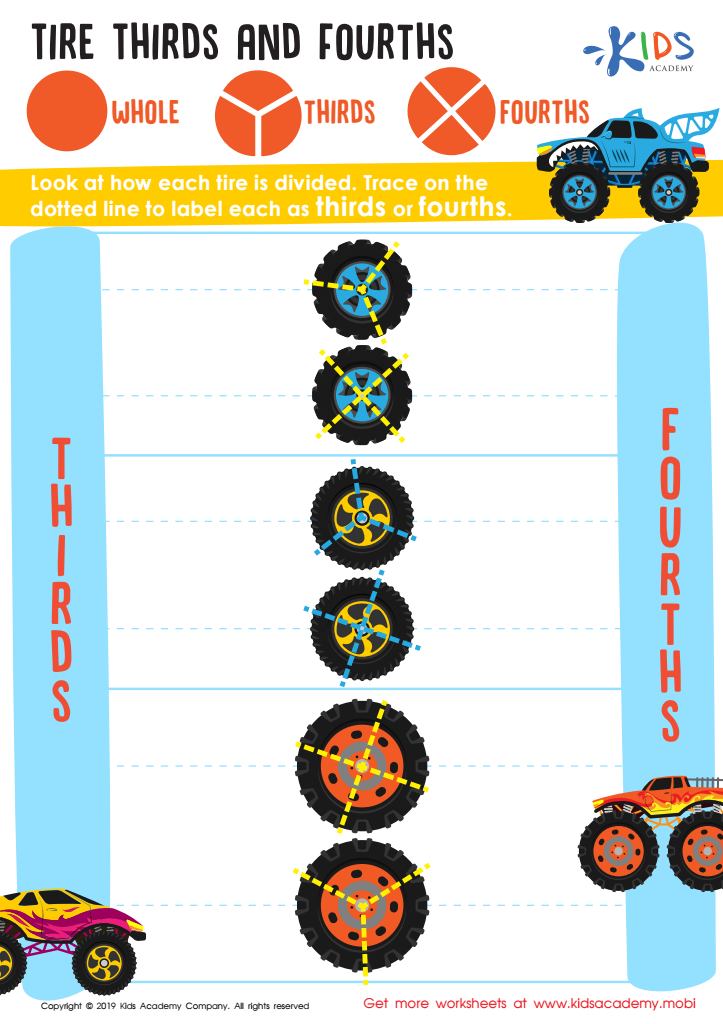
Tire Thirds and Fourths Worksheet
 Assign to My Students











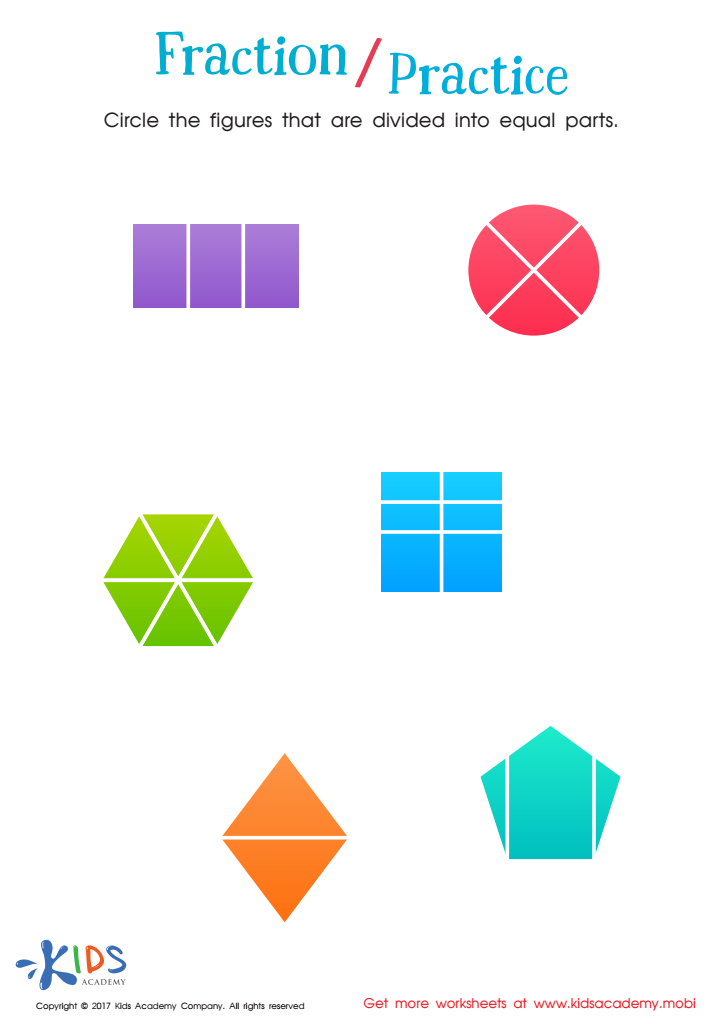
Fractions: Shapes Worksheet
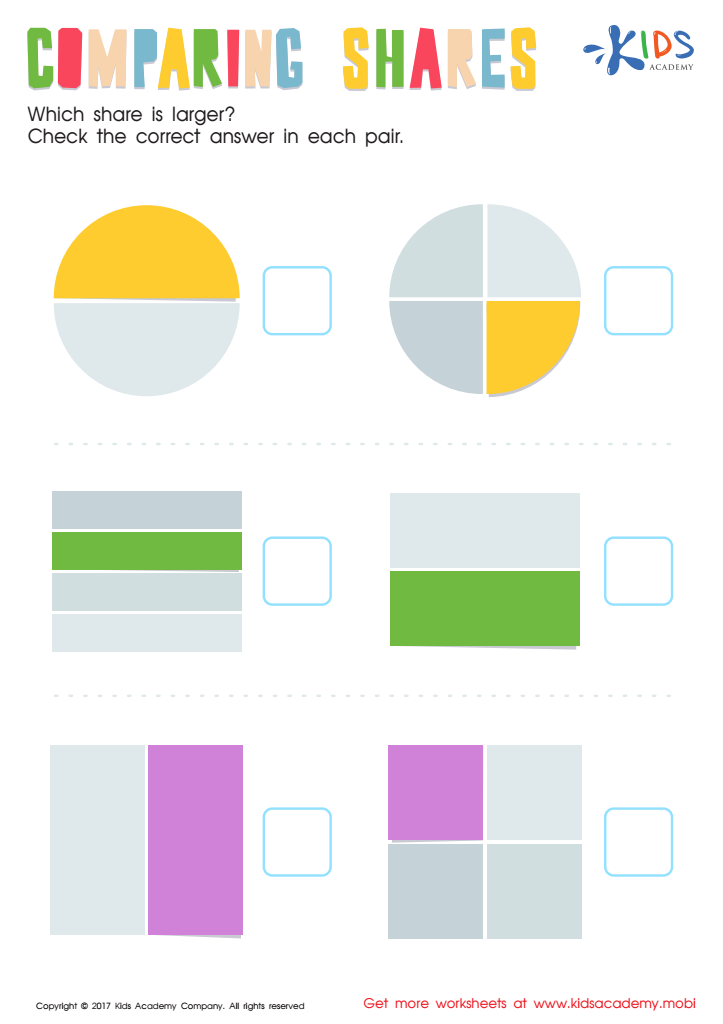
Comparing Shares Worksheet
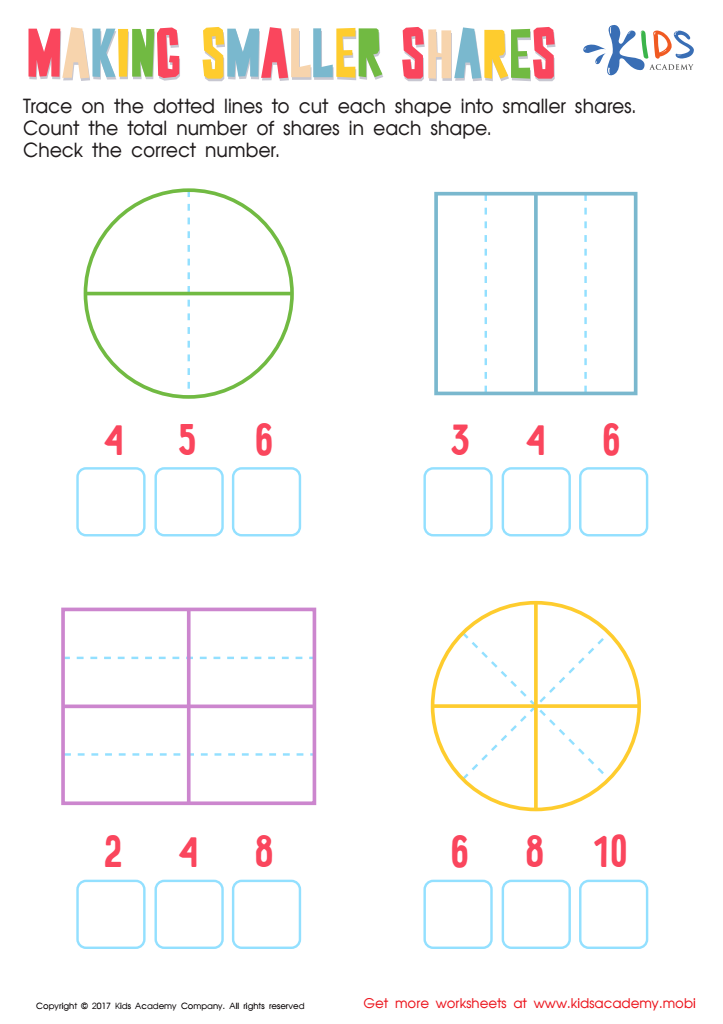
Making Smaller Shares Worksheet
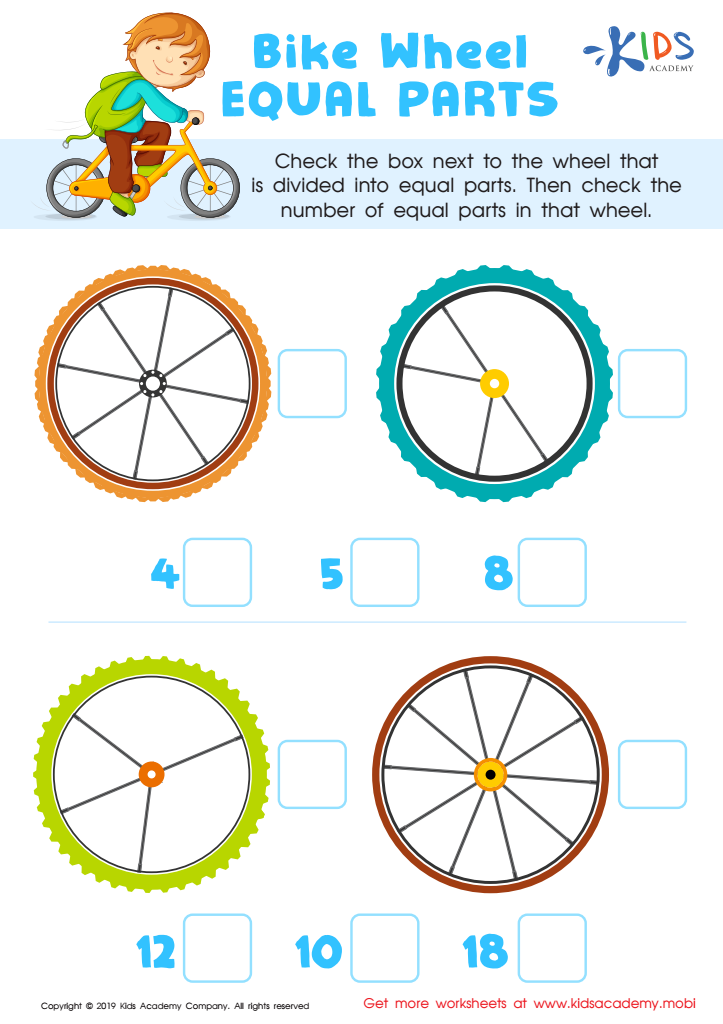
Bike Wheel Equal Parts Worksheet








At first glance, comparing fractions and geometry for children ages 3-8 might seem advanced. However, these concepts play a crucial role in early mathematical development and fostering critical thinking skills.
Comparing fractions provides a foundation for understanding proportionality, division, and equivalence. Early exposure to fractions helps children grasp that numbers can express parts of a whole, an essential idea in various math topics and real-life situations. Moreover, learning fractions hones their skills in logical reasoning and problem-solving. For instance, by comparing which of two snacks is a bigger piece, children learn to visualize and make decisions based on numerical information.
Geometry introduces young learners to shapes, sizes, patterns, and spaces, impacting their spatial reasoning and cognitive development. Activities like identifying shapes, assembling puzzles, or comparing geometric figures stimulate visual and motor skills. These exercises also strongly relate to practical understanding; children begin to recognize geometric shapes in their environment, connecting classroom learning to the real world.
Combining fractions with geometry enriches mathematical sense-making. Comparing fractional parts of geometric shapes (like halving squares or circles) reinforces the interconnectedness of math concepts. For these reasons, parents and teachers should invest time in these topics early on. Doing so not only builds a robust math foundation but also nurtures inquisitive and analytical learners.








