Identifying shapes Geometry Worksheets for Ages 3-8
3 filtered results
-
From - To
Discover our engaging "Identifying Shapes Geometry Worksheets" designed for children aged 3-8! These worksheets help young learners familiarize themselves with basic geometric shapes, including circles, squares, triangles, and more. Each page features fun illustrations and interactive activities that encourage kids to identify and differentiate shapes in various contexts. Perfect for reinforcing essential math skills, our resources can be used in classrooms or at home, promoting both learning and creativity. With a focus on playful exploration, these worksheets make geometry a delightful experience for early learners. Start your child's journey into the world of shapes today!
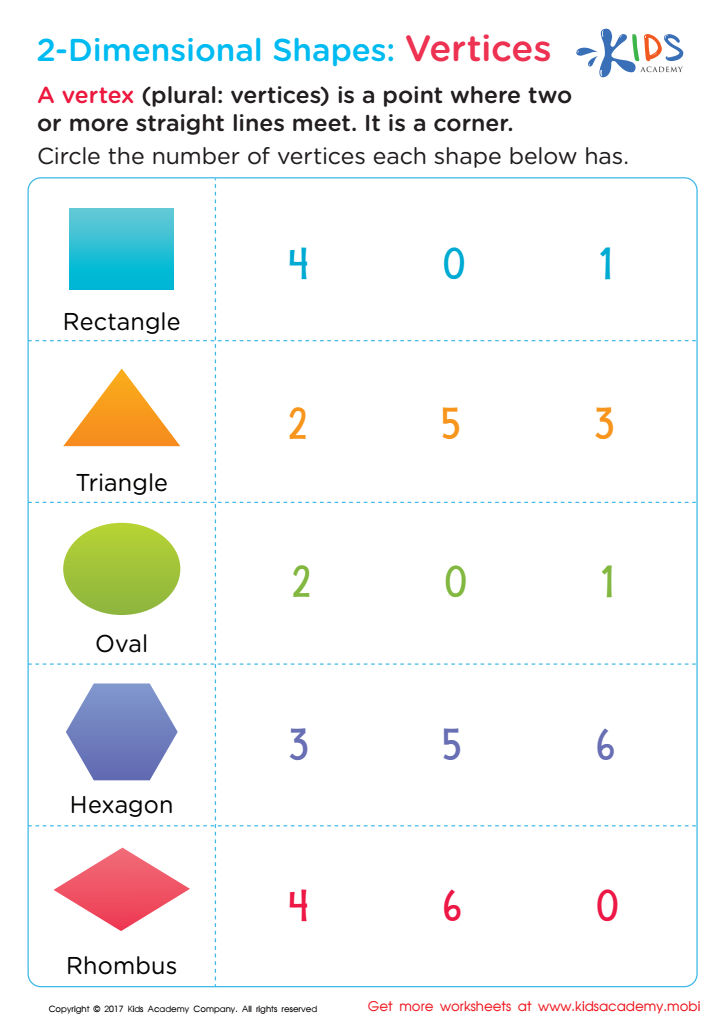
Two–Dimensional Shapes: Vertices Printable











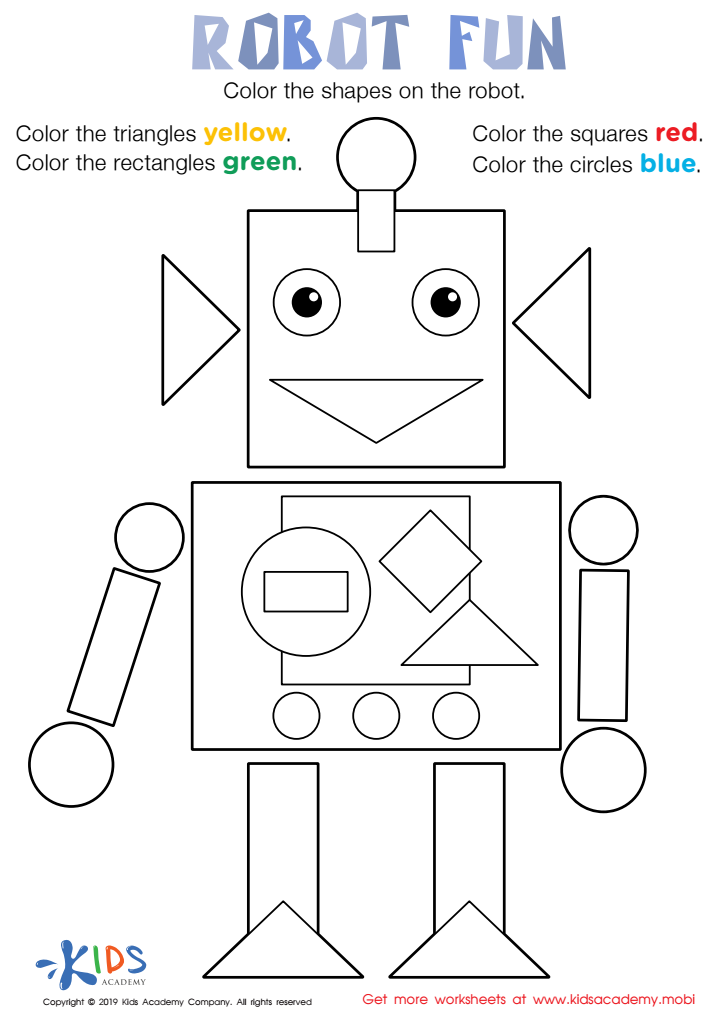
Robot Fun Worksheet
 Assign to My Students
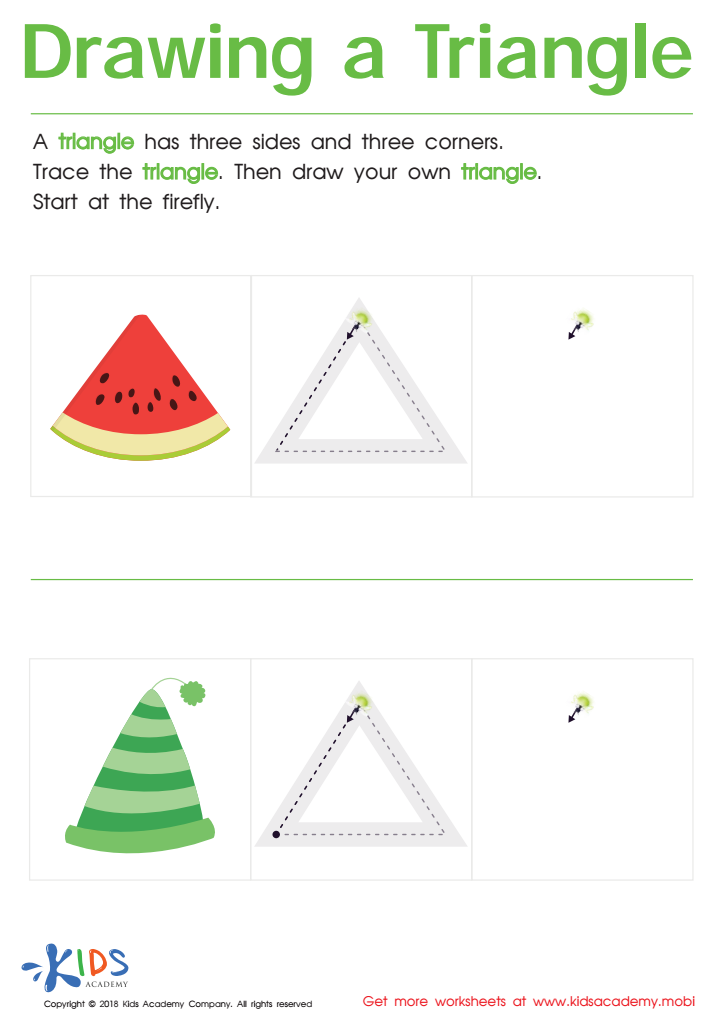
Drawing a Triangle Worksheet








Identifying shapes is a foundational skill in early childhood education for children aged 3-8. Understanding shapes is crucial because it forms the basis of geometry, a branch of mathematics that is essential for everyday problem-solving and spatial awareness. When parents and teachers prioritize shape recognition, they help children develop critical thinking skills, a necessary component of cognitive development.
Recognizing shapes allows children to categorize and analyze their surroundings, fostering observational skills that enhance their learning experiences. For instance, shapes are prevalent in books, art, and the environment, providing opportunities for children to interact with and understand their world better. Moreover, shape identification supports literacy development, as many words, sounds, and stories are connected to geometric concepts.
Encouraging shape recognition also helps pave the way for advanced math concepts. By engaging with shapes through games, crafts, and activities, children develop a strong mathematical foundation that will benefit them in future learning. Lastly, engaging with shapes enhances fine motor skills through drawing and construction activities, making learning through play both enjoyable and educational. Emphasizing shape identification in early years sets the stage for lifelong learning and critical thinking abilities, making it essential for parents and educators alike to prioritize this learning.








