Sorting skills Geometry Worksheets for Ages 3-8
5 filtered results
-
From - To
Discover the engaging world of sorting skills geometry worksheets designed for children ages 3-8 on Kids Academy. Our expertly crafted printable activities help young learners develop critical thinking and problem-solving abilities as they arrange shapes, colors, and sizes with fun and interactive exercises. Perfect for preschool through early elementary, these worksheets foster foundational math skills in a dynamic, enjoyable way that keeps kids eager to learn. Boost your child's confidence and competency in geometry while supporting their educational journey with our engaging sorting skills worksheets. Visit Kids Academy to explore and download today!
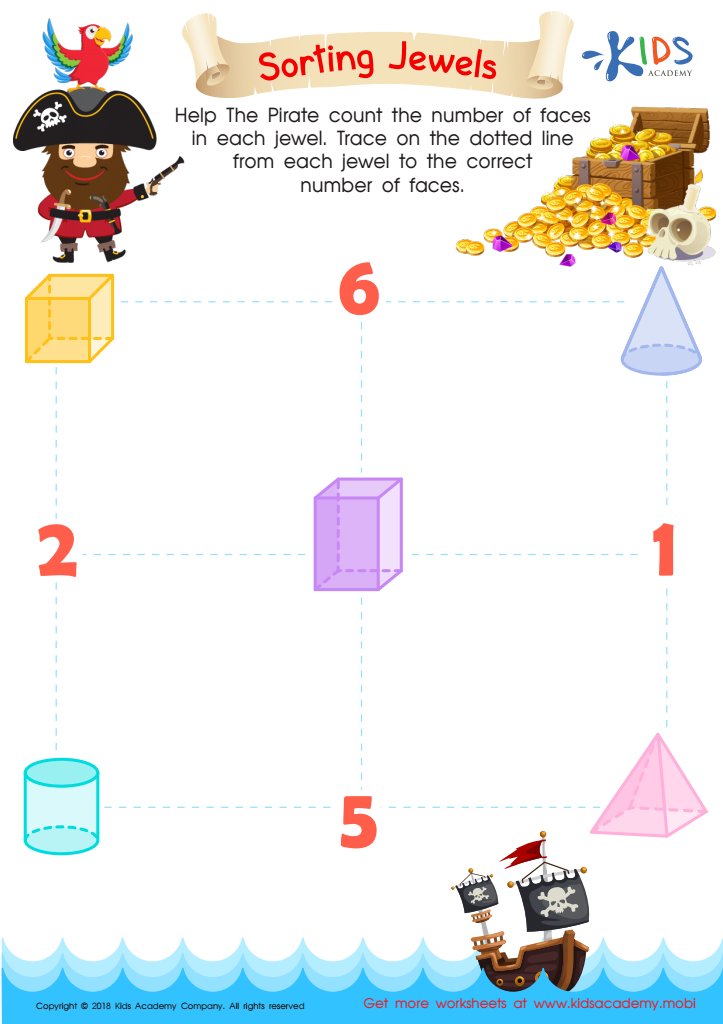
Sorting Jewels Worksheet
 Assign to My Students











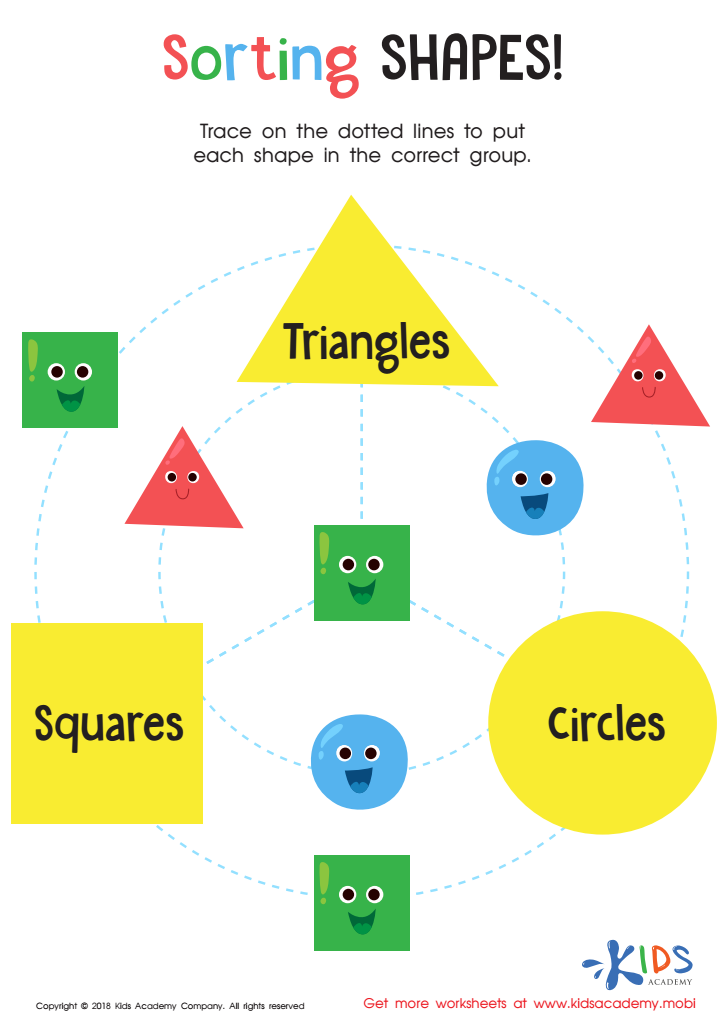
Sorting Shapes - Part 3 Worksheet
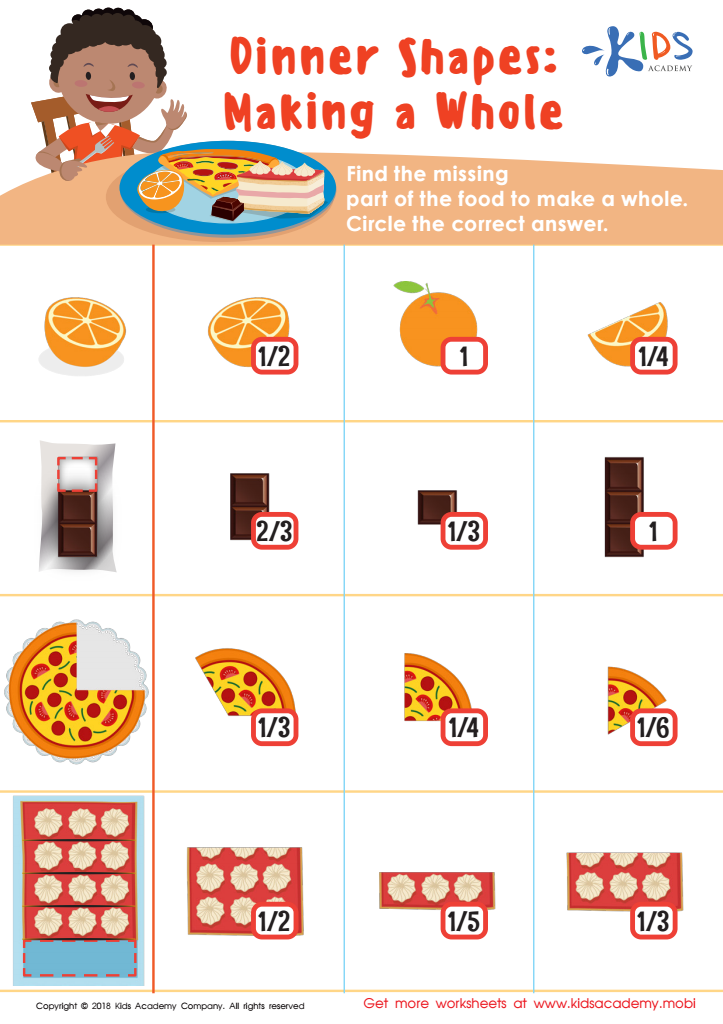
Dinner Shapes: Making a Whole Worksheet
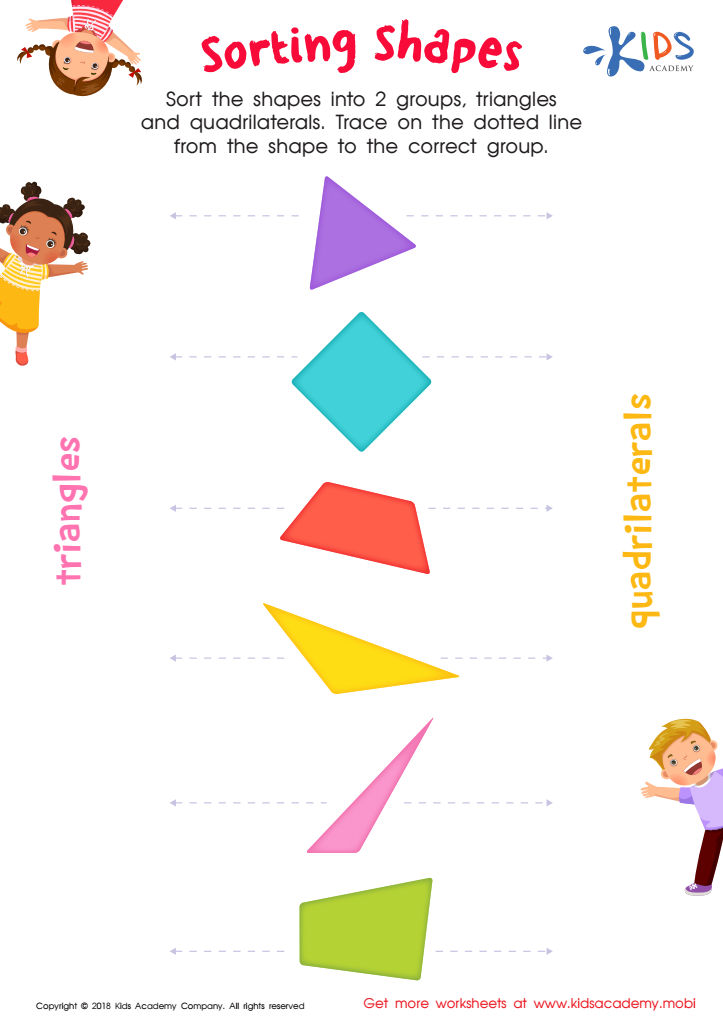
Sorting Shapes Worksheet
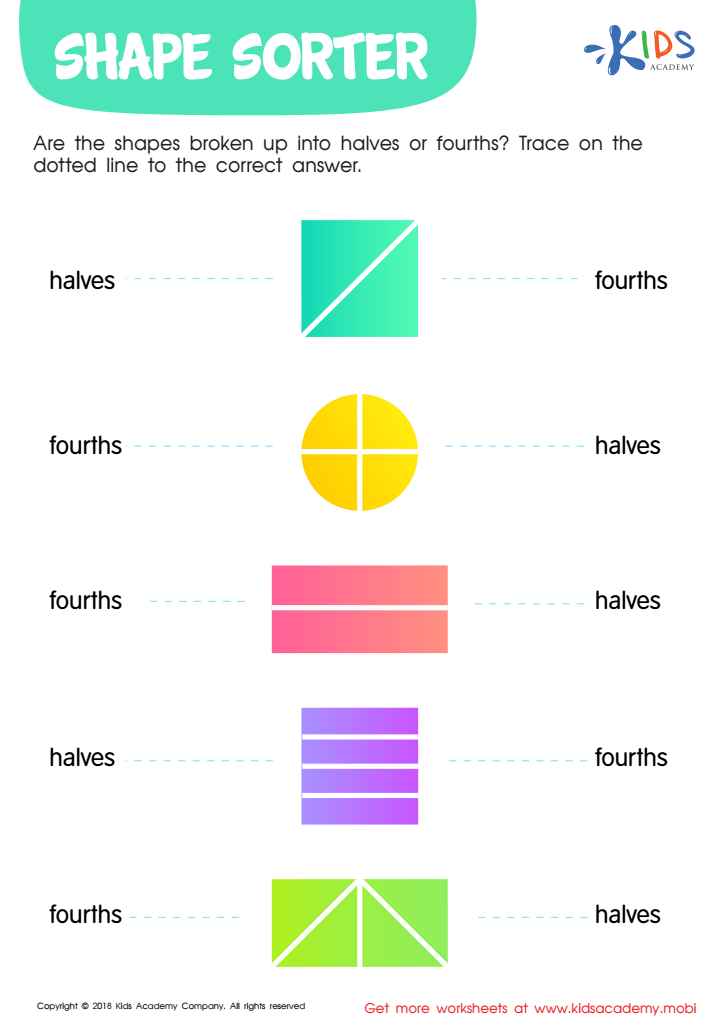
Shape Sorter Worksheet








Sorting skills and geometry are foundational aspects of a child's early education that parents and teachers should prioritize for several important reasons. For children aged 3-8, engaging in these activities promotes cognitive development, problem-solving abilities, and logical thinking skills. When children sort objects by size, color, or shape, they develop critical attributes like attention to detail and pattern recognition, which are essential for mathematical reasoning.
Sorting helps young children understand the world around them by categorizing and organizing information, making abstract concepts more concrete. This skill scaffolds future learning, as it relates directly to subjects such as mathematics (classifying numbers, patterns) and science (grouping elements, understanding hierarchies in biology).
Introducing basic geometry concepts provides young learners with the language and understanding of spatial relationships. Recognizing shapes and their properties improves children's ability to navigate their environment, understand geometric terms, and describe objects in space. These skills are directly applicable to everyday tasks and prepare children for more complex mathematical concepts they will encounter in higher grades.
Encouraging these competencies through playful, hands-on activities also fosters curiosity and a love for learning. For example, using building blocks, sorting games, and interactive apps can make learning these concepts enjoyable and engaging, laying a solid foundation for future academic success.








