Spatial understanding Geometry Worksheets for Ages 3-8
3 filtered results
-
From - To
Unlock the world of shapes and spatial understanding with our engaging Geometry Worksheets for Ages 3-8. Designed to spark curiosity and develop essential math skills, these printable resources help young learners explore concepts like shapes, patterns, and spatial relations. Our worksheets feature fun, age-appropriate activities that encourage hands-on learning, critical thinking, and problem-solving. From identifying shapes to understanding how they fit together, children will build a strong foundation in geometry while enjoying interactive exercises. Perfect for classroom use or at-home learning, these worksheets make mastering spatial understanding enjoyable and effective. Help your child develop essential math confidence today!
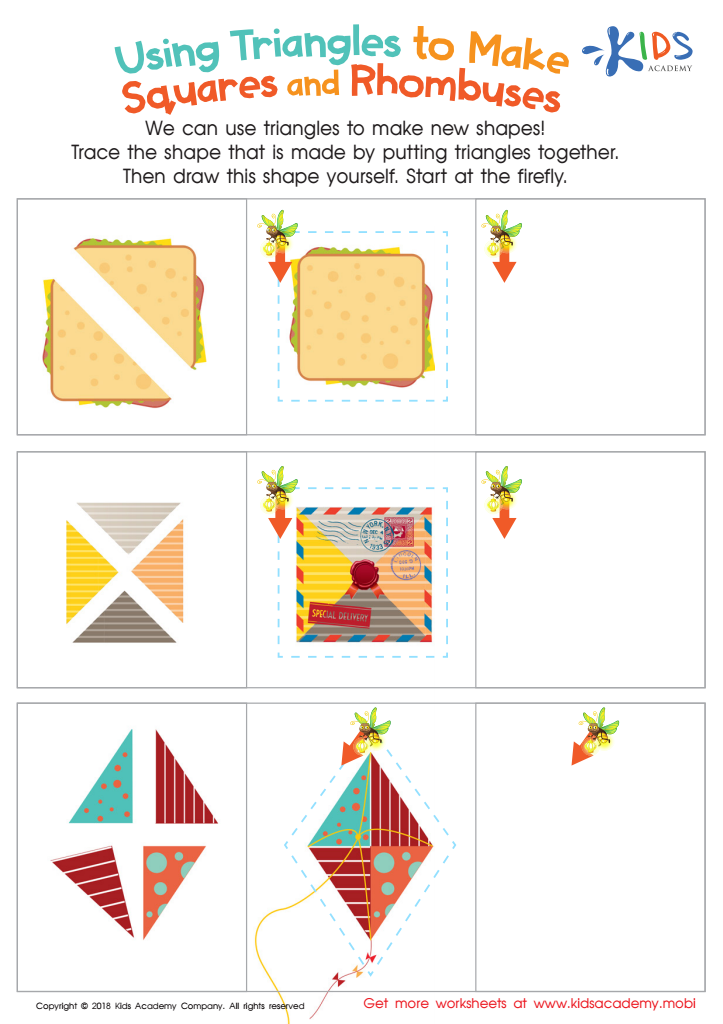
Using Triangles to Make Squares and Rhombuses Worksheet
 Assign to My Students











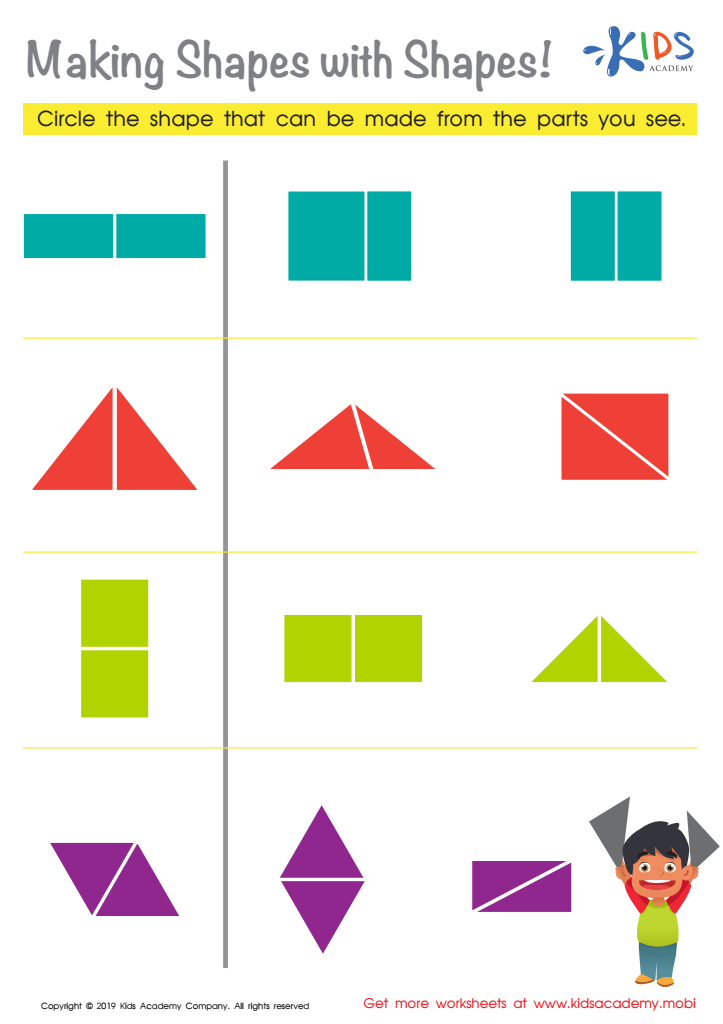
Making Shapes with Shapes Worksheet
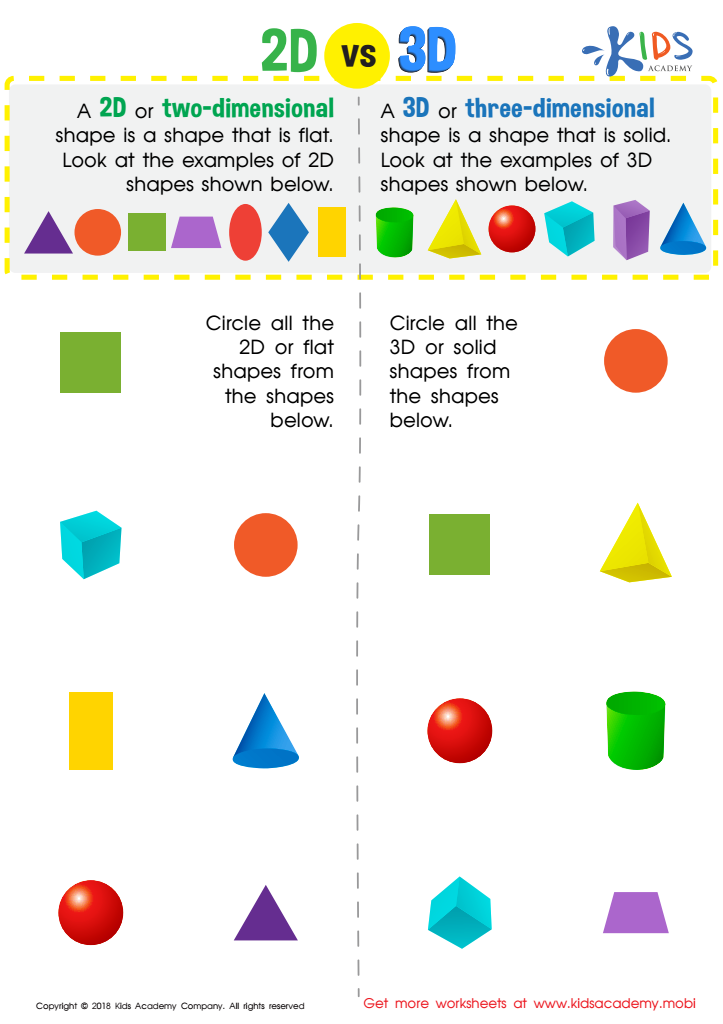
2D vs 3D Shapes Worksheet








Spatial understanding in geometry is a fundamental skill that forms the backbone of many critical cognitive abilities in young children aged 3-8. Parents and teachers should prioritize this area of learning because it significantly influences a child's problem-solving capabilities, creativity, and logical thinking. By fostering spatial awareness, children develop the ability to perceive and manipulate spaces and objects, helping them navigate their environment confidently.
Engaging with geometry at this early stage enhances a child's understanding of shapes, sizes, and spatial relationships. These skills are crucial for later mathematical concepts, such as measurement and geometry, which are foundational for advanced learning in STEM fields. Additionally, spatial skills have been linked to success in various disciplines, including art, architecture, and even reading comprehension.
Moreover, activities that promote spatial skills, such as puzzle-solving, building with blocks, or following directions, support social development and collaborative play. They encourage teamwork, communication, and negotiating skills, which are vital for children's social interactions.
In summary, understanding spatial geometry equips children with essential skills for lifelong learning, enriching their educational journey while fostering confidence and engagement in learning environments. Therefore, investing in spatial understanding is investing in a child's future success.








