Understanding geometry Geometry Worksheets for Ages 3-8
4 filtered results
-
From - To
Discover a fun and engaging way to introduce your child to the world of geometry with our Understanding Geometry Worksheets, designed specifically for ages 3-8. These worksheets provide interactive activities that help young learners grasp essential geometric concepts, such as shapes, spatial awareness, and measurement. Each activity is colorful and age-appropriate, encouraging children to explore and understand geometry through play. With a variety of exercises, children will enhance their critical thinking and problem-solving skills while building a strong foundation in math. Explore our collection today and watch your child's love for geometry grow! Perfect for teachers and parents alike.
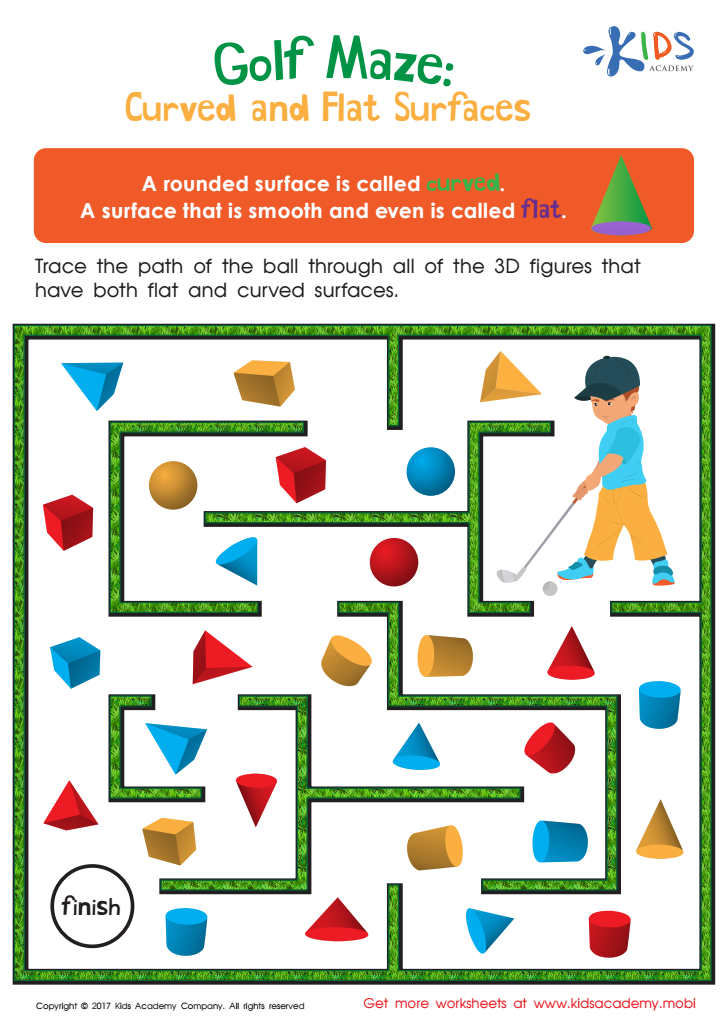
Golf Maze: Curved and Flat Surfaces Worksheet
 Assign to My Students











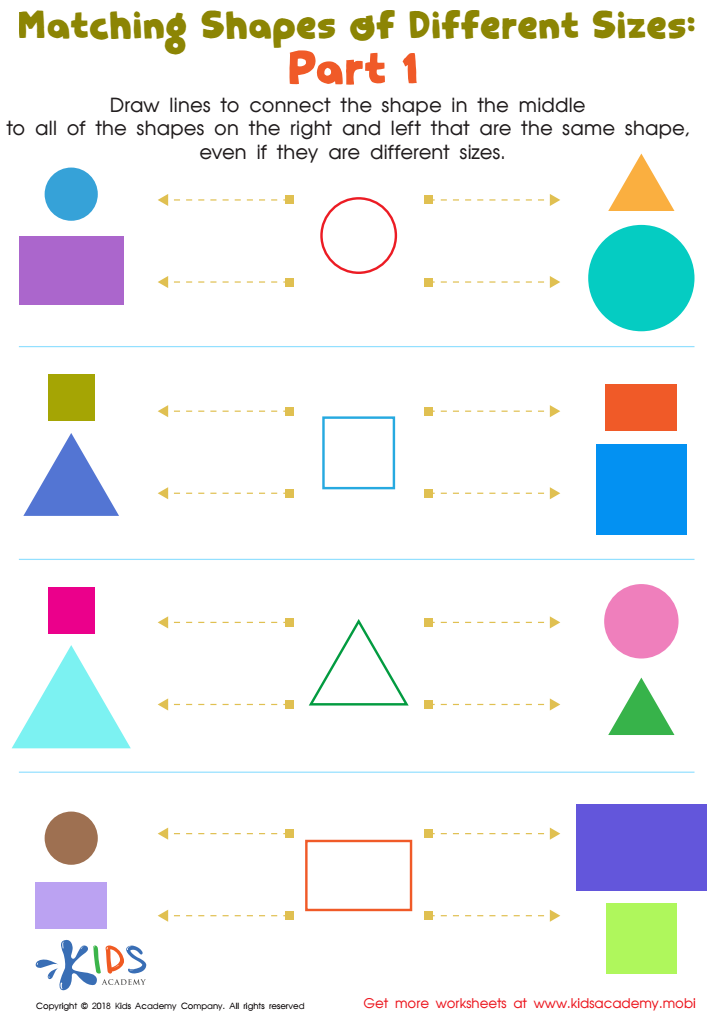
Geometry: part 1 Worksheet
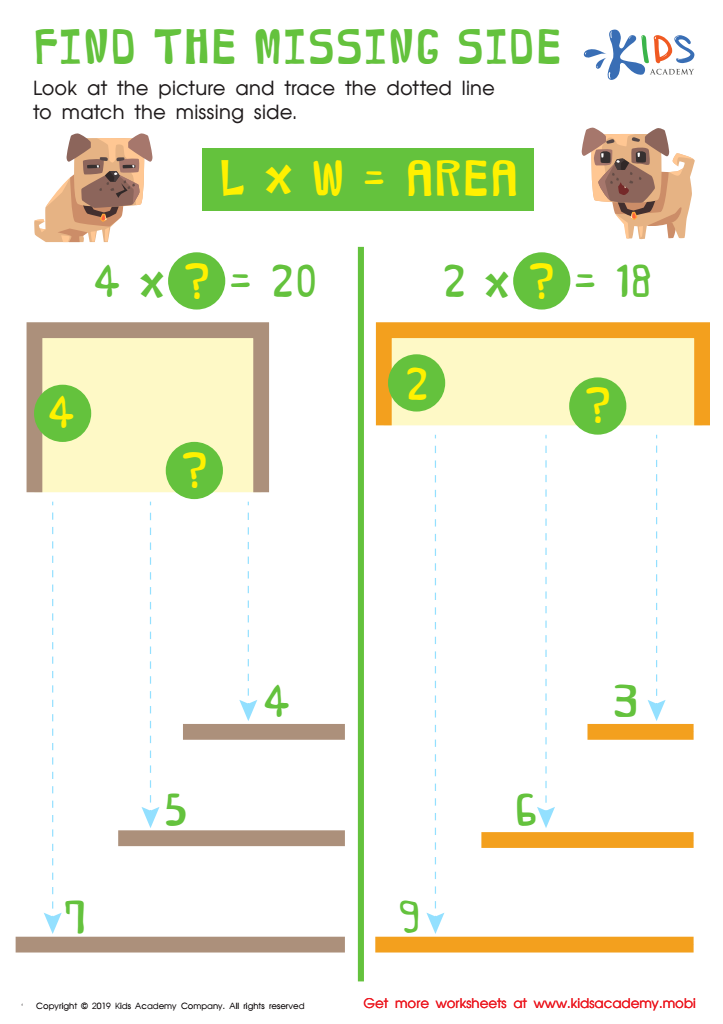
Find the Missing Side Worksheet
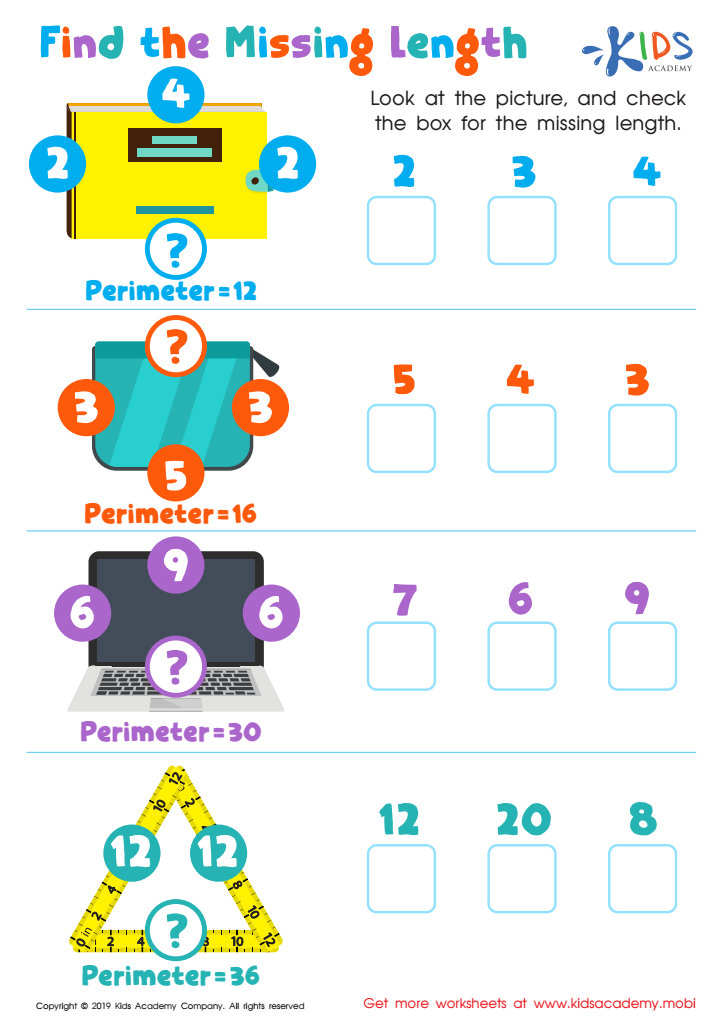
Find the Missing Length Worksheet








Understanding geometry is crucial for children aged 3-8 as it lays the foundation for their mathematical reasoning and cognitive development. During these formative years, children are naturally curious and begin to explore their environment, making this an ideal time to engage them with geometric concepts.
Parents and teachers should value geometric understanding because it enhances spatial awareness, critical thinking, and problem-solving skills. Children learn to identify shapes, recognize patterns, and understand spatial relationships, which are essential skills that apply to everyday life. For example, playing with blocks helps children grasp concepts of symmetry, balance, and measurement while incorporating tactile learning.
Moreover, geometry is intertwined with various subjects like art and science, enabling interdisciplinary learning. When children explore geometry through play and hands-on activities, they become active participants in their learning journey rather than passive recipients of information. Additionally, a foundational understanding of geometry sets the stage for success in higher mathematical concepts, fostering confidence and a love for math.
Incorporating geometry in early education nurtures not only academic abilities but also supports social skills and creativity. Therefore, it is critical for parents and teachers to prioritize geometry in young children's curricula to promote holistic development.








