Basic addition practice Numbers Worksheets for Ages 3-8
6 filtered results
-
From - To
Boost your child's math skills with our Basic Addition Practice Worksheets, designed specifically for ages 3-8! These engaging and interactive worksheets help young learners master the fundamentals of addition through fun exercises. With activities tailored to different skill levels, children will enjoy countless opportunities to practice counting and adding numbers within a friendly, nurturing environment. Our worksheets feature colorful illustrations and clear instructions, making learning both effective and enjoyable. Whether at home or in the classroom, these resources are perfect for enhancing your child's understanding of basic math concepts. Start their journey to math mastery today with our exciting addition worksheets!
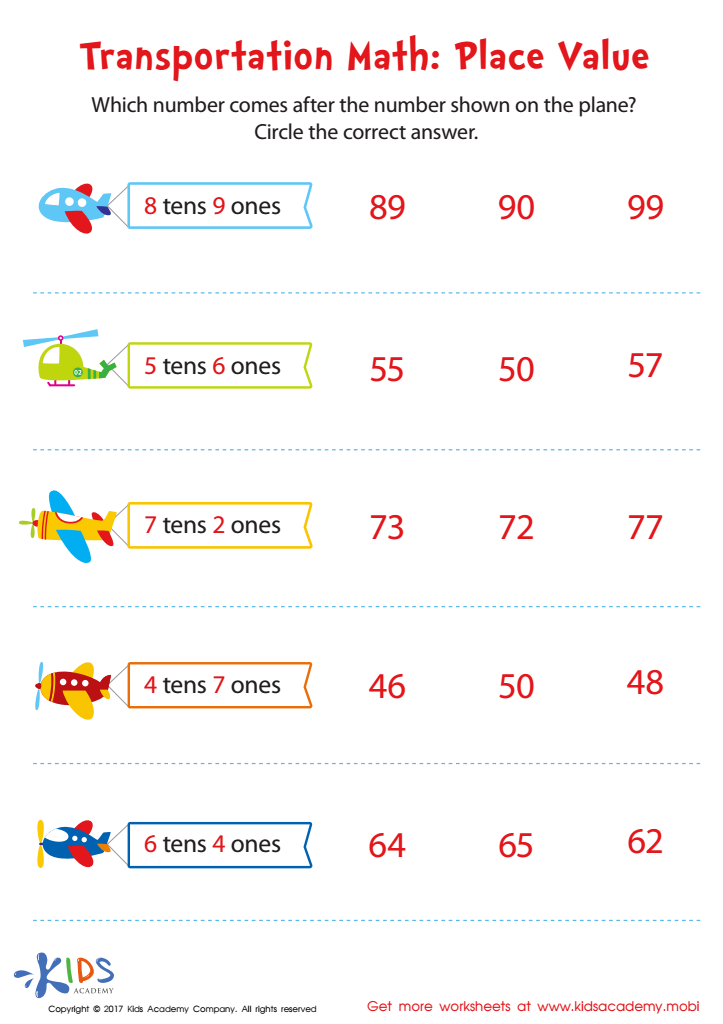
Transportation Math Printable
 Assign to My Students
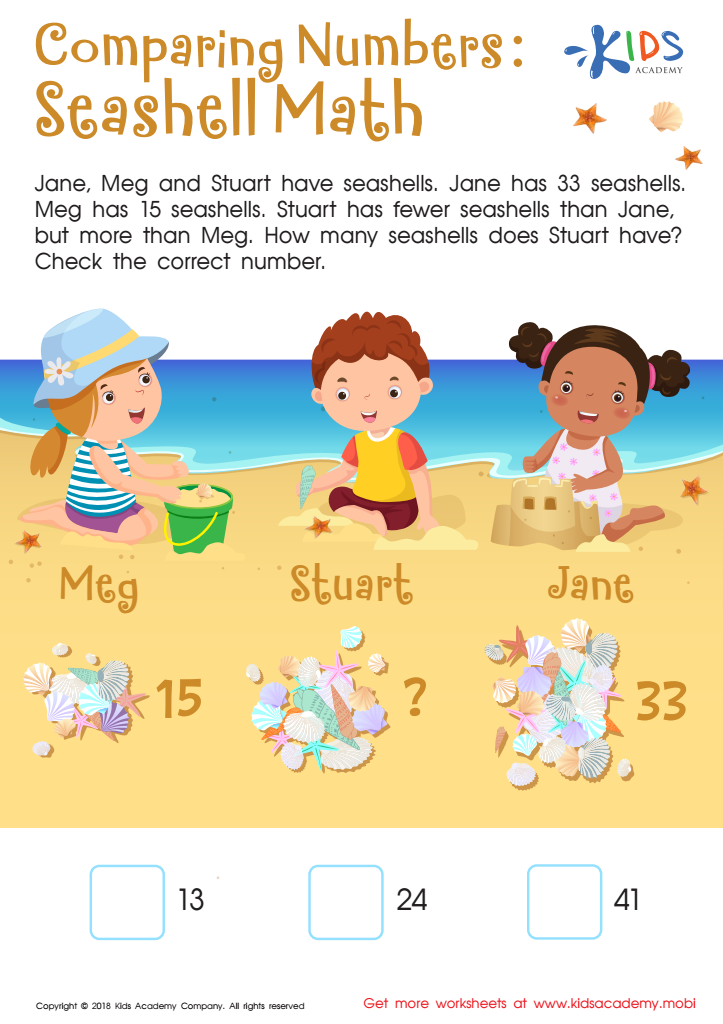
Seashell Collectors Worksheet
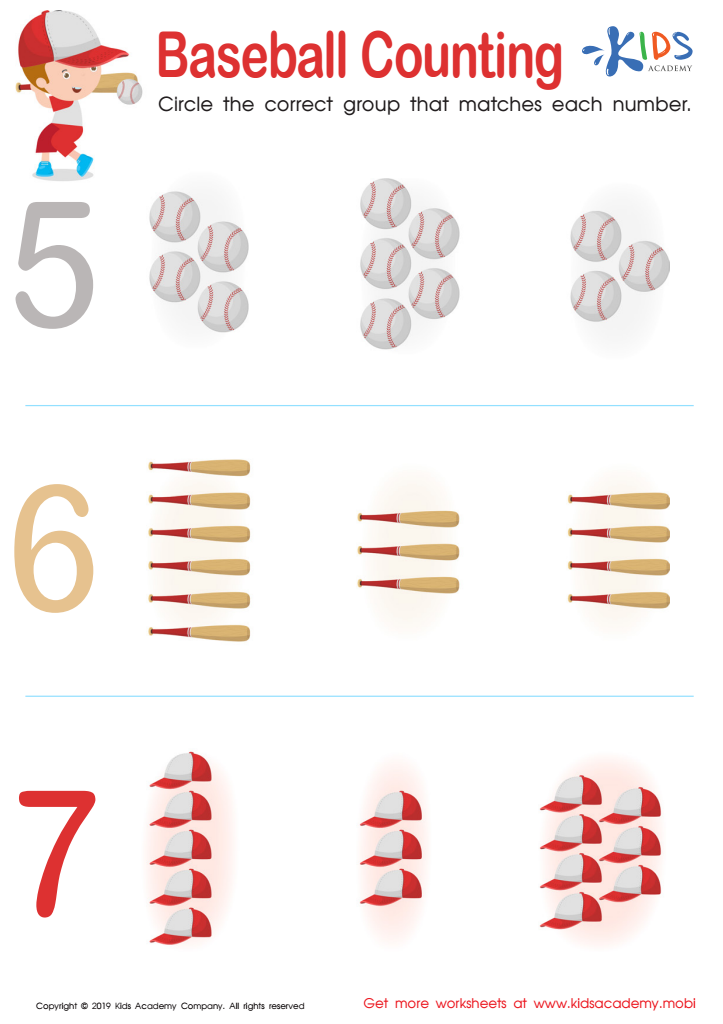
Baseball Counting Worksheet
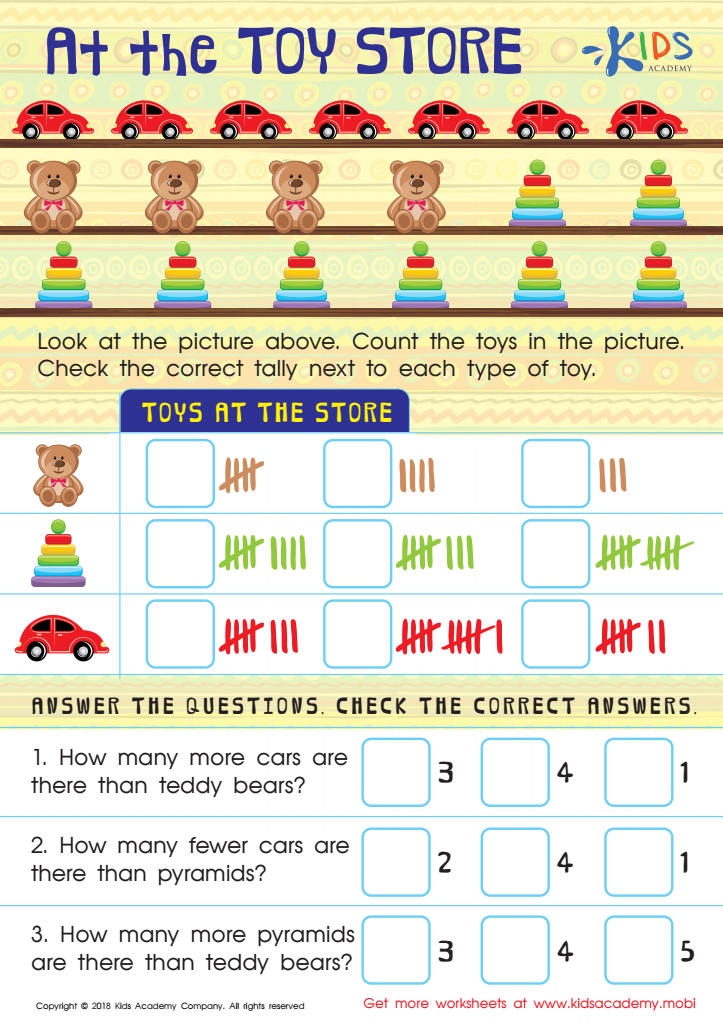
Tally Chart: At the Toy Store Worksheet
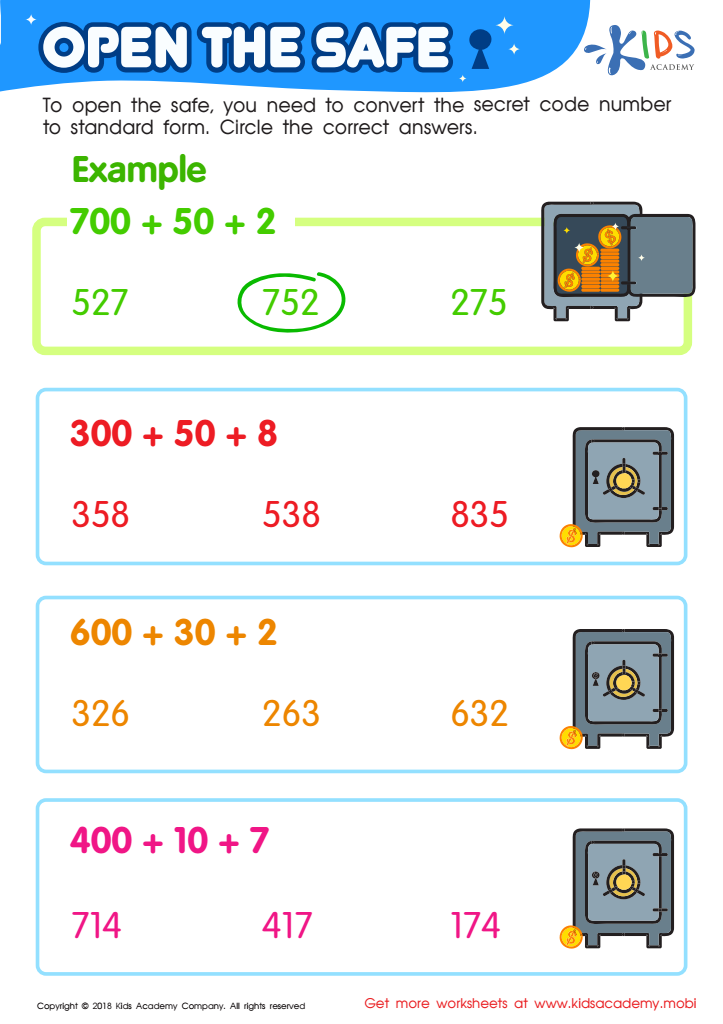
Open the Safe Worksheet
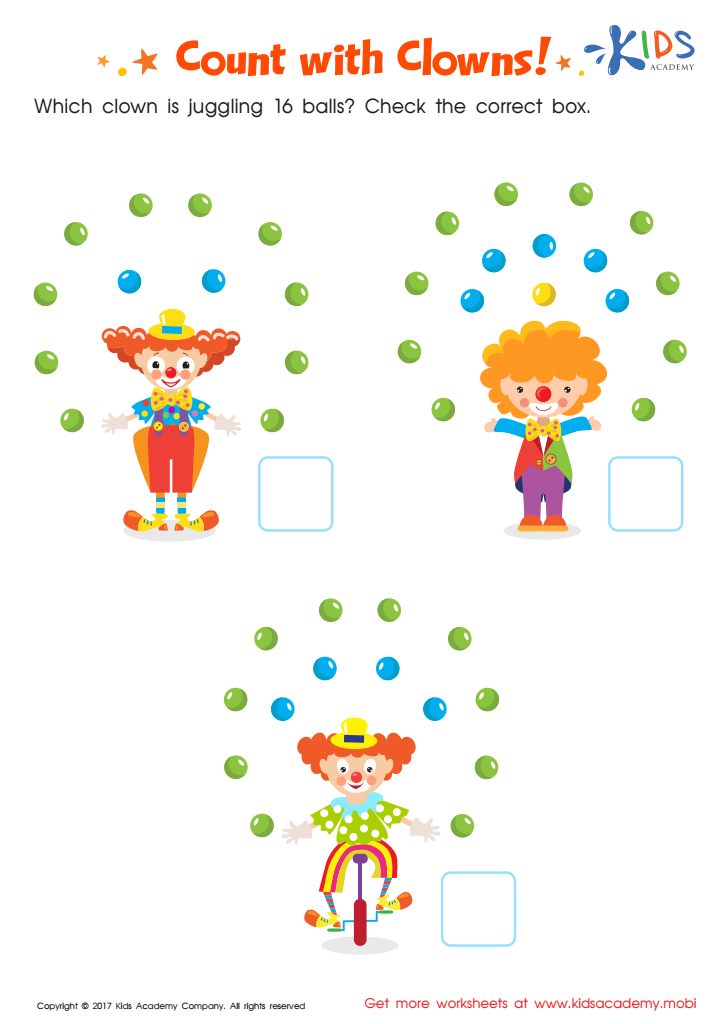
Count with Clowns Worksheet







Basic addition practice for children ages 3-8 is vital for several reasons. Firstly, early math skills form the foundation for later academic success. Mastery of addition lays the groundwork for more complex math concepts, such as subtraction, multiplication, and division, ensuring a smoother learning curve in school.
Engaging in addition helps develop critical cognitive skills. Children learn to recognize patterns, make connections, and solve problems, which boost their overall intellectual growth. Furthermore, practicing basic addition enhances their confidence in math, making them more eager to tackle challenging problems in the future.
In addition to academic benefits, basic addition also promotes fine motor skills when children work with manipulatives such as blocks or counters. It's a fun, interactive way to learn, fostering a positive attitude toward learning. Playing addition games as a family can strengthen parent-child relationships, making education a shared experience.
Finally, incorporating addition practice into daily routines allows for real-life applications, helping children understand the relevance of math in everyday situations, like counting items during grocery shopping. Hence, parents and teachers should prioritize basic addition, as it supports holistic development, cultivates a love for learning, and sets the stage for lifelong academic achievement.








