Critical thinking enhancement Numbers Worksheets for Ages 3-8
3 filtered results
-
From - To
Transform young minds with our Critical Thinking Enhancement Numbers Worksheets for Ages 3-8! These engaging activities are designed to promote logical reasoning, analytical skills, and problem-solving abilities in early learners as they explore numbers and basic math concepts. Each worksheet combines fun themes with thoughtful challenges, encouraging children to think critically, recognize patterns, and make connections. Perfect for home or classroom use, these resources provide an enjoyable way to boost confidence and academic growth. Discover the excitement of learning with numbers and help build a strong foundation for future success with our expertly crafted worksheets.

Around the Globe Worksheet
 Assign to My Students
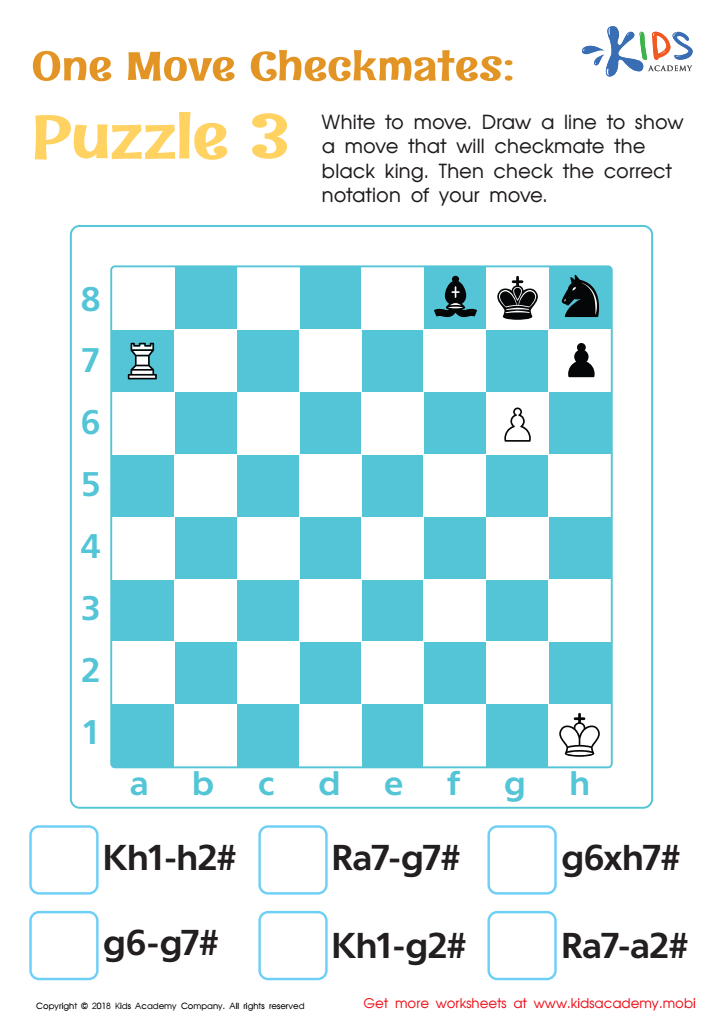
One Move Checkmates: Puzzle 3 Worksheet
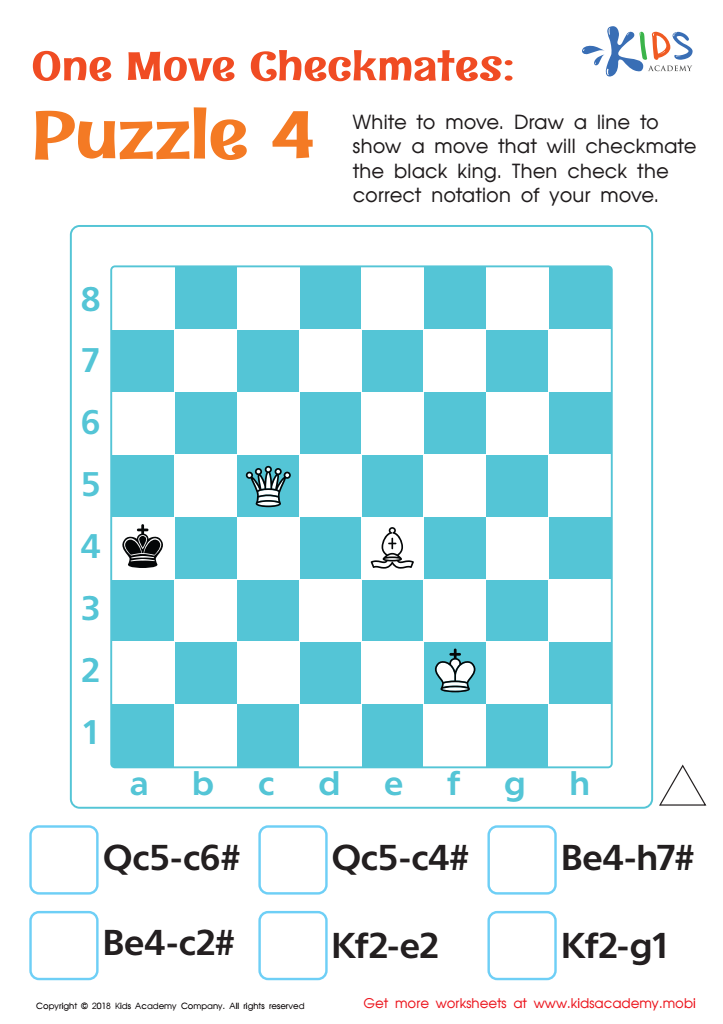
One Move Checkmates: Puzzle 4 Worksheet








Encouraging critical thinking in children aged 3-8 has profound benefits for both their cognitive development and future success. Critical thinking is the ability to analyze, evaluate, and make decisions based on information presented, rather than simply absorbing facts passively. It helps children become not just good learners, but independent thinkers who are equipped to solve problems inventively and adaptably.
During the early years, children's brains are particularly malleable, making this an optimal time to introduce critical thinking activities. These children learn to approach problems methodically and consider multiple solutions, positively affecting their academic performance across subjects. Critical thinking bolsters foundational numeracy skills as well. Engaging with numbers through puzzles, games, and practical questions helps children grasp core mathematical concepts such as pattern recognition, logical reasoning, and spatial awareness.
For parents and teachers, fostering critical thinking offers the added benefit of instilling confidence and self-reliance in their children or students. Children who develop these skills at an early age are often better at expressing their ideas and understanding other perspectives, enhancing their social development.
In summary, investing in critical thinking enhancement for young children equips them with essential life skills, promotes academic success, and supports them in becoming thoughtful, articulate, and resilient individuals.








