
Real-life application Numbers Worksheets for Ages 3-8
3 filtered results
Difficulty Level
Grade
Age
-
From - To
Subject
Activity
Standards
Explore our engaging "Real-life Application Numbers Worksheets" designed for children ages 3-8. These interactive worksheets help young learners connect numerical concepts to everyday scenarios, fostering practical problem-solving skills. From counting fruits in a market to measuring ingredients for a recipe, each activity encourages children to apply math in real-world contexts. Our resources are carefully crafted to align with early educational standards, ensuring a balance of fun and learning. With colorful visuals and age-appropriate challenges, these worksheets make math relatable and enjoyable, setting the foundation for a lifetime of numeracy skills. Begin your child’s math journey with our dynamic learning tools today!
Favorites
With answer key
Interactive
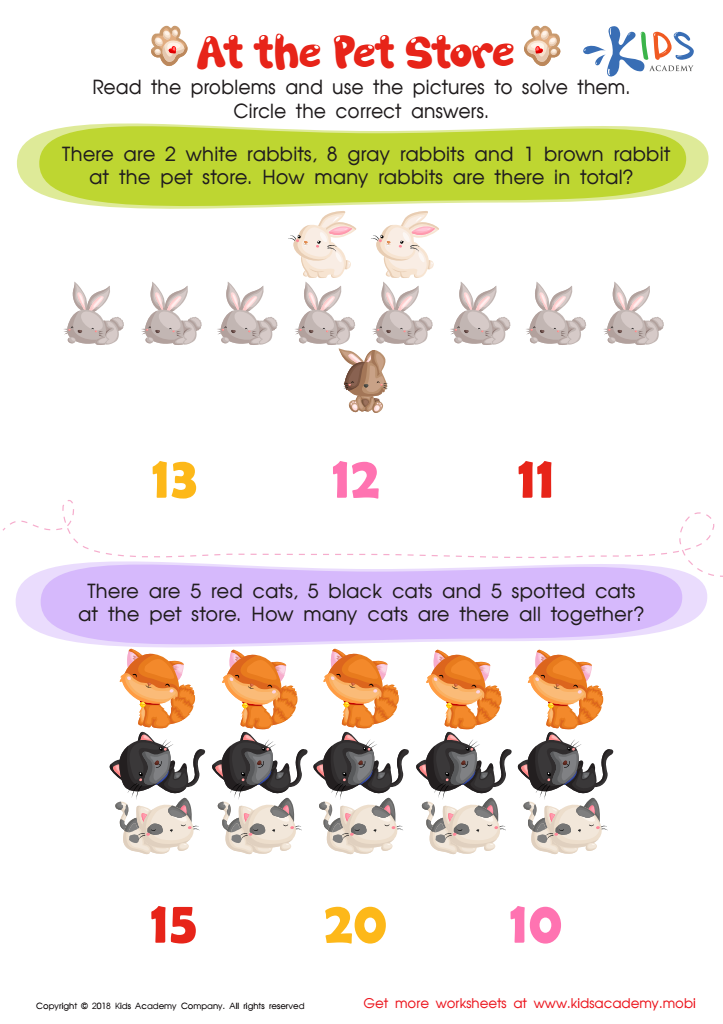
At the Pet Store Word Problems Worksheet
Kids love pet stores! This free, fun PDF worksheet engages little learners to solve word problems with counting and addition. With adorable animals to focus on, your child will practice arithmetic with three addends to find the sum! Help them gain success with word addition word problems.
 Assign to My Students
At the Pet Store Word Problems Worksheet
Worksheet
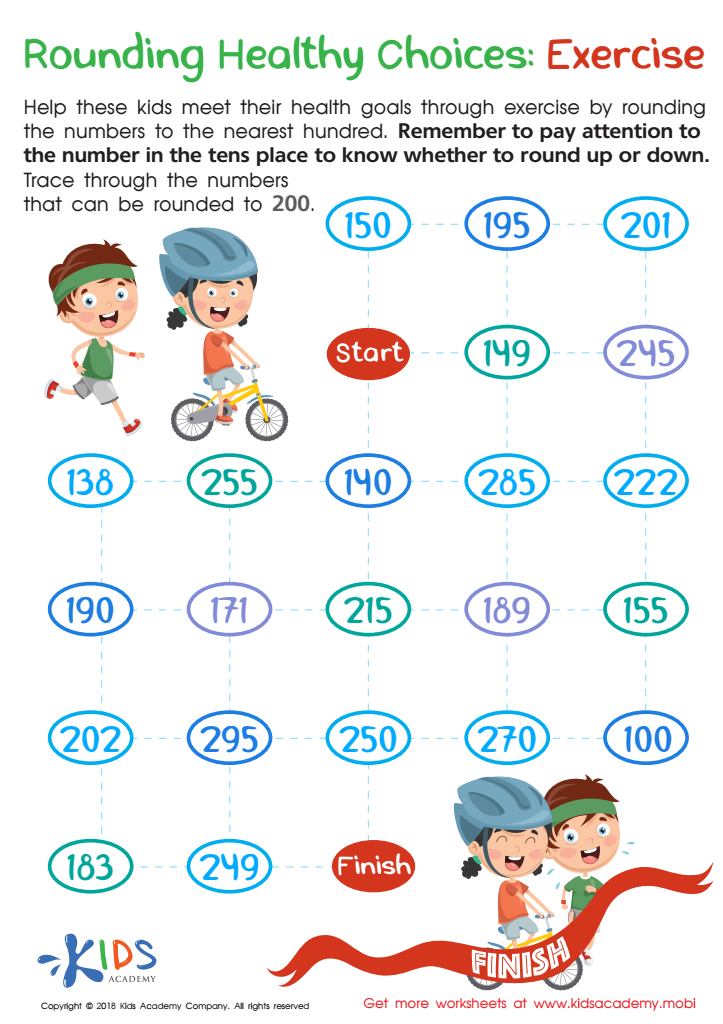
Rounding Healthy Choices Exercise Worksheet
Tired of boring math worksheets? Check out this fun rounding maze printout! Help the kids reach their goals by going from start to finish. To move through the maze, they must find numbers to round to 200. Teach them to pay close attention to the tens place to know whether to round up or down. Have fun and reach the finish line to complete the maze!
Rounding Healthy Choices Exercise Worksheet
Worksheet
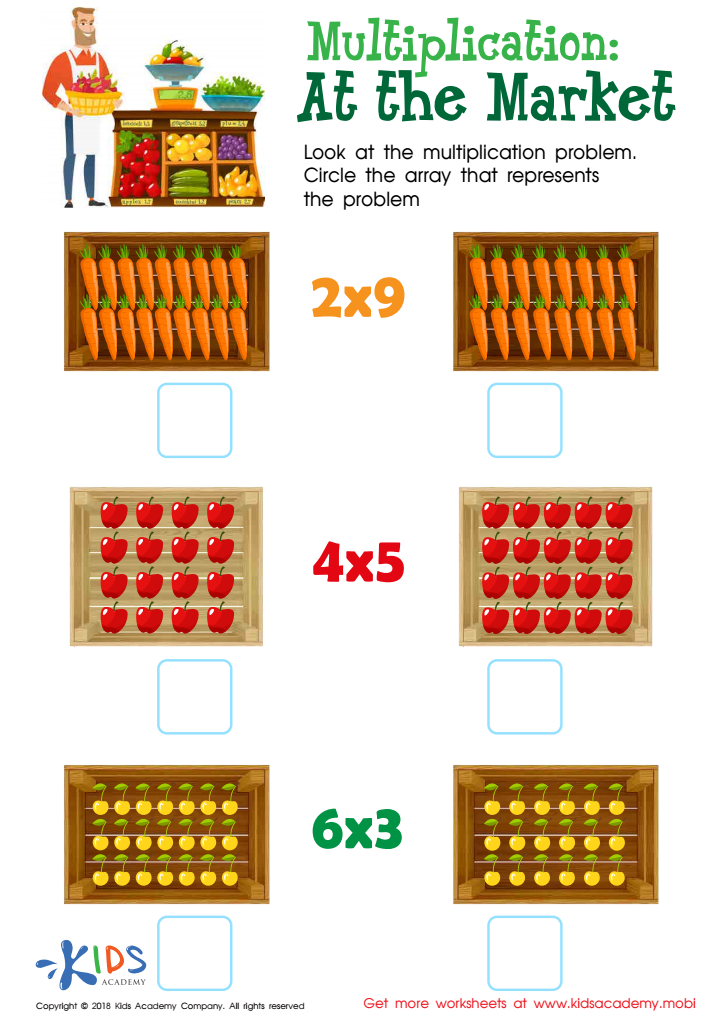
At the Market Worksheet
Head to At the Market! This attractive worksheet features arrays of delicious fruits and veggies that'll have 3rd graders working on their multiplication. Solve the problems, choose the correct answer, and learn while having fun!
At the Market Worksheet
Worksheet
Join Kids Academy for Free
Who is primarily going to use this learning content?








Parents and teachers should prioritize real-life application numbers for children aged 3-8 because early numeracy lays the foundation for lifelong learning. Integrating numbers with everyday contexts—like counting apples at the grocery store or measuring ingredients for a snack—makes math relatable and engaging. This practical approach enhances understanding and retention, as children often grasp concepts better when they can see their relevance in daily life.
Additionally, real-life applications cultivate critical thinking and problem-solving skills. When children encounter scenarios requiring them to apply numbers, such as planning playdates with friends or budgeting simple purchases with pretend money, they learn to analyze and make decisions. This hands-on experience not only strengthens their mathematical abilities but also fosters confidence.
Moreover, early exposure to numbers in context promotes positive attitudes toward math. By making math fun and applicable, we can help reduce anxiety associated with the subject later in life, ensuring students approach math with curiosity rather than fear.
In summary, focusing on real-life applications of numbers for young learners nurtures essential cognitive skills, builds confidence, and prepares children for future mathematical challenges. It’s a critical step toward fostering a generation of numerically literate and enthusiastic learners.








