
Shape identification Numbers Worksheets for Ages 3-8
3 filtered results
Difficulty Level
Grade
Age
-
From - To
Subject
Activity
Standards
Welcome to our engaging "Shape Identification Numbers Worksheets for Ages 3-8!" Designed to enhance your child's mathematical and visual-spatial skills, these printable worksheets combine fun with learning. Kids will explore various shapes while developing their number recognition abilities through interactive activities and colorful illustrations. Our worksheets cater to different learning levels, ensuring that every child enjoys the process of discovering shapes in their environment. These exercises not only promote critical thinking but also help to build a strong foundation for future math concepts. Make learning shapes and numbers a delightful experience for your young learners with our expertly crafted resources!
Favorites
With answer key
Interactive
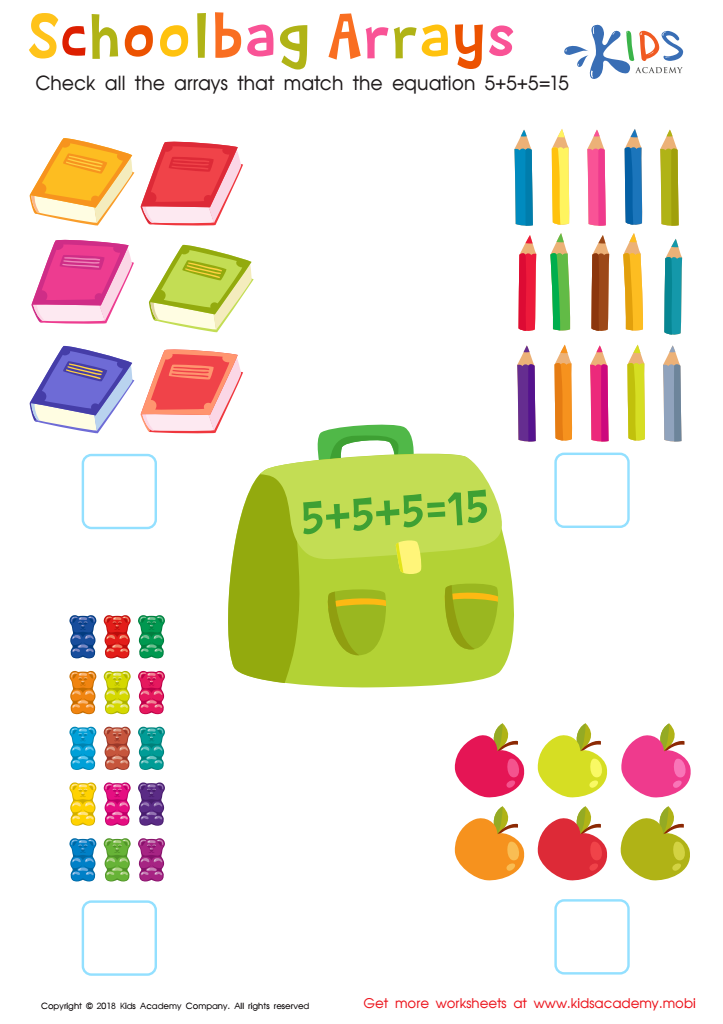
Schoolbag Arrays Worksheet
Help your child spot the correct arrays in this worksheet: having them count the items in each and check the boxes for the ones with 15 objects. Ask them to differentiate between rows and columns and explain which ones match the equation 5+5+5=15.
Schoolbag Arrays Worksheet
Worksheet
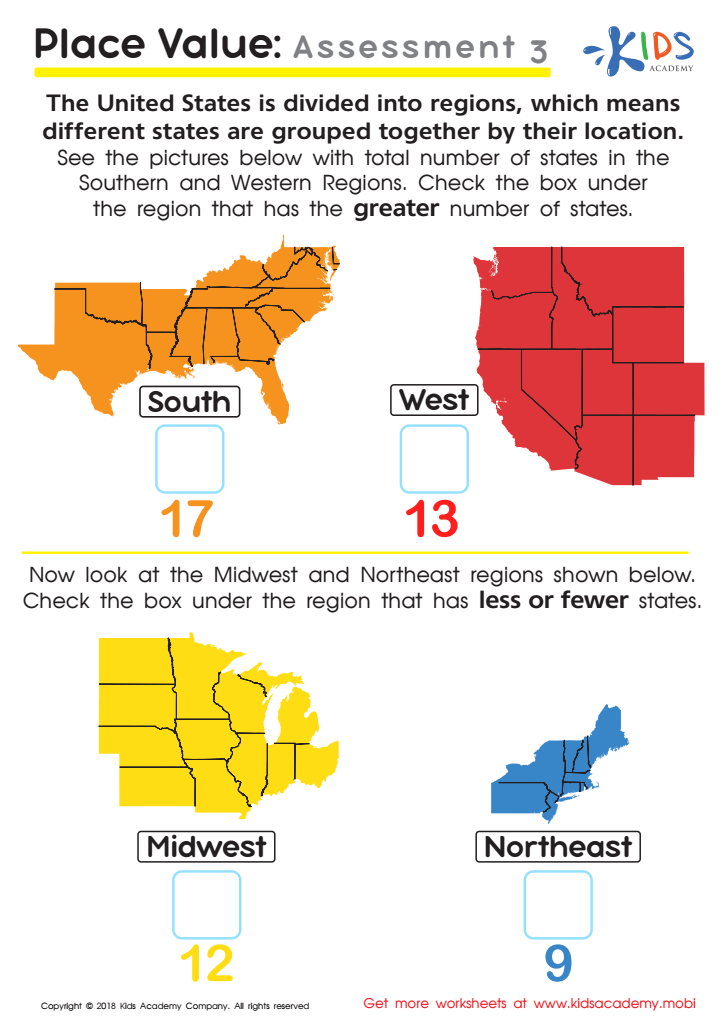
Place Value: Assessment 3 Worksheet
Test your child's math skills without them realizing it! This fun worksheet looks at the states and regions of the U.S. and your child can compare numbers greater or lesser than the other. It's the perfect way to assess your child's number sense without them knowing.
Place Value: Assessment 3 Worksheet
Worksheet
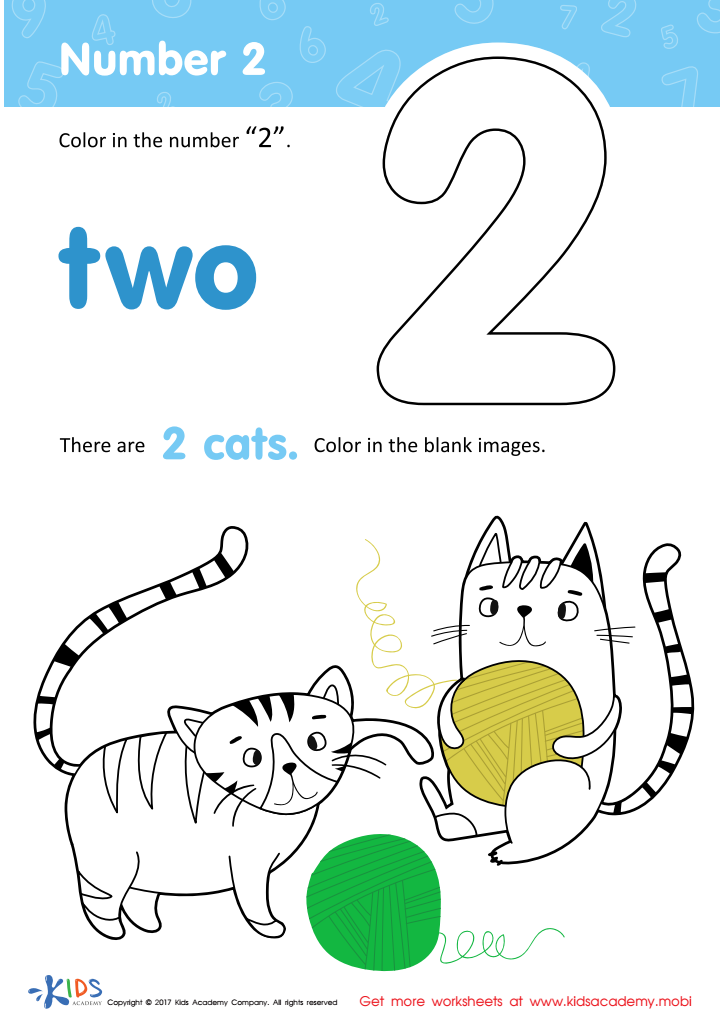
Number 2 Printable
Help your child learn to recognize the number two with these cats and their yarn balls. Print this coloring page – it's great for counting and coloring fun! Your child will develop basic numeracy skills as they visually see numbers in action.
Download (PDF)
 Assign to My Students
Assign to My Students
Number 2 Printable
Worksheet
Join Kids Academy for Free
Who is primarily going to use this learning content?








Shape identification in early childhood education is crucial for children aged 3-8, as it lays the foundation for various cognitive, social, and emotional skills. Understanding shapes helps young children recognize and categorize the world around them. It enhances their spatial awareness and problem-solving abilities, which are critical for subjects like math and science later in their education.
Additionally, shape identification fosters fine motor skills through activities such as drawing, cutting, or building with shapes. Engaging with shapes also promotes language development, as children learn to articulate and describe their observations and experiences. This can strengthen vocabulary and comprehension skills.
Encouraging shape recognition also supports creativity, as children learn to combine shapes to create new forms, fostering imaginative play. From a social perspective, group activities involving shape identification can enhance collaboration and teamwork as children work together to create patterns or complete puzzles.
Ultimately, parents and teachers should care about shape identification because it nurtures a well-rounded developmental approach, preparing young children for academic success and lifelong learning. Prioritizing shape recognition at a young age equips children with critical skills they will build upon throughout their educational journey.








