Understanding comparisons Numbers Worksheets for Ages 3-8
3 filtered results
-
From - To
Enhance your child's math skills with our "Understanding Comparisons" worksheets designed for ages 3-8! These engaging activities help young learners grasp important concepts like greater than, less than, equal to, and more. With colorful visuals and fun themes, children will easily compare numbers, fostering critical thinking and early math abilities. Each worksheet is tailored to suit various learning styles, ensuring every child can master comparisons in a playful way. Download these printable resources to provide your little ones with a fun, interactive learning experience that lays a strong foundation in mathematics. Start exploring the world of numbers today!
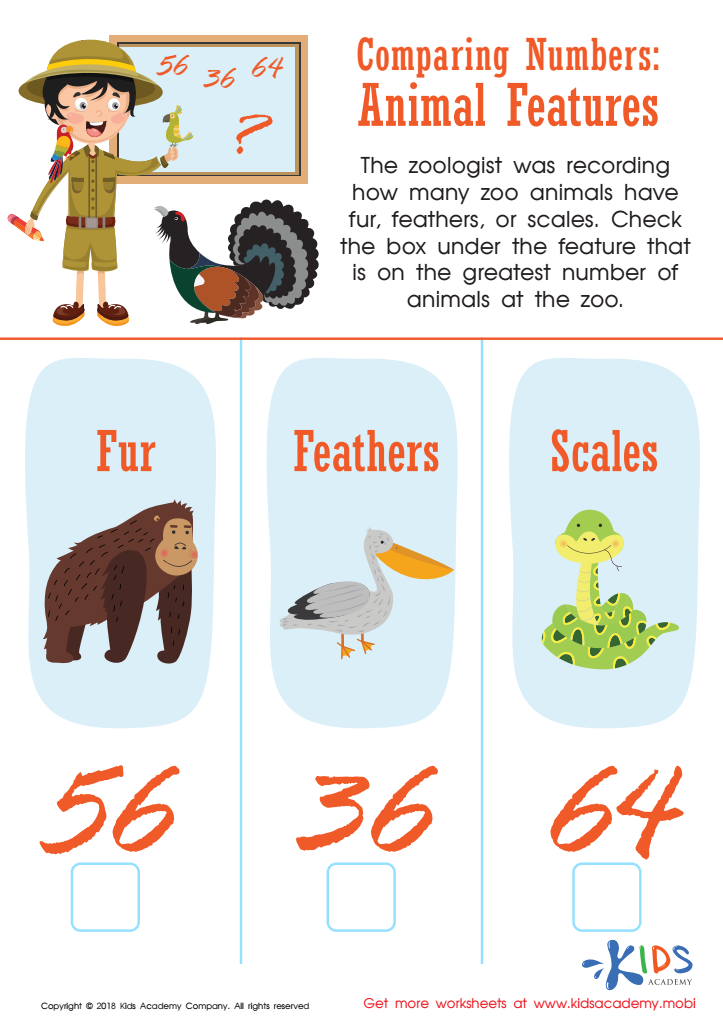
Animal Features Worksheet
 Assign to My Students
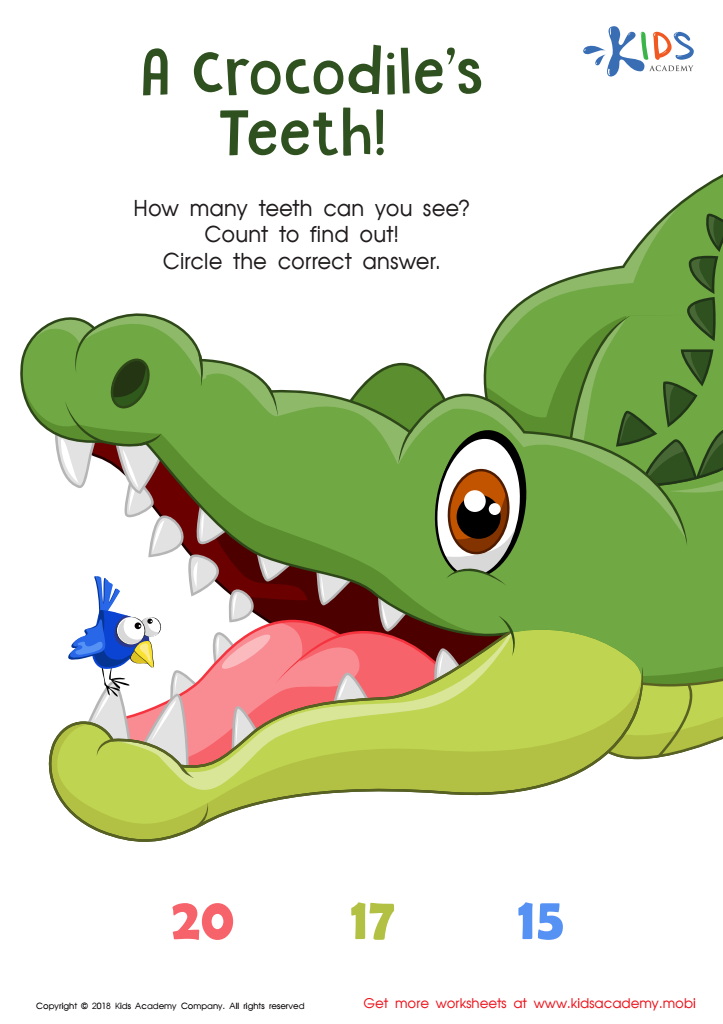
A Crocodile's Teeth Worksheet
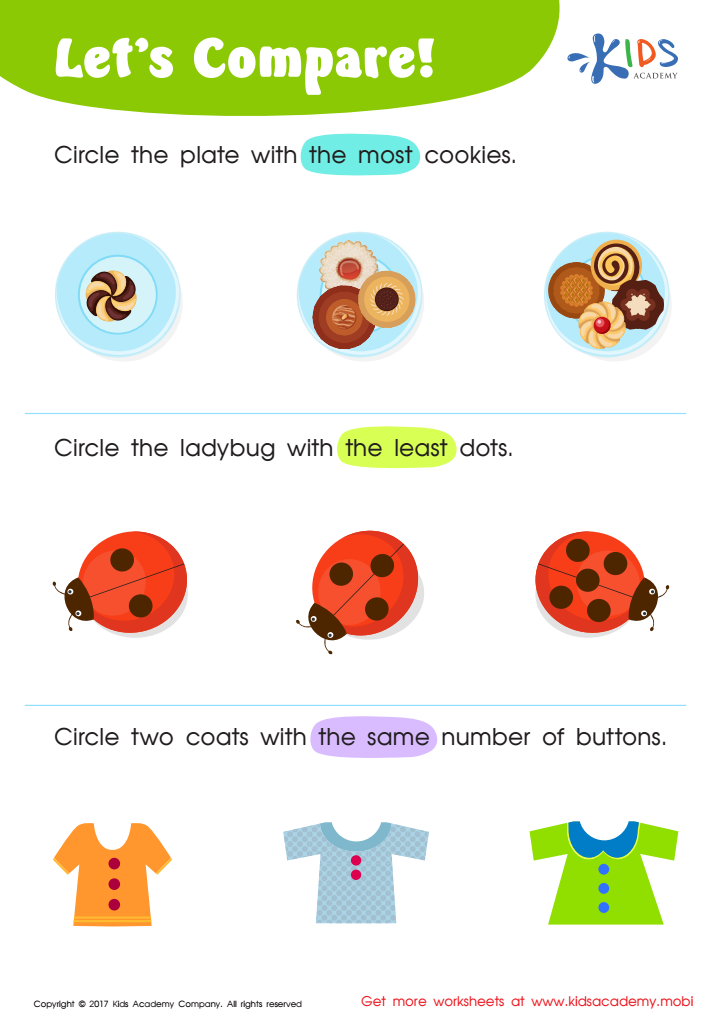
Matching: Classifying Toys by Size Worksheet




.jpg)
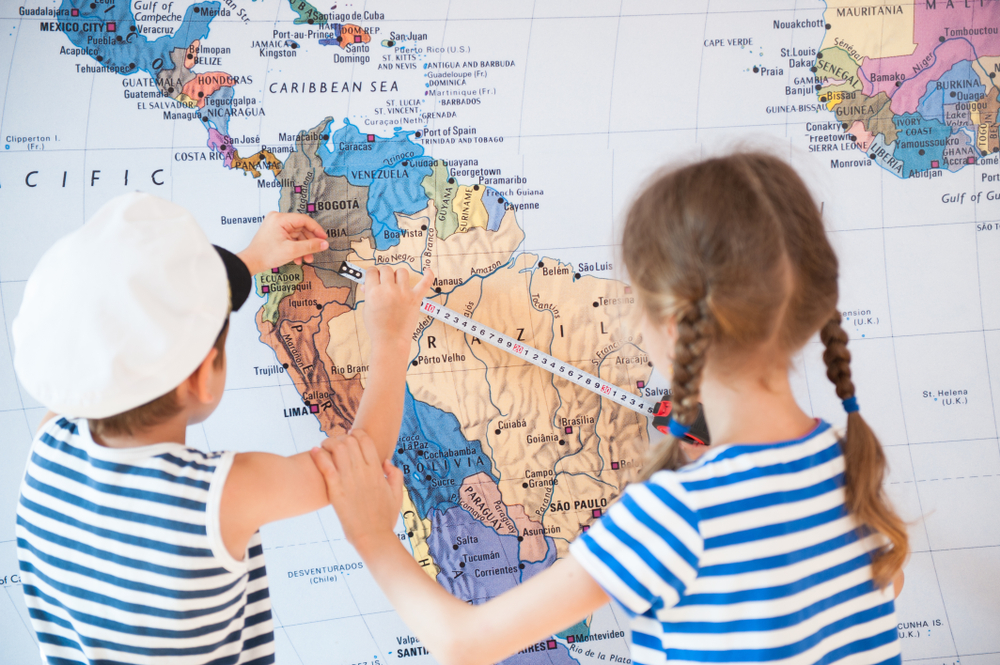


Understanding comparisons in numbers is crucial for children aged 3-8 as it lays the foundation for their mathematical development. When children learn to compare quantities—such as more versus less, and equal versus unequal—they develop a sense of number relationships that enhances their critical thinking and problem-solving skills. Early comparisons foster an intuitive understanding of mathematics that goes beyond mere rote memorization.
For parents and teachers, fostering this skill helps children develop confidence and competence in mathematics, crucial for their academic success. This understanding supports their ability to categorize objects, quantify them, and ultimately grasp more complex mathematical concepts in later stages, such as addition, subtraction, and even basic algebra.
Moreover, comprehension of comparisons isn't limited to formal education; it extends to everyday life. Through cooking, shopping, or even playing games, children often engage in comparisons, supporting their cognitive development in practical situations.
By prioritizing the development of comparative number skills, parents and teachers can promote a lifelong enjoyment and appreciation of mathematics, derivatives to communication and reasoning. Encouraging these skills from a young age not only prepares children academically but also equips them with essential life skills.








