
Analytical skills development Math Worksheets for Ages 3-8
4 filtered results
Difficulty Level
Grade
Age
-
From - To
Subject
Activity
Standards
Enhance your child's analytical skills with our engaging Math Worksheets designed for ages 3-8! Our worksheets focus on developing critical thinking, problem-solving, and reasoning abilities through fun and age-appropriate activities. Each worksheet combines basic math concepts with interactive exercises that encourage exploration and creativity. By solving puzzles, identifying patterns, and completing challenges, children will gain confidence in their analytical skills while enjoying the learning process. Perfect for preschool and early elementary settings, these resources are ideal for both classroom and home use. Unlock your child’s potential with our thoughtfully designed materials and watch them thrive in their mathematical journey!
Favorites
With answer key
Interactive
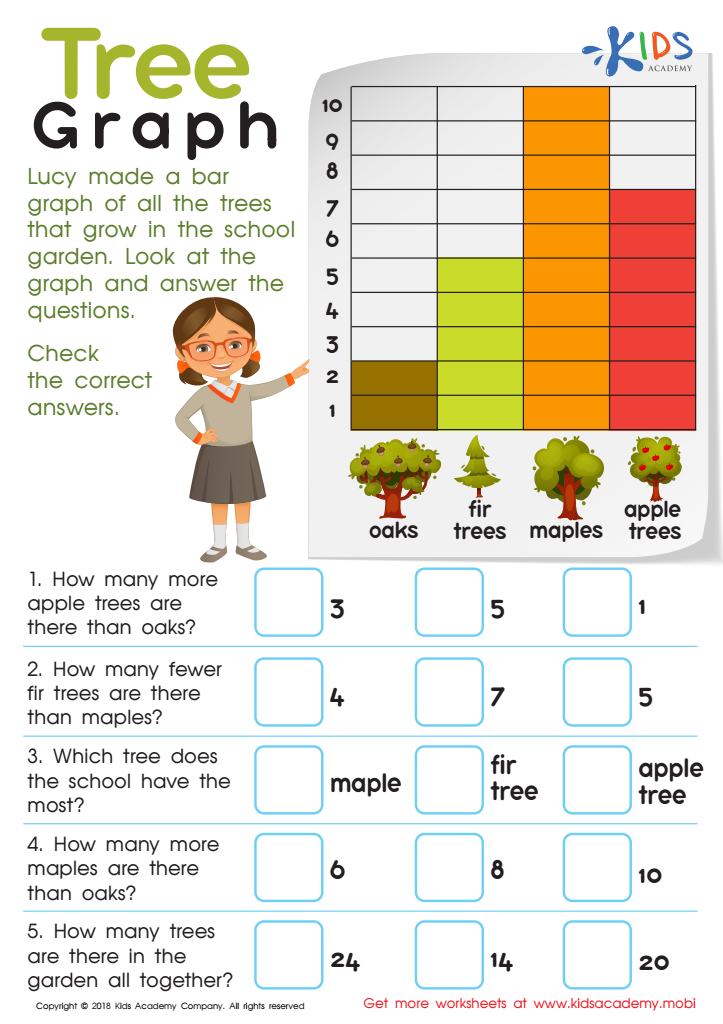
Tree Graph Worksheet
Help your child/students learn to read graphs and report data. With this colorful worksheet, the different types of trees in a school's garden are listed in a bar graph. Guide them through viewing it and answering the questions. To extend the lesson, have them create a tree graph to list the trees at their own school or home.
 Assign to My Students
Tree Graph Worksheet
Worksheet
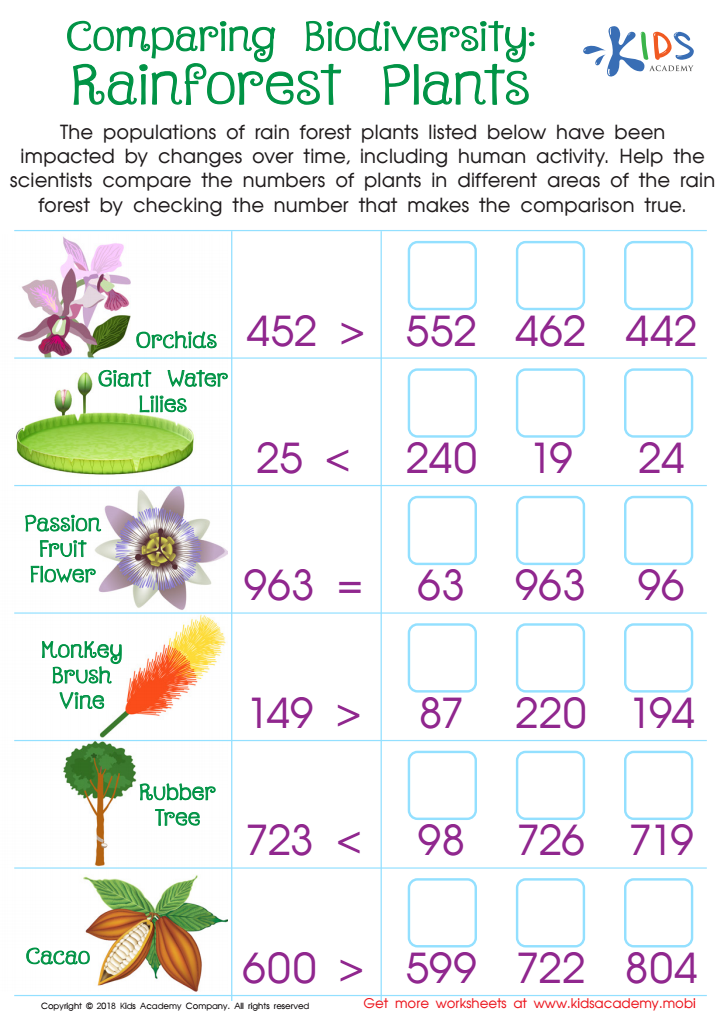
Comparing Biodiversity: Rainforest Plants Worksheet
Have your students learn about biodiversity in the rainforest and practice number sense and reasoning with this colorful PDF worksheet. Comparing the numbers of plants found in different areas of the rainforest, they'll combine eco-friendly science and math to make the number comparisons true.
Comparing Biodiversity: Rainforest Plants Worksheet
Worksheet
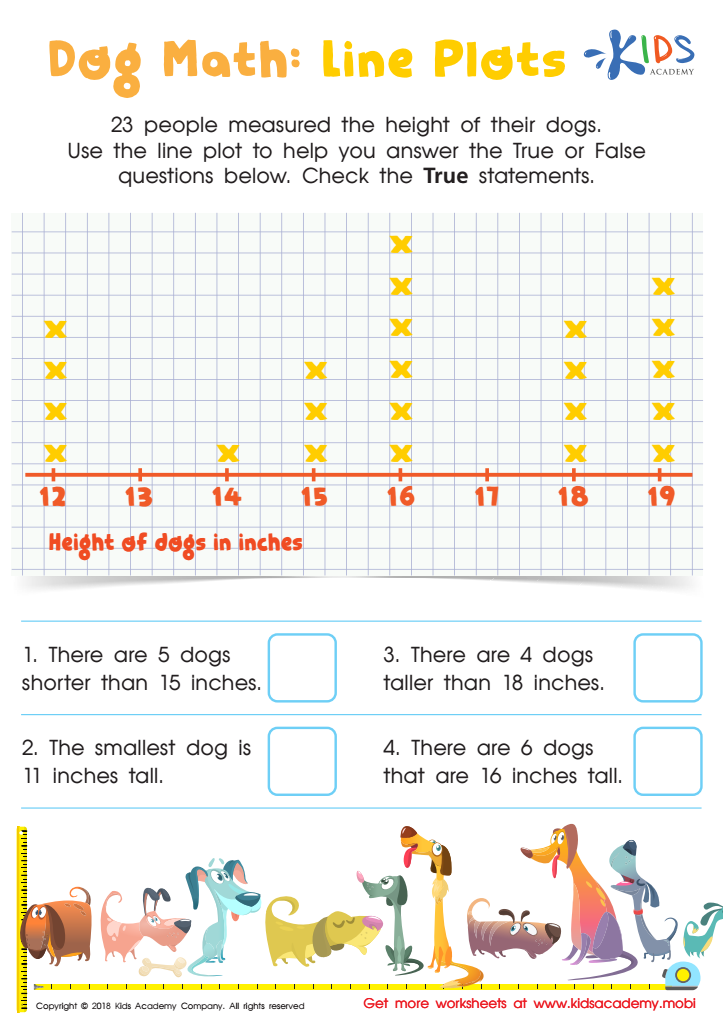
Dog Math: Line Plots Worksheet
Do your kids love dogs? If you have family pets, your kids may be excited to do this worksheet. It involves a line plot and True/False questions about 23 people measuring their dogs' heights. Assist your kids in verifying the statements that are True.
Dog Math: Line Plots Worksheet
Worksheet
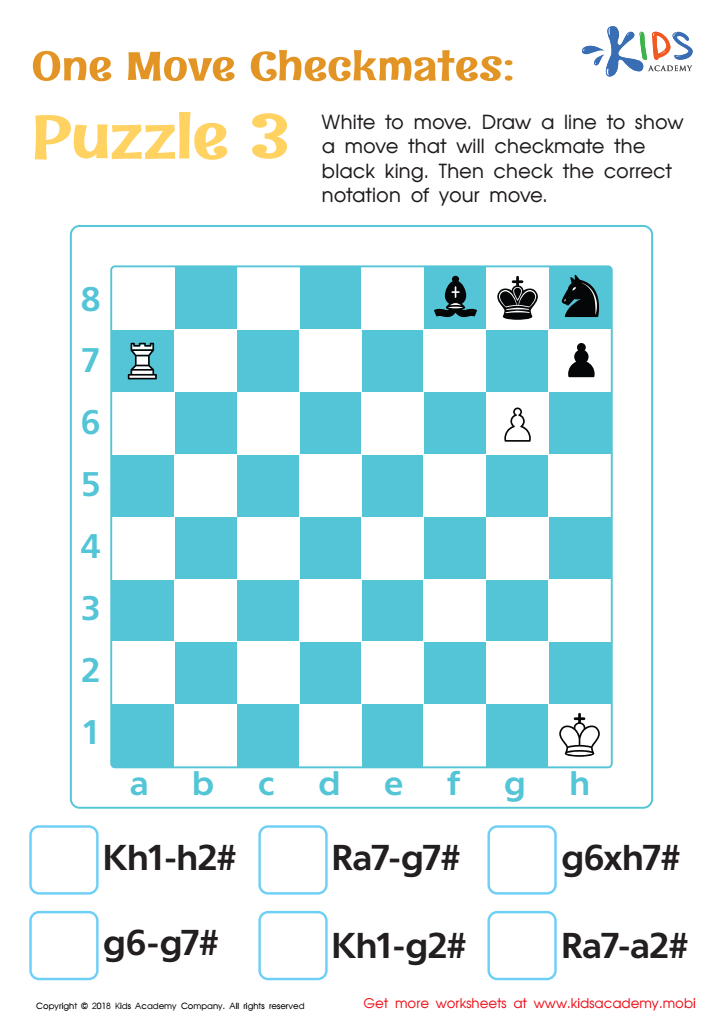
One Move Checkmates: Puzzle 3 Worksheet
Boost your child's critical thinking and strategy skills with this fun puzzle activity. They'll use their logical thinking to plot ways to checkmate the black king, and then check their answer with the given choices. A great way to improve their skills and have a blast doing it!
One Move Checkmates: Puzzle 3 Worksheet
Worksheet
Join Kids Academy for Free
Who is primarily going to use this learning content?







Parents and teachers should prioritize the development of analytical skills in mathematics for children aged 3-8 because these foundational skills significantly impact future learning and problem-solving abilities. Analytical skills enable young learners to recognize patterns, categorize information, and approach challenges logically, which are crucial not only in mathematics but across all subjects and in daily life.
At this age, children's brains are highly adaptable, making it the perfect time to cultivate critical thinking abilities. Engaging in activities that promote analytical skills—such as puzzles, sorting games, and simple math problems—encourages curiosity and a love for learning. This early exposure lays the groundwork for greater mathematical understanding and confidence as they progress through school.
Moreover, strong analytical skills contribute to improved academic performance and can reduce math-related anxiety as children face more complex concepts in higher grades. By working collaboratively, parents and teachers can create enriching mathematical experiences that build these skills, ensuring that children are not only proficient in math but also equipped to tackle challenges in diverse life situations. Ultimately, investing in analytical skill development during these formative years can shape children's futures, making them more effective, adaptable thinkers.








