Basic arithmetic skills Math Worksheets for Ages 3-8 - Page 2
27 filtered results
-
From - To
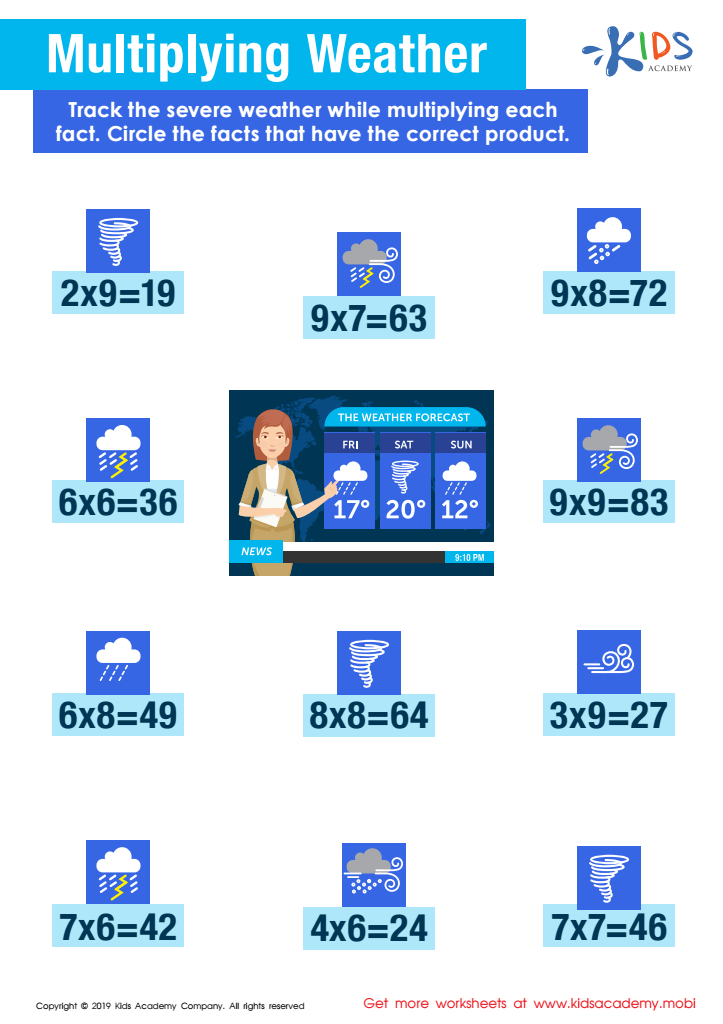
Multiplying Weather Worksheet
 Assign to My Students
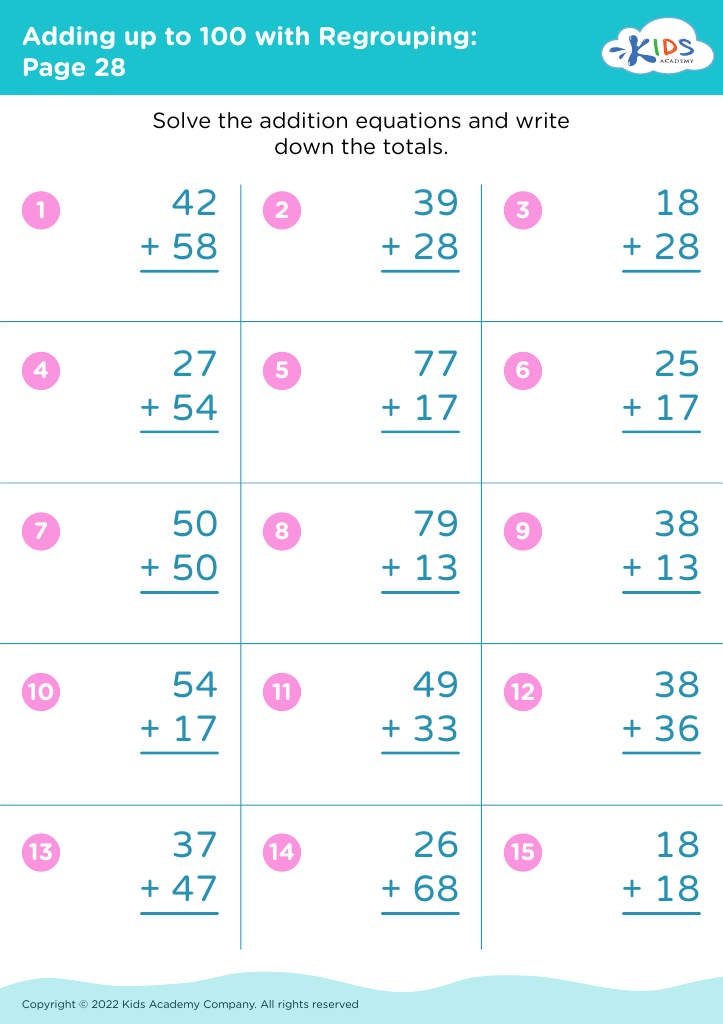
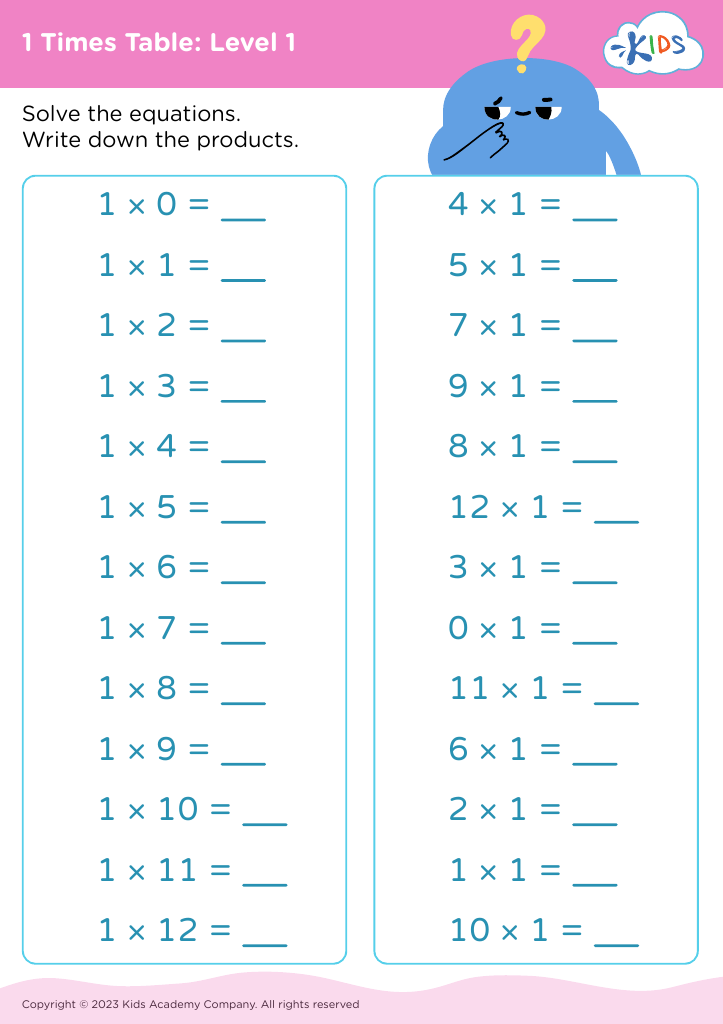







Basic arithmetic skills are crucial for children aged 3-8 for several reasons. First, these foundational skills foster cognitive development, enabling children to understand concepts such as numerical relationships, patterns, and problem-solving. Early exposure to math helps create solid neural pathways that are essential for more complex mathematical learning in the future.
Furthermore, arithmetic skills influence everyday life. Children begin to encounter math in grocery shopping, game playing, and even simple chores at home. By mastering basic math, children build confidence and become more likely to engage positively with more complex mathematical concepts later in school.
Additionally, proficiency in arithmetic enhances academic success. Research indicates that early math skills are strong predictors of later academic achievement, including literacy. As teachers and parents engage children in fun and interactive math activities, they create a positive learning environment that encourages curiosity and enthusiasm for learning.
Finally, instilling strong basic math skills fosters important life skills such as critical thinking and decision-making, helping children navigate real-world situations. By prioritizing arithmetic education in early childhood, parents and teachers equip children with essential tools for a successful future.








