Filters

171 filtered results

Clear all filters
Favorites
With answer key
Interactive

171 filtered results

Difficulty Level

Grade


Check out this FREE Trial Lesson on Math for age 3-8!

Match Objects that Fit Together

Favorites
With answer key
Interactive
  • 3-8
  • Basic Math Skills
  • Math
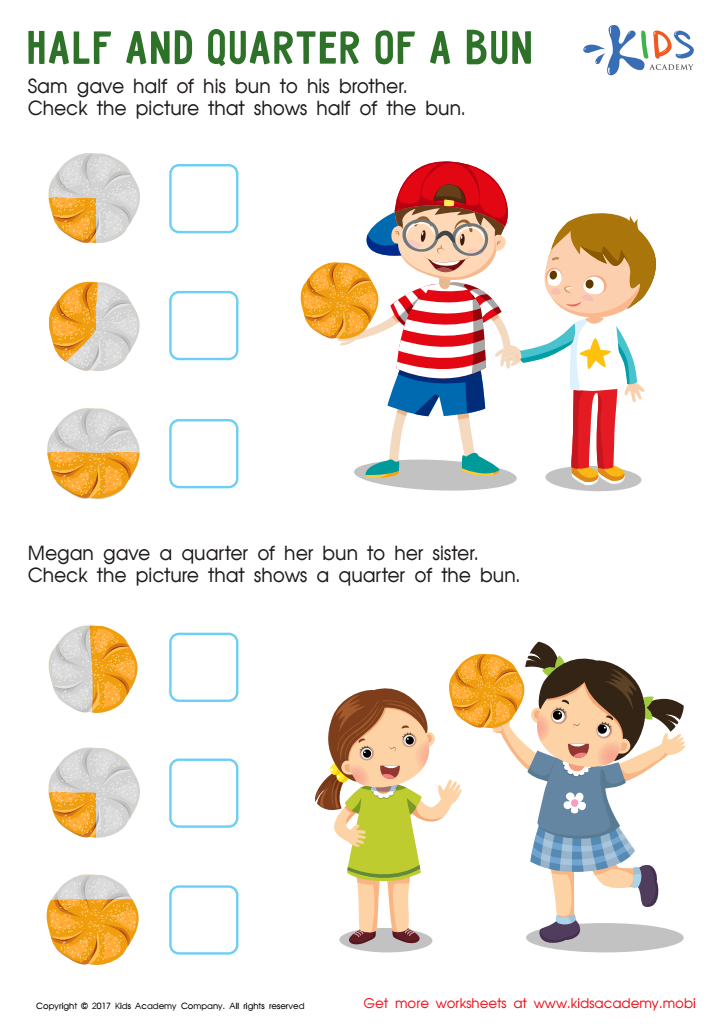
Half and Quarter of a Bun Worksheet

Half and Quarter of a Bun Worksheet

This worksheet introduces Sam, his brother and Megan, her sister, who are sharing buns. Show kids the picture of half and quarter to help them understand. Ask if they know what half and quarter of a shape is before progressing. Help them check the picture showing half and quarter of a bun.
Half and Quarter of a Bun Worksheet
Worksheet
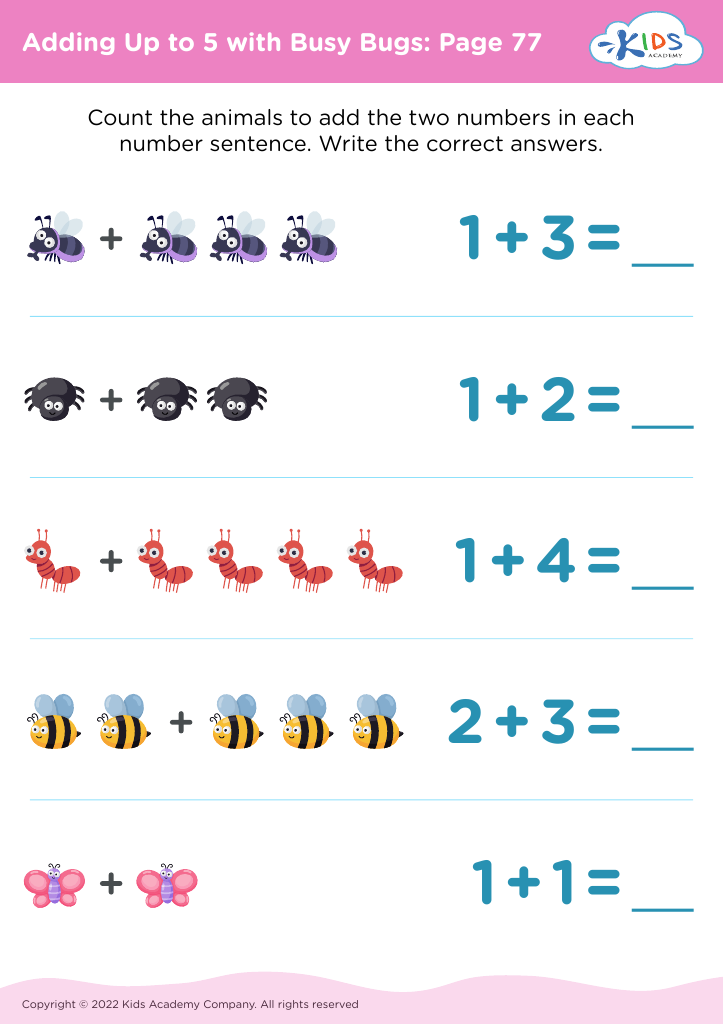
Adding Up to 5 with Busy Bugs: Page 77
Worksheet
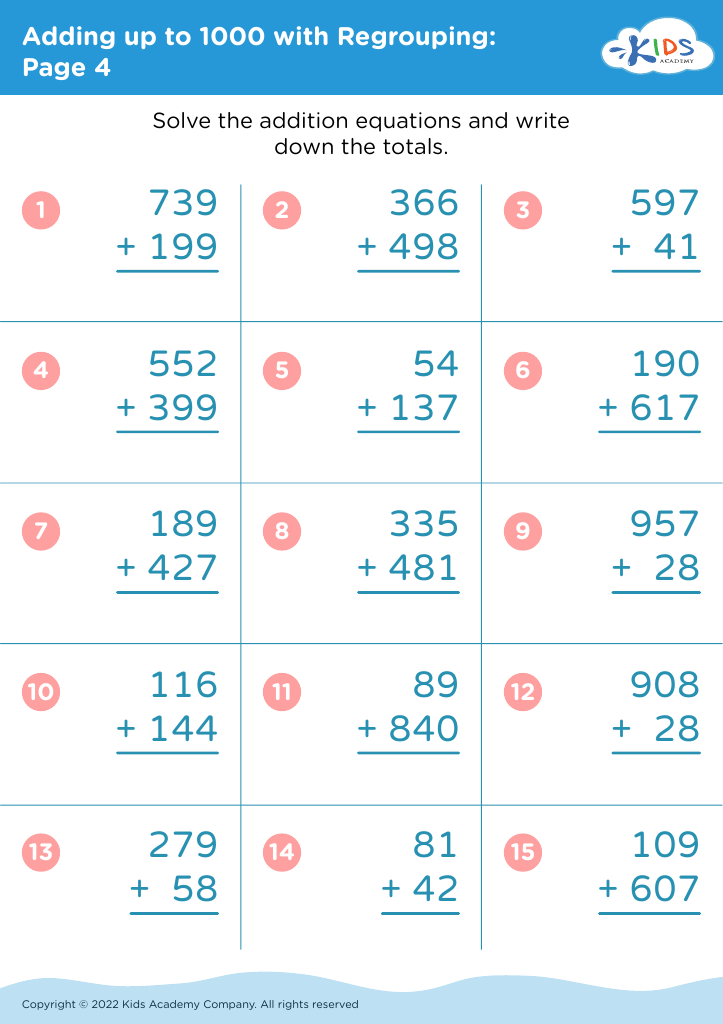
Adding up to 1000 with Regrouping: Page 4
Worksheet
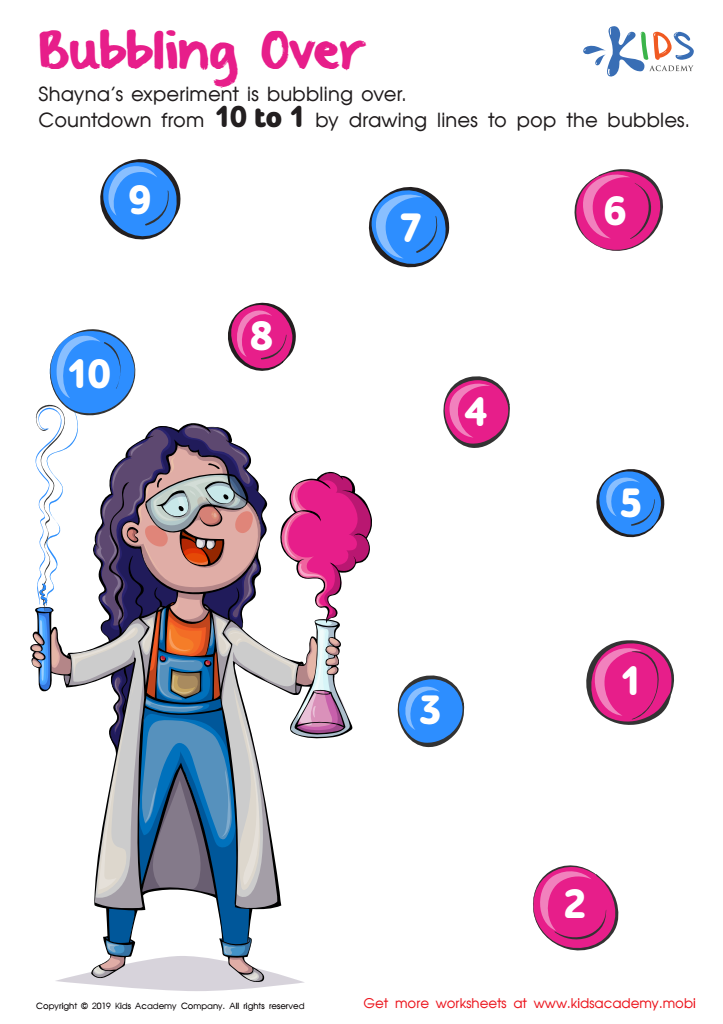
Bubbling Over Worksheet

Bubbling Over Worksheet

Students love science experiments at the lab! They get to practice their counting skills while creating a masterpiece or an unexpected catastrophe! Ask them to count down from 10 to 1 by drawing lines to 'pop' the bubbles coming out of Shayna's experiment in the worksheet.
Bubbling Over Worksheet
Worksheet
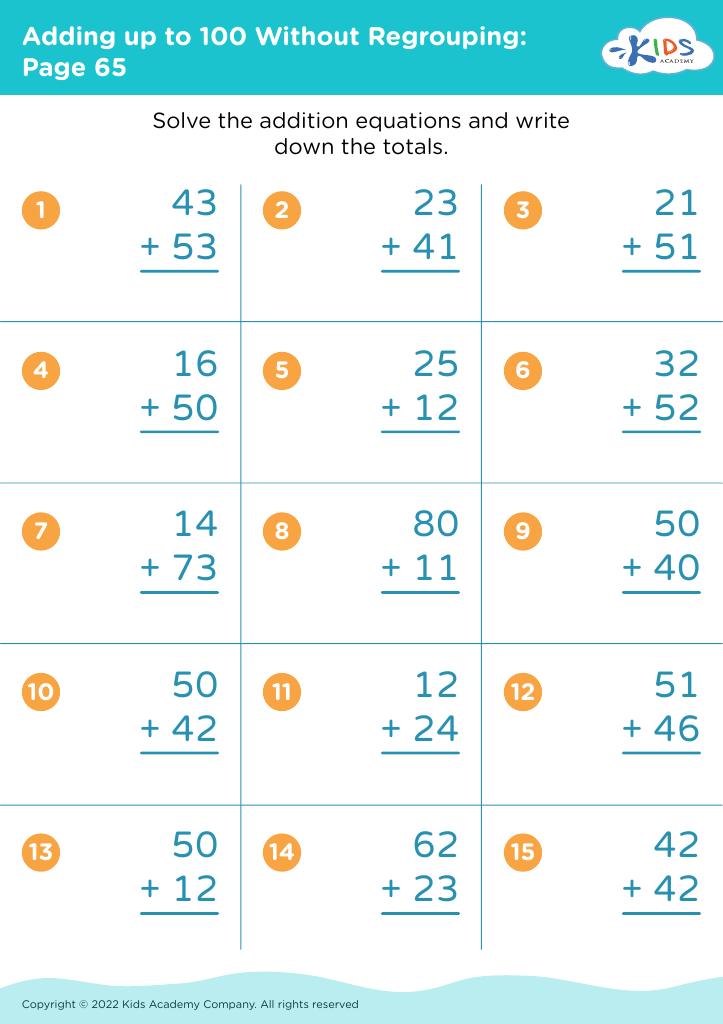
Adding up to 100 Without Regrouping: Page 65
Worksheet
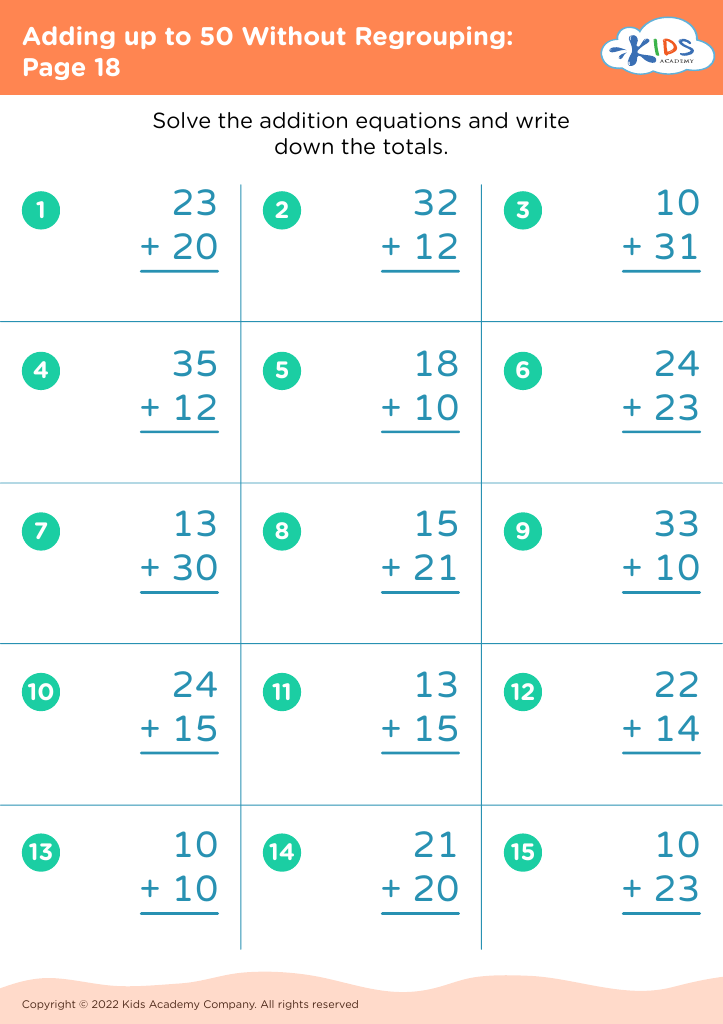
Adding up to 50 Without Regrouping: Page 18
Worksheet
Count and Pair Seashells Worksheet
Count and Pair Seashells Worksheet
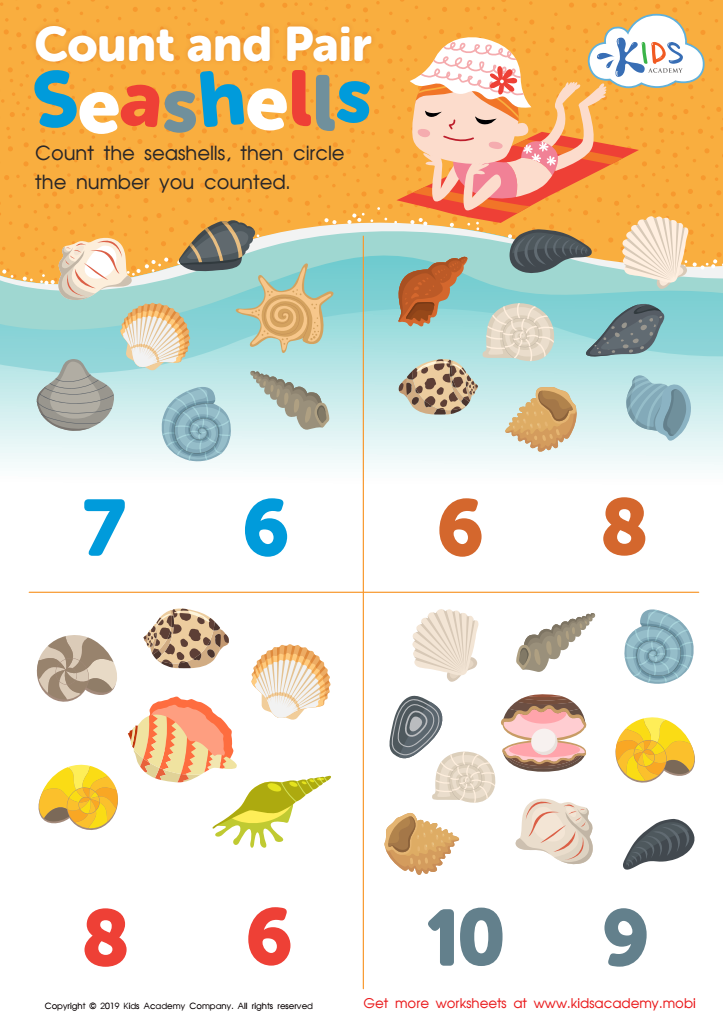
Kids love trips to the beach. Ask them to count the shells in the four sets of seashells in this printout - then circle the correct number beneath each set. Let them recall the happy memories of the beach and make this worksheet fun.
Count and Pair Seashells Worksheet
Worksheet
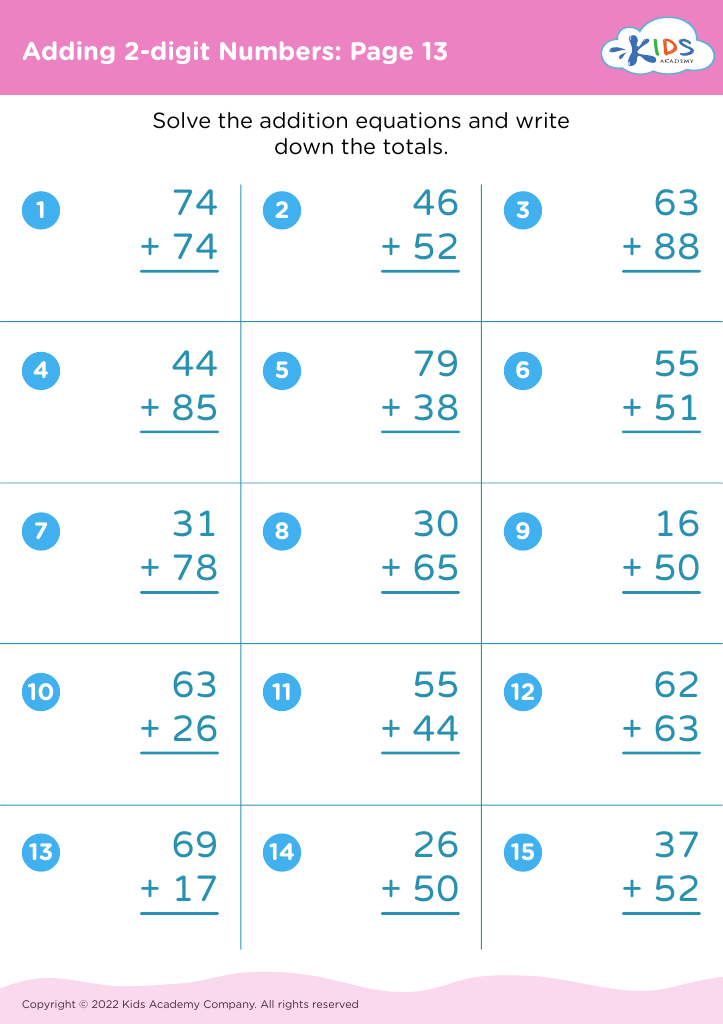
Adding 2-digit Numbers: Page 13

Adding 2-digit Numbers: Page 13

Adding 2-digit Numbers: Page 13
Worksheet
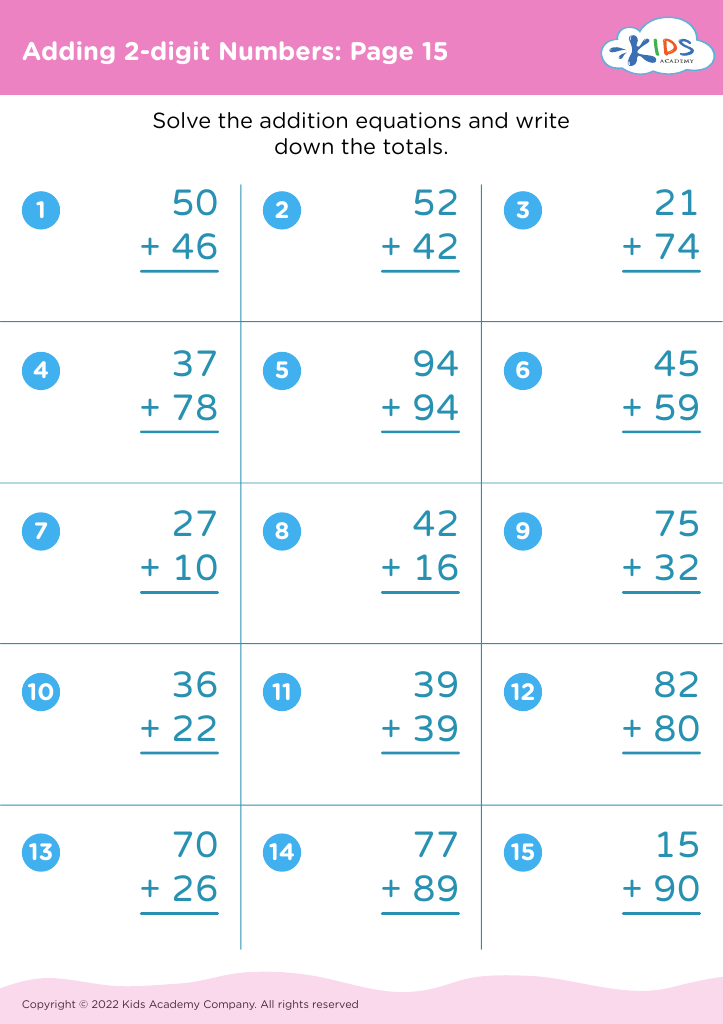
Adding 2-digit Numbers: Page 15

Adding 2-digit Numbers: Page 15

Adding 2-digit Numbers: Page 15
Worksheet
Comparing numbers worksheet for 2nd grade

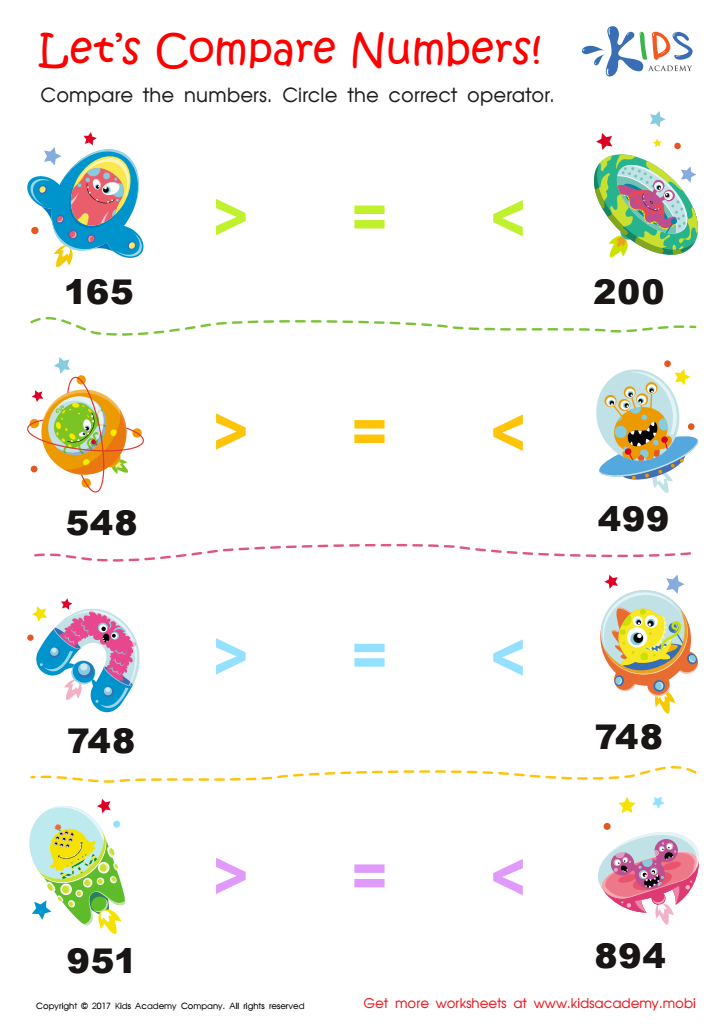
Comparing Numbers Worksheet for 2nd Grade
Alien friends are back to help your child learn to compare numbers using >, < and = symbols. This 2nd grade worksheet will challenge them with larger numbers!
Comparing Numbers Worksheet for 2nd Grade
Worksheet
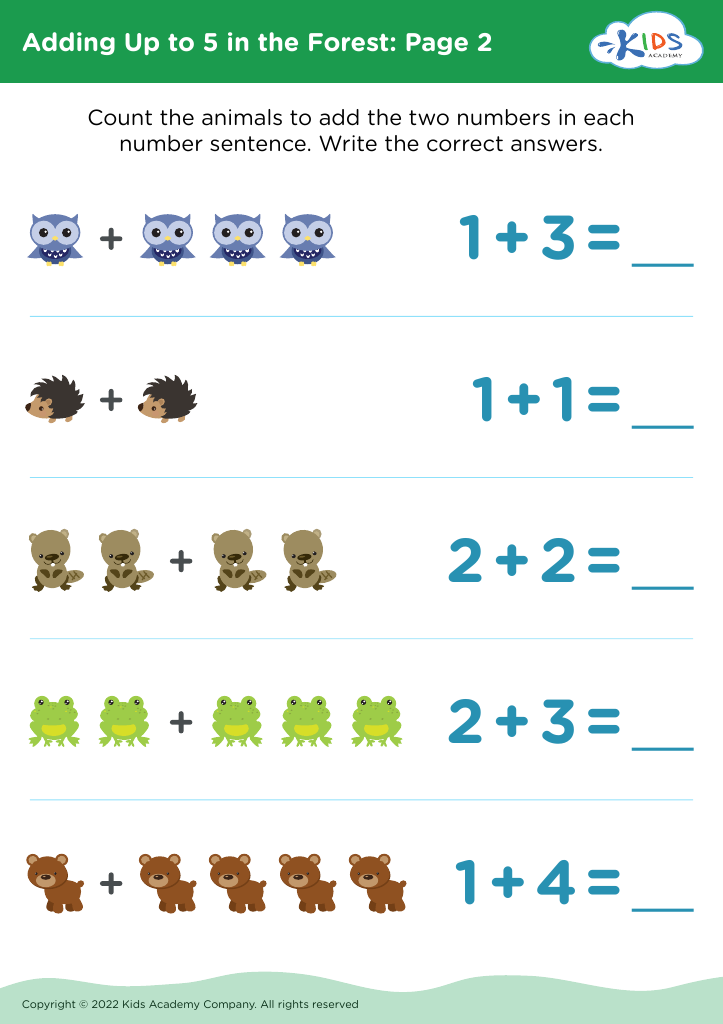
Adding Up to 5 in the Forest: Page 2
Worksheet
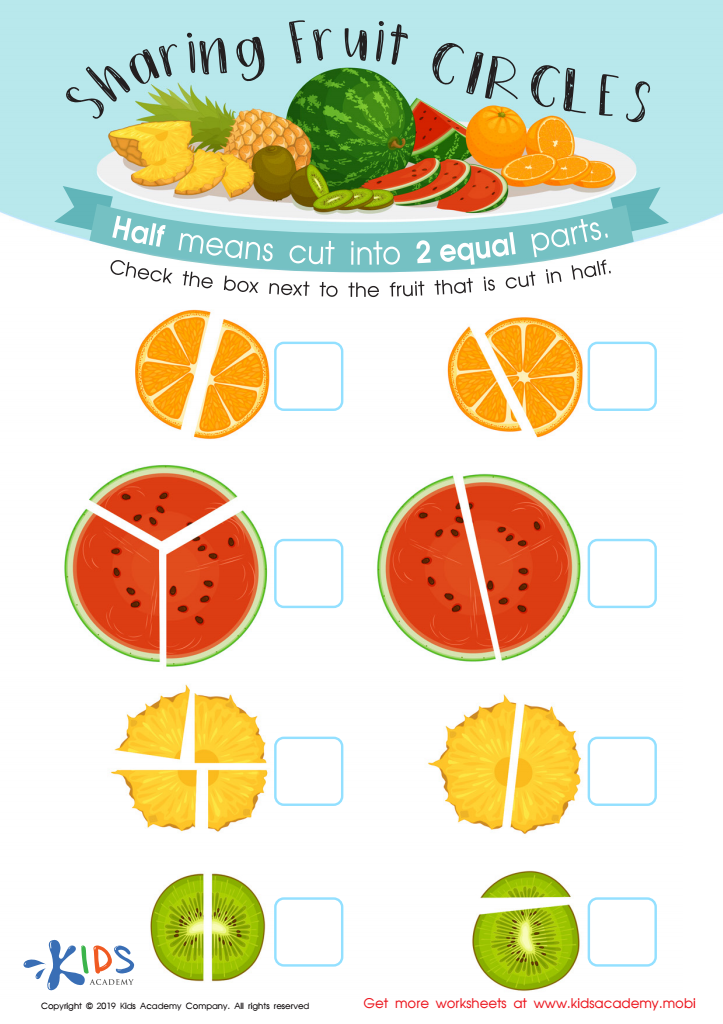
Sharing Fruit Circles Worksheet

Sharing Fruit Circles Worksheet

Fruits are tasty and bright! Can your kids name some of their favorites? With this worksheet, you can use fruit to teach your kids geometry. Talk about how shapes can be cut into halves. Ask them to tick the box for the fruit halves in the printout.
Sharing Fruit Circles Worksheet
Worksheet
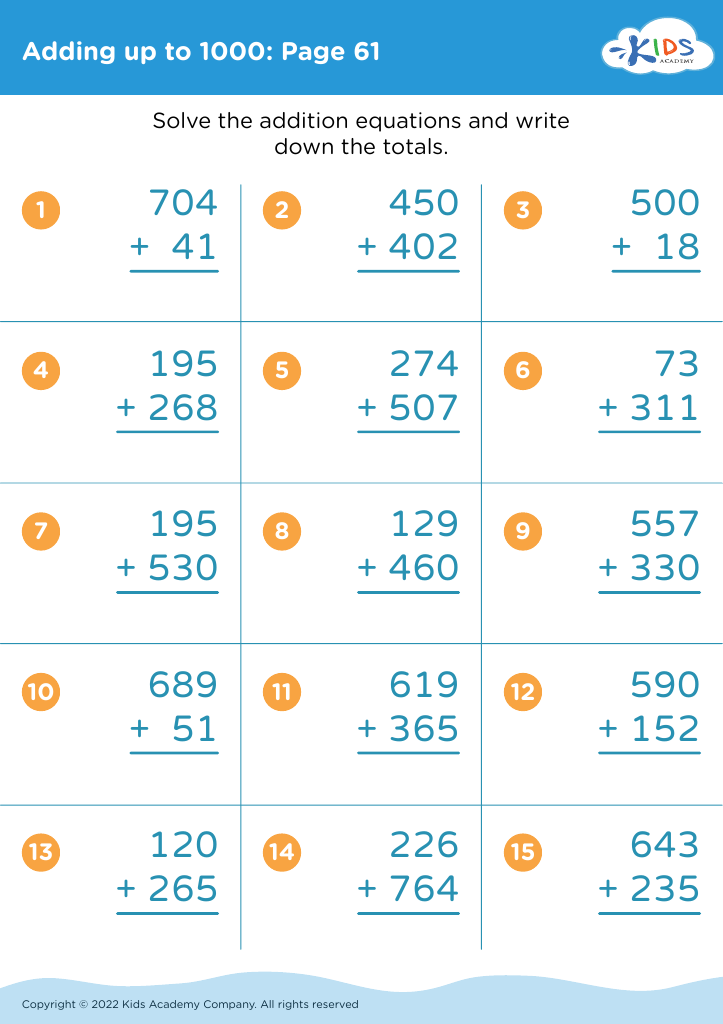
Adding up to 1000: Page 61

Adding up to 1000: Page 61

Adding up to 1000: Page 61
Worksheet
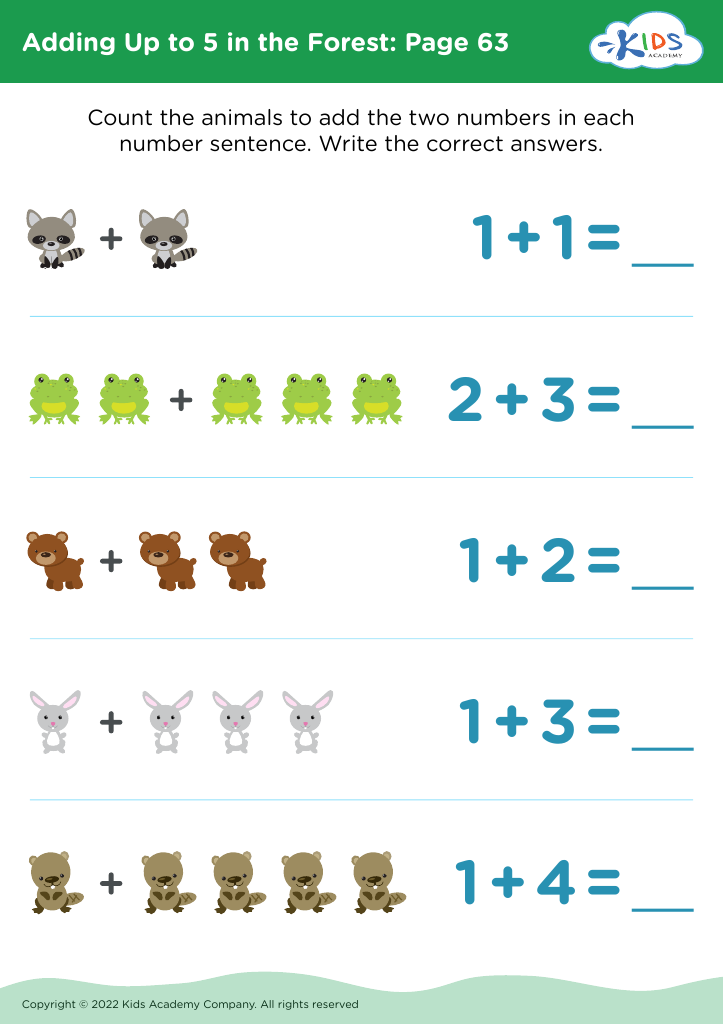
Adding Up to 5 in the Forest: Page 63
Worksheet
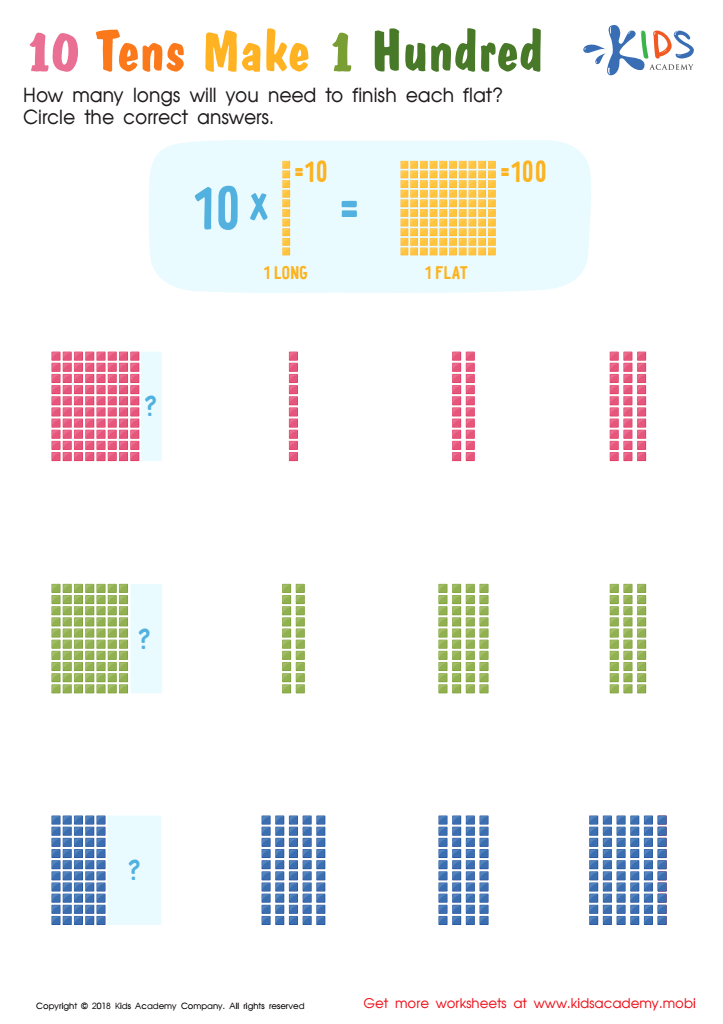
10 Tens Make 1 Hundred Worksheet
10 Tens Make 1 Hundred Worksheet
Help your child understand multiplication with this worksheet. Ask them how many 'longs' will be needed to complete each flat, then have them circle the correct answer from the options. With this exercise, your child will learn that 10 'tens' make 1 'hundred'!
10 Tens Make 1 Hundred Worksheet
Worksheet
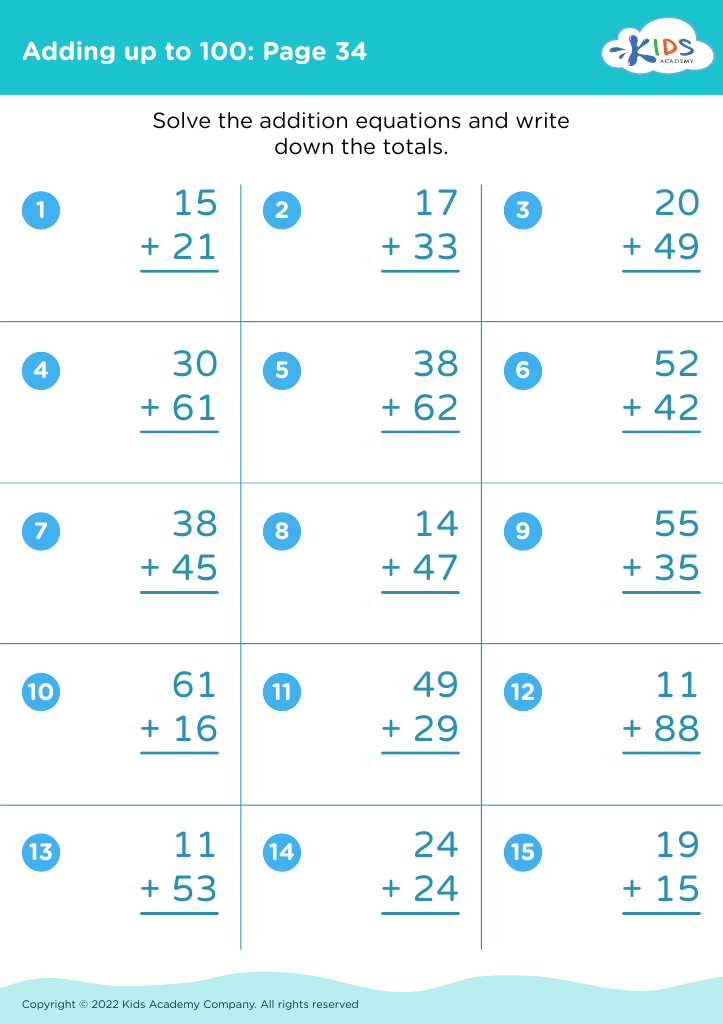
Adding up to 100: Page 34

Adding up to 100: Page 34

Adding up to 100: Page 34
Worksheet
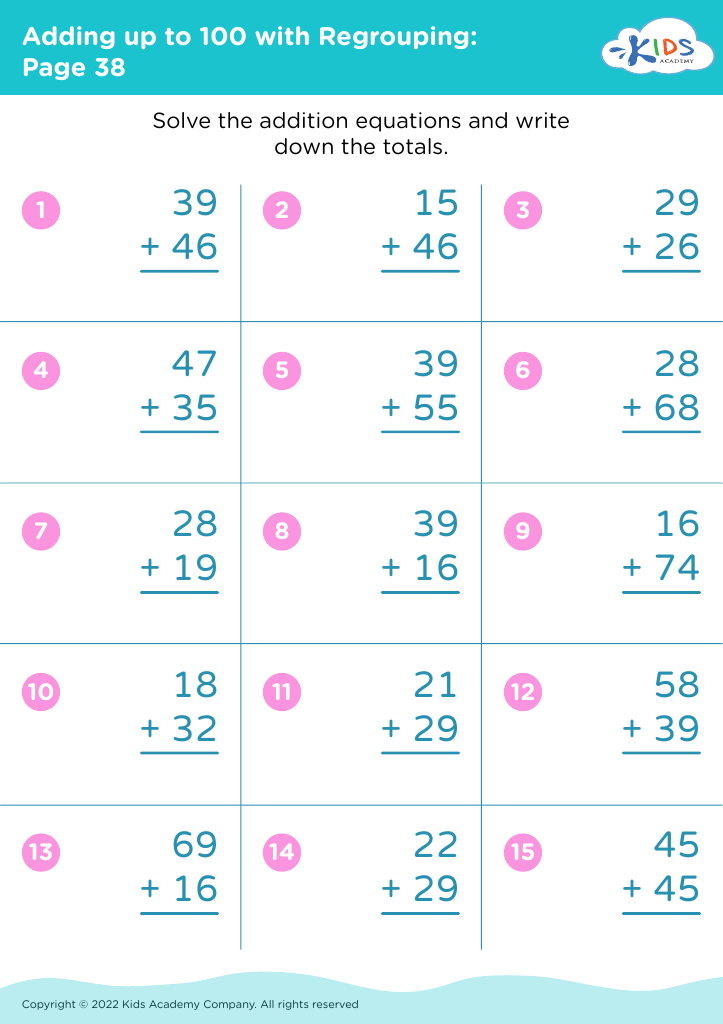
Adding up to 100 with Regrouping: Page 38
Worksheet
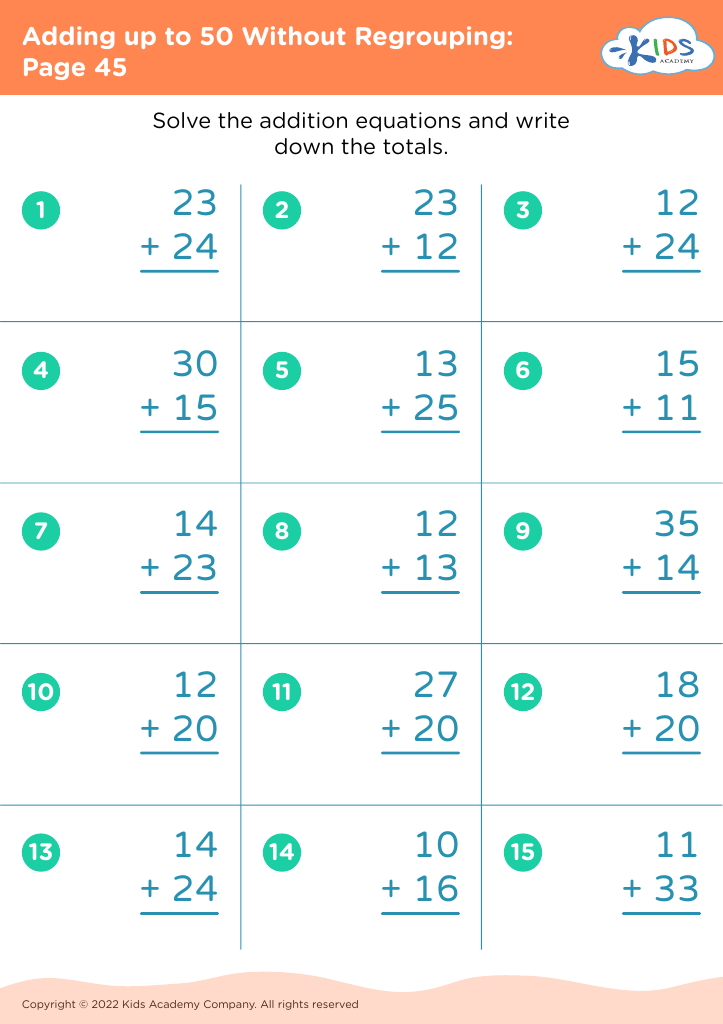
Adding up to 50 Without Regrouping: Page 45
Worksheet
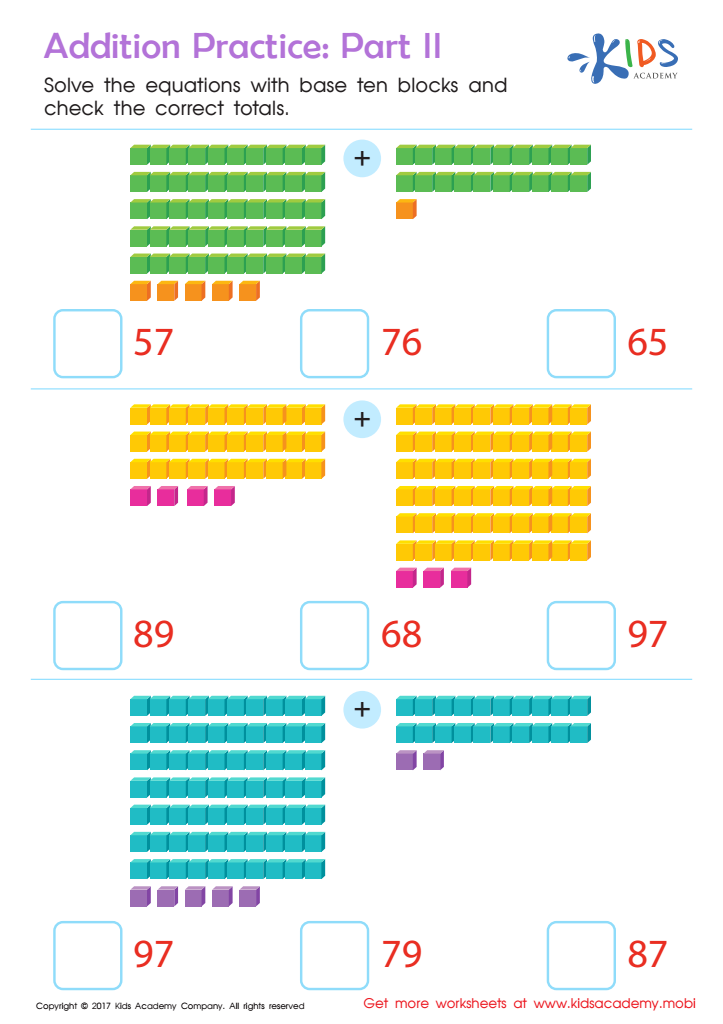
Addition Practice Sheet: Part 2

Addition Practice Sheet: Part 2

Make sure your kids understand place value before introducing two/three-digit addition. To help, use Kids Academy's colorful cube worksheet. It provides all the manipulatives needed to solve the problem and find totals. A great way to explain the concept behind the addition!
Addition Practice Sheet: Part 2
Worksheet
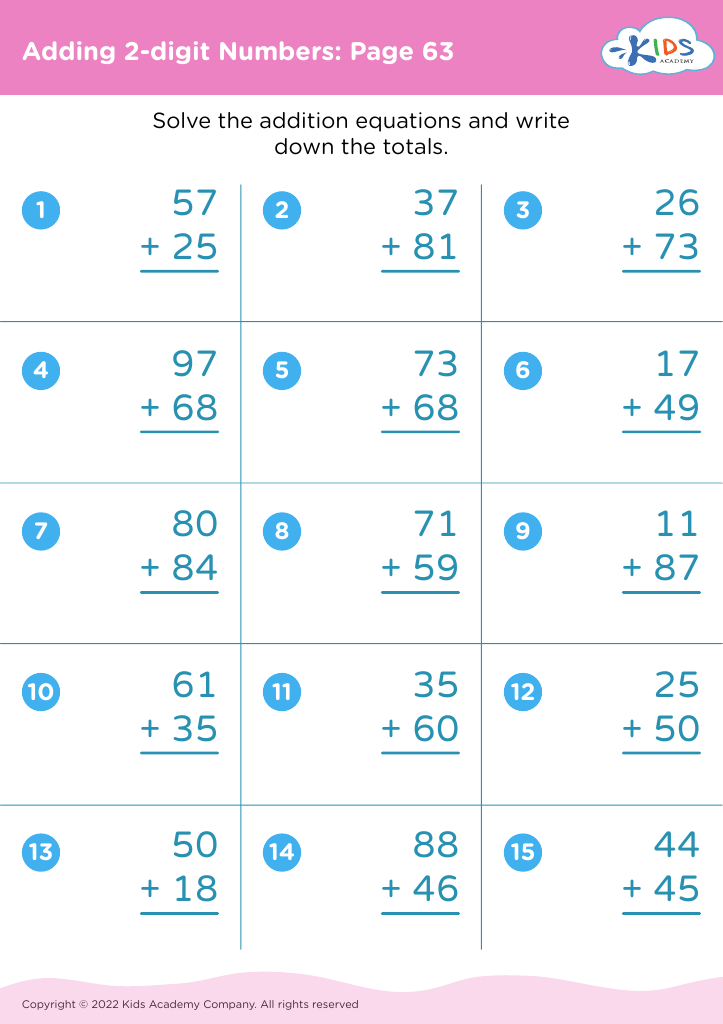
Adding 2-digit Numbers: Page 63

Adding 2-digit Numbers: Page 63

Adding 2-digit Numbers: Page 63
Worksheet
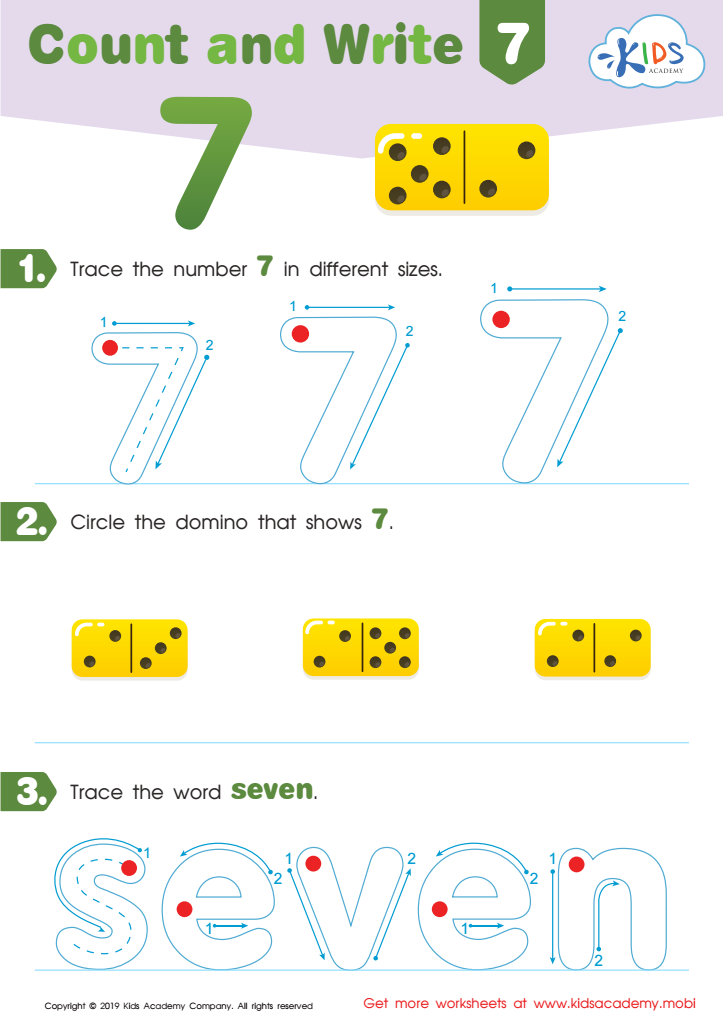
Count and Write 7 Worksheet


Count and Write 7 Worksheet

It's key to recognize and represent numbers in different formats. This free PDF shows children how '7' looks as a numeral, word, and with dice. Strengthening math skills is crucial, and the traceable lines and bright guide dots can help them practice writing '7' in two forms. Additionally, they'll hone their fine motor skills as they circle the dice that depicts '7'.
Count and Write 7 Worksheet
Worksheet
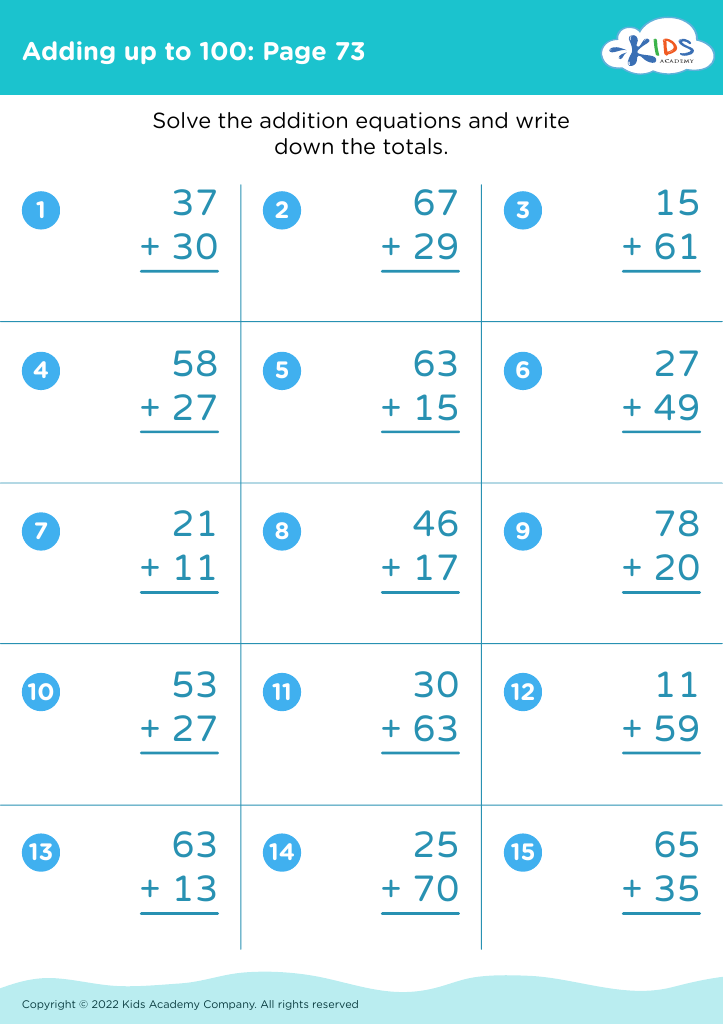
Adding up to 100: Page 73

Adding up to 100: Page 73

Adding up to 100: Page 73
Worksheet
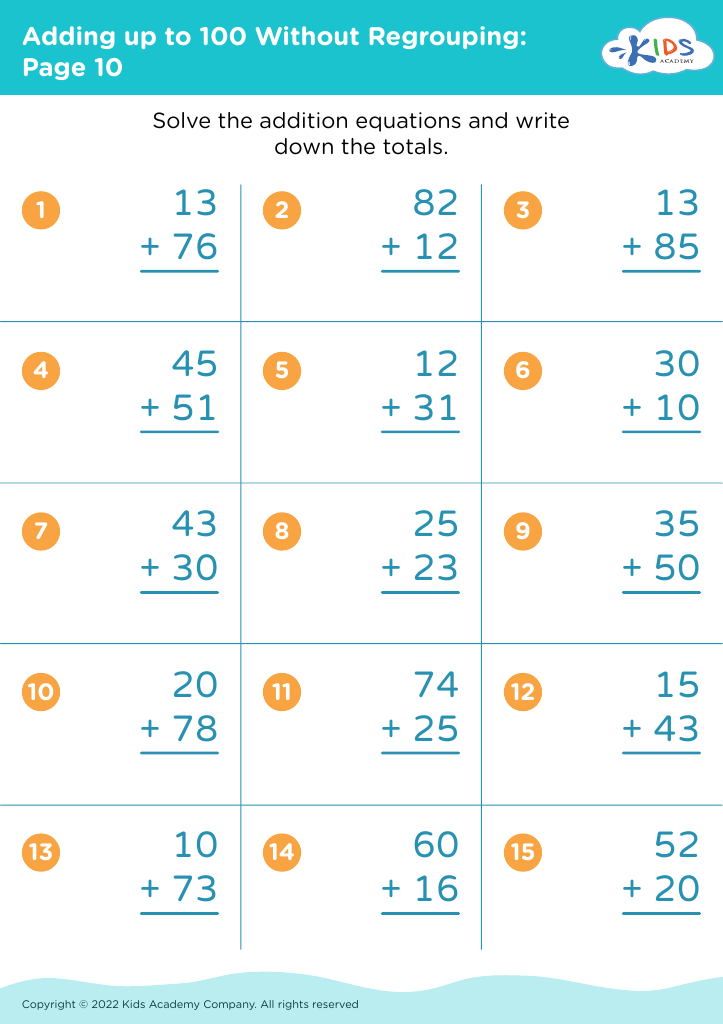
Adding up to 100 Without Regrouping: Page 10
Worksheet
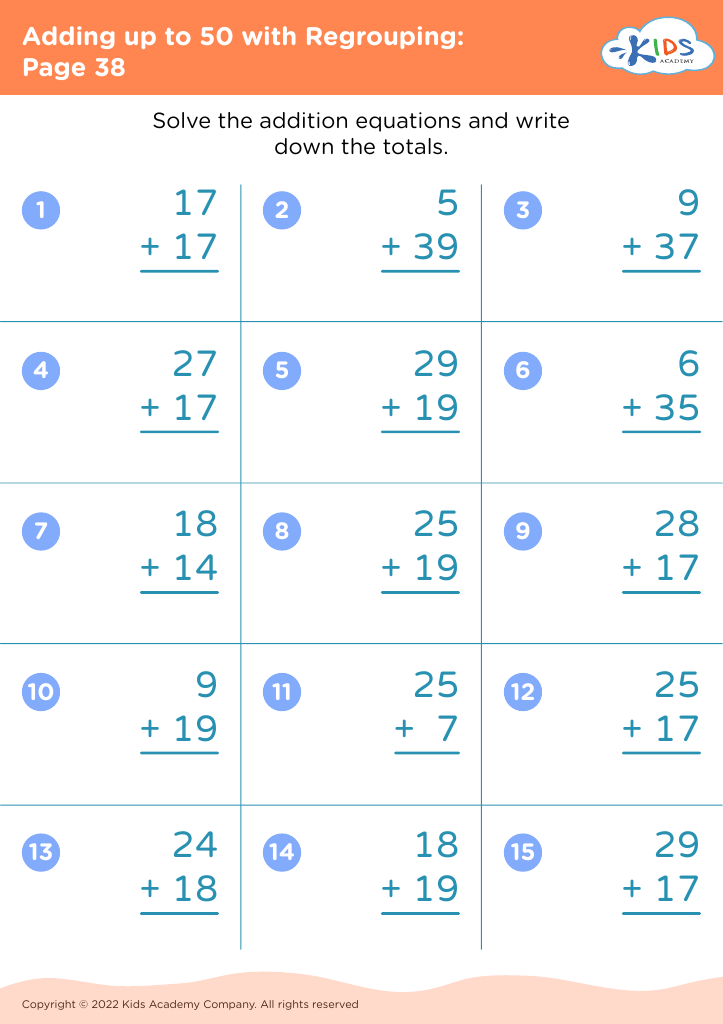
Adding up to 50 with Regrouping: Page 38
Worksheet


Basic math skills are foundational for cognitive development and future academic success for children aged 3-8. These early years are a critical period because children's brains are highly receptive to new information and developing pathways for complex thought processes. Learning basic math helps develop problem-solving skills, logical reasoning, and the ability to think in abstract ways.

Parents and teachers should prioritize basic math skills because they are integral to everyday activities and help build a child's confidence in handling real-world situations. Recognizing patterns, understanding numbers, and basic measuring concepts pave the way for advanced mathematical thinking and more profound comprehension in elementary school. For example, children who can grasp basic addition and subtraction develop a sense of numbers which is essential for more advanced topics like multiplication or division.

Moreover, math activities encourage persistence, concentration, and the ability to follow instructions—key traits for academic success in all areas. Encouraging a positive relationship with math during these formative years helps reduce anxiety and builds a strong foundation that will benefit children across all subjects and into adulthood. Parents and teachers play crucial roles in providing supportive, engaging, and practical math learning experiences that make abstract concepts tangible and relatable. Thus, early math education is a lifelong investment in a child's education and cognitive development.