Comparing object weights Math Worksheets for Ages 3-8
3 filtered results
-
From - To
Explore our engaging "Comparing Object Weights Math Worksheets" designed for children ages 3-8! These worksheets aim to develop early math skills through fun, interactive activities that teach kids how to compare and analyze the weights of various objects. With vibrant illustrations and clear instructions, children will recognize patterns, understand heavier vs. lighter concepts, and enhance their problem-solving abilities. Ideal for home or classroom use, these worksheets make learning about weights enjoyable and effective. Foster your child's confidence in math while encouraging hands-on exploration and critical thinking. Start your young learner on their math journey today with our thoughtfully crafted resources!
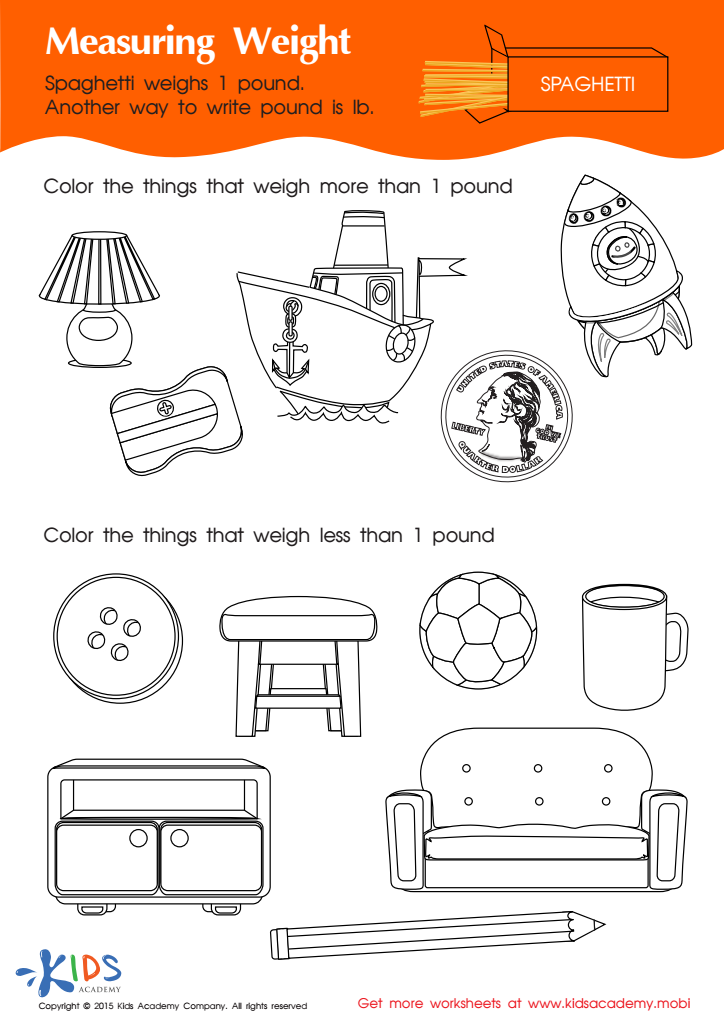
 Assign to My Students
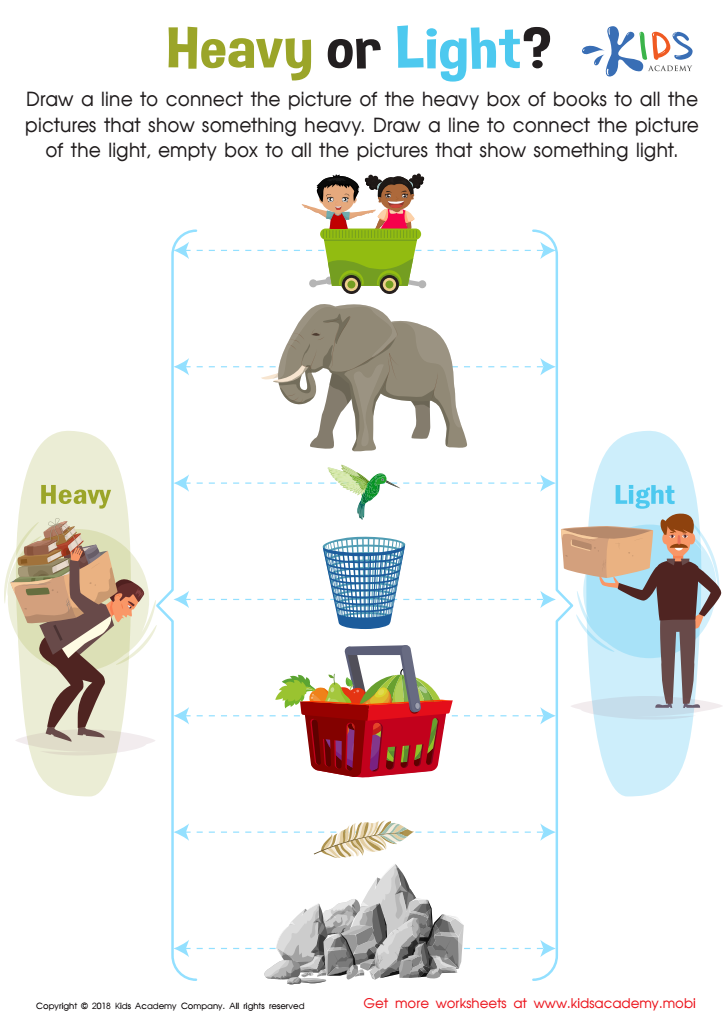
Heavy or Light? Worksheet
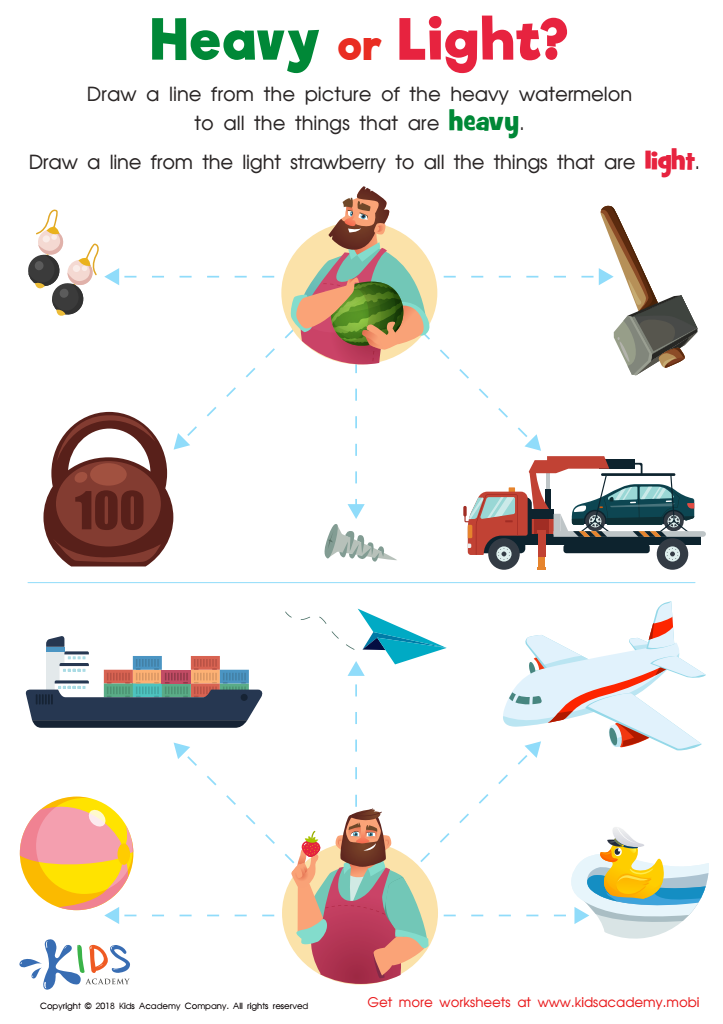
Heavy or Light? Worksheet






Comparing object weights is a vital mathematical concept for children ages 3 to 8, and parents and teachers should prioritize this learning for several reasons. First, understanding weight comparison helps children develop foundational mathematical skills. It fosters counting abilities, introduces the concept of measurement, and enhances critical thinking as children learn to ask questions like, "Which object is heavier?"
Second, this skill is deeply connected to everyday life. Recognizing and comparing weights is essential in various daily activities, such as grocery shopping or cooking. When children grasp these concepts early, they become more adept problem solvers and can make informed decisions.
Moreover, engaging in weight comparison activities naturally encourages sensory exploration and fine motor skills through hands-on experiences. As children lift, balance, or judge the weight of different objects, they refine their physical coordination and observation skills.
Lastly, comparing weights can spark curiosity and inquiry, leading to discussions about concepts like gravity and buoyancy, fostering a love for learning. In summary, teaching young learners about weights involves more than just mathematics; it provides practical life skills, enhances cognitive development, and inspires a growth mindset, making it a crucial area of focus for parents and educators alike.








