
Enhance counting skills Math Worksheets for Ages 3-8
16 filtered results
Difficulty Level
Grade
Age
-
From - To
Subject
Activity
Standards
Boost your child's counting abilities with our "Enhance Counting Skills Math Worksheets for Ages 3-8." These expertly designed printable activities nurture early math talents in a fun, engaging way. Perfect for young learners, our worksheets cover a variety of foundational skills, from number recognition and sequence counting to simple addition and subtraction. Each worksheet features colorful and interactive elements to make learning enjoyable. Created by educational professionals, these resources build confidence and proficiency in math. Ideal for at-home practice or classroom use, help your child master counting with quality materials that support their academic journey.
Favorites
With answer key
Interactive
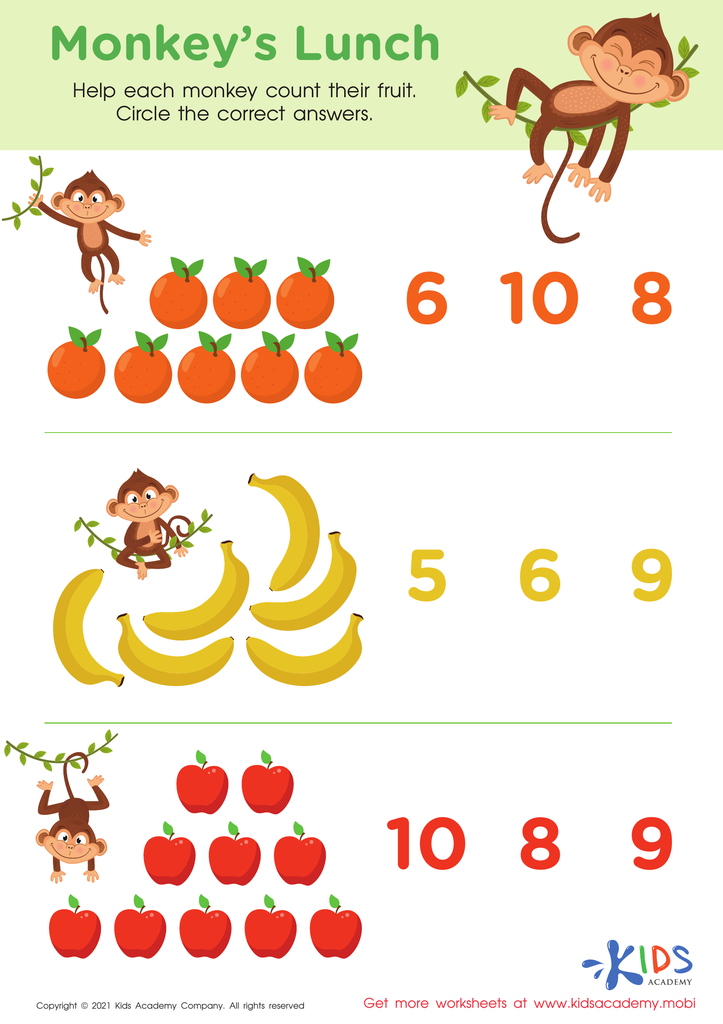
Monkey’s Lunch Worksheet
Download this free worksheet to help your kindergartner perfect their counting skills! Have your child circle the correct answers and count the fruits for the monkeys. It'll seem like fun, but your child is really learning how to count, group objects, and identify numbers.
Monkey’s Lunch Worksheet
Worksheet
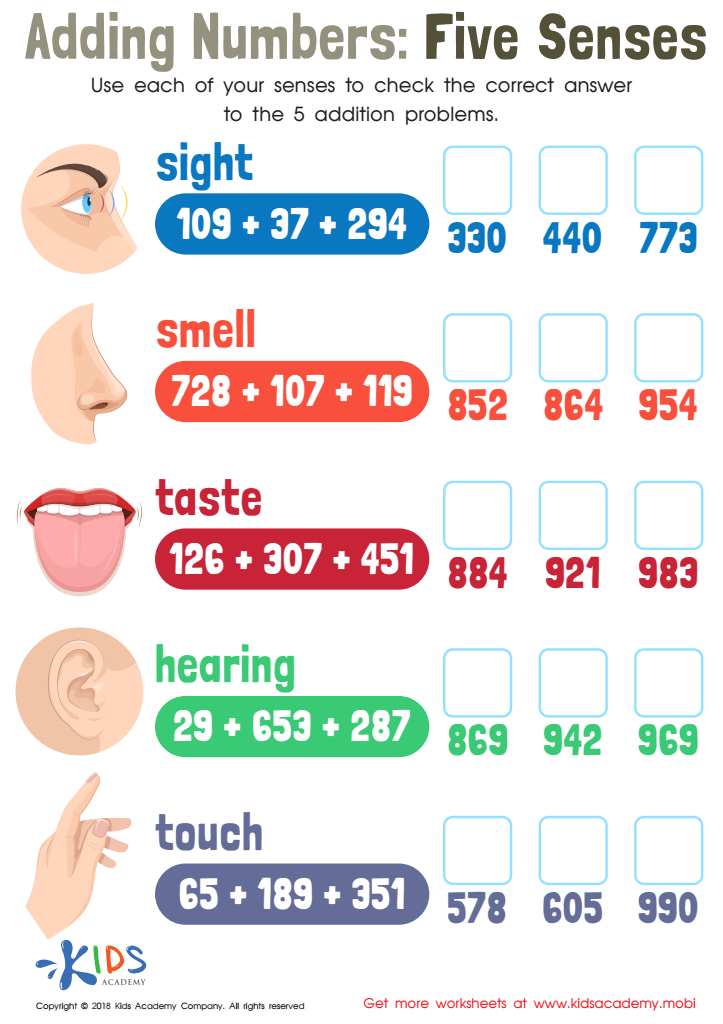
Adding Numbers: Five Senses Worksheet
Help your child identify the five senses on their body: eye, nose, tongue, ear, and skin. Explain that they're used for seeing, smelling, tasting, hearing and touching. Then, have them solve the five addition problems in the worksheet and check the correct answers.
 Assign to My Students
Adding Numbers: Five Senses Worksheet
Worksheet
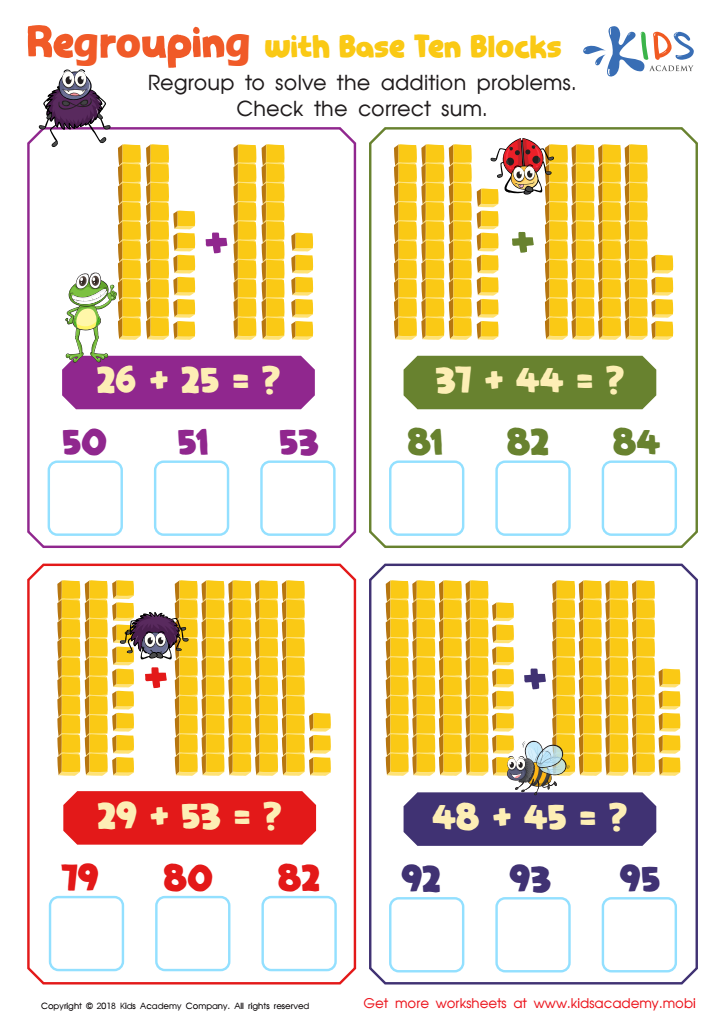
Regrouping With Base Ten Blocks Worksheet
Challenge your child to regroup the base ten blocks and solve the four equations in this worksheet. This exercise requires counting and adding up in base ten. When they are done, help them check the correct sum.
Regrouping With Base Ten Blocks Worksheet
Worksheet
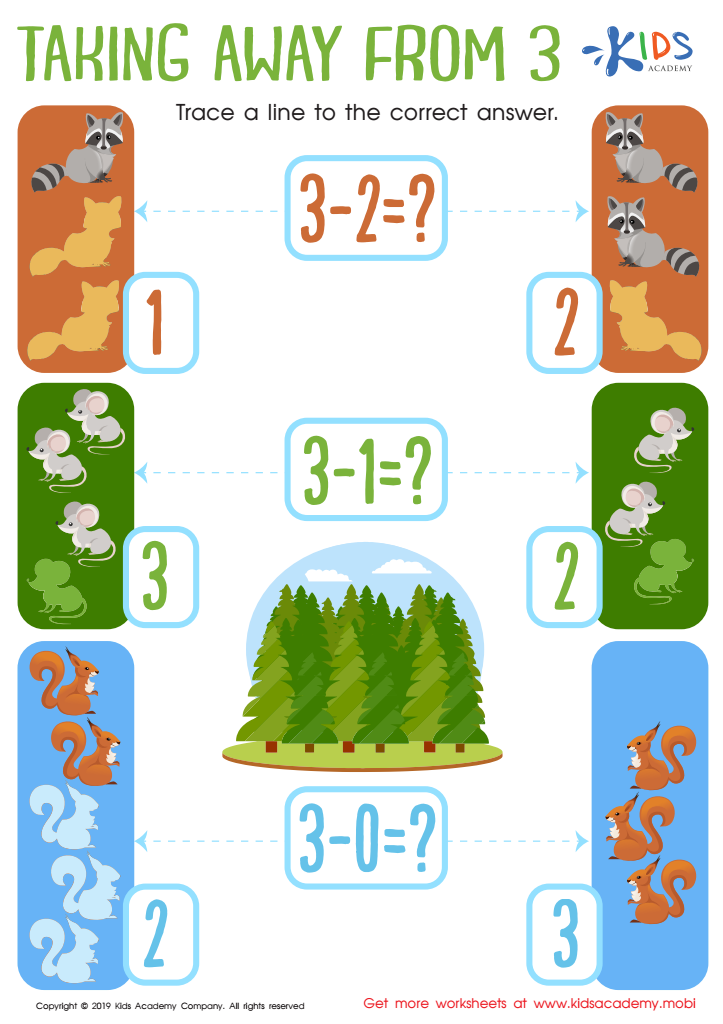
Taking Away From 3 Worksheet
Help your students learn equations and math easily by using this tracing worksheet. It has three different equations that they can count and solve, then trace a line to the correct answer. This will make the learning process fun and exciting.
Taking Away From 3 Worksheet
Worksheet
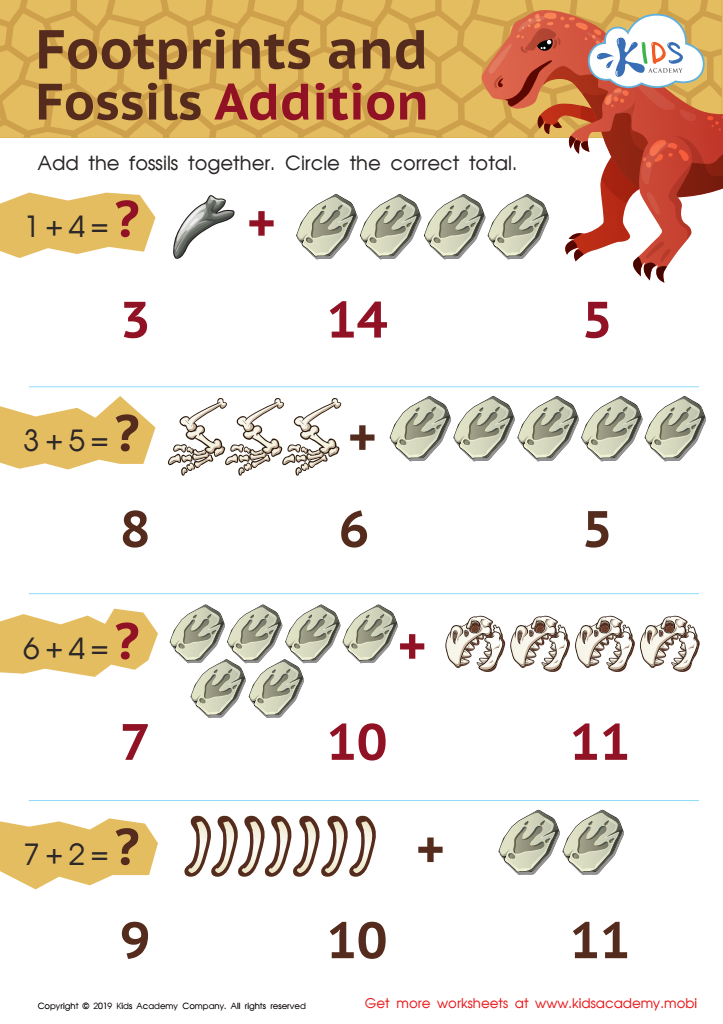
Footprints and Fossils Addition Worksheet
Show your students that addition and subtraction is easy with the right guidance and exercises. Use this worksheet to help them practice by adding fossils and circling the correct total of each equation. Your students will soon see that addition and subtraction is not so intimidating after all.
Footprints and Fossils Addition Worksheet
Worksheet
Join Kids Academy for Free
Who is primarily going to use this learning content?







.jpg)
Enhancing counting skills in children ages 3-8 is crucial for their mathematical development and lays the foundation for future academic success. At this pivotal stage in a child's cognitive development, understanding and mastering counting are essential for a range of more complex mathematical concepts. These include addition, subtraction, multiplication, division, and later, algebra and geometry.
Firstly, counting helps develop number sense, which is the ability to understand numbers and their relationships. It fosters a child's ability to recognize patterns, make estimations, and grasp the concept of quantity. This forms the basis for logical thinking and problem-solving abilities.
Secondly, counting skills are closely linked to other areas of development. These include language skills through counting songs and rhymes, fine motor skills from tasks like counting objects, and social skills through group counting activities. In addition, it helps build confidence and a positive attitude toward math, which is crucial for later academic motivation.
Lastly, early mastery of counting can predict future school success not only in math but also in other subjects. A strong foundation in early mathematical concepts prepares children to handle more advanced topics with greater ease. Ensuring that children develop strong counting skills is therefore a fundamental responsibility of both parents and teachers.








