Enhancing analytical thinking Math Worksheets for Ages 3-8
3 filtered results
-
From - To
Discover our collection of "Enhancing Analytical Thinking Math Worksheets" designed for children ages 3-8! These engaging worksheets aim to develop essential critical thinking skills through fun, interactive activities. Tailored to reinforce analytical reasoning, our worksheets blend play with education, covering various math concepts such as patterns, sorting, comparisons, and logical reasoning. Each worksheet encourages young learners to think outside the box while building a strong foundational understanding of mathematical principles. Perfect for parents and educators, these resources promote cognitive development and prepare children for future academic success. Start fostering analytical skills today with our thoughtfully crafted math worksheets!
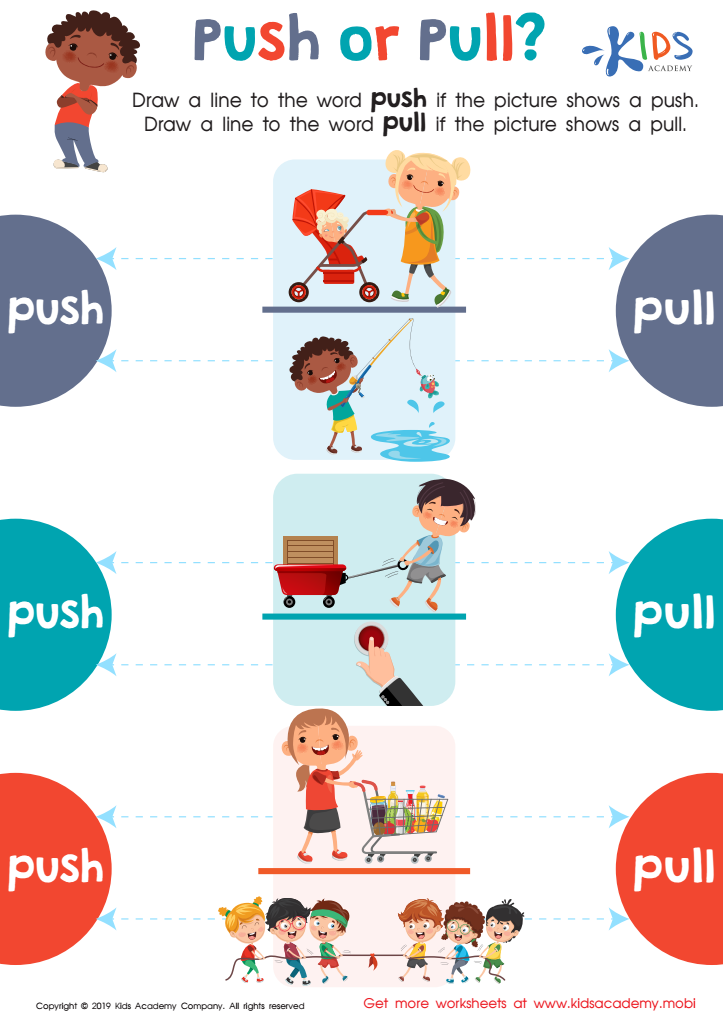
Push or Pull? Worksheet
 Assign to My Students
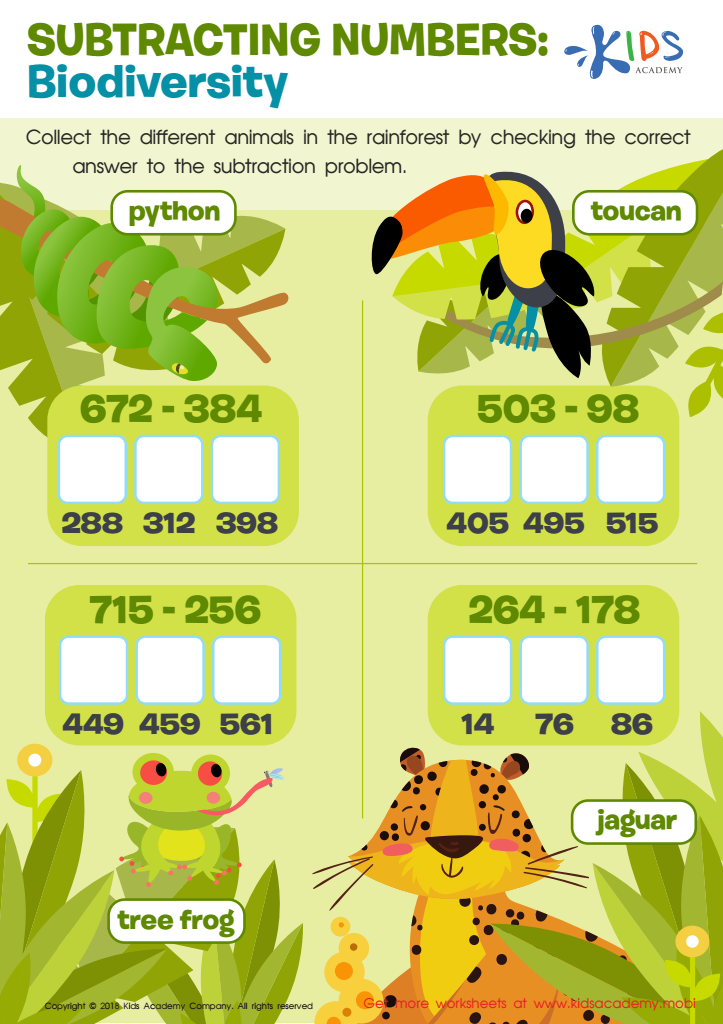
Subtracting Numbers: Biodiversity Worksheet
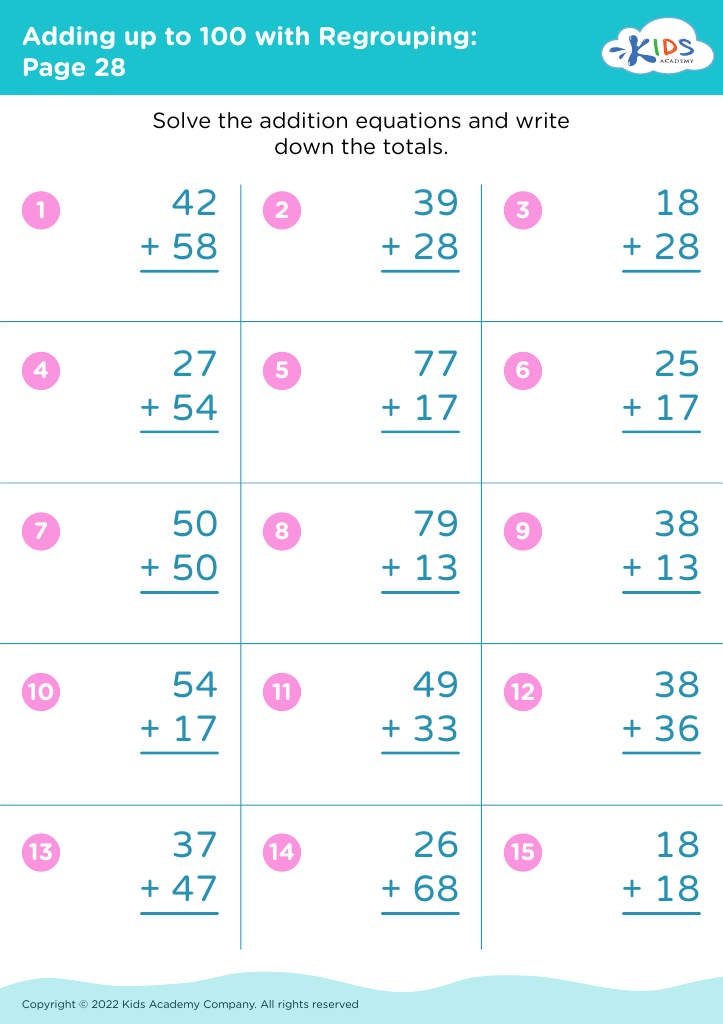






Enhancing analytical thinking in mathematics for children aged 3 to 8 is crucial for their cognitive development and future academic success. At this early stage, children's brains are highly receptive to learning foundational concepts that shape their problem-solving abilities. By fostering analytical thinking, parents and teachers equip children with essential skills such as recognizing patterns, making predictions, and understanding relationships between numbers.
Mathematics at this age serves as more than just numbers; it introduces critical thinking and reasoning processes that are applicable in everyday life. Promoting analytical skills helps children learn to approach problems methodically, encouraging perseverance and creativity as they find solutions.
Moreover, strong analytical thinking in math is linked to improved performance in other subjects, supporting a well-rounded education. It enhances children's ability to communicate their ideas and justify their reasoning—skills that are invaluable in both academic settings and social interactions.
Ultimately, by prioritizing the development of analytical thinking in mathematical contexts, parents and teachers nurture confident learners who are prepared to tackle complex challenges in the future. Investing in these early experiences ensures children build not only mathematical proficiency but also robust 21st-century skills crucial for lifelong learning.








