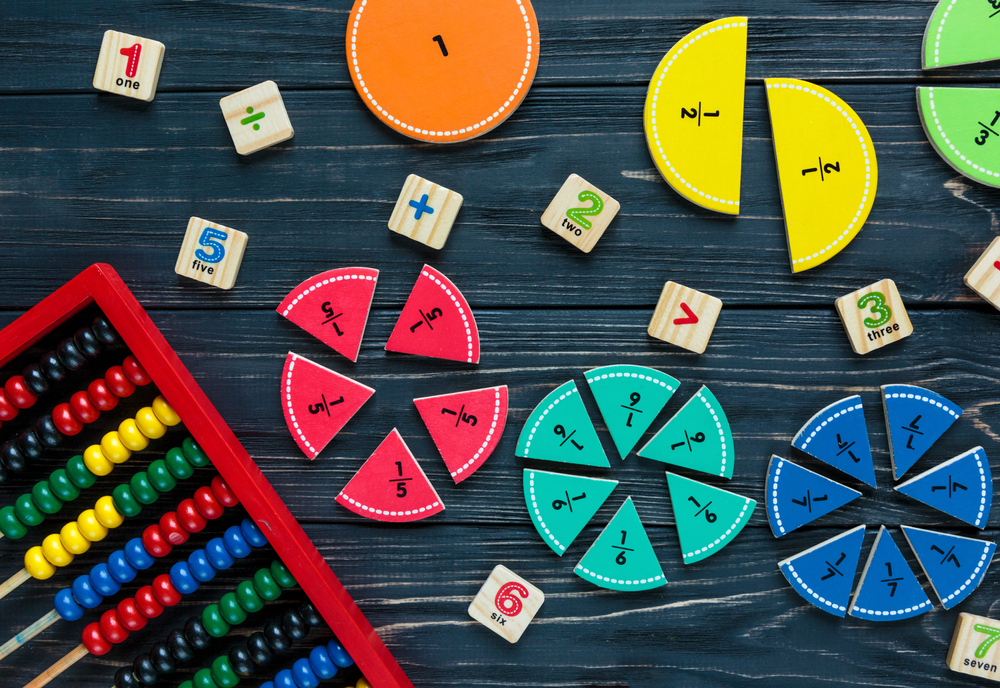
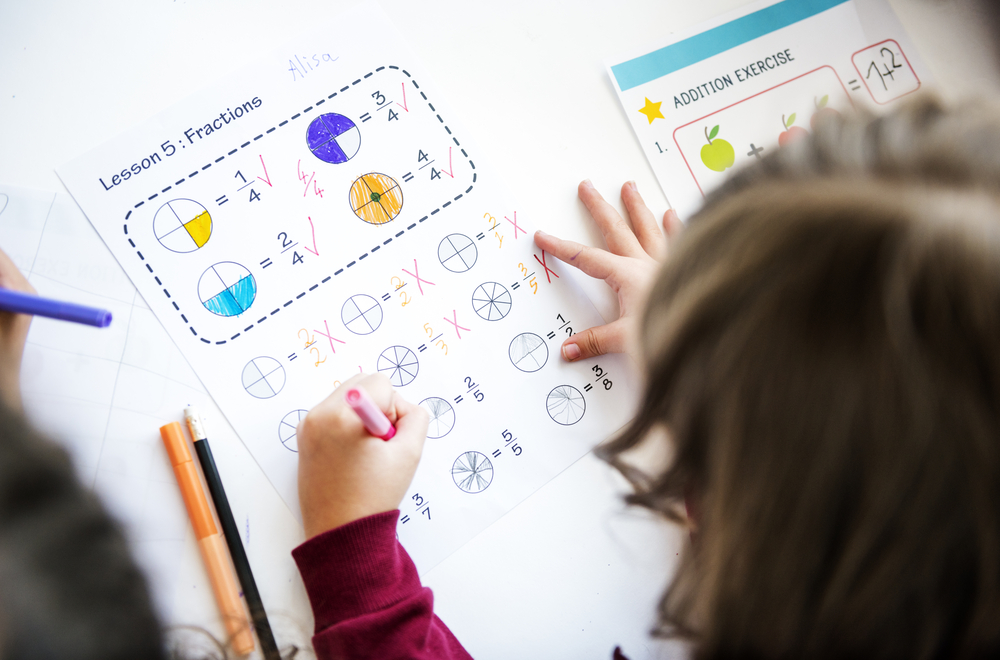
Our Fraction Addition Math Worksheets for ages 3-8 are thoughtfully designed to make learning fun and effective. These engaging resources help young learners grasp the basics of fraction addition through a variety of colorful, easy-to-understand exercises. With charming illustrations and simple instructions, our worksheets provide a solid foundation for developing crucial math skills. Perfect for homeschool or classroom settings, these printables support both teachers and parents in nurturing a love for math in children. Download our Fraction Addition Worksheets today and watch your child's confidence and proficiency in math grow!

Check out this FREE Trial Lesson on Math for age 3-8!

D

Favorites
With answer key
Interactive
  • 3-8
  • Fraction Addition
  • Math
Shared Food Worksheet

Shared Food Worksheet

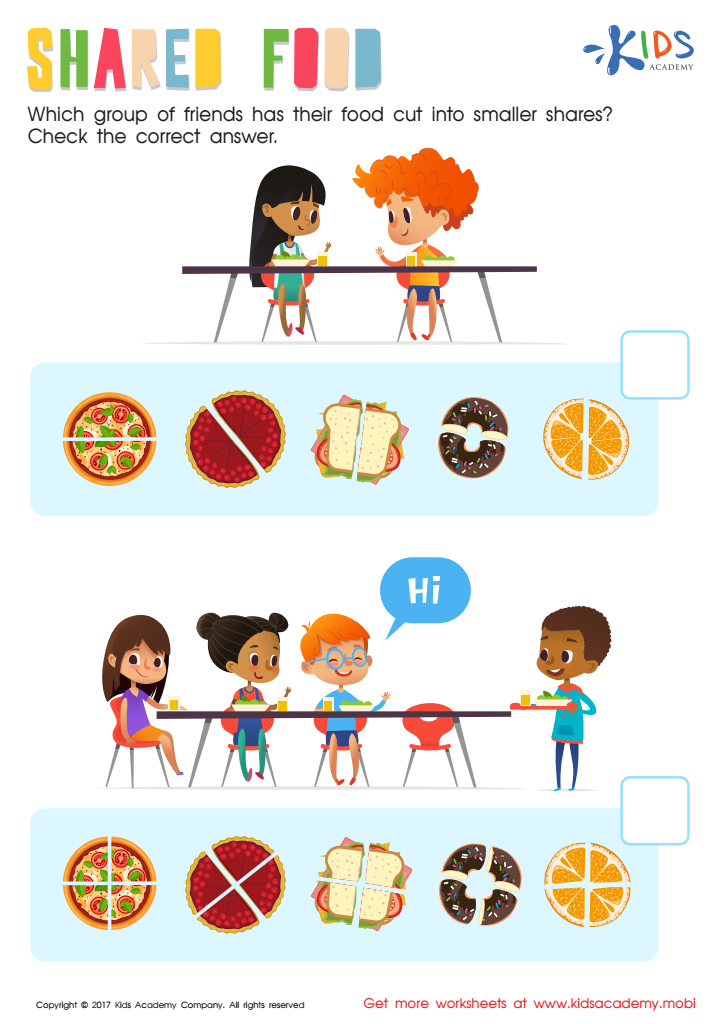
In this worksheet, kids learn about sharing and cutting shapes into equal parts. There are two groups of friends: one with two, the other with four. Ask your child which group has their food cut into smaller shares, and help them find the right answer.
Shared Food Worksheet
Worksheet
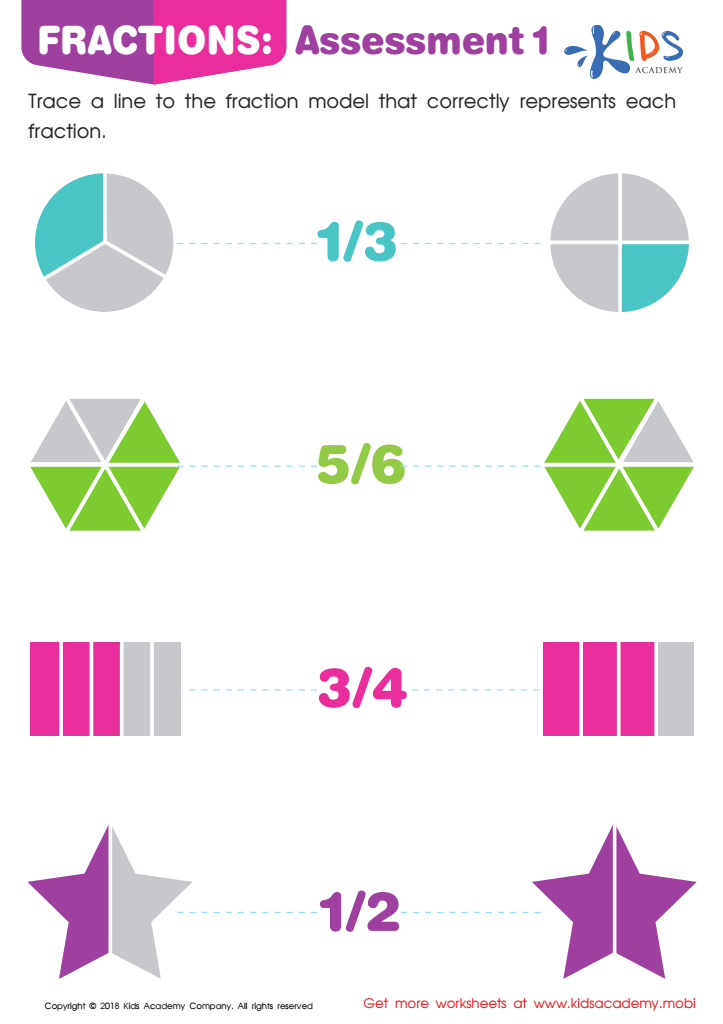
Fractions: Assessment 1 Worksheet

Fractions: Assessment 1 Worksheet

Master fractions easily with this worksheet! It has four sets of fraction models and fraction equations with two models each. Guide your kids to trace a line to the correct fraction model for each equation.
Fractions: Assessment 1 Worksheet
Worksheet
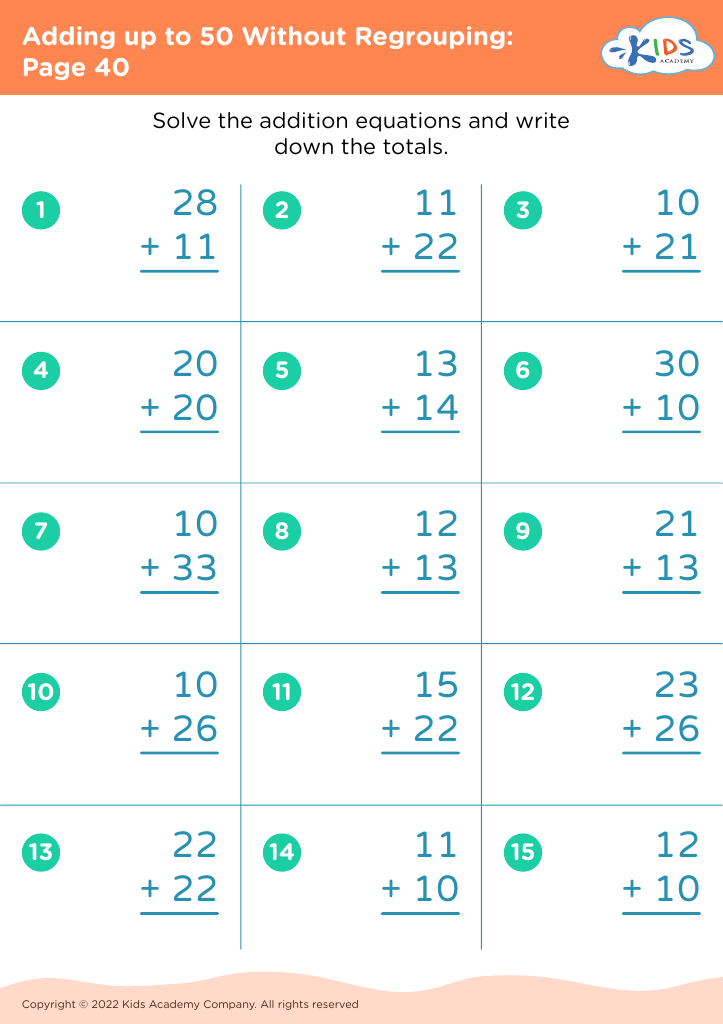
Adding up to 50 Without Regrouping: Page 40
Worksheet
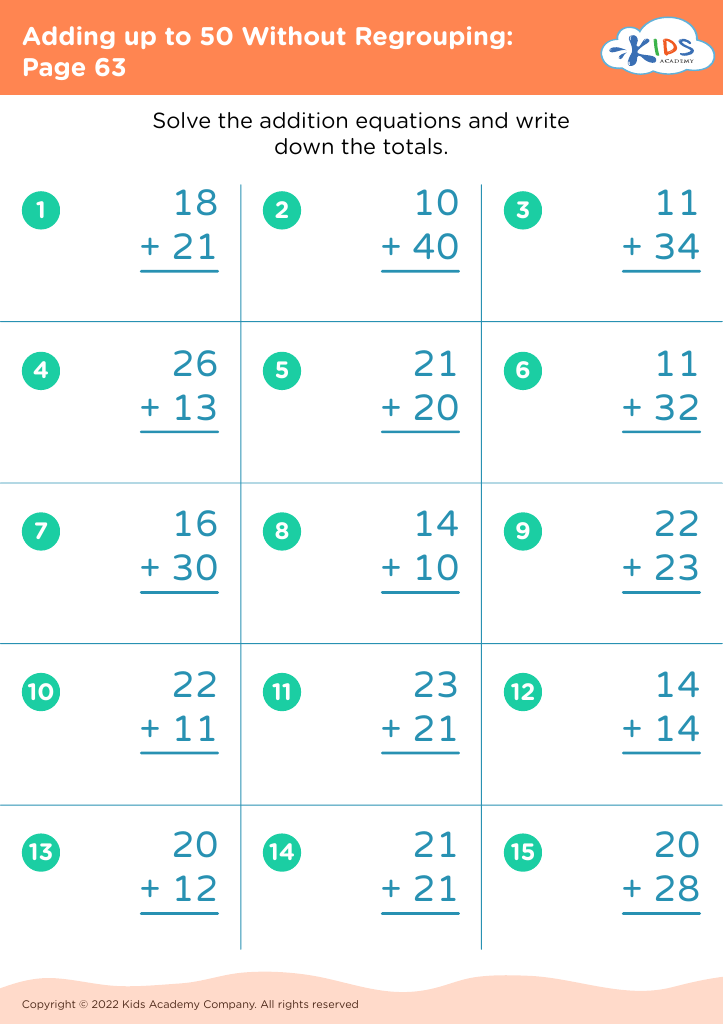
Adding up to 50 Without Regrouping: Page 63
Worksheet
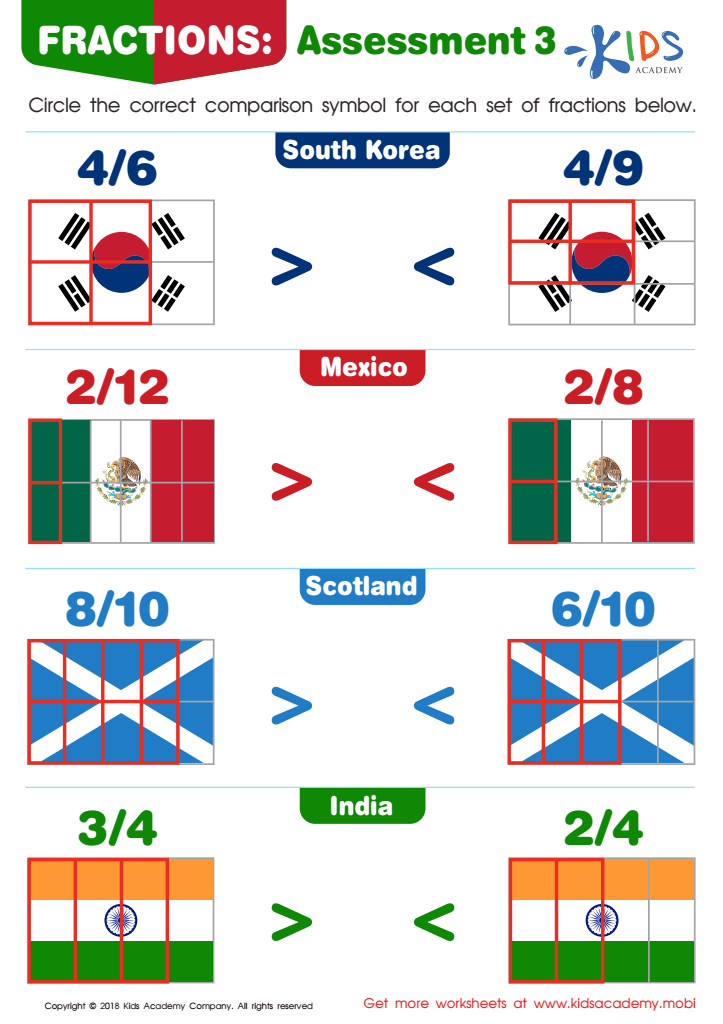
Fractions: Assessment 3 Worksheet
Fractions: Assessment 3 Worksheet
This worksheet helps teach kids about fractions and introduces them to countries and their flags. Have them read the country names and point to the flags. Then help them assess the fractions, and ask them to circle the symbol that shows their values.
Fractions: Assessment 3 Worksheet
Worksheet
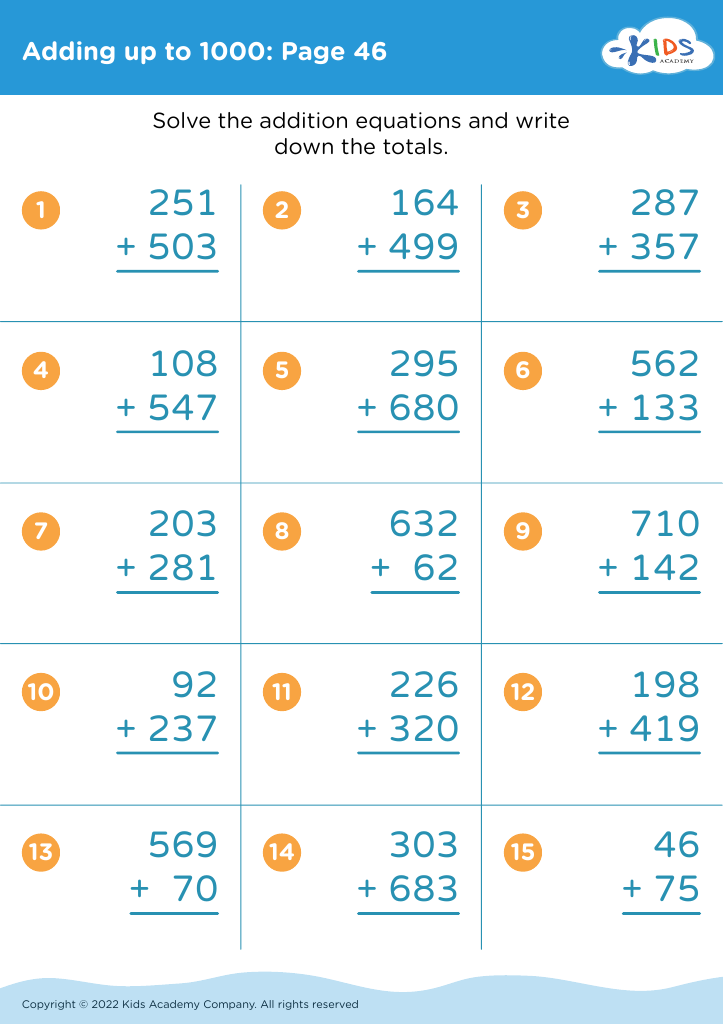
Adding up to 1000: Page 46

Adding up to 1000: Page 46

Adding up to 1000: Page 46
Worksheet
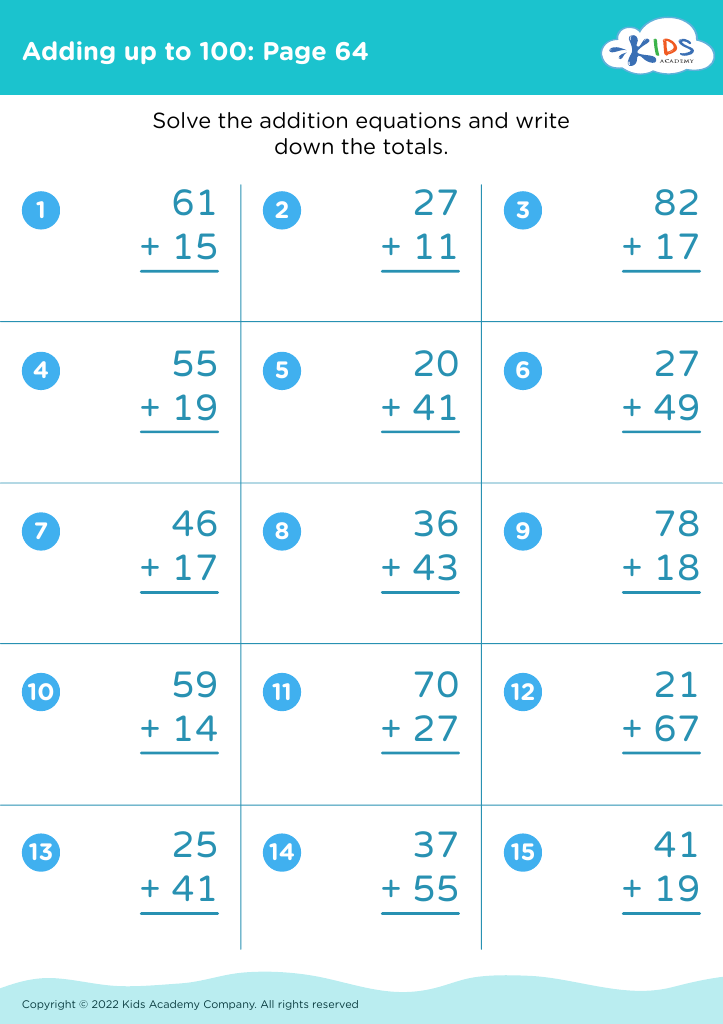
Adding up to 100: Page 64

Adding up to 100: Page 64

Adding up to 100: Page 64
Worksheet
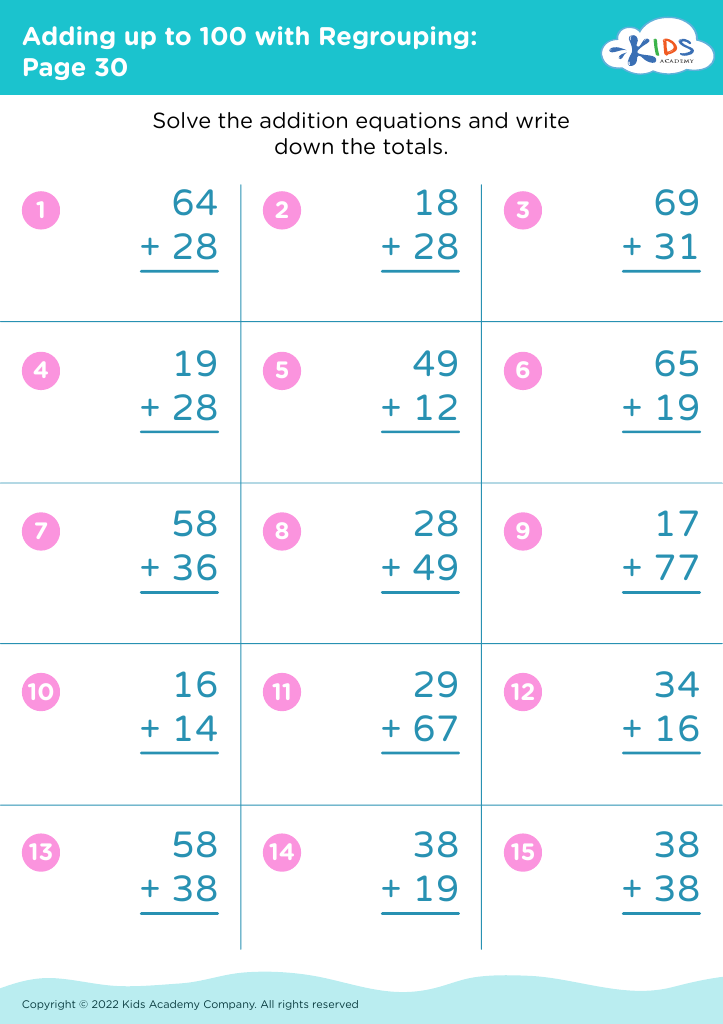
Adding up to 100 with Regrouping: Page 30
Worksheet
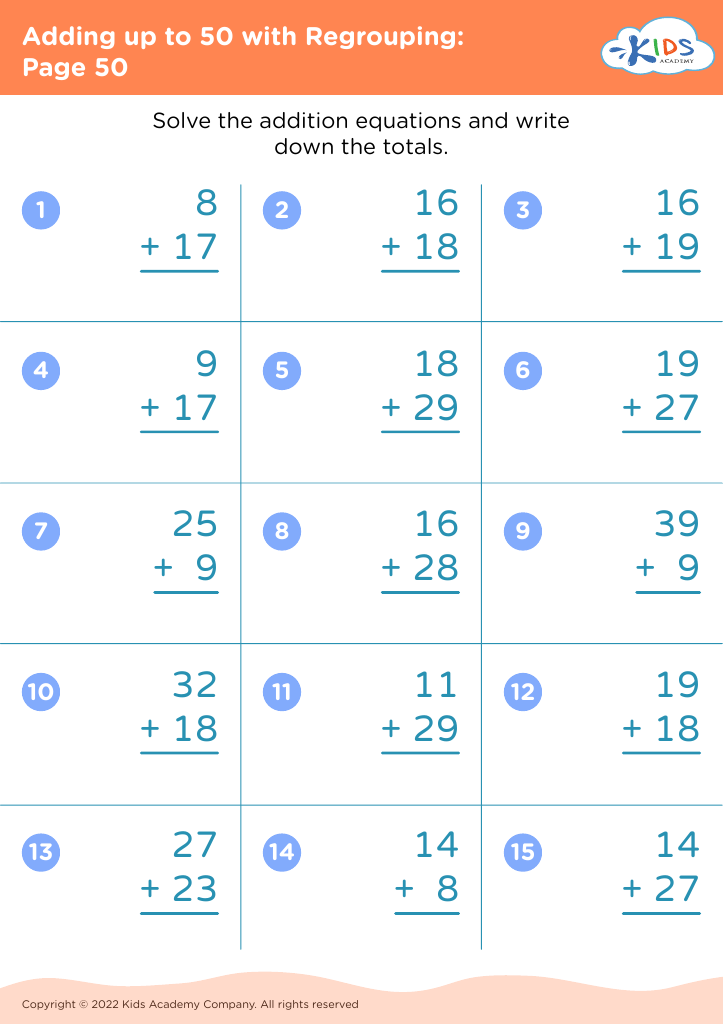
Adding up to 50 with Regrouping: Page 50
Worksheet
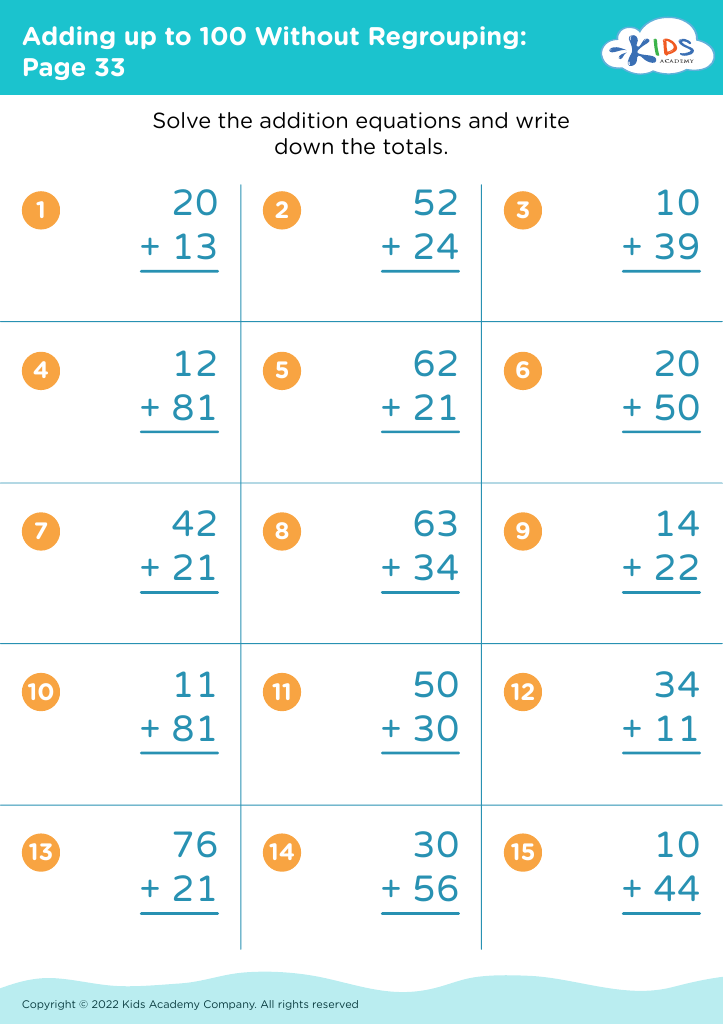
Adding up to 100 Without Regrouping: Page 33
Worksheet
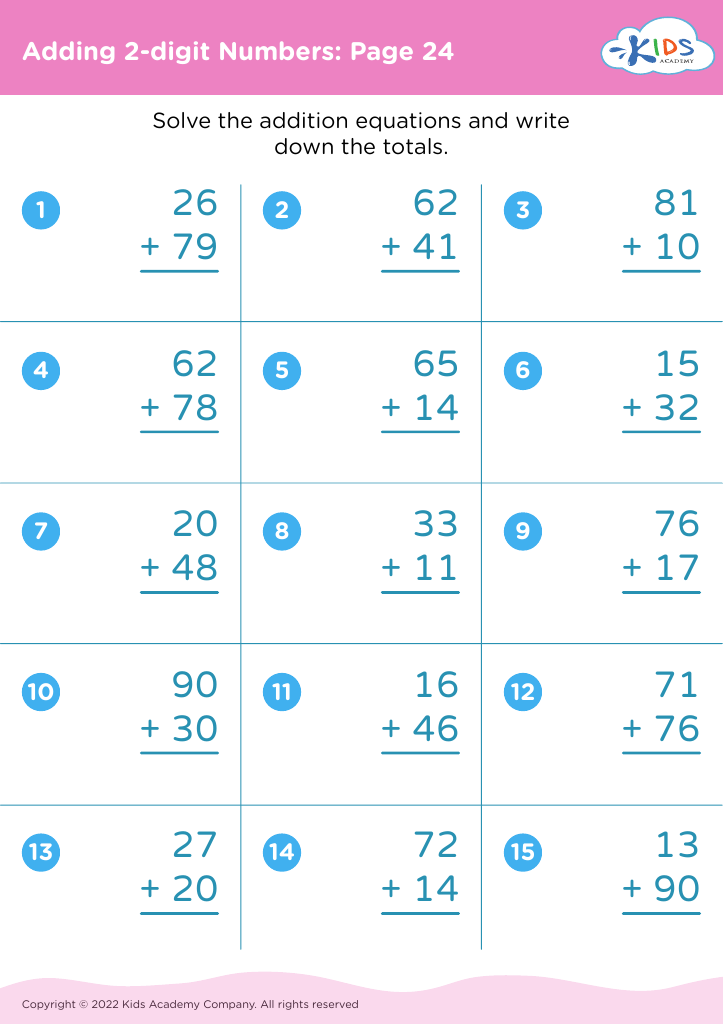
Adding 2-digit Numbers: Page 24

Adding 2-digit Numbers: Page 24

Adding 2-digit Numbers: Page 24
Worksheet
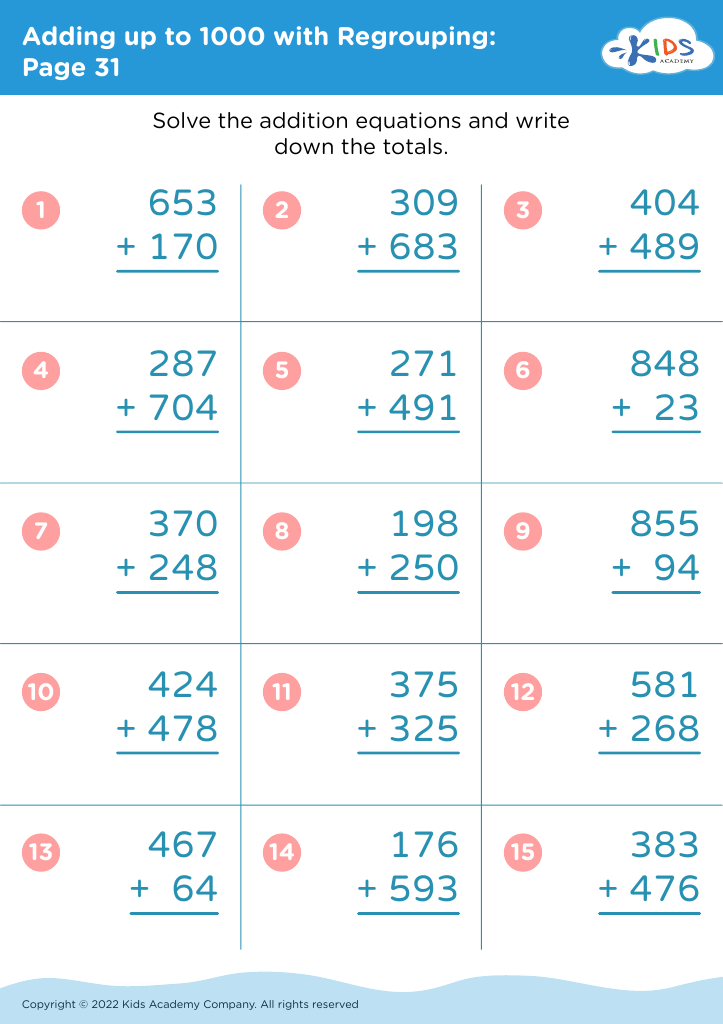
Adding up to 1000 with Regrouping: Page 31
Worksheet
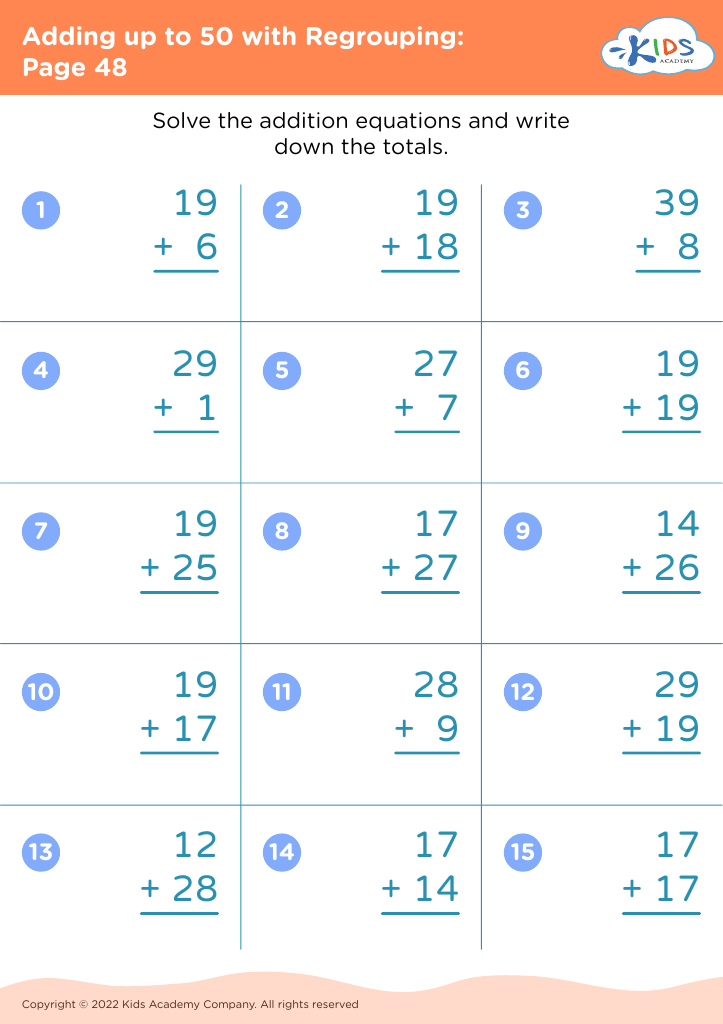
Adding up to 50 with Regrouping: Page 48
Worksheet
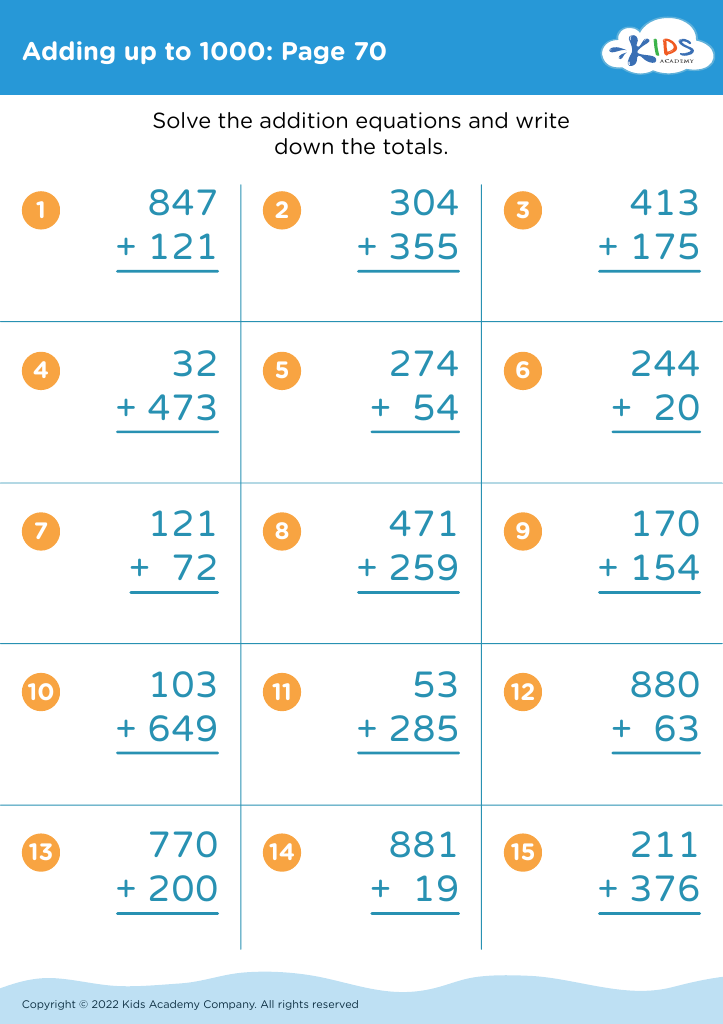
Adding up to 1000: Page 70

Adding up to 1000: Page 70

Adding up to 1000: Page 70
Worksheet
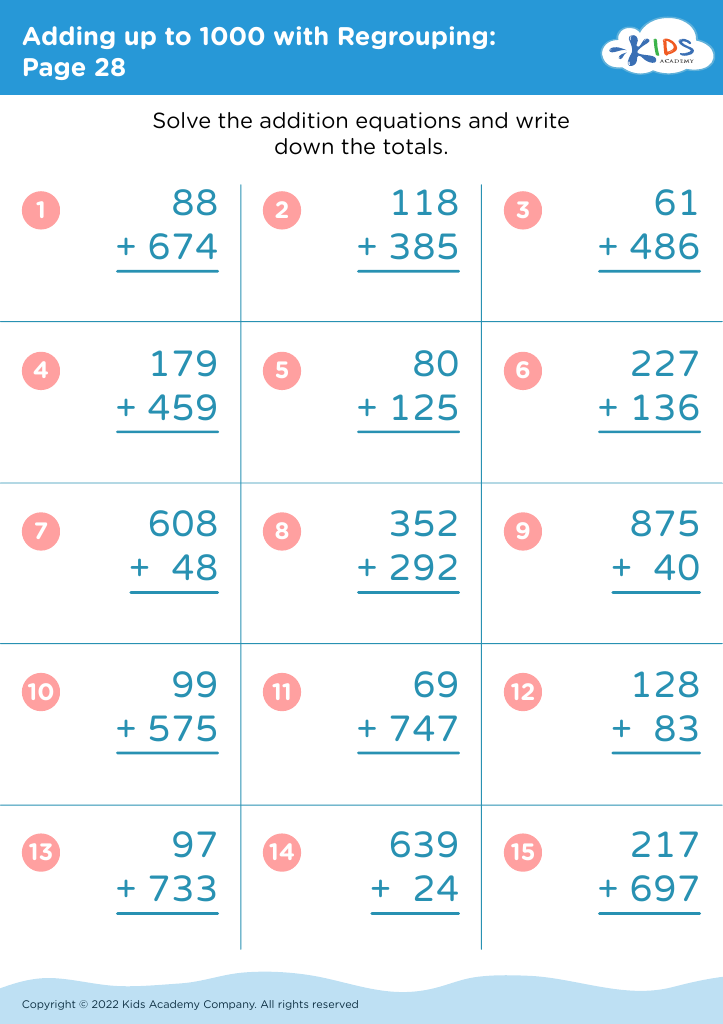
Adding up to 1000 with Regrouping: Page 28
Worksheet
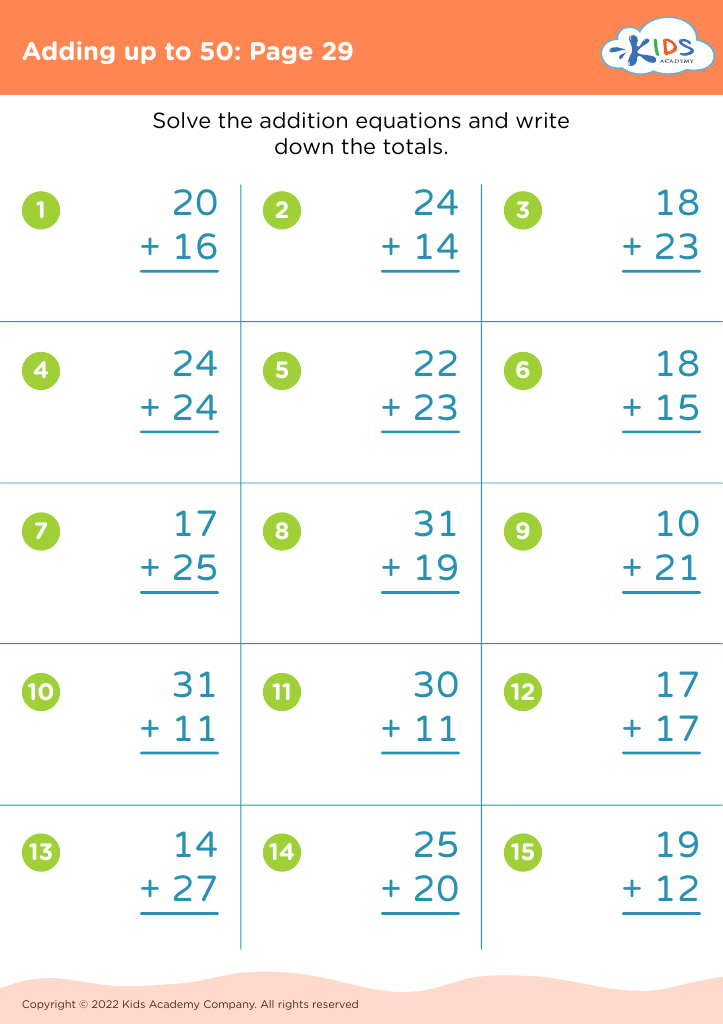
Adding up to 50: Page 29

Adding up to 50: Page 29

Adding up to 50: Page 29
Worksheet
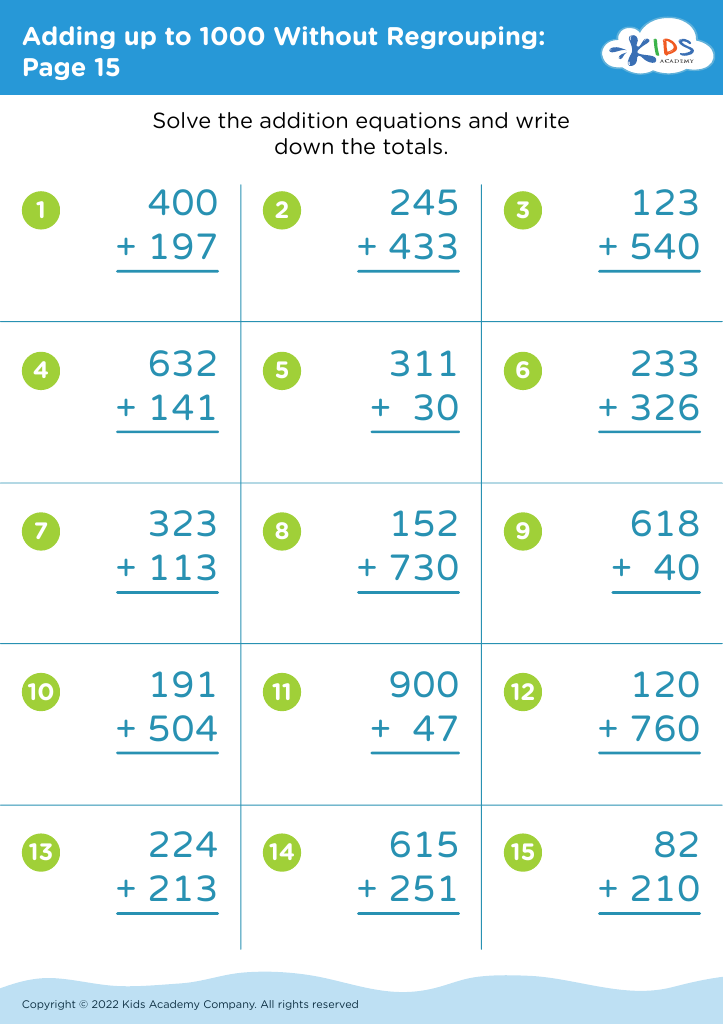
Adding up to 1000 Without Regrouping: Page 15
Worksheet


Understanding fraction addition is foundational for young children's mathematical development, even though it might seem quite advanced for ages 3-8. Introducing the basic concepts early ensures that children develop strong number sense and problem-solving skills that will benefit them throughout their education.

Firstly, learning to add fractions helps students grasp the idea that numbers can be expressed in different ways. For instance, understanding that two halves make a whole bolsters their ability to see relationships between numbers. This forms a crucial step in mastering more complex math topics they will encounter later.

Secondly, fraction addition supports their understanding of division, sharing, and proportionality in real-world contexts. Simple activities like sharing a pizza or a cake into equal parts allow kids to visualize and practically apply what they are learning, making math more enjoyable and accessible.

Moreover, developing fraction skills at an early age can enhance cognitive abilities, including logical thinking and pattern recognition. These cognitive skills are not only important in math but are transferable to other subjects and everyday decision-making.

Lastly, fostering a positive attitude towards math early on can prevent anxiety and build confidence. Fun, interactive fraction addition exercises can transform learning math into an exciting and engaging activity.

In sum, introducing fraction addition timely ensures children build a robust mathematical foundation, leading to advanced comprehension and application in later academic pursuits and life skills.