Fraction representation Math Worksheets for Ages 3-8
5 filtered results
-
From - To
Explore our engaging Fraction Representation Math Worksheets, designed specifically for children aged 3-8! These worksheets introduce young learners to the foundational concepts of fractions through fun, interactive activities. Each worksheet includes varied exercises that help kids visualize fractions using pictures, shapes, and real-life examples. By incorporating playful imagery and relatable scenarios, we encourage a love for math while building essential skills. Our printable resources cater to diverse learning styles, making math both enjoyable and approachable. Perfect for classroom settings or at-home learning, these worksheets are an excellent tool for nurturing math confidence in early learners. Start your fraction adventure today!
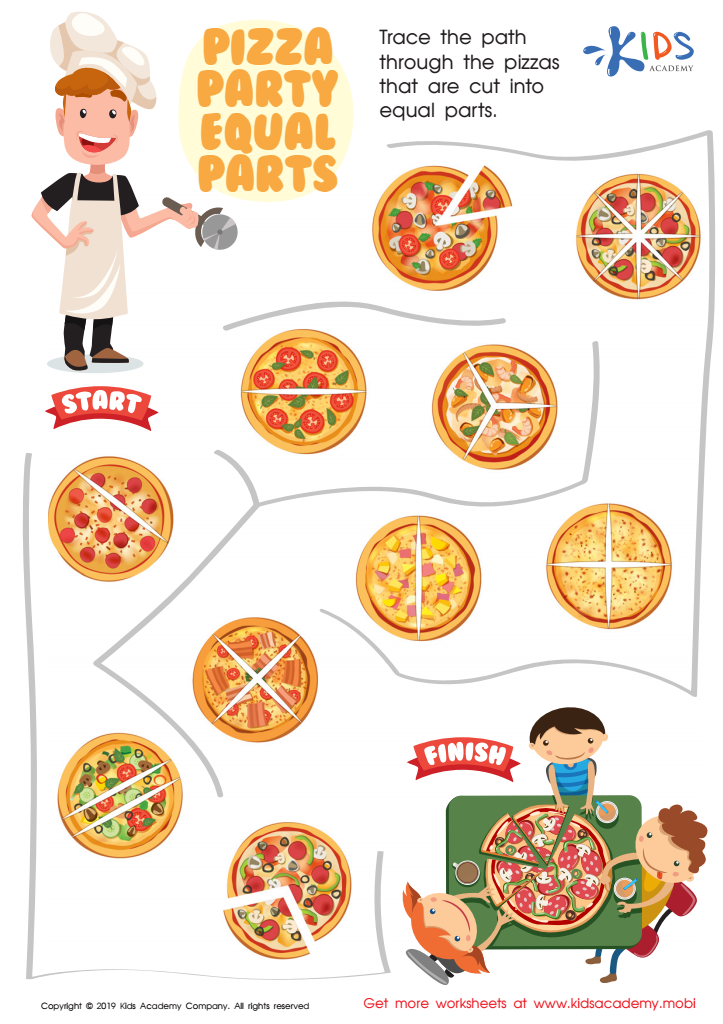
Pizza Party Equal Parts Worksheet
 Assign to My Students
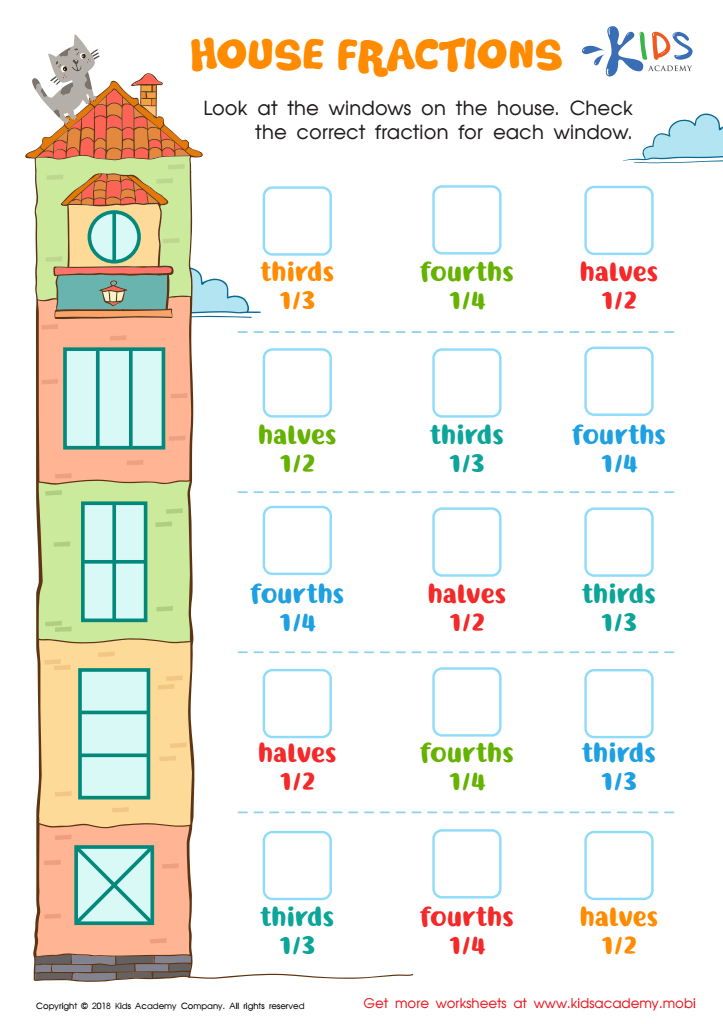
House Fractions Worksheet
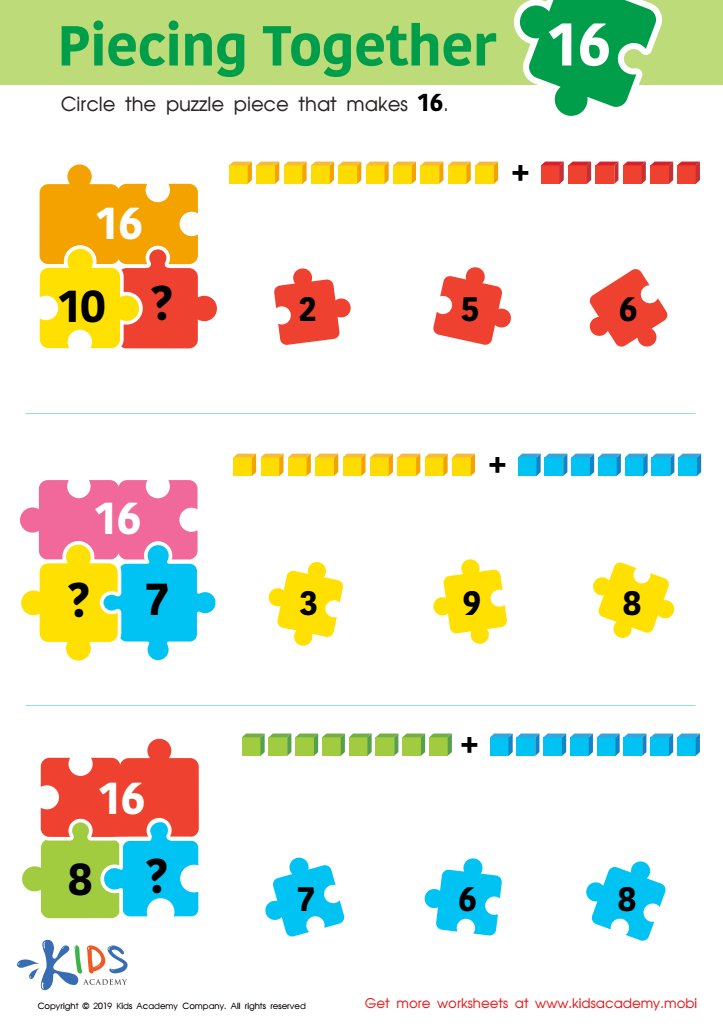
Piecing Together 16 Worksheet
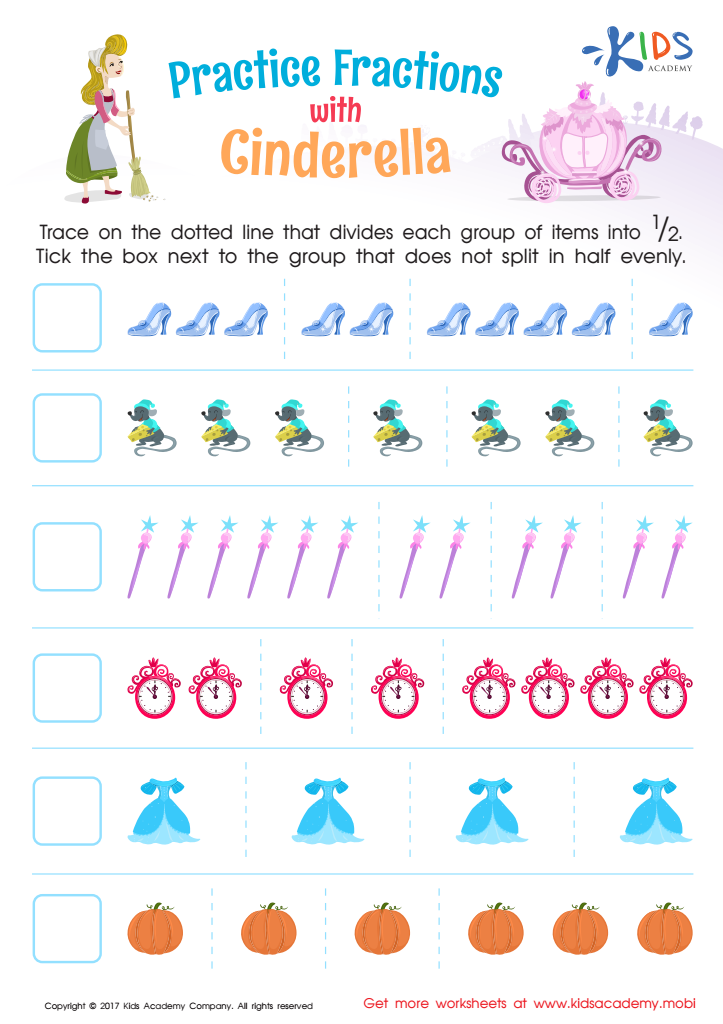
Fractions: Cinderella Printable







Understanding fraction representation is fundamental for children aged 3-8 as it lays the groundwork for their future mathematical skills. At this age, children are naturally curious and eager to learn about relationships between quantities, making it an optimal time to introduce fractions. Fractions are not just abstract concepts; they are essential for understanding part-to-whole relationships, which appear frequently in everyday life—think sharing pizza slices or measuring ingredients for a recipe.
By emphasizing fraction representation, parents and teachers help children develop critical thinking and problem-solving abilities. Visual aids like fraction circles or number lines can make these concepts tangible, fostering a deeper comprehension. This understanding supports later mathematical topics, such as ratios, percentages, and algebra.
Moreover, grasping fractions promotes number fluency and strengthens foundational skills necessary for future learning. It encourages kids to engage in discussions about their thought processes, enhancing verbal articulation of mathematical reasoning.
Ultimately, familiarity with fractions in early years can not only boost academic performance but also cultivate a positive attitude towards math. An early investment in these skills empowers children to build confidence and competence for more complex mathematical challenges ahead.








