
Improve problem-solving Math Worksheets for Ages 3-8
4 filtered results
Difficulty Level
Grade
Age
-
From - To
Subject
Activity
Standards
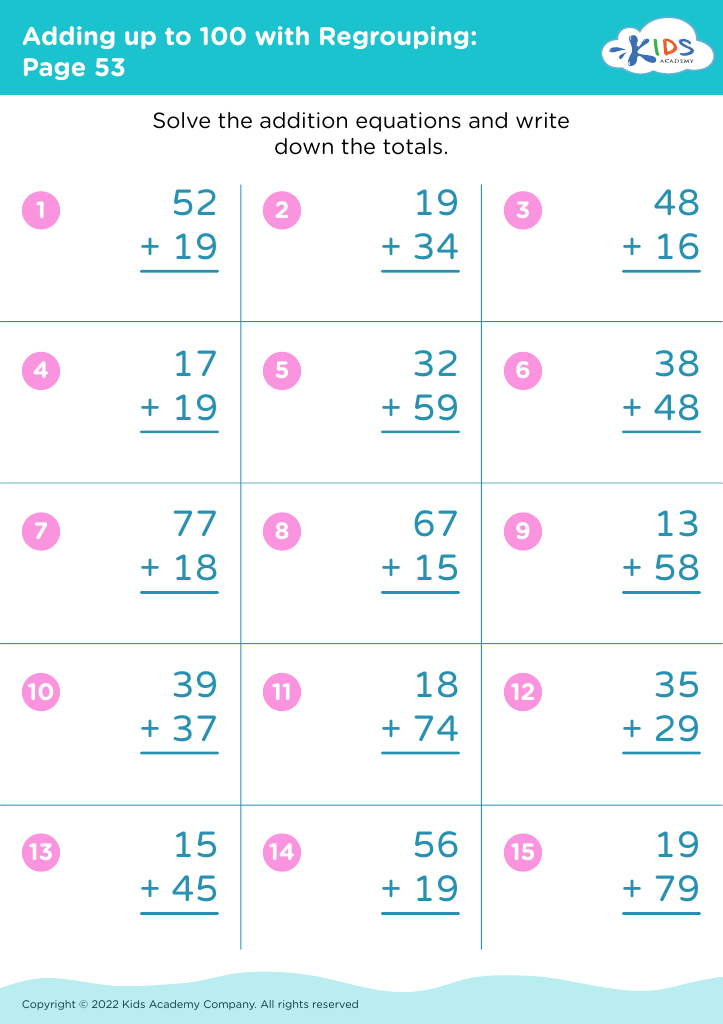
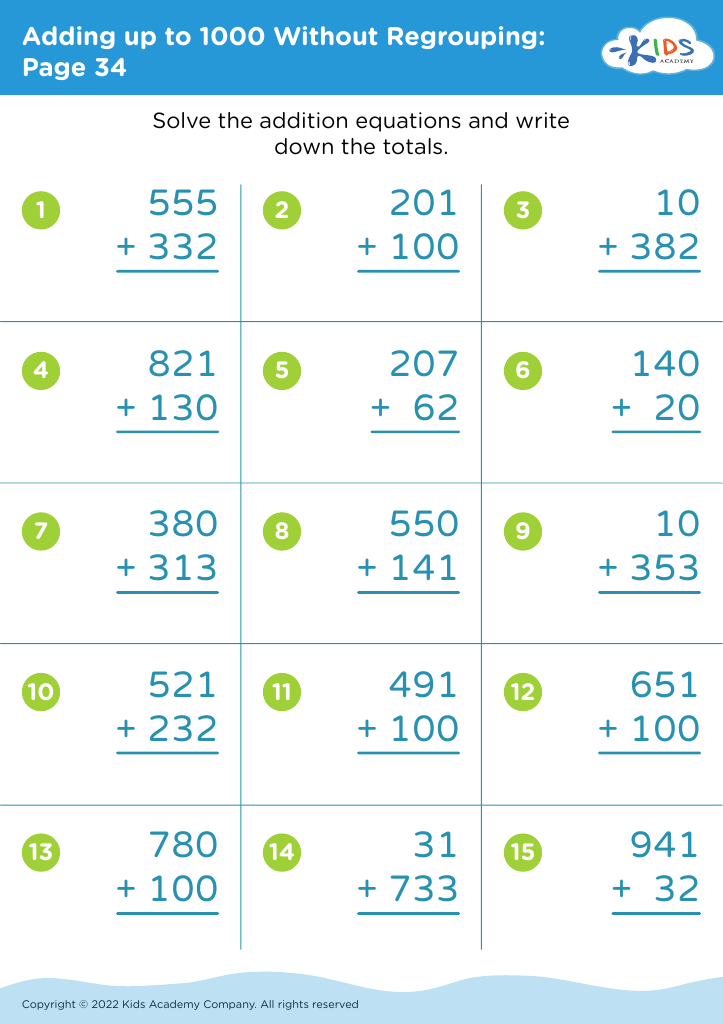
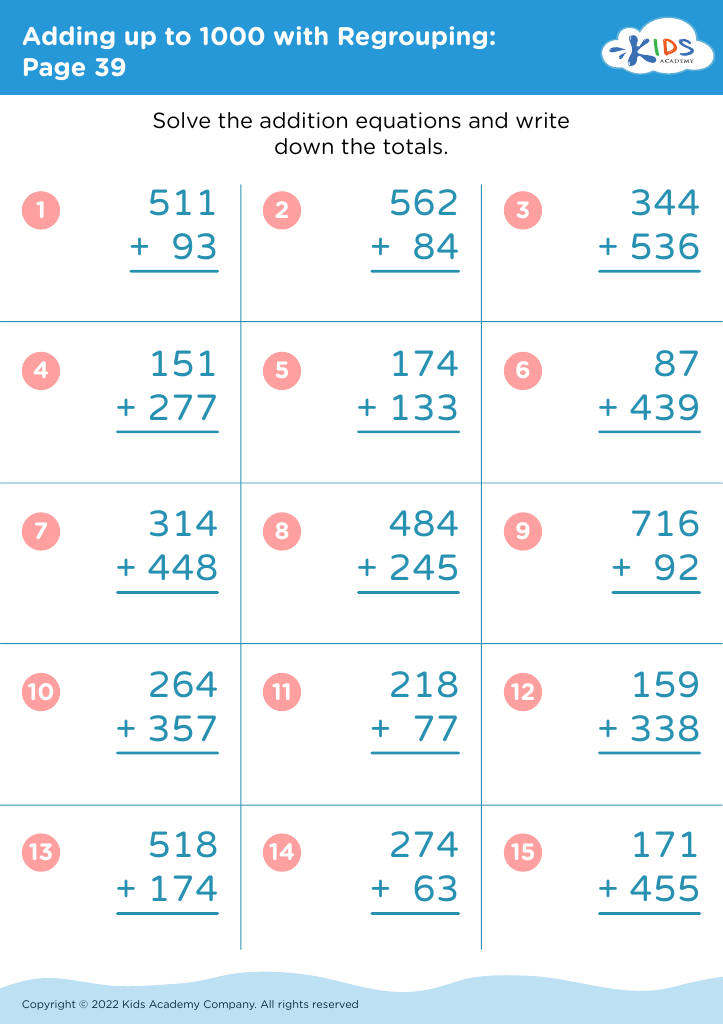
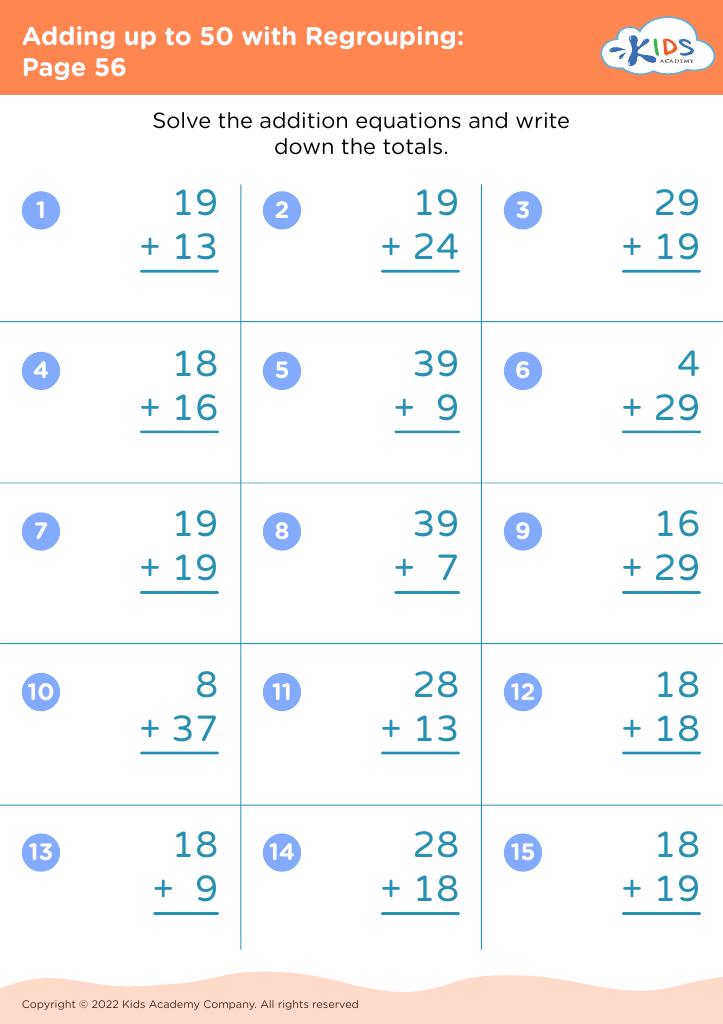
Welcome to our "Improve Problem-Solving Math Worksheets" page, designed specifically for children ages 3-8. These engaging worksheets aim to enhance critical thinking and problem-solving skills through fun and interactive math challenges. Each worksheet is carefully crafted to cater to different learning levels, ensuring every child can build confidence while mastering essential math concepts. From simple addition and subtraction to basic patterns and shapes, our resources support the development of mathematical reasoning in a playful manner. Perfect for both classroom and home use, these worksheets help pave the way for a strong mathematical foundation in young learners. Start exploring today!
Favorites
With answer key
Interactive
Join Kids Academy for Free
Who is primarily going to use this learning content?








Improving problem-solving math skills in children aged 3-8 is essential for their cognitive development and future academic success. At this young age, the foundation for critical thinking is laid, and math problem-solving fosters skills such as reasoning, logic, and persistence. Engaging in math challenges enhances children's ability to think independently, make decisions, and approach issues thoughtfully — skills that extend far beyond the classroom.
Parents and teachers play a crucial role in nurturing these abilities. Early intervention in math helps children develop a positive attitude towards the subject, promoting lifelong learning and enjoyment. Moreover, mathematical problem-solving encourages children to connect concepts with real-world applications, enhancing their understanding and relatability to everyday situations.
By focusing on these skills, educators can cultivate resilience as children learn to navigate challenges and setbacks while solving problems. Parents can reinforce these lessons at home, making math an integrated part of daily life through fun activities and games. Ultimately, empowering young learners in problem-solving math equips them not just academically, but also socially and emotionally, laying the groundwork for successful, confident adults in an increasingly complex world. Engaging in early math problem-solving is an investment in a child's holistic development and future potential.








