Learning number patterns Math Worksheets for Ages 3-8
4 filtered results
-
From - To
Unlock the magic of mathematics with our engaging Learning Number Patterns Math Worksheets designed for children aged 3-8! These worksheets provide a fun and interactive way to help young learners recognize, create, and extend number patterns, building essential counting and analytical skills. Each worksheet is tailored to different learning levels, ensuring that every child can participate and grow at their own pace. Through captivating visuals and hands-on activities, kids will enjoy exploring sequences and relationships, laying a strong foundation for future math success. Enhance your child’s learning journey today with our colorful and educational number patterns worksheets!
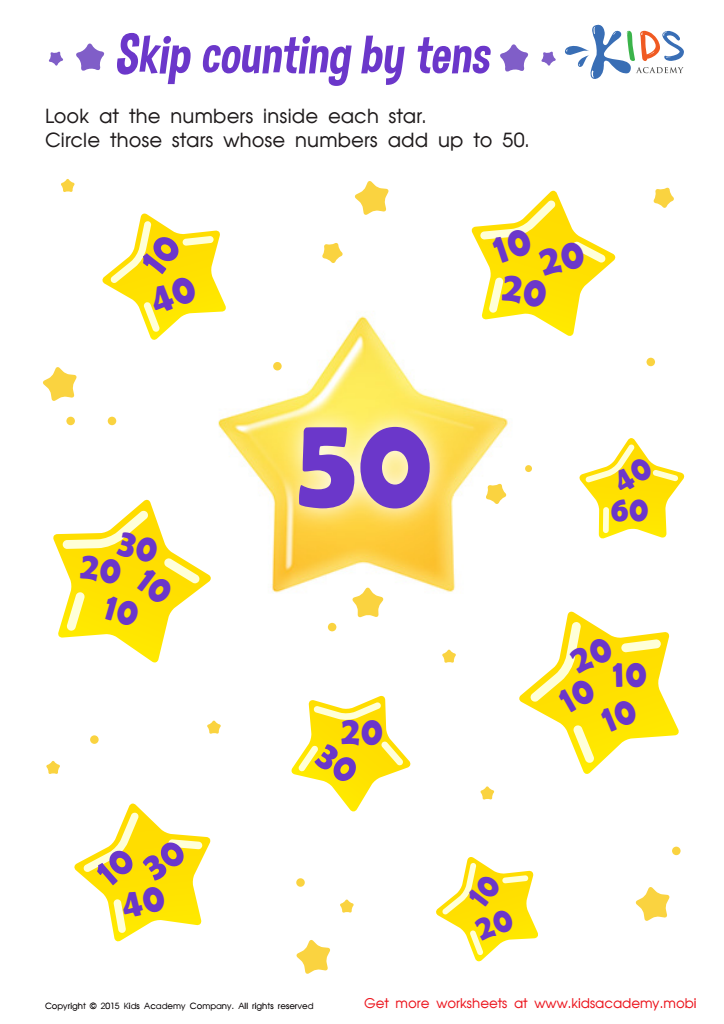
Learn Dozens: Skip Counting by Tens Printable
 Assign to My Students








Learning number patterns is foundational for children aged 3-8, as it paves the way for their future mathematical understanding and problem-solving skills. For parents and teachers, recognizing the importance of this early skill can significantly impact a child's educational journey. Number patterns help children identify relationships between numbers and recognize order and structure, which are crucial for mastering more complex mathematical concepts later on, such as addition, subtraction, multiplication, and beyond.
Engaging children with patterns nurtures their cognitive abilities, improving logical thinking and critical reasoning. These skills are not only vital in math but also enhance their capabilities in science, technology, engineering, and even the arts. Additionally, understanding patterns fosters persistence and patience, qualities that are essential for lifelong learning.
Moreover, introducing patterns can be a fun and interactive way to engage young learners, making math enjoyable and accessible. This early positive experience with math reduces anxiety about the subject as they grow. By creating a strong foundation in recognizing and understanding number patterns, parents and teachers equip children with essential tools that promote both academic success and a love for learning, ultimately fostering confidence and resilience in their educational endeavors.








