Mental math development Math Worksheets for Ages 3-8
3 filtered results
-
From - To
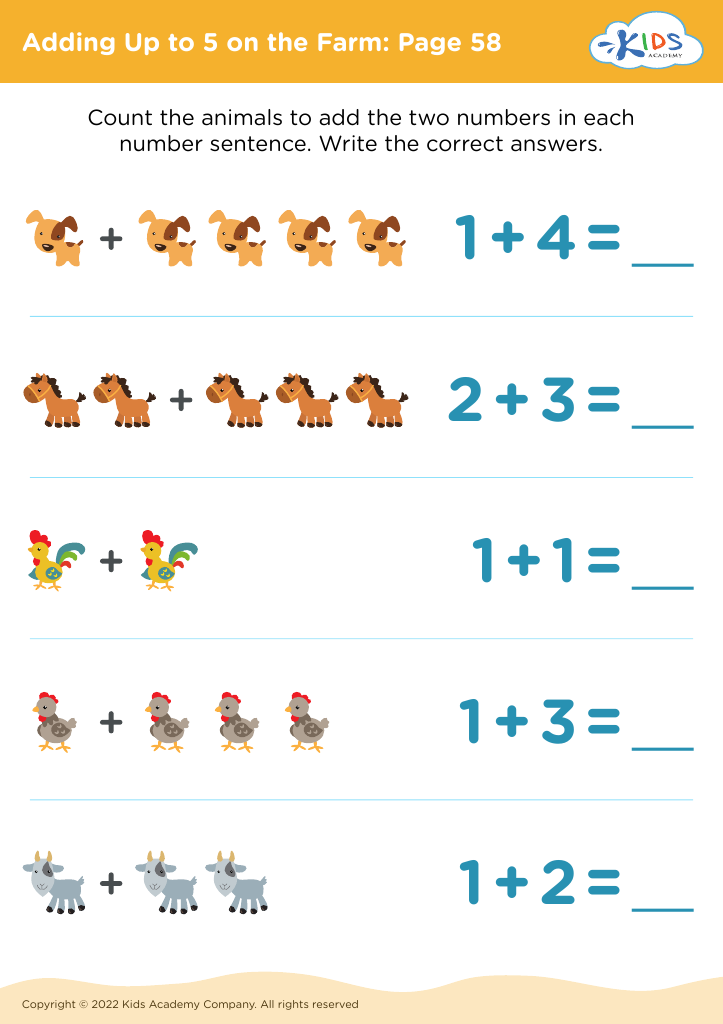
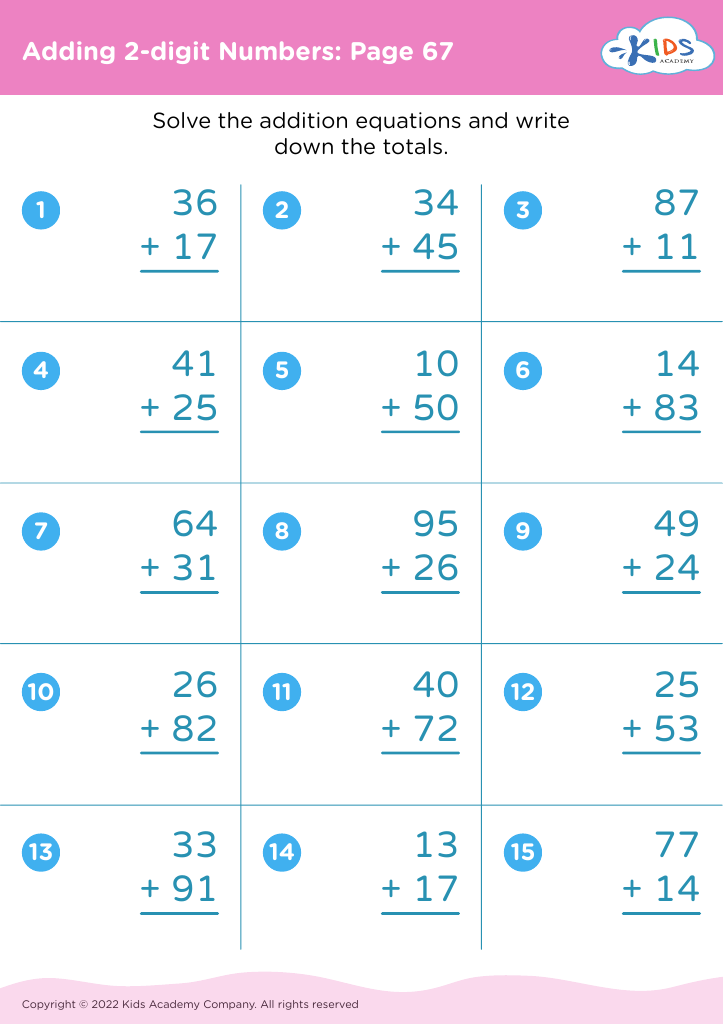
Boost your child’s numerical fluency with our engaging Mental Math Development Math Worksheets, tailor-made for ages 3-8. These fun and interactive printables are designed to enhance counting, addition, subtraction, and multiplication skills, fostering critical thinking and problem-solving abilities. Perfect for home or classroom use, our worksheets offer a variety of activities that cater to different learning styles, ensuring young learners build confidence and proficiency in mental math. Help your child unlock the joy of numbers and achieve math mastery through structured practice with colorful and captivating exercises, designed by educational experts at Kids Academy.
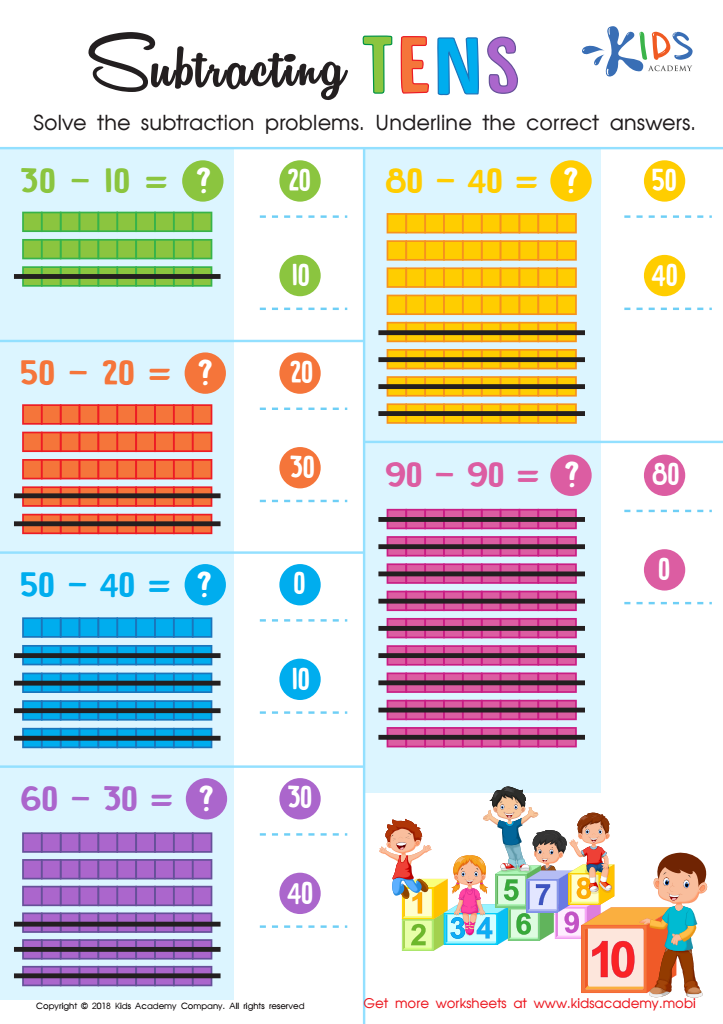
Subtracting Tens Worksheet
 Assign to My Students








Mental math development in children aged 3-8 is crucial for their cognitive and academic growth. Mental math refers to performing basic arithmetic calculations like addition, subtraction, multiplication, and division in one's head, without relying on written methods or electronic aids. Here's why parents and teachers should prioritize it:
-
Foundation of Numeracy: Early mental math lays the groundwork for more complex mathematical concepts. Mastering these skills ensures a robust numerical foundation, making future learning more accessible and less intimidating.
-
Boosts Cognitive Skills: Engaging in mental math stimulates young minds, enhancing memory, concentration, and problem-solving abilities. These cognitive skills are not only vital for math but also beneficial across other academic subjects and daily life.
-
Builds Confidence: Success in mental math fosters a sense of accomplishment and self-confidence. When children feel confident in their mathematical abilities, they are more likely to approach new challenges with a positive mindset.
-
Promotes Analytical Thinking: Mental math encourages logical reasoning and quick thinking. Children learn to analyze problems, recognize patterns, and develop efficient strategies for solving them.
-
Everyday Relevance: Math is omnipresent in everyday life—from shopping to time management. Proficiency in mental math helps children navigate their world more effectively and fosters practical life skills that will be useful well into adulthood.
By nurturing these skills early on, parents and teachers can provide a strong educational foundation that supports lifelong learning and growth.








