
Multiplication basics Math Worksheets for Ages 3-8
3 filtered results
Difficulty Level
Grade
Age
-
From - To
Subject
Activity
Standards
Unlock the world of mathematics for your little learners with our "Multiplication Basics Math Worksheets" designed specifically for ages 3-8! These engaging worksheets introduce multiplication concepts through colorful visuals and fun activities, making learning enjoyable and effective. Each worksheet reinforces critical skills, from understanding repeated addition to mastering multiplication tables, while catering to varying skill levels. Parents and educators will appreciate the structured approach that promotes independent practice and effective comprehension. Whether for at-home learning or classroom use, our multiplication worksheets help children build a strong foundation in math. Start your child’s math journey today with our easy-to-use resources!
Favorites
With answer key
Interactive
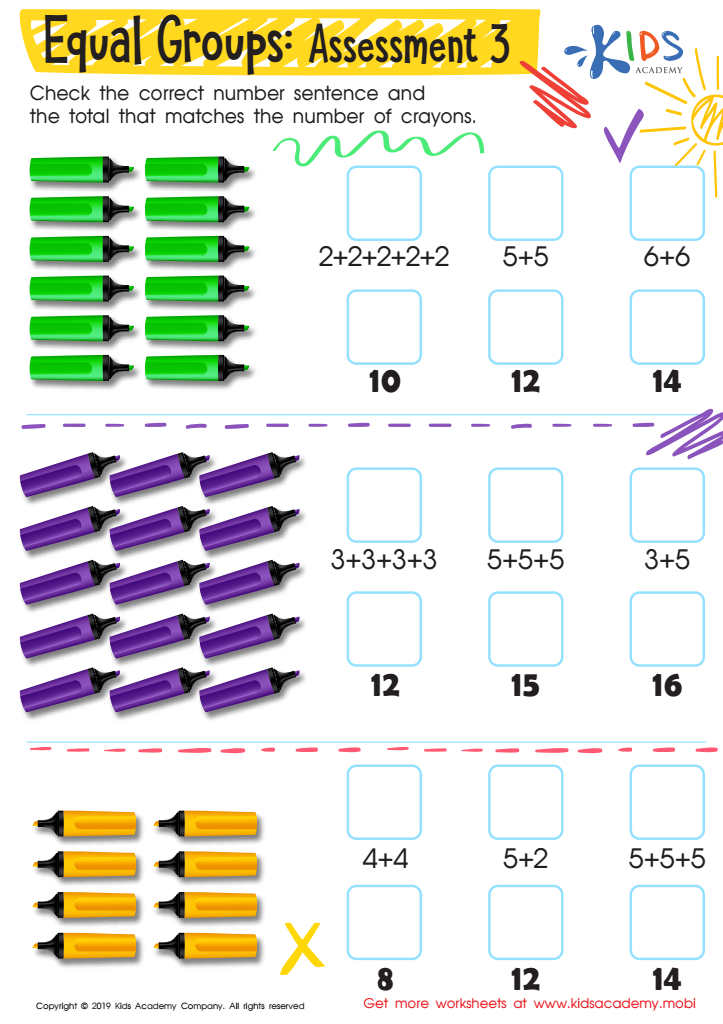
Equal Groups: Assessment 3 Worksheet
Ask your kids to identify the objects in the pdf. Then, help them count the crayons and check the correct number sentences in the options. Ask them to find the total that matches the number of crayons. This worksheet will easily assess your kid's knowledge on counting and grouping numbers.
 Assign to My Students
Equal Groups: Assessment 3 Worksheet
Worksheet
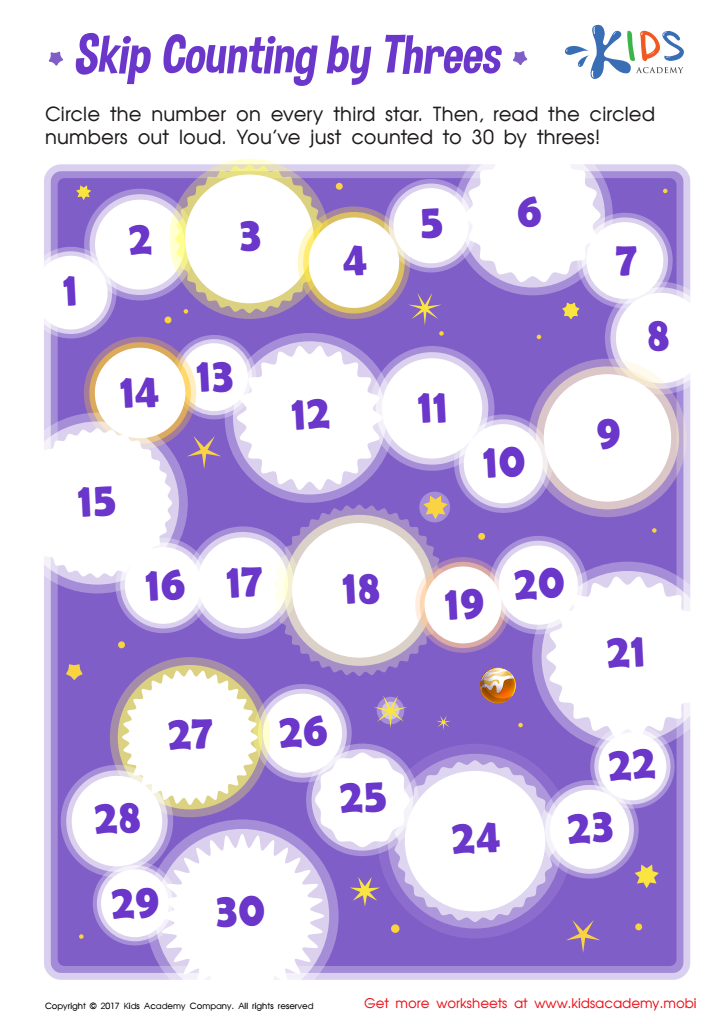
Skip Counting By Three Printable
Inspire your child with this star-themed skip counting worksheet! It offers a fun way to learn while providing a foundation for more advanced math skills, like adding, subtracting, and multiplication. It will help your child gain a sense of numeracy, practice problem solving, and stay ahead in math.
Skip Counting By Three Printable
Worksheet
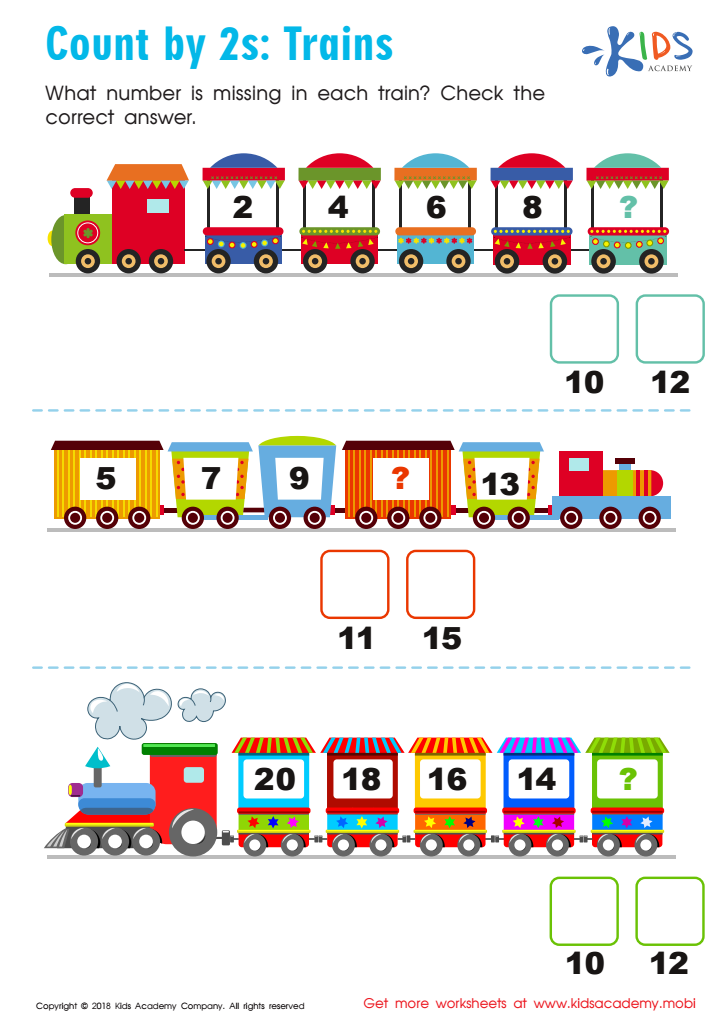
Count by 2's: Trains Worksheet
Teaching your kids quick computations? Get them skip-counting by 2s! They'll love filling in the colors of the train while counting, and it will help with 'counting up' or backward on paper or in their heads - essential for quick computations later.
Count by 2's: Trains Worksheet
Worksheet
Join Kids Academy for Free
Who is primarily going to use this learning content?




.jpg)

Understanding multiplication basics is crucial for children aged 3-8 as it lays the foundation for their future math skills. At this age, kids begin to develop critical thinking and problem-solving abilities, and introducing them to multiplication helps enhance these skills. Early exposure to multiplication concepts can foster mathematical fluency, enabling them to solve problems quickly and confidently as they advance in their education.
Moreover, multiplication is not just about memorizing times tables; it encourages the development of logical reasoning. When children grasp the concept of grouping and repeated addition, it aids them in understanding more complex mathematical ideas as they progress.
Parents and teachers play a vital role in supporting this learning journey. By incorporating everyday activities that involve multiplication—such as sharing snacks or counting items in groups—they can make the concept tangible and relatable. This interactive approach can enhance engagement and retention.
Furthermore, a strong foundation in multiplication is linked to academic success in later grades, as it is essential for learning division and advancing to more complex mathematical operations. By emphasizing multiplication at an early age, parents and teachers set children on a path of confidence and competence in mathematics, crucial life skills that will benefit them in the long run.








