Multiplication practice Math Worksheets for Ages 3-8 - Page 4
78 filtered results
-
From - To
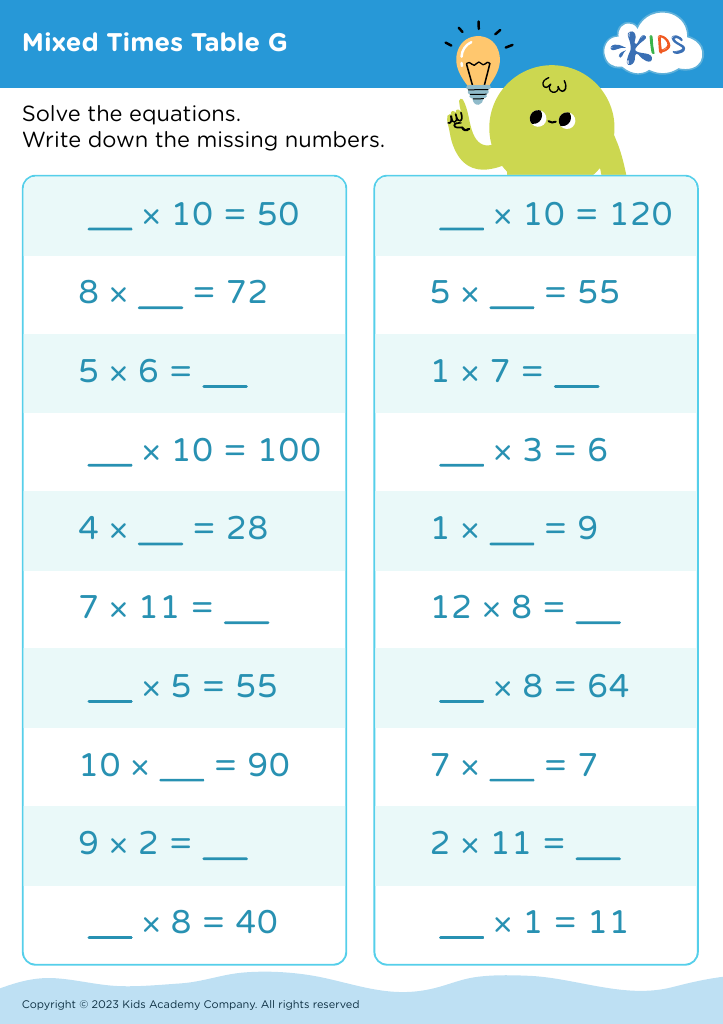
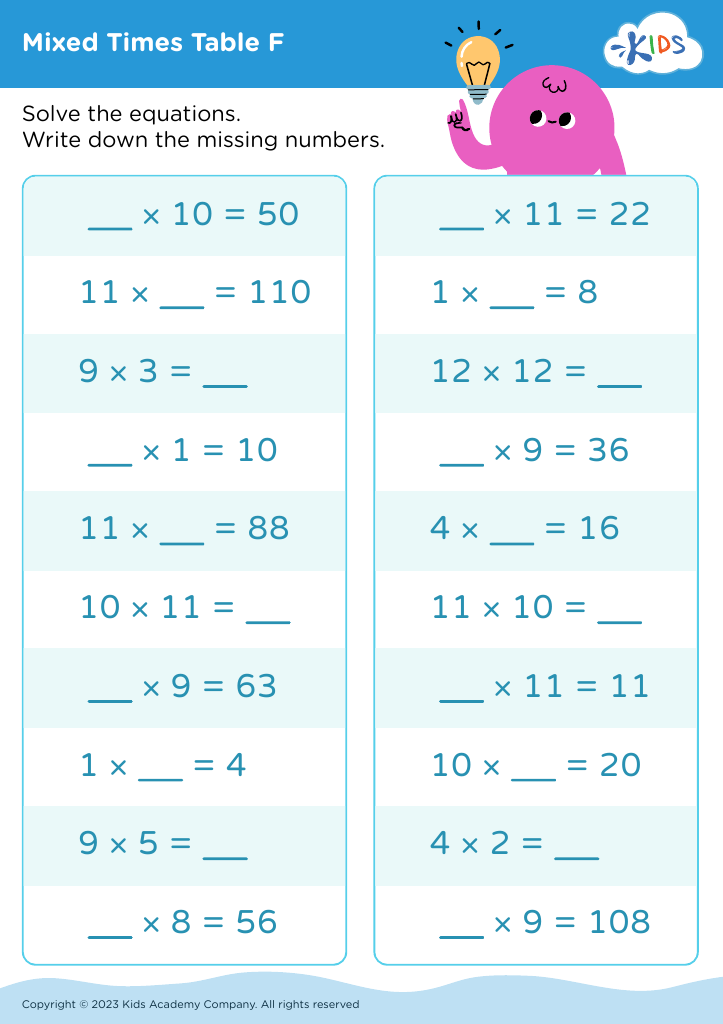
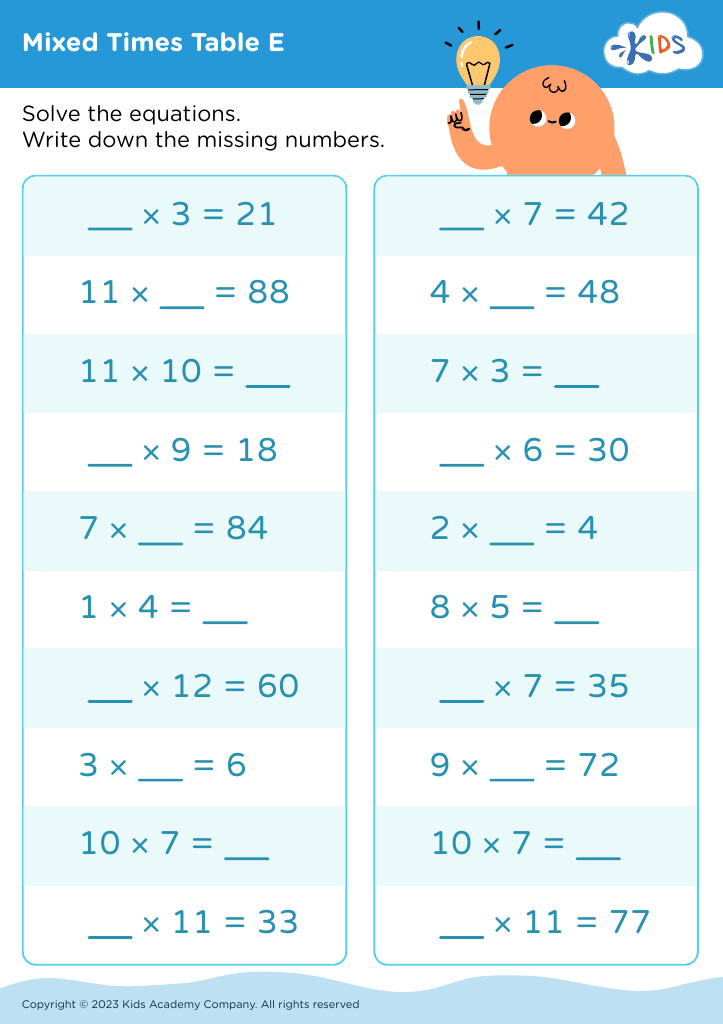
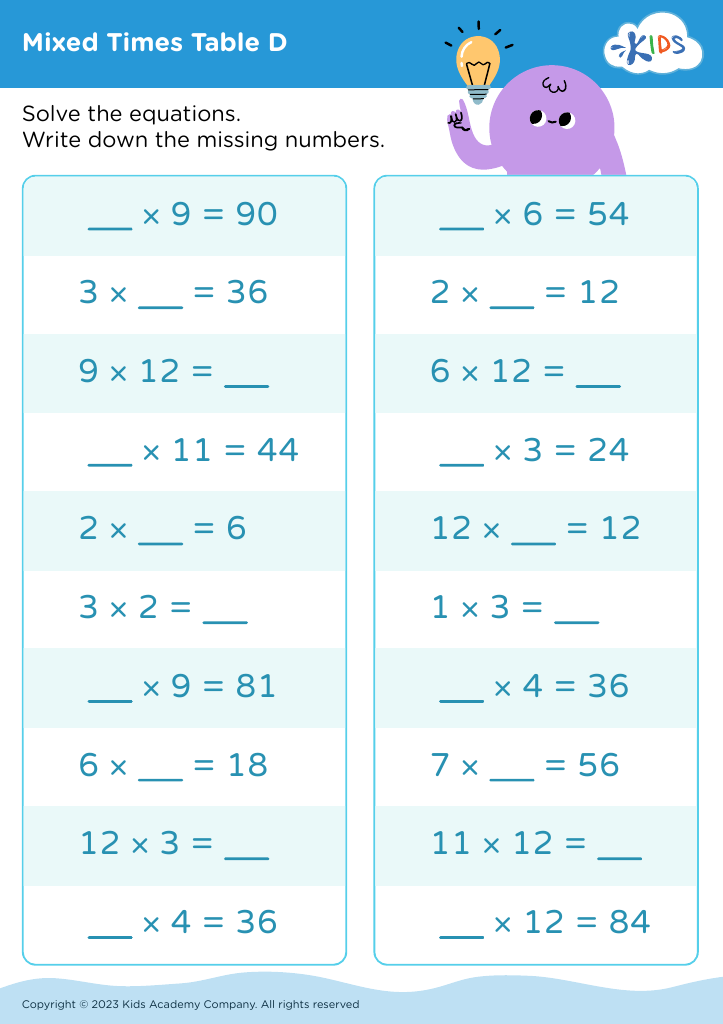
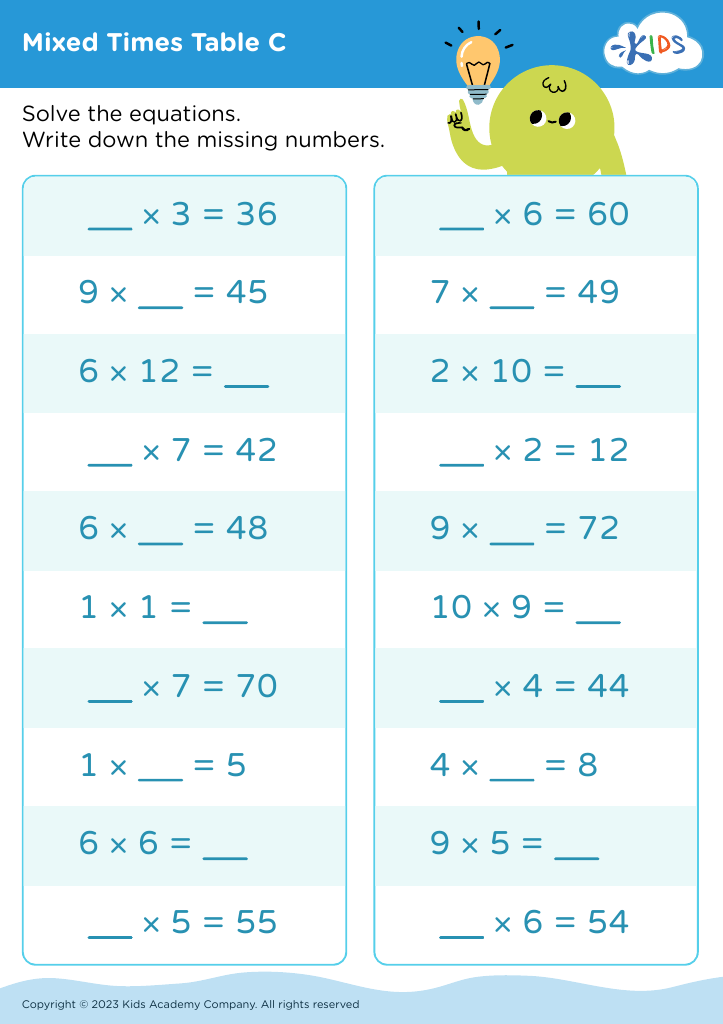
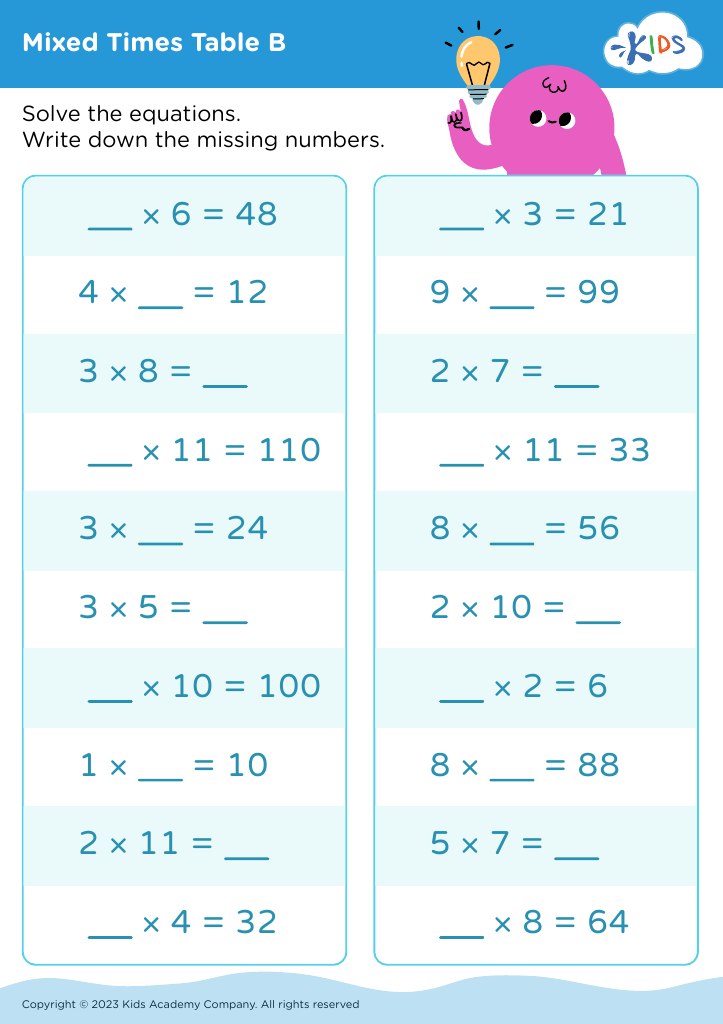






Multiplication practice is a fundamental aspect of early mathematics education for children aged 3-8. At this stage of development, children are highly receptive to learning through interactive and engaging methods. Understanding multiplication lays a strong foundation for their future math skills, as it transitions them from basic addition and subtraction to more complex operations, developing their critical thinking and problem-solving abilities.
Practicing multiplication helps children recognize patterns and relationships between numbers, enhancing their cognitive development. Furthermore, early exposure fosters mathematical fluency, allowing children to perform calculations more confidently as they progress in their education. By integrating multiplication practice into daily activities, parents and teachers create a positive learning environment that encourages curiosity and perseverance.
Besides academic benefits, multiplication practice also cultivates essential life skills. It supports discipline and persistence, as students navigate challenges, and promotes teamwork and collaboration in group activities. Lastly, understanding multiplication empowers children, boosting their self-esteem and resilience when facing new challenges in mathematics or beyond.
In summary, multiplication practice for young learners is crucial for building foundational math skills, enhancing cognitive development, and instilling a love for learning—attributes that protect future academic success and personal growth.








