Number sequence learning Math Worksheets for Ages 3-8
3 filtered results
-
From - To
Welcome to our Number Sequence Learning Math Worksheets designed for children aged 3-8! These engaging and interactive worksheets help young learners develop essential counting and sequencing skills through fun activities. Each worksheet features colorful visuals and age-appropriate exercises that encourage kids to practice recognizing, ordering, and completing number sequences. Perfect for home learning or classroom use, our resources cater to various learning styles, ensuring that your child masters the fundamentals of math with confidence. Unlock your child's potential and make learning enjoyable with our comprehensive collection of worksheets that foster a strong foundation in number sequences! Start exploring today!
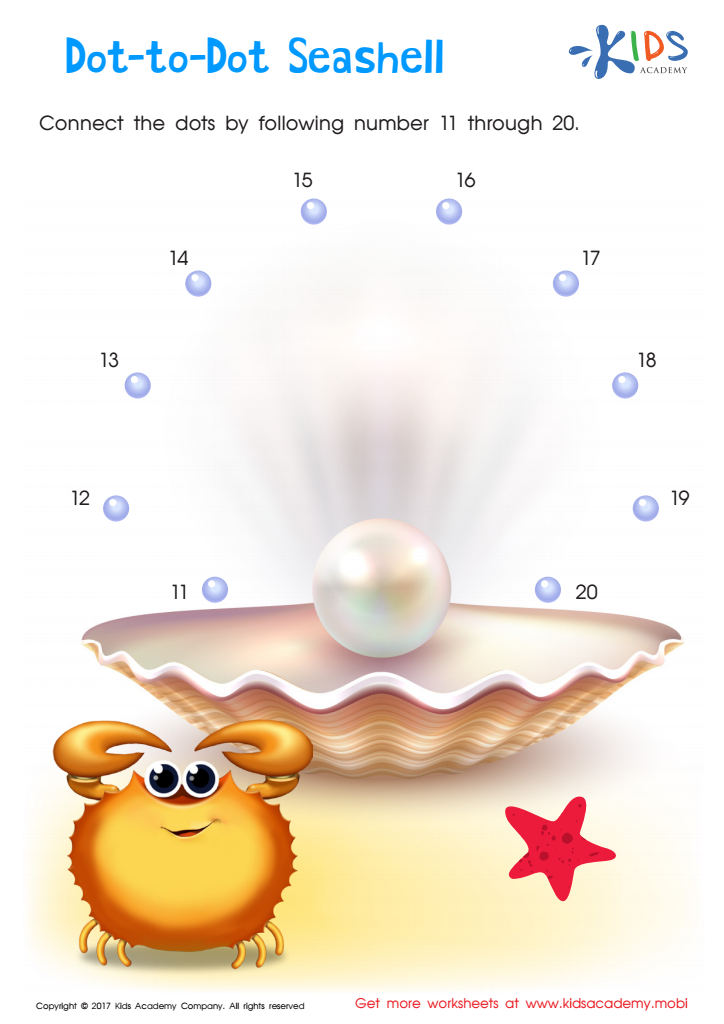
Ordering 11–20: Dot–to–dot Seashell Printable
 Assign to My Students

Counting on the City Skyline: Dot-to-Dot Worksheet




%20(1).jpg)



Caring about number sequence learning in early childhood is vital for both parents and teachers as it lays the foundation for a child's mathematical understanding. From ages 3 to 8, children are naturally curious and eager to explore numbers, making this an ideal time to instill essential math skills. Mastering number sequences enhances their ability to recognize patterns and relationships, which are crucial for problem-solving and logical reasoning.
When children learn to understand and produce number sequences, they develop skills that support more advanced mathematical concepts. This competency leads to greater confidence in math, encouraging children to engage in more complex tasks later in their education. Moreover, a strong grasp of number sequences fosters number sense, critical for everyday activities, such as counting change or measuring ingredients in cooking.
Additionally, parental involvement boosts children’s motivation and enjoyment of math. Engaging in number activities together can strengthen bonds and create a positive attitude toward learning. Teachers can harness this interactive approach in the classroom, using games and collaborative activities to reinforce concepts. Ultimately, a solid understanding of number sequences can significantly improve a child's academic trajectory, setting them up for success in math and other subjects throughout their educational journey.








