
Practice addition Math Worksheets for Ages 3-8
7 filtered results
Difficulty Level
Grade
Age
-
From - To
Subject
Activity
Standards
Welcome to our collection of engaging addition math worksheets, designed specifically for young learners aged 3-8! Our carefully crafted resources help children build a strong foundation in addition through enjoyable exercises. These worksheets combine colorful visuals and interactive activities to keep kids motivated while they master essential math skills. Perfect for home or classroom use, our addition worksheets cater to various skill levels, ensuring tailored practice for every child. Whether your little one is just starting or ready for more advanced challenges, our worksheets provide the perfect opportunity for children to practice addition in a fun and effective way!
Favorites
With answer key
Interactive
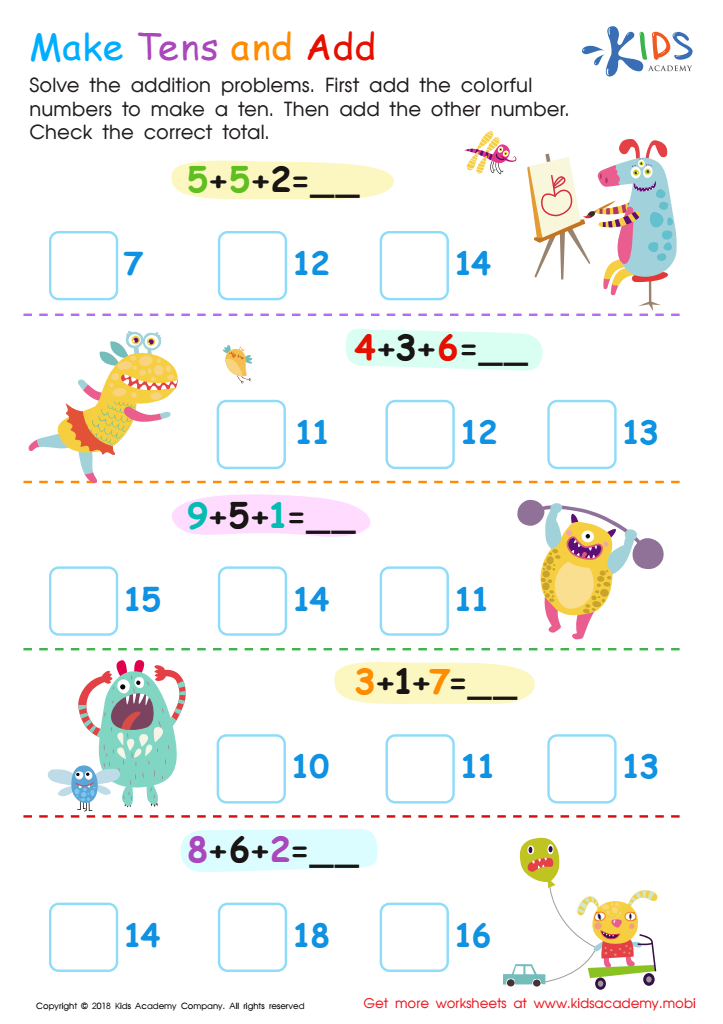
Make Tens and Add Worksheet
Making a "ten" is a powerful strategy to use when computing, but we may not realize it. This PDF worksheet will help kids understand how easy it is to add three numbers with this strategy. Plus, they'll have fun with the monsters and strengthen fine motor skills as they check the right answer boxes.
 Assign to My Students
Make Tens and Add Worksheet
Worksheet
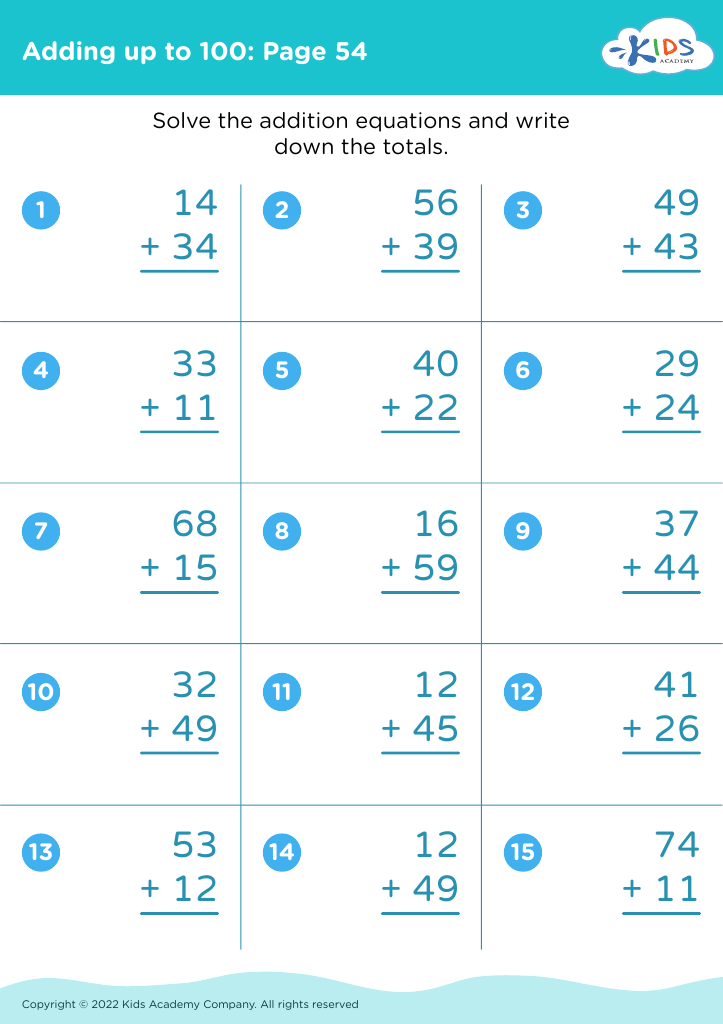
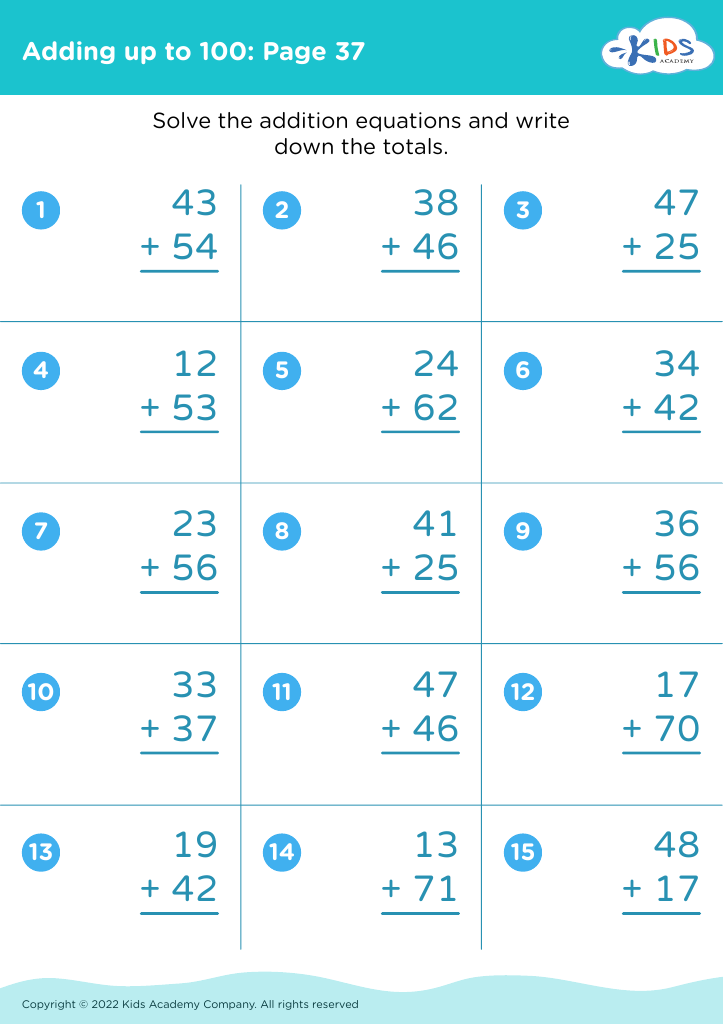
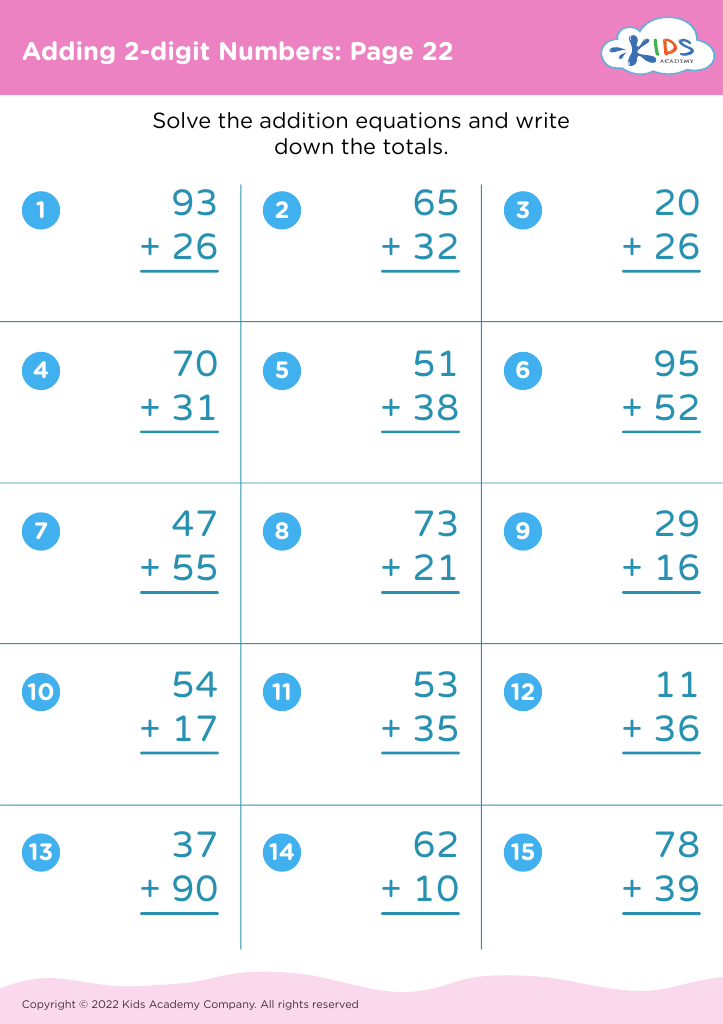
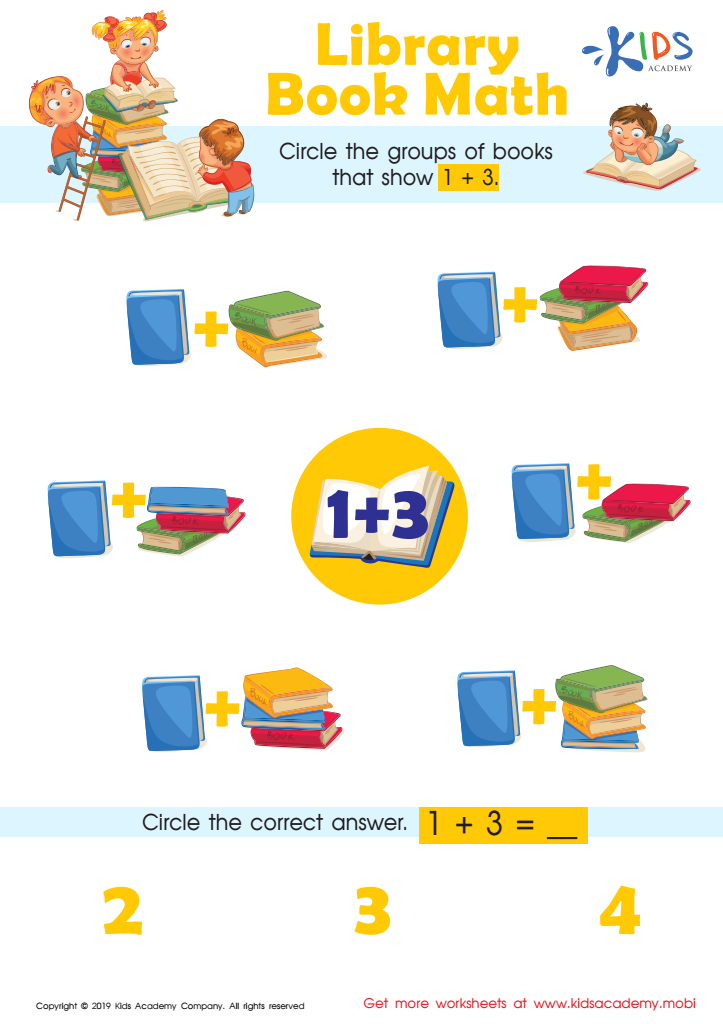
Library Book Math Worksheet
=4.
It's essential for your child's growth to know how to count and add. Help them by giving simple tasks and encouraging them. This worksheet is a great tool to use. Ask your kids to name the objects in the picture and help them circle the groups of books that show 1+3=4.
Library Book Math Worksheet
Worksheet
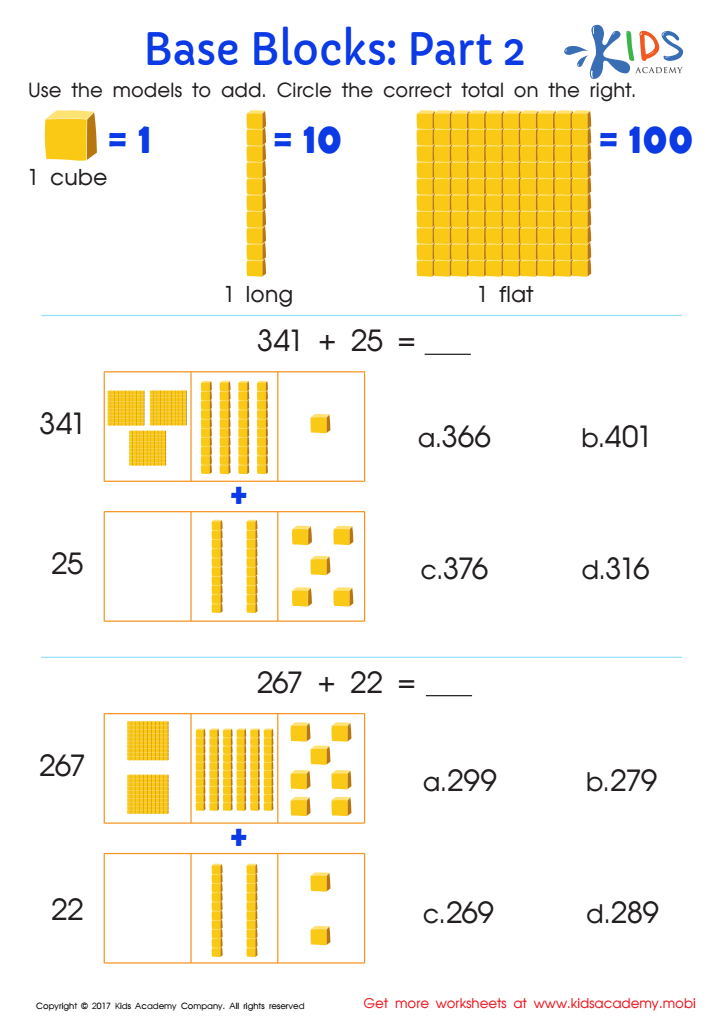
Base Ten Blocks Worksheet: Part 2
It provides kids with the practice needed to get a better grip on numeracy and multi-digit addition. Get the PDF today and give your child the resources they need.
This worksheet uses base blocks to help kids recognize and add multi-digit numbers. It gives kids the practice they need to become more numerate and handle multi-digit addition with confidence. Download the PDF now and give your child the tools they need to succeed.
Base Ten Blocks Worksheet: Part 2
Worksheet
Join Kids Academy for Free
Who is primarily going to use this learning content?






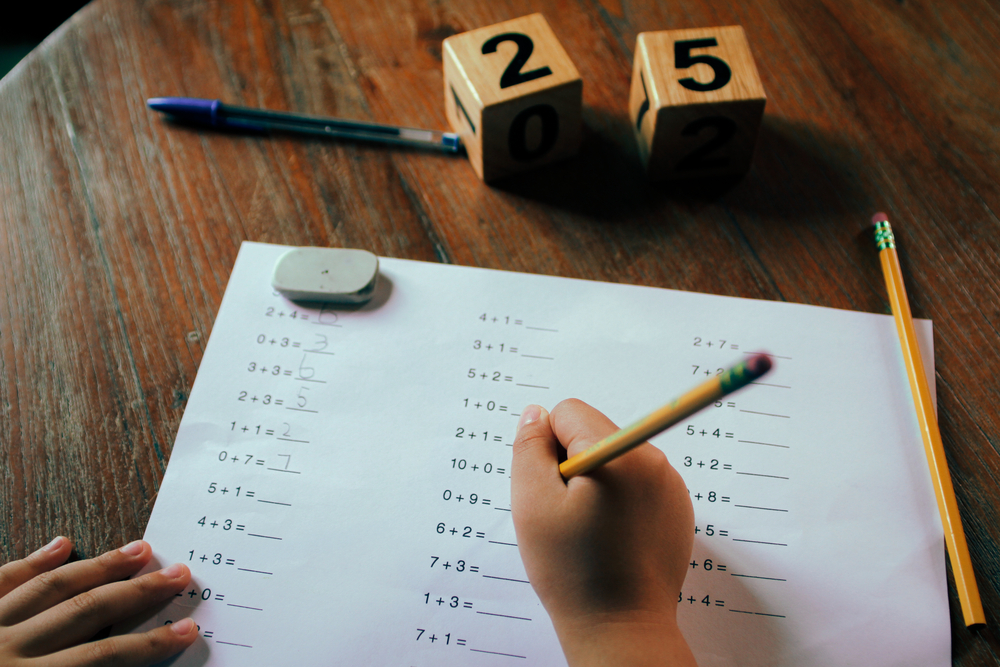
Practicing addition math for ages 3-8 is vital for several reasons. This developmental stage is crucial as children lay the foundation for their mathematical understanding. Learning basic addition fosters essential cognitive skills, such as problem-solving, critical thinking, and logical reasoning. By engaging in addition activities, children develop number sense, allowing them to recognize quantities and quantities' relationships.
Moreover, practicing addition helps enhance children's memory and concentration. Games, fun activities, and real-life applications can make learning enjoyable, encouraging a positive attitude toward math. This early exposure can dispel any anxiety towards numbers, cultivating confidence in their mathematical abilities.
From a social perspective, group activities related to addition can promote teamwork, communication, and sharing. Children learn to collaborate, take turns, and respect others' ideas, making meaningful connections in the learning process.
For parents and teachers, reinforcing addition skills is essential for ensuring that children meet educational milestones. Consistent practice prepares children for more advanced mathematical concepts and helps shape their overall academic performance. Early intervention in math helps bridge educational gaps, ensuring all children can succeed in a later, increasingly numerically complex environment. Ultimately, prioritizing addition practice can foster future success in numerous fields of study and daily life skills.








