Recognizing equal parts Math Worksheets for Ages 3-8
3 filtered results
-
From - To
Explore our engaging "Recognizing Equal Parts Math Worksheets" designed for children ages 3-8! These printable worksheets provide a fun and interactive way for young learners to grasp the concept of equal parts through colorful visuals and activities. Perfect for parents and educators, our resources help reinforce essential math skills while making learning enjoyable. From identifying equal shares to dividing shapes, each worksheet promotes creativity and critical thinking. Whether at home or in the classroom, these worksheets are perfect for hands-on learning, ensuring children build a strong foundation in math. Start your child's mathematical journey today with our comprehensive worksheets!
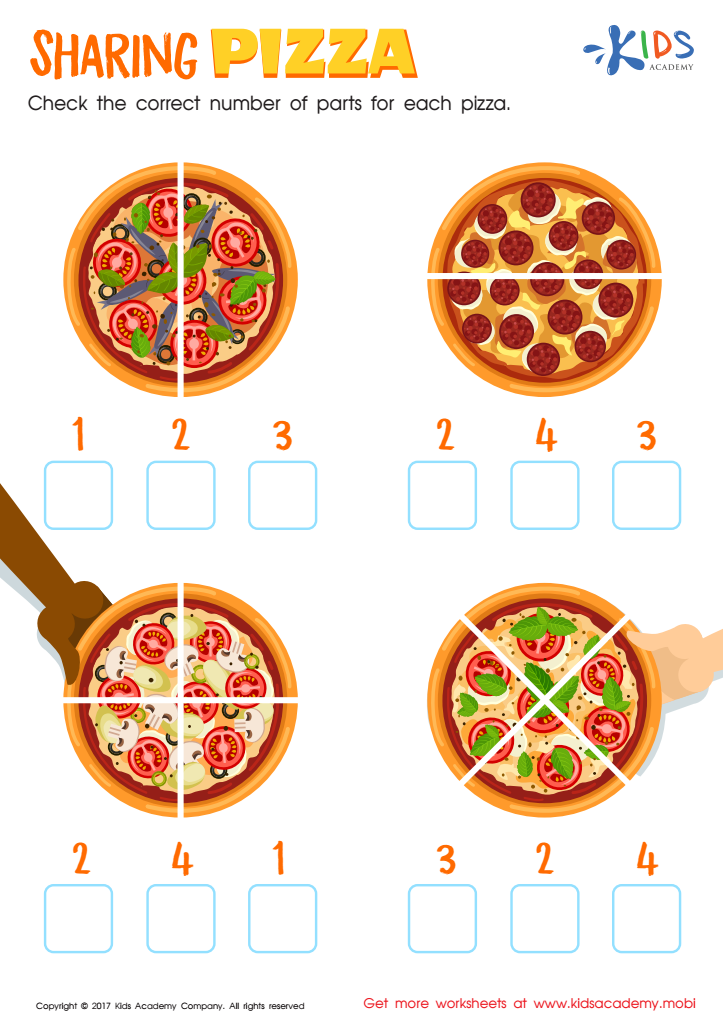
Sharing Pizza Worksheet
 Assign to My Students
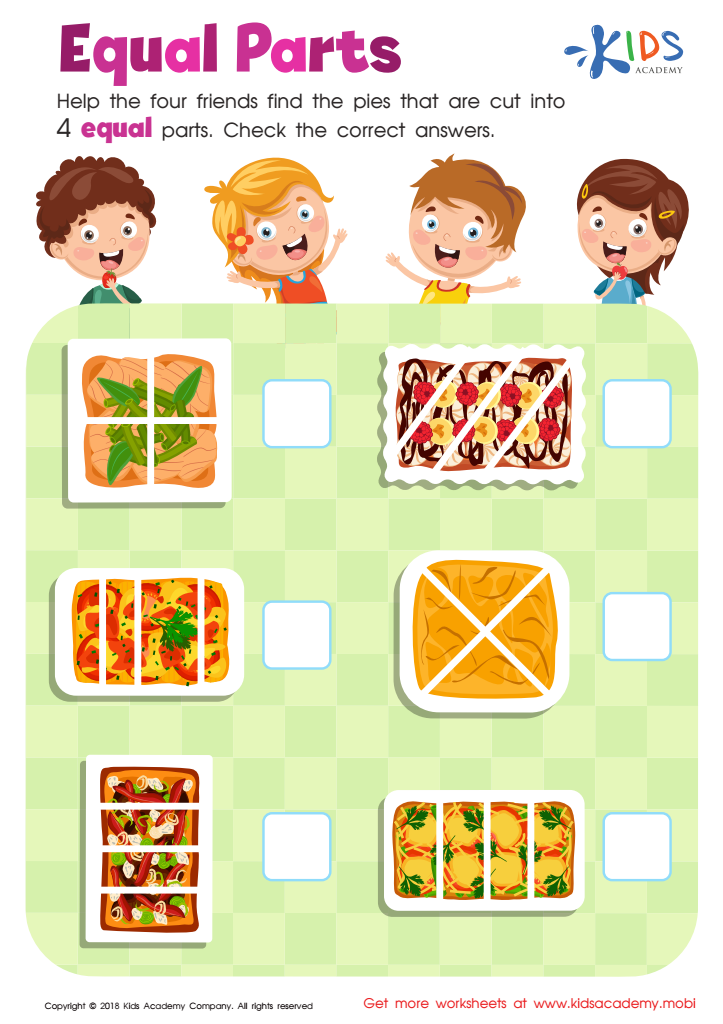
Equal Parts: Food Worksheet




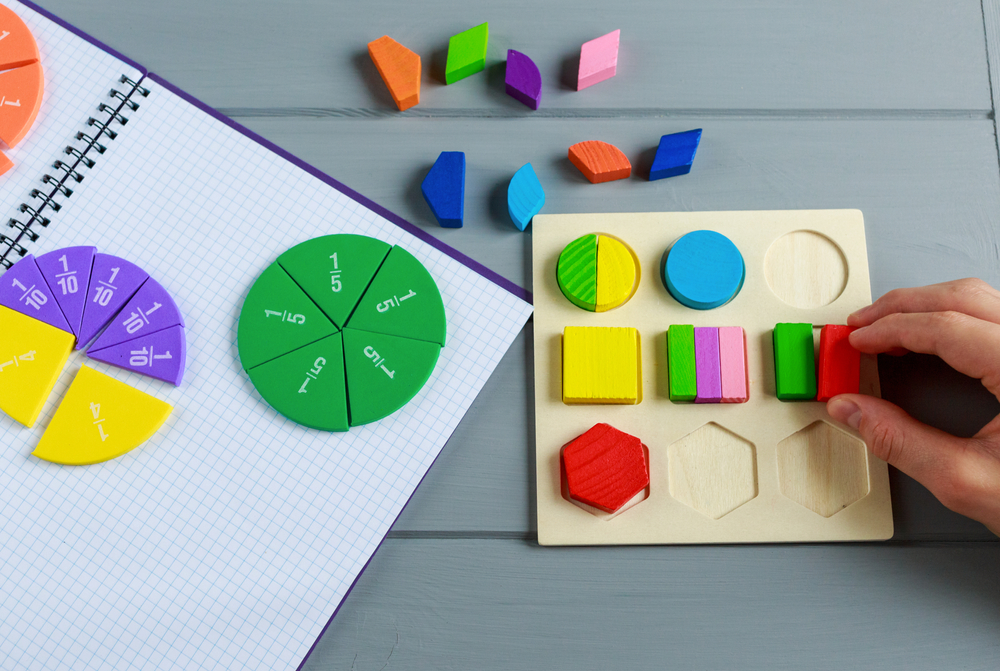


Recognizing equal parts is a fundamental mathematical concept for young learners aged 3-8, and its significance extends beyond mere numbers. Understanding equal parts lays the groundwork for critical thinking, problem-solving skills, and a deeper comprehension of math concepts like fractions and ratios later on.
For teachers and parents, early exposure to equal parts encourages children to grasp the idea of fairness, sharing, and division, fostering social skills. Activities that explore equal parts, such as dividing snacks, sharing toys, or cutting shapes, make learning engaging and relatable. They also promote spatial awareness and help children develop a sense of patterns and symmetry, which are essential for advanced mathematical concepts.
Furthermore, recognizing equal parts enhances a child's ability to visualize and manipulate objects, essential skills in both math and daily life. As children learn to see the world in equal divisions, they are better prepared for future challenges.
Ultimately, fostering a strong understanding of equal parts not only empowers children in mathematics but also equips them with valuable life skills, making it imperative for both parents and teachers to prioritize this essential concept in early learning.








