Subtraction practice Math Worksheets for Ages 3-8 - Page 4
89 filtered results
-
From - To
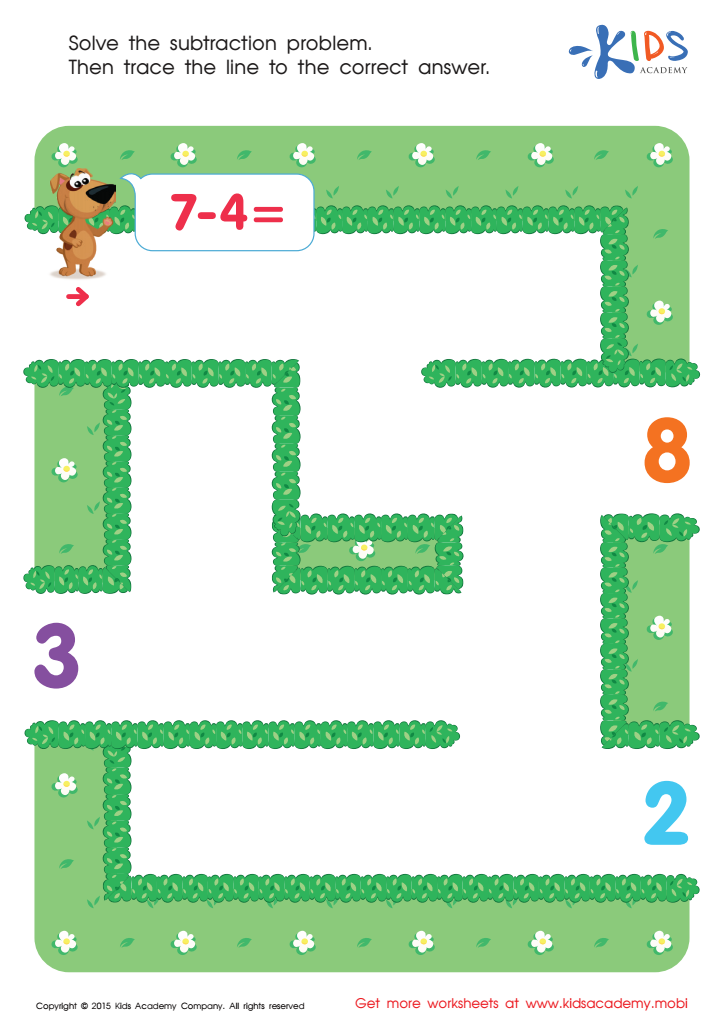
Subtraction Seven Minus Four Worksheet
 Assign to My Students
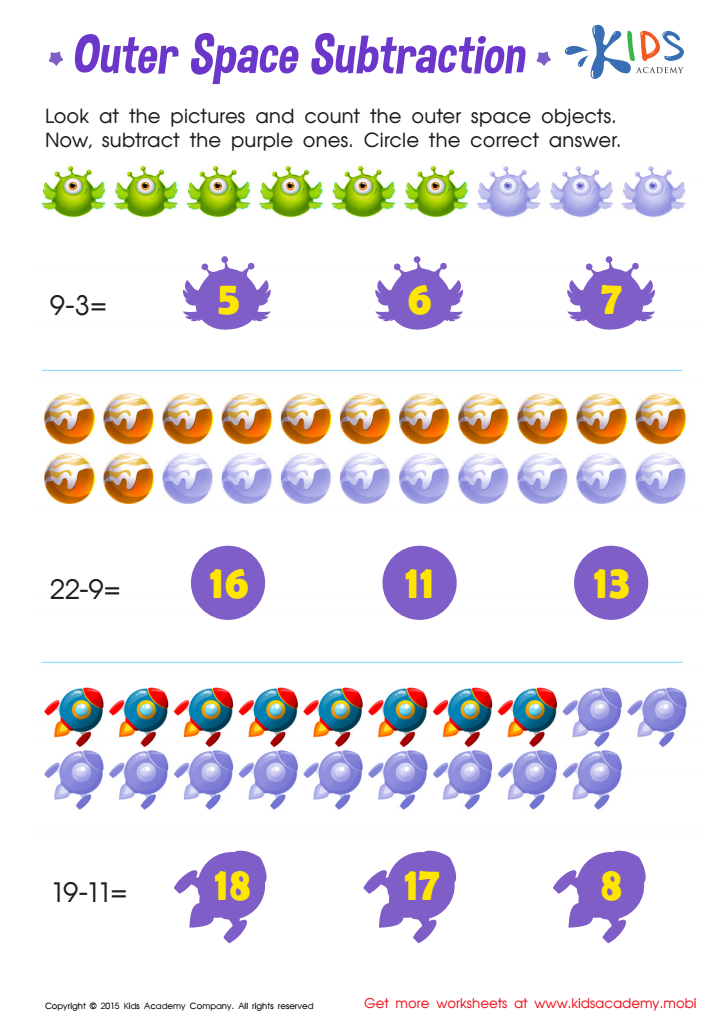
Outer Space Substraction Worksheet
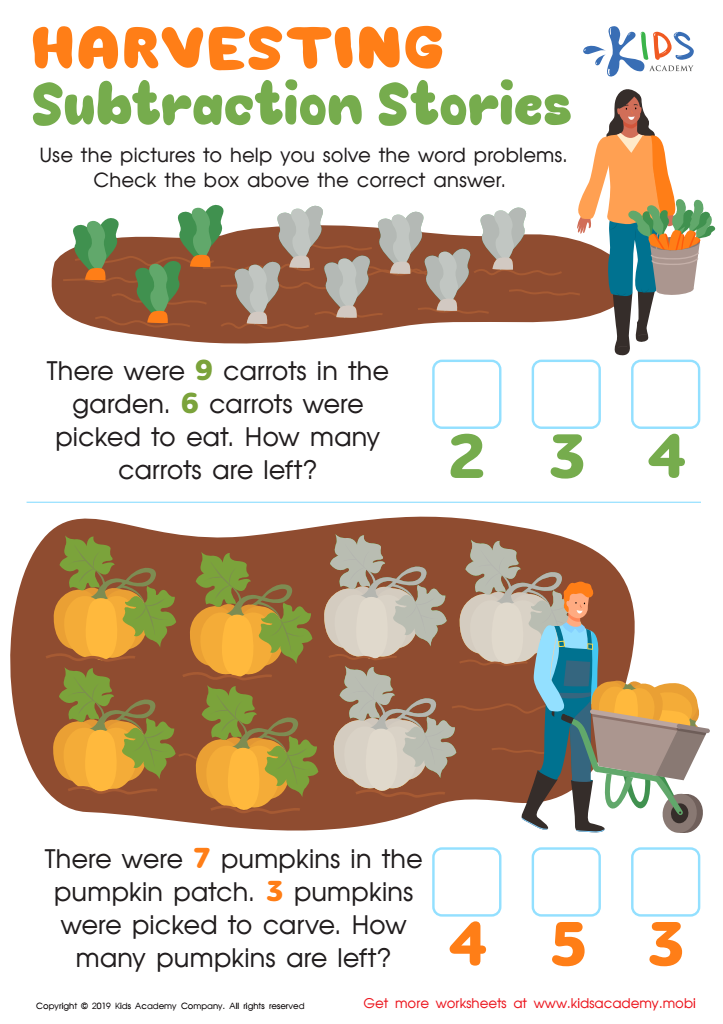
Harvesting Subtraction Stories Worksheet
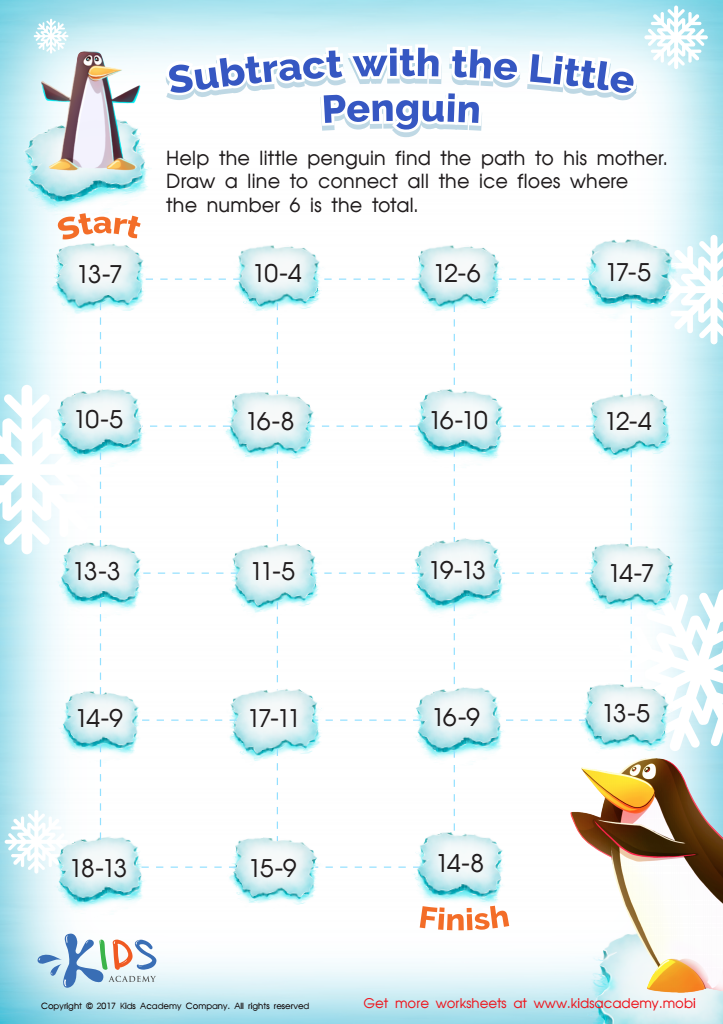
Subtract With The Little Penguin Substraction Worksheet
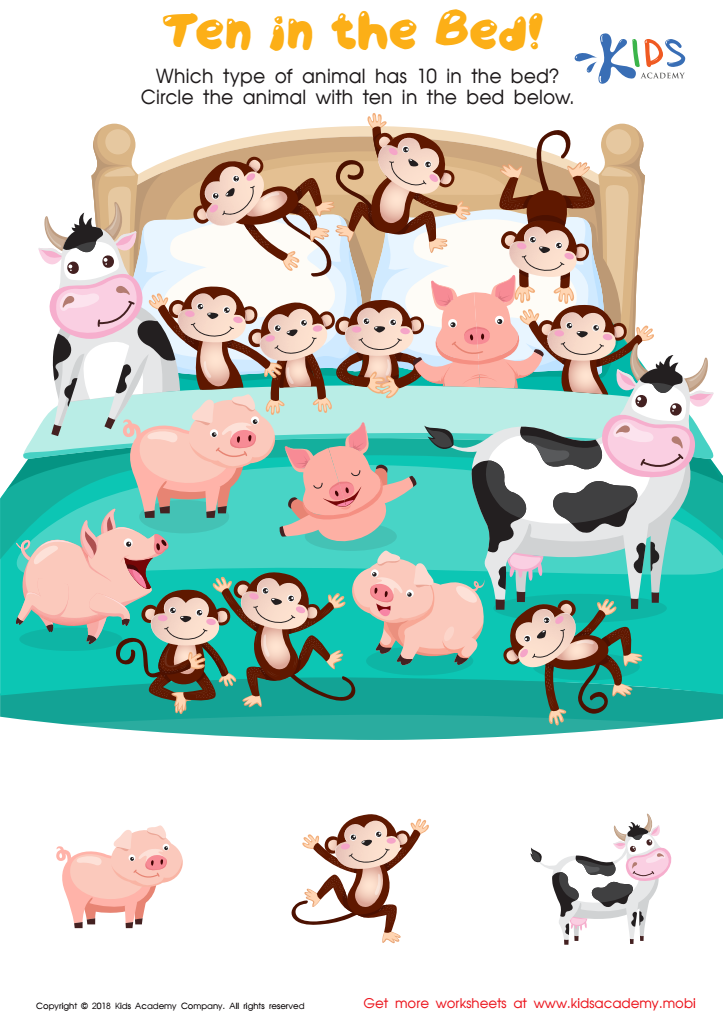
Ten in the Bed Worksheet
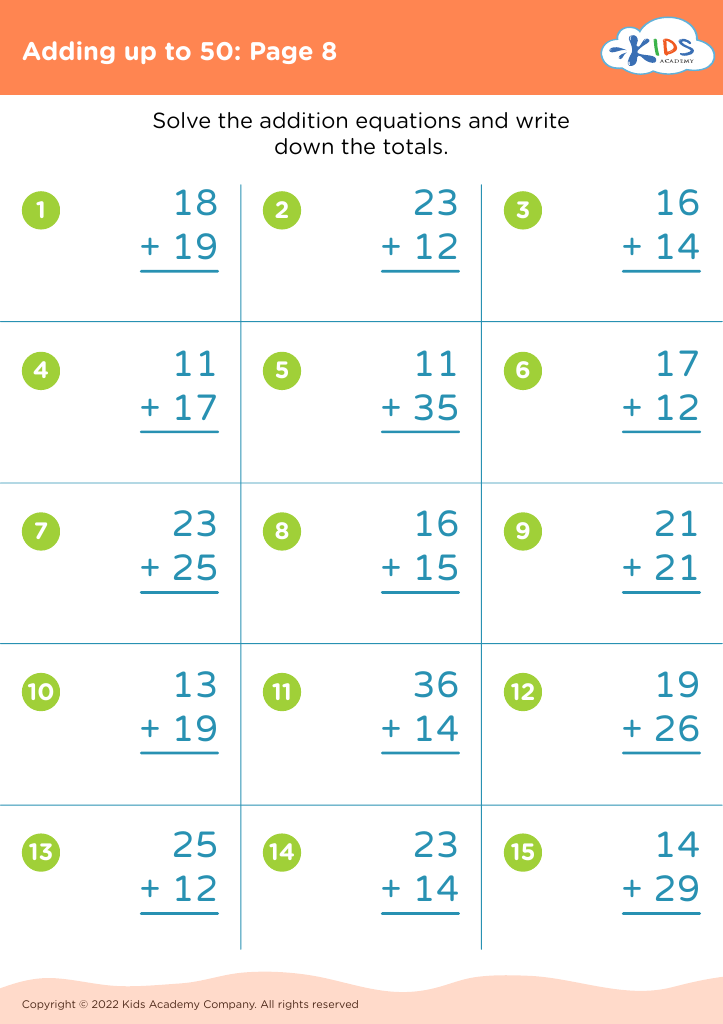
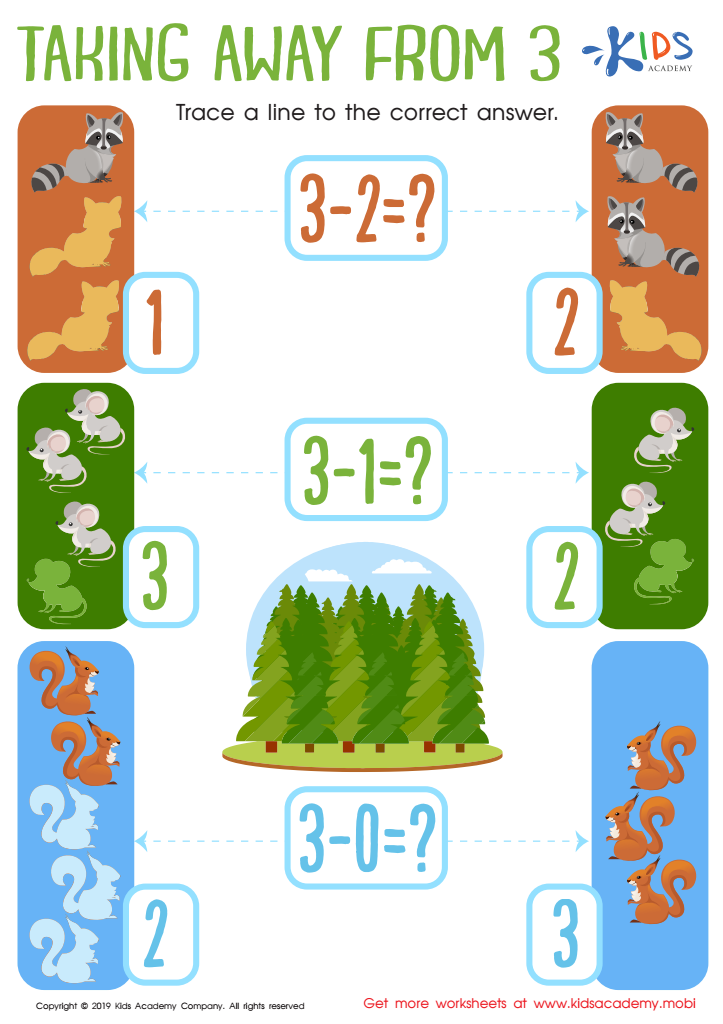
Taking Away From 3 Worksheet
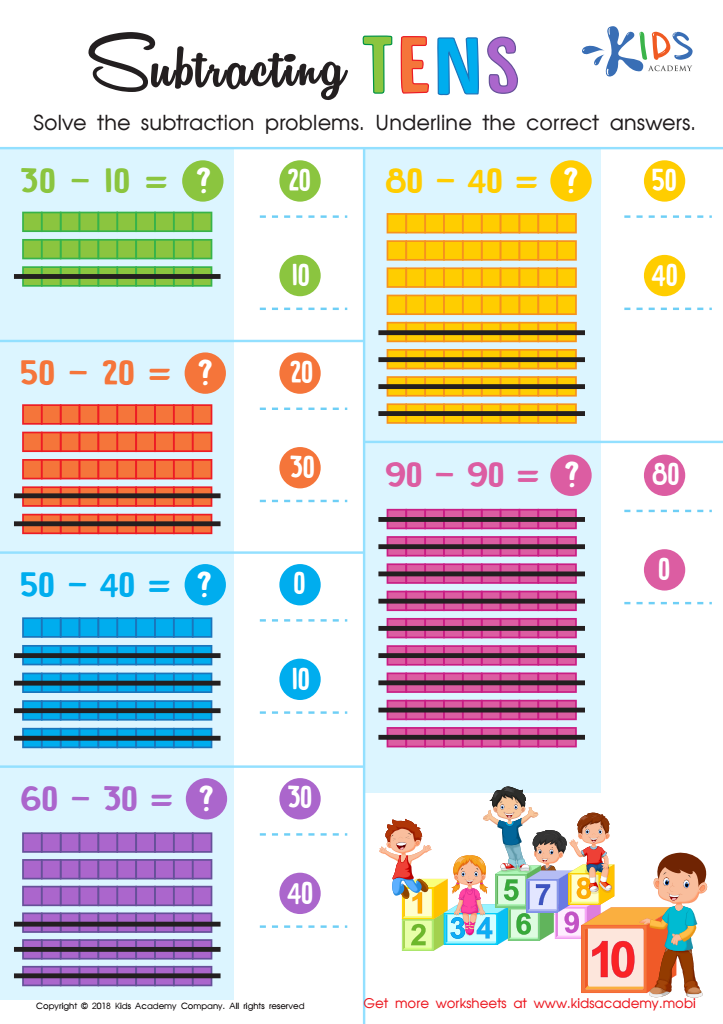
Subtracting Tens Worksheet
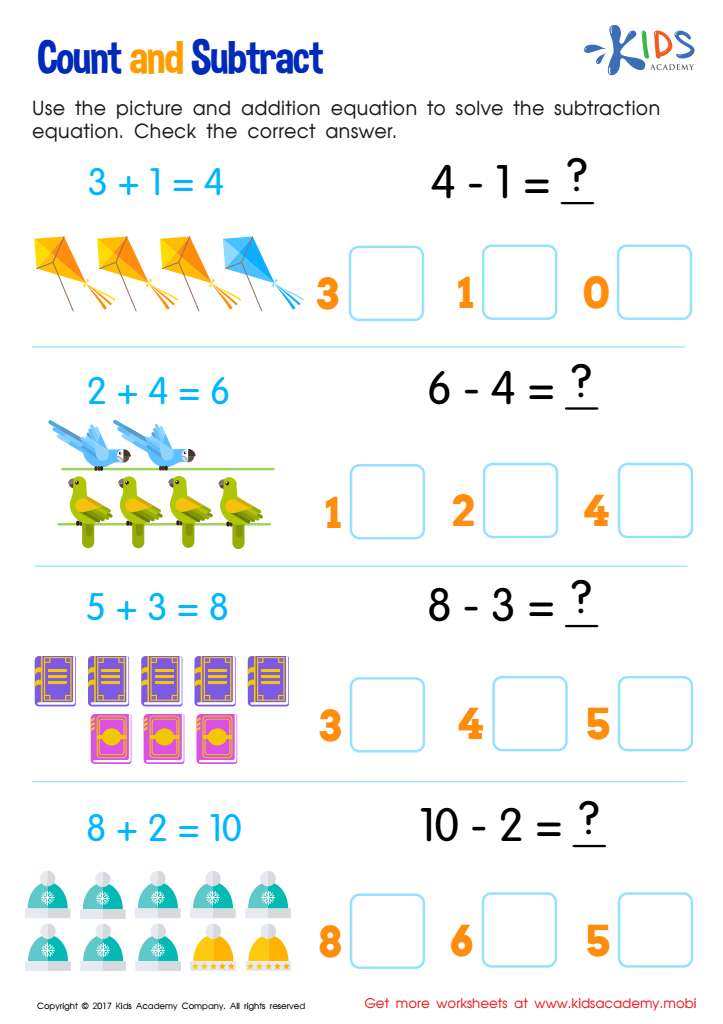
Count and Subtract Worksheet
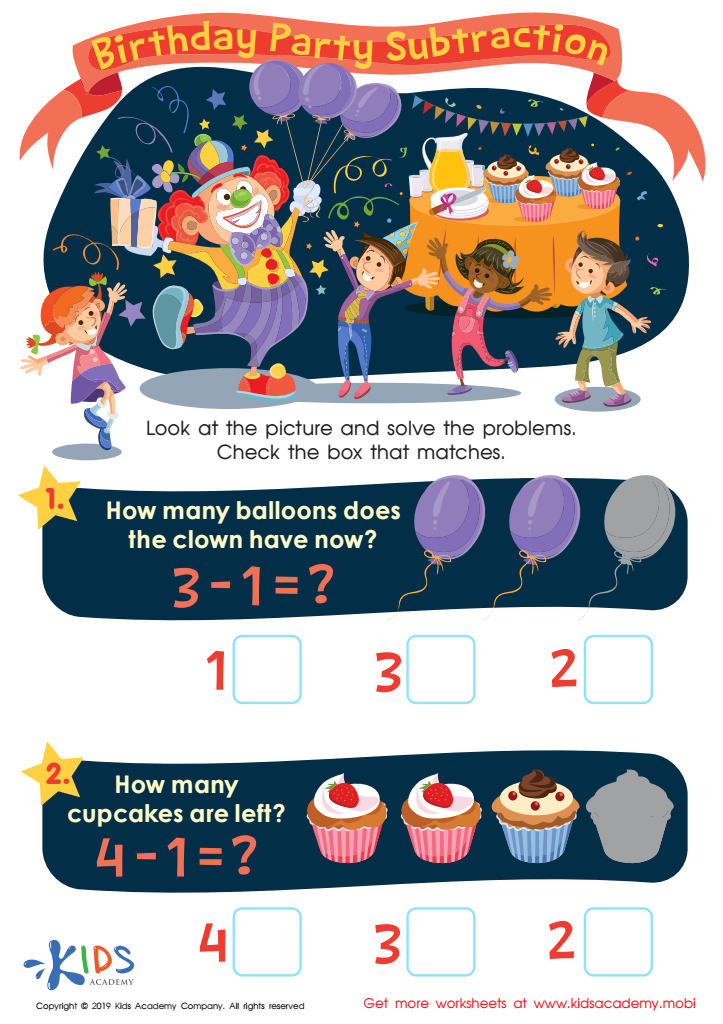
Birthday Party Subtraction Worksheet
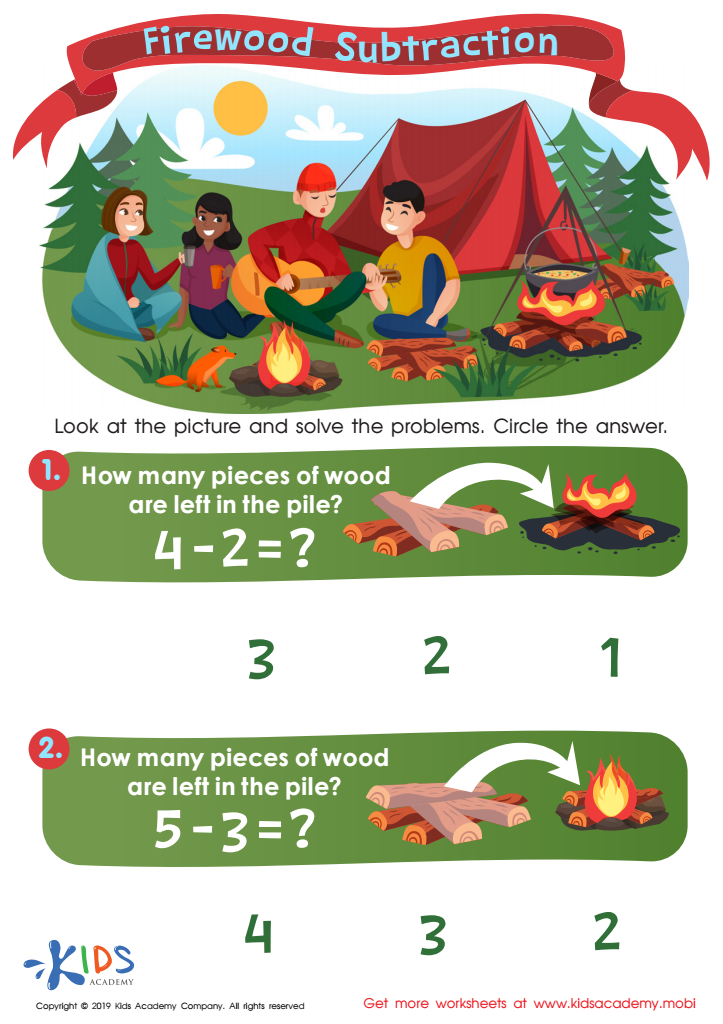
Firewood Subtraction Worksheet
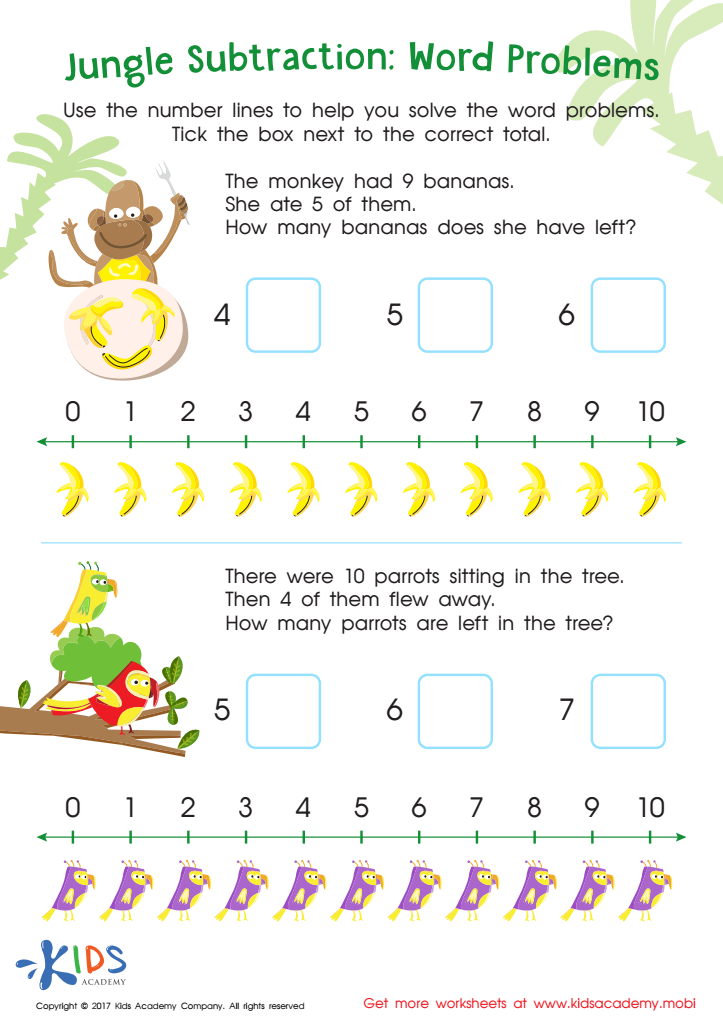
Jungle Subtraction Word Problems Substraction Worksheet
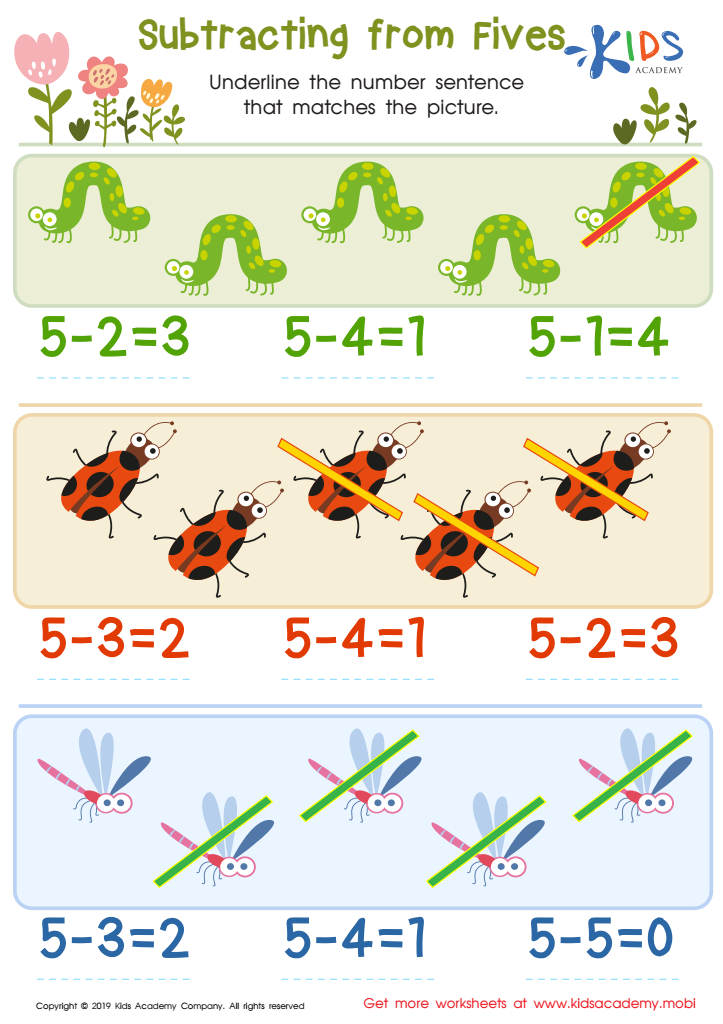
Subtracting From Fives Worksheet






.jpg)
Subtraction practice is crucial for children aged 3-8 as it lays the foundation for their mathematical understanding and problem-solving skills. Early exposure to subtraction helps children develop number sense, allowing them to understand quantities, relationships between numbers, and the concept of taking away or finding differences. This comprehension is essential as they progress to more complex math concepts.
Additionally, subtraction practice encourages cognitive development. Engaging children in activities that involve subtractive reasoning promotes critical thinking and enhances their ability to analyze problems. As they work through subtraction problems, whether through manipulatives, games, or worksheets, children learn perseverance when tackling challenges—skills that benefit them beyond mathematics.
Furthermore, consistent subtraction practice can boost confidence in young learners. Mastery of basic math operations like subtraction is fundamental for academic success, fostering a positive attitude toward math and reducing anxiety surrounding the subject.
Finally, involving parents in subtraction practice creates bonding moments that reinforce learning through supportive interaction. Overall, prioritizing subtraction practice not only equips children with necessary academic skills but also paves the way for lifelong learning and a positive mathematics experience.








