Understanding area Math Worksheets for Ages 3-8
3 filtered results
-
From - To
Discover our engaging "Understanding Area" math worksheets designed for children ages 3-8! These resources help young learners grasp the concept of area through fun, interactive activities. Our worksheets feature vibrant visuals and real-life examples, making challenging topics accessible and enjoyable. Children will explore shapes, sizes, and how to quantify space, all while reinforcing their critical thinking and problem-solving skills. Whether at home or in the classroom, these worksheets provide essential practice, fostering a solid mathematical foundation. Dive into a world of learning with purpose-built exercises that inspire creativity and confidence in understanding area concepts. Perfect for little mathematicians!
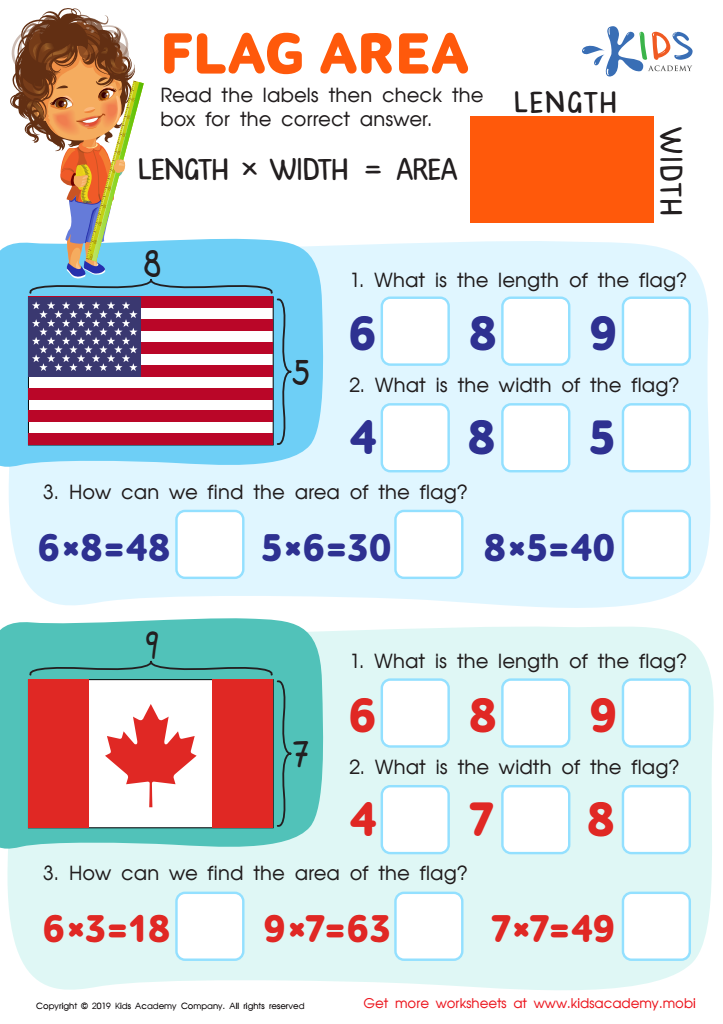
Flag Area Worksheet
 Assign to My Students
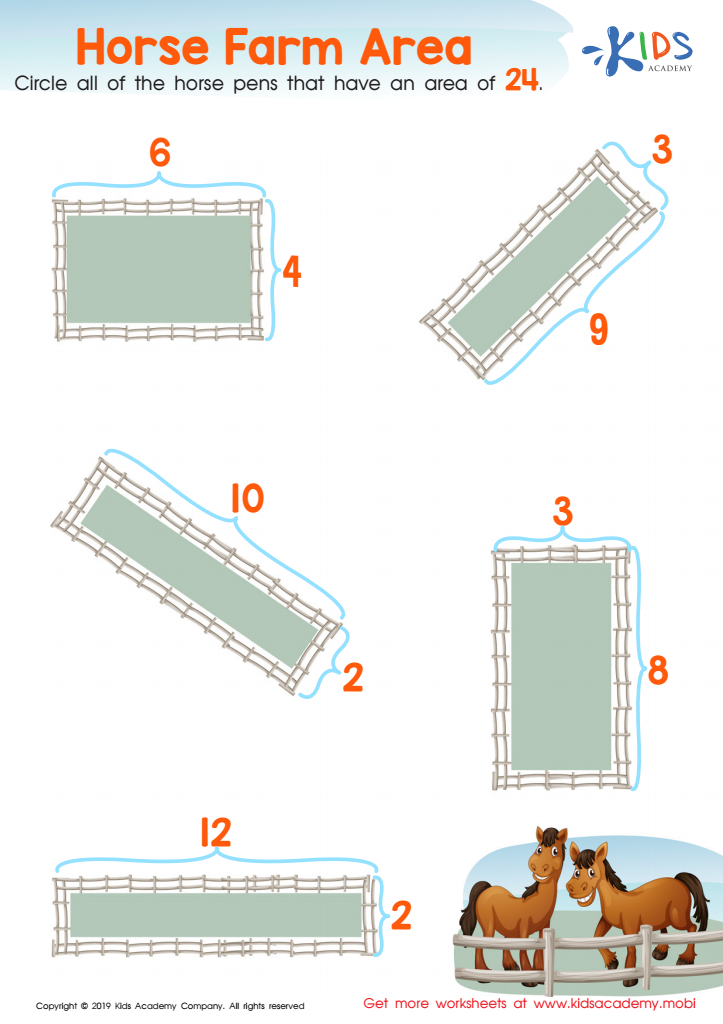
Horse Farm Area Worksheet
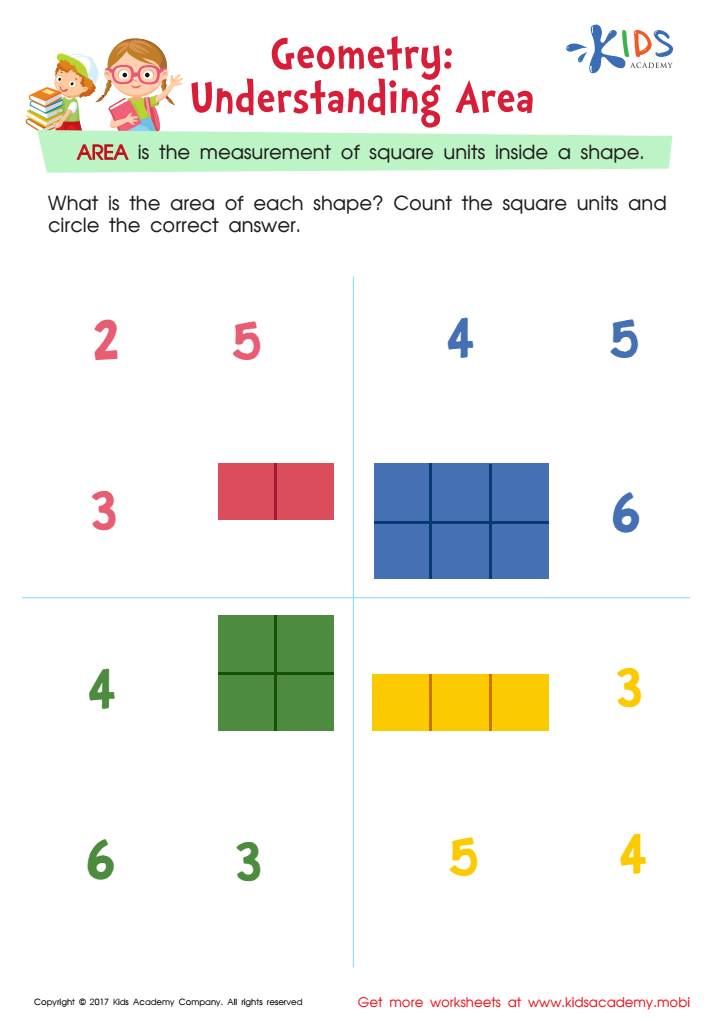
Understanding Area Worksheet








Understanding area in mathematics is essential for children aged 3-8 as it lays the foundation for spatial reasoning and problem-solving skills that are vital in later academic pursuits. At this developmental stage, children are naturally curious about the world around them, and engaging them in concepts of area brings mathematics to life in tangible ways.
Parents and teachers should care because learning about area helps children develop a practical understanding of measurement and geometry, which can be applied to everyday tasks, such as laying a carpet or arranging furniture. Integrating area concepts into playful activities—like covering a surface with blocks or using art projects—encourages hands-on learning and makes abstract concepts more relatable.
Furthermore, early exposure to spatial awareness fosters critical thinking and boosts confidence in math skills, equipping children to tackle more complex mathematical ideas in the future. By nurturing an understanding of area in a fun and interactive way, adults can ignite a lifelong interest in mathematics. Ultimately, promoting these foundational skills allows children to navigate and comprehend their environment better, paving the way for academic success and encouraging a positive mindset towards math as they grow.








