
Understanding base ten Math Worksheets for Ages 3-8
3 filtered results
Difficulty Level
Grade
Age
-
From - To
Subject
Activity
Standards
Explore our engaging "Understanding Base Ten" math worksheets designed for children ages 3-8. These age-appropriate resources provide a fun and interactive way for kids to grasp the concept of base ten, a fundamental building block in their math education. Our worksheets include colorful visuals and hands-on activities, helping young learners master place value, grouping, and number sense. From simple counting exercises to more complex tasks, these worksheets cater to various skill levels, ensuring every child can learn at their own pace. Enhance your child’s confidence in math while making learning enjoyable. Download and print today!
Favorites
With answer key
Interactive
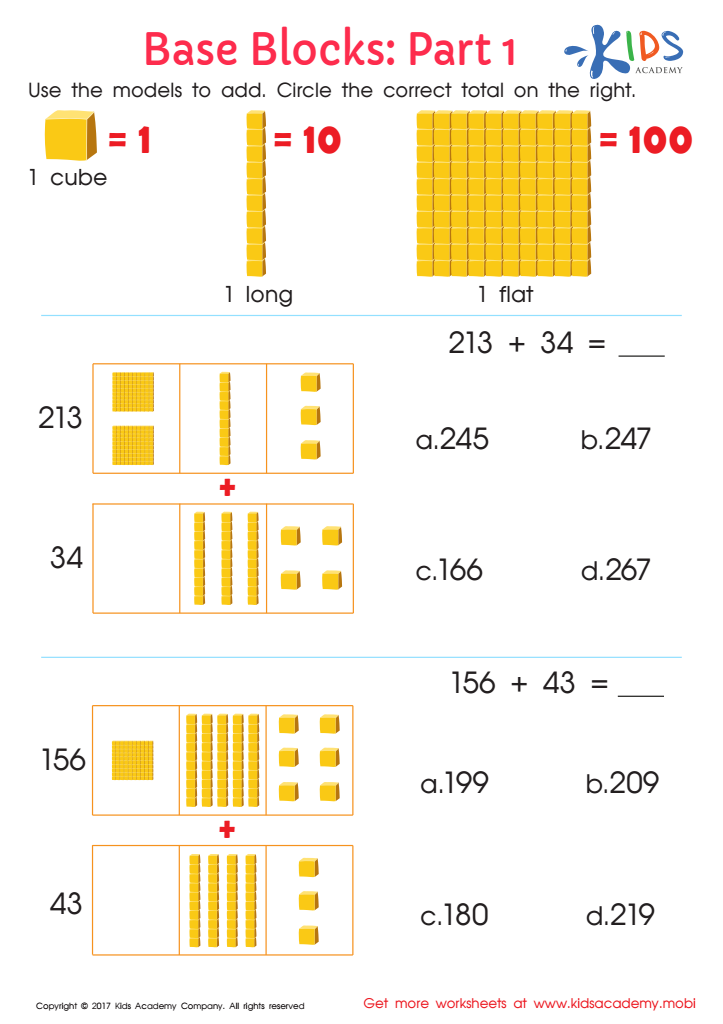
Base Ten Blocks Worksheet: Part 1
They promote numeracy and are a great substitute when kids don't have access to physical blocks.
 Assign to My Students
Base Ten Blocks Worksheet: Part 1
Worksheet
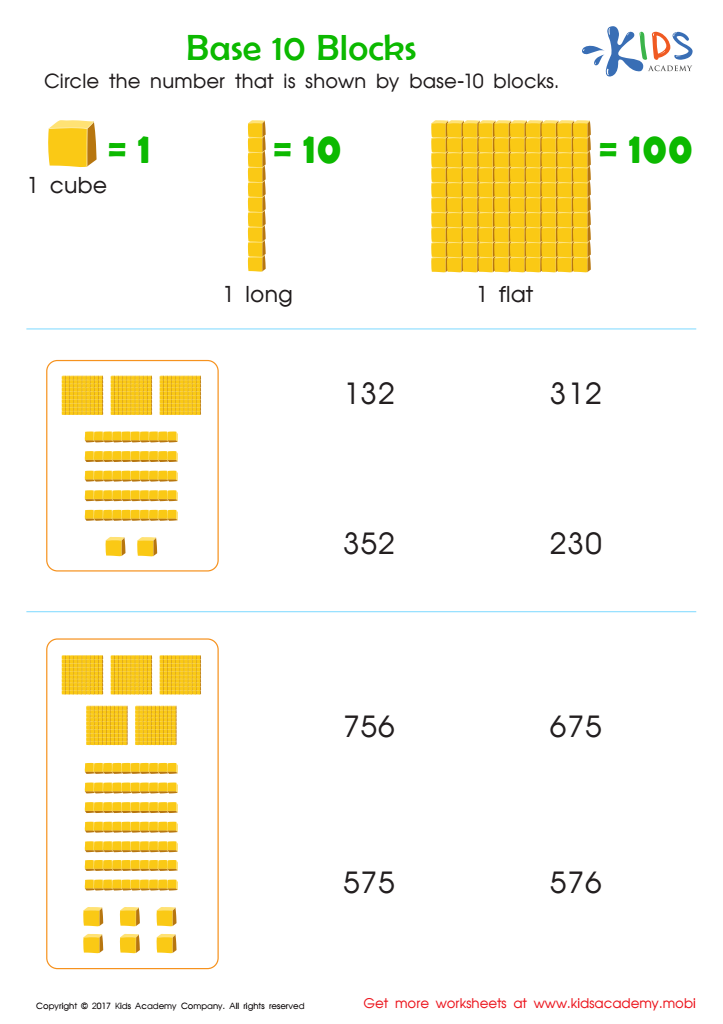
Base Ten Blocks Worksheet
When school ends, your child can still practice place value at home with this base ten blocks worksheet. They'll count and circle the right number, gaining mastery of the concept. It's a fun, easy way to hone their skills!
Base Ten Blocks Worksheet
Worksheet
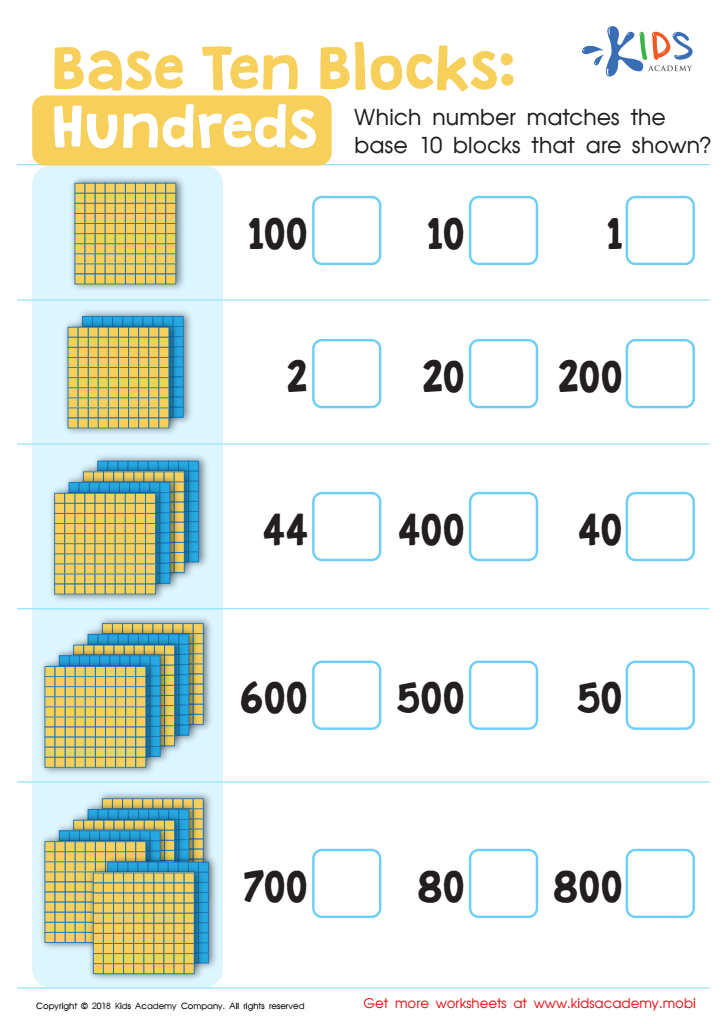
Base Ten Blocks: Hundreds Worksheet
Help your child overcome their dislike of math by guiding them with this base ten blocks worksheet. Count the blocks and answer the questions together. Ask them which number matches the base ten blocks shown. This will help them solve math problems more easily.
Base Ten Blocks: Hundreds Worksheet
Worksheet
Join Kids Academy for Free
Who is primarily going to use this learning content?






Understanding base ten math is essential for children ages 3-8 as it lays the foundational skills necessary for numeracy and future mathematical concepts. In the early years, children are introduced to the idea that numbers are structured in groups of ten, allowing them to understand place value, addition, and subtraction more naturally as they progress.
When parents or teachers embrace base ten concepts, they facilitate a deeper understanding of how numbers work, helping children grasp more complex ideas like carrying and regrouping in addition and subtraction, as well as multiplication and division down the line. This foundation also enhances children's problem-solving skills and fosters logical thinking.
Moreover, a solid understanding of base ten mechanics nurtures confidence in students' math abilities, encouraging them to engage with math in a positive way.
Additionally, as textual and standardized math curricula increasingly require students to apply base ten methods, ensuring children have a strong grasp early on prepares them for academic success. Ultimately, understanding base ten math not only advances academic performance but also develops important cognitive skills that benefit children's overall learning experiences. Both parents and teachers play a crucial role in creating an engaging environment where these concepts can flourish.








