
Understanding division Math Worksheets for Ages 3-8
8 filtered results
Difficulty Level
Grade
Age
-
From - To
Subject
Activity
Standards
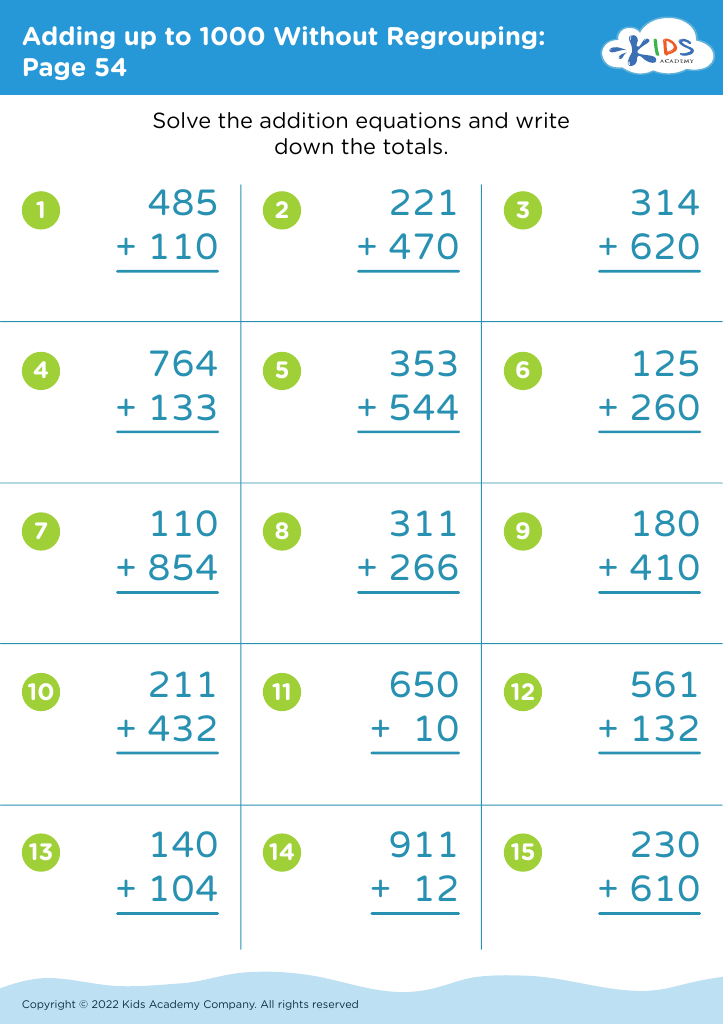
Discover fun and engaging division math worksheets designed for children aged 3-8! Our printable resources at Kids Academy simplify division concepts with kid-friendly activities and illustrations, making it easy for young learners to understand and practice. These worksheets support a variety of learning styles and help children develop essential math skills through interactive problems and exercises. Perfect for classroom or home use, our division worksheets lay a strong foundation in math by fostering confidence and competence. Foster a love for math early on with our age-appropriate, expertly crafted worksheets. Visit now to boost your child's division skills!
Favorites
With answer key
Interactive
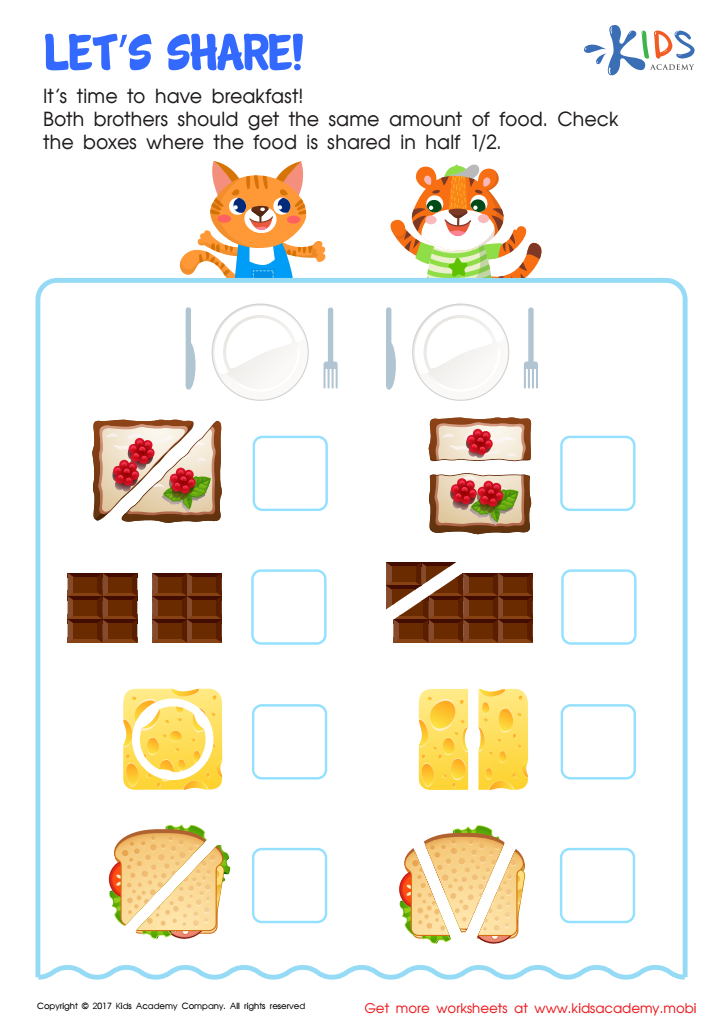
Let's Share Worksheet
It's time to test if your lessons on sharing paid off! With this worksheet, your child can have breakfast and make sure both brothers get equal amounts of food. Have them look at the food images and check the boxes where food is divided equally.
 Assign to My Students
Let's Share Worksheet
Worksheet
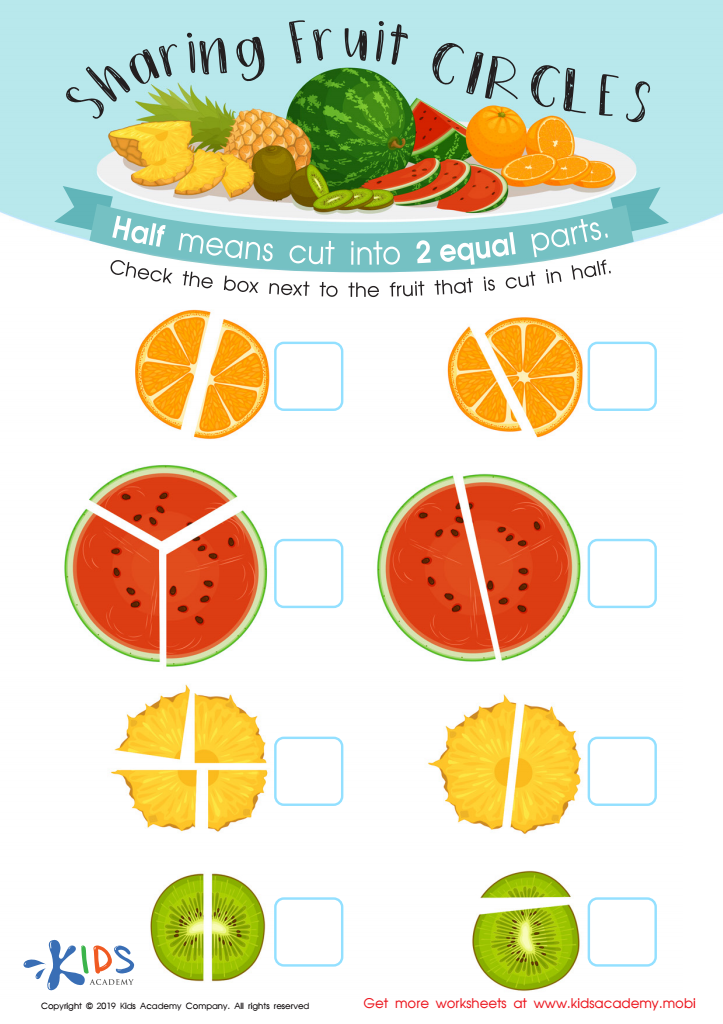
Sharing Fruit Circles Worksheet
Fruits are tasty and bright! Can your kids name some of their favorites? With this worksheet, you can use fruit to teach your kids geometry. Talk about how shapes can be cut into halves. Ask them to tick the box for the fruit halves in the printout.
Sharing Fruit Circles Worksheet
Worksheet
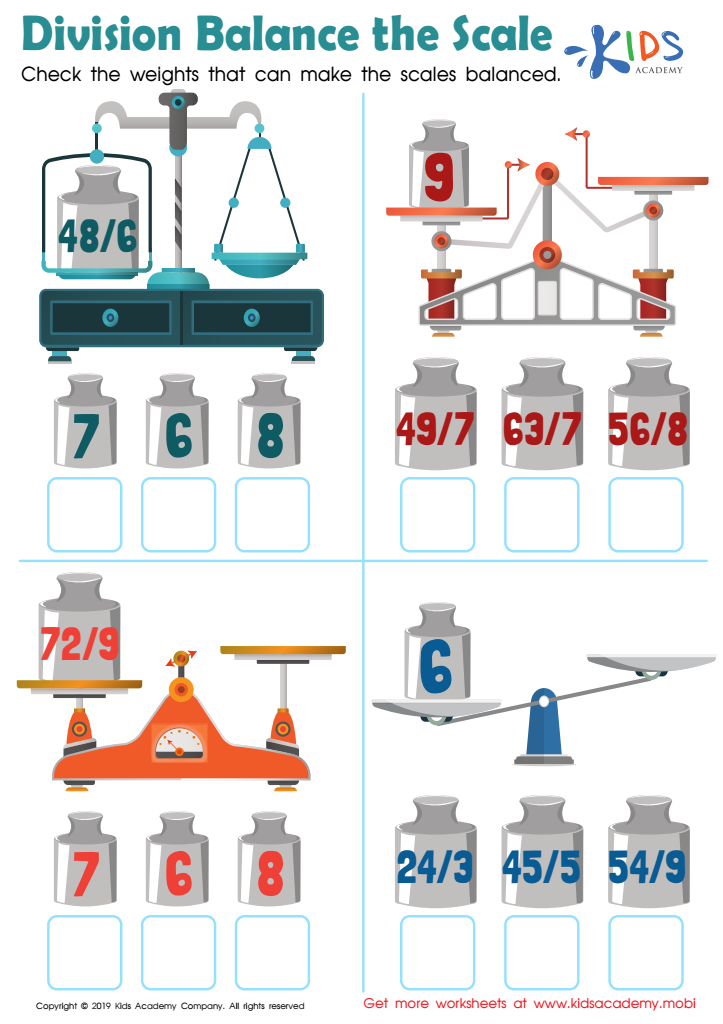
Division Balance the Scale Worksheet
Students can learn math better when they understand the relationships between numbers. This free worksheet helps them practice division: solving problems and matching the correct quotient to balance the scales. Fun visual boxes make it a unique way to engage with the material.
Division Balance the Scale Worksheet
Worksheet
Join Kids Academy for Free
Who is primarily going to use this learning content?








Understanding division at an early age (3-8 years) is crucial for several reasons. First, division is a fundamental mathematical operation intertwined with addition, subtraction, and multiplication. By mastering division early, children develop a robust mathematical foundation that enables them to understand more advanced concepts as they grow.
Second, division helps cultivate critical thinking and problem-solving skills. Young learners are naturally curious, and grasping division enables them to understand how larger quantities can be broken into smaller, manageable parts. This fosters logical reasoning and analytical skills that are valuable in everyday decision-making and more complex math challenges.
Third, learning division at an early age instills confidence in math. When children see they can solve division problems, they feel more competent and are likely to continue engaging positively with math. This boosts their overall academic performance and paves the way for better opportunities as they progress in their education.
Lastly, early division understanding aids in practical life skills. Simple tasks like sharing snacks among friends or dividing toys fairly require basic division principles. Teachers and parents who emphasize early division learning equip children with essential tools for both academic success and everyday life, ultimately fostering well-rounded, confident individuals ready to tackle future challenges.








