Understanding mass Math Worksheets for Ages 3-8
3 filtered results
-
From - To
Unlock your child's potential with our "Understanding Mass" math worksheets, designed specifically for ages 3-8. These engaging and educational resources help young learners grasp key concepts related to mass and weight, fostering a solid foundation in math. Featuring playful illustrations and age-appropriate activities, our worksheets make learning fun and interactive. Kids will develop essential skills as they compare, order, and measure different objects. Ideal for parents and educators alike, these worksheets cater to diverse learning styles, ensuring each child can thrive at their own pace. Explore our collection today and embark on a delightful journey into the world of mass and measurement!
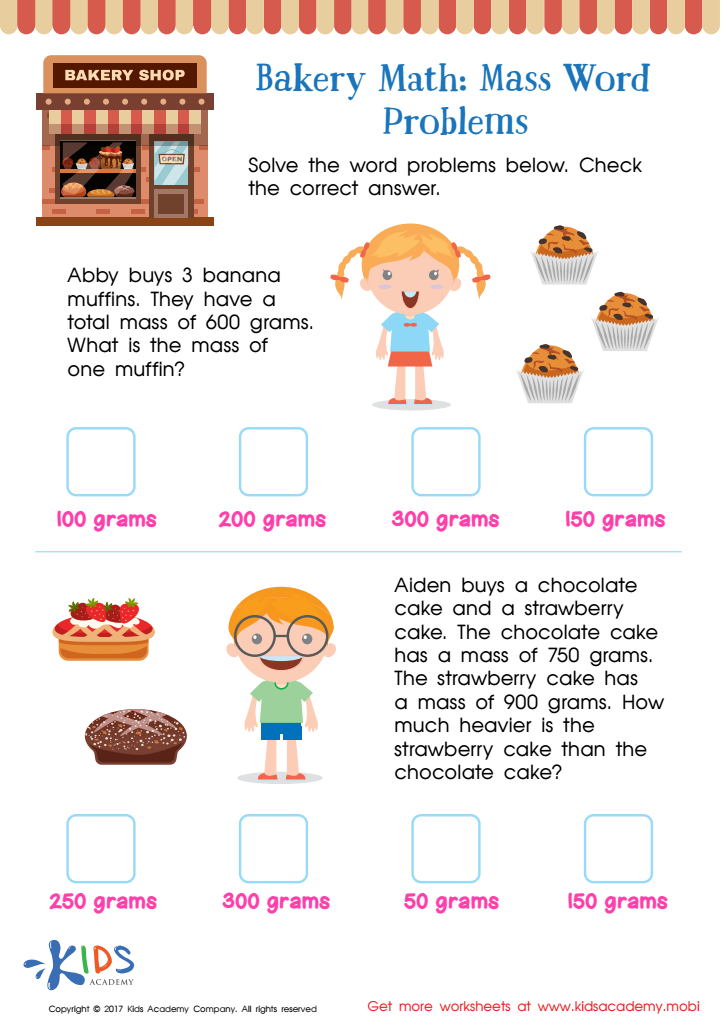
Mass Word Problems Worksheet
 Assign to My Students
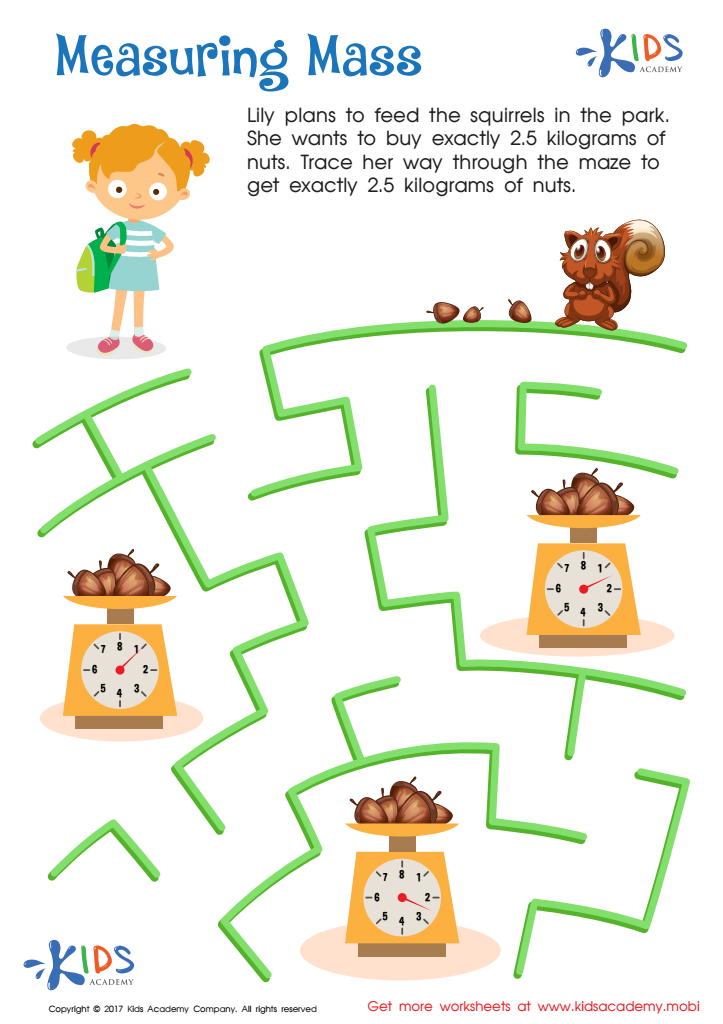
Measuring Mass Worksheet
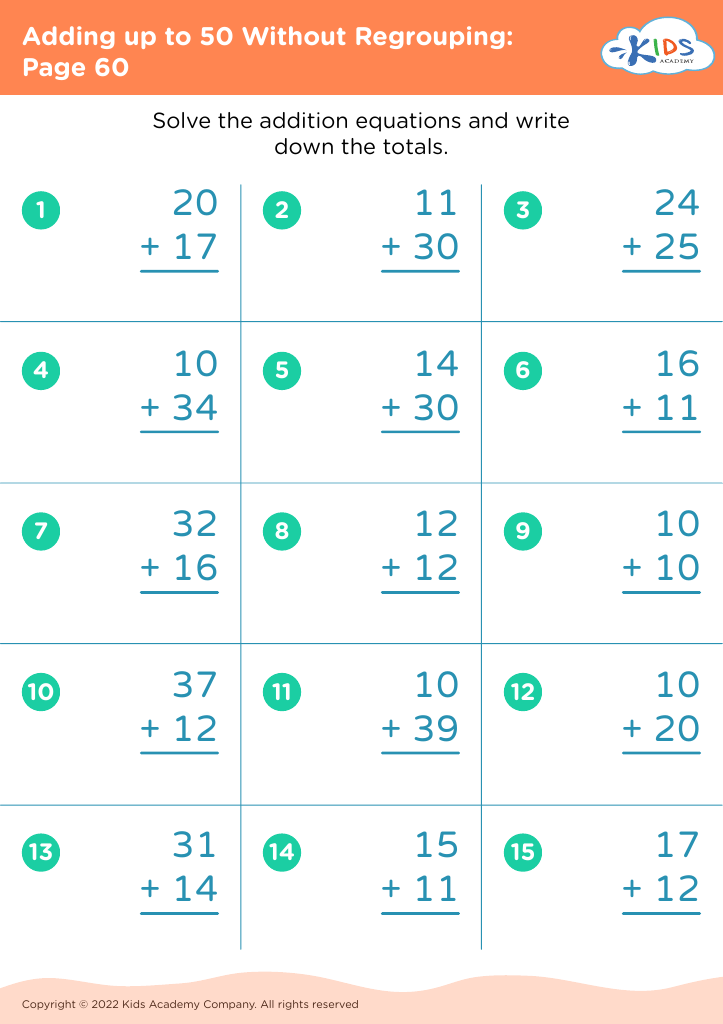







Understanding mass math for children ages 3-8 is crucial for their cognitive development and foundational skills. During these early years, children are naturally curious about the world around them, and introducing concepts like mass through practical, hands-on experiences fosters this curiosity. Engaging with mass concepts allows children to explore measurement, comparison, and numerical relationships, which can enhance their critical thinking and problem-solving abilities.
Moreover, grasping mass helps young learners make sense of everyday situations, such as measuring ingredients in cooking or understanding weights of toys. This knowledge prepares them for more complex mathematical concepts later on. It also encourages discussions about science and real-life applications, fostering an interdisciplinary approach to learning.
By integrating mass math activities into play, parents and teachers can create a rich learning environment that encourages exploration and inquiry. This not only contributes to mathematical competency but also builds confidence, as children learn to express their understanding and make predictions based on their observations.
Ultimately, prioritizing mass math engagement at a young age encourages lifelong enthusiasm for learning, paving the way for future academic success and a deeper appreciation for the subject as they grow.








