Understanding sequencing Math Worksheets for Ages 3-8
11 filtered results
-
From - To
Explore our engaging “Understanding Sequencing Math Worksheets” designed for children aged 3-8. These worksheets aim to develop critical thinking and mathematical skills by guiding young learners in the essential concept of sequencing. Through fun and interactive exercises, kids will practice organizing events, numbers, and shapes in a logical order, enhancing their problem-solving abilities. Perfect for home or classroom use, these worksheets foster early childhood development while making learning enjoyable. Whether your child is a beginner or ready for more challenging tasks, our carefully crafted resources will inspire curiosity and confidence in their mathematical journey. Start helping your child master sequencing today!
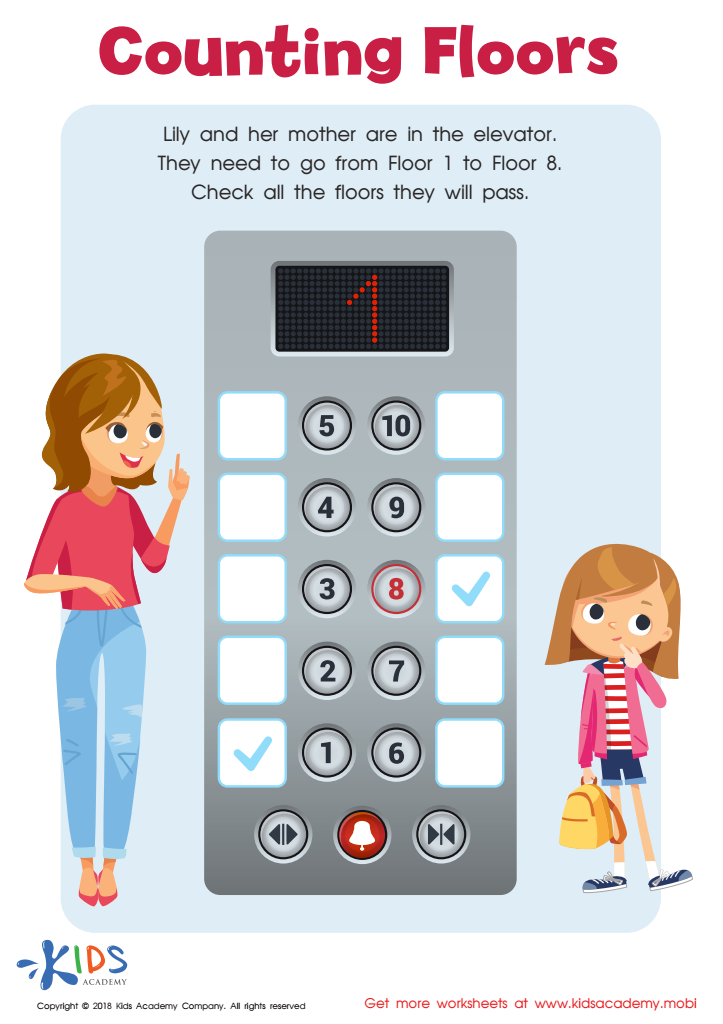
Counting Floors Worksheet
 Assign to My Students
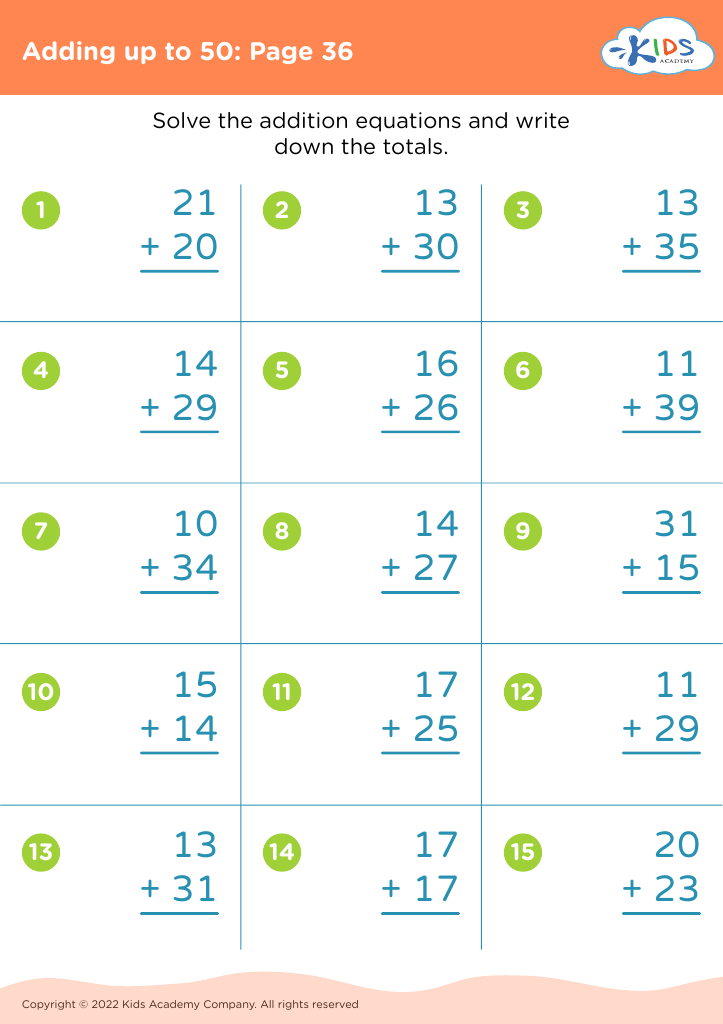
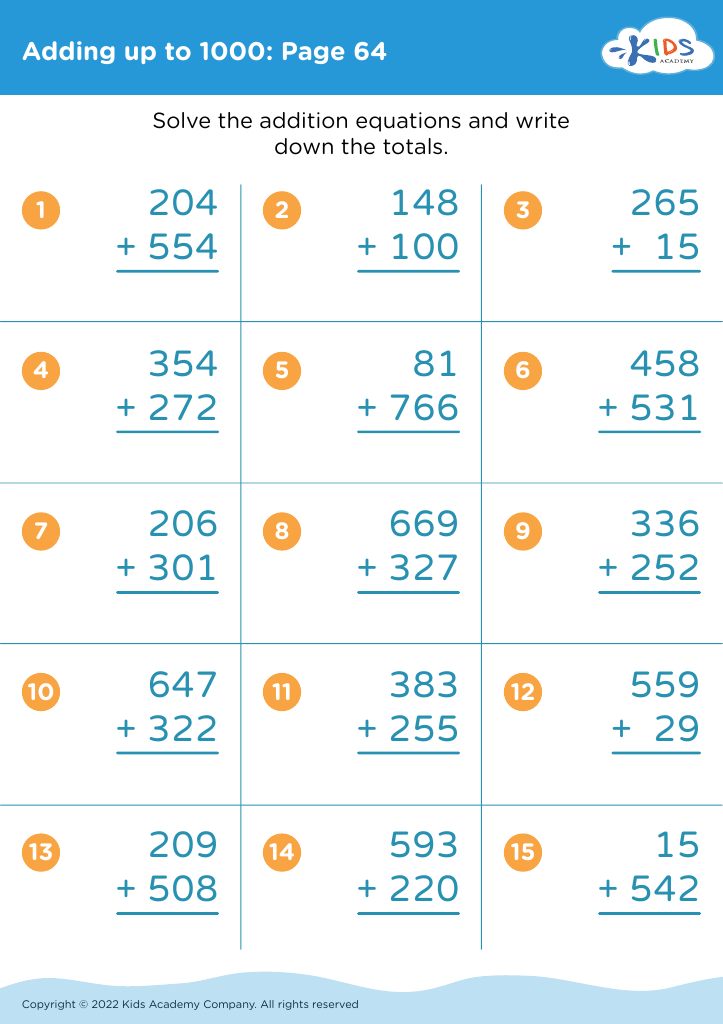
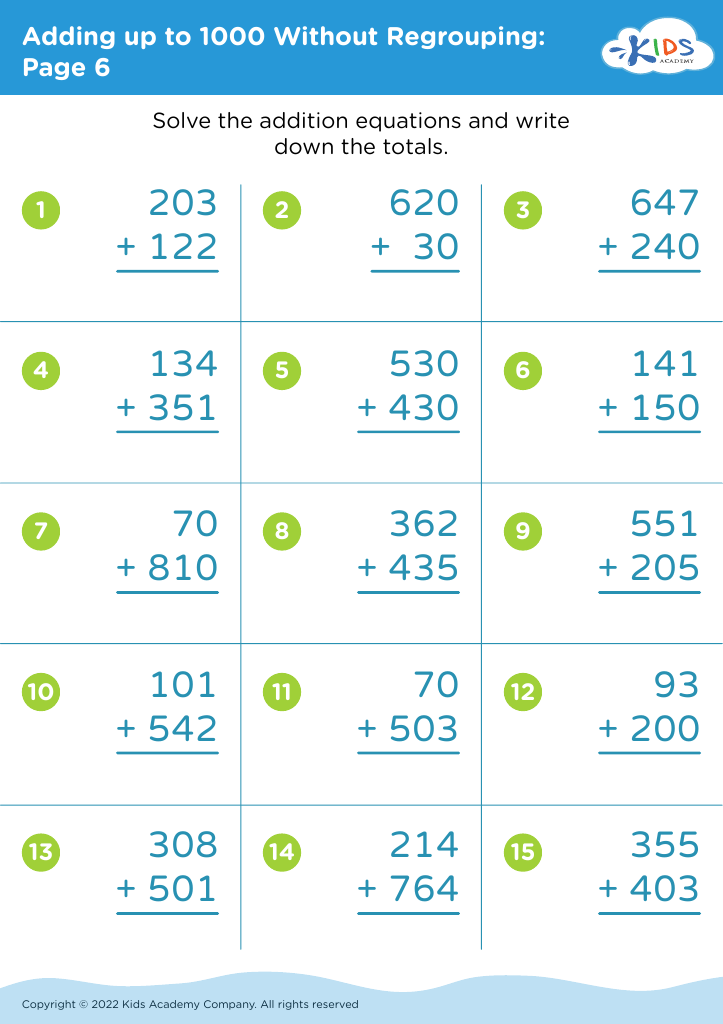
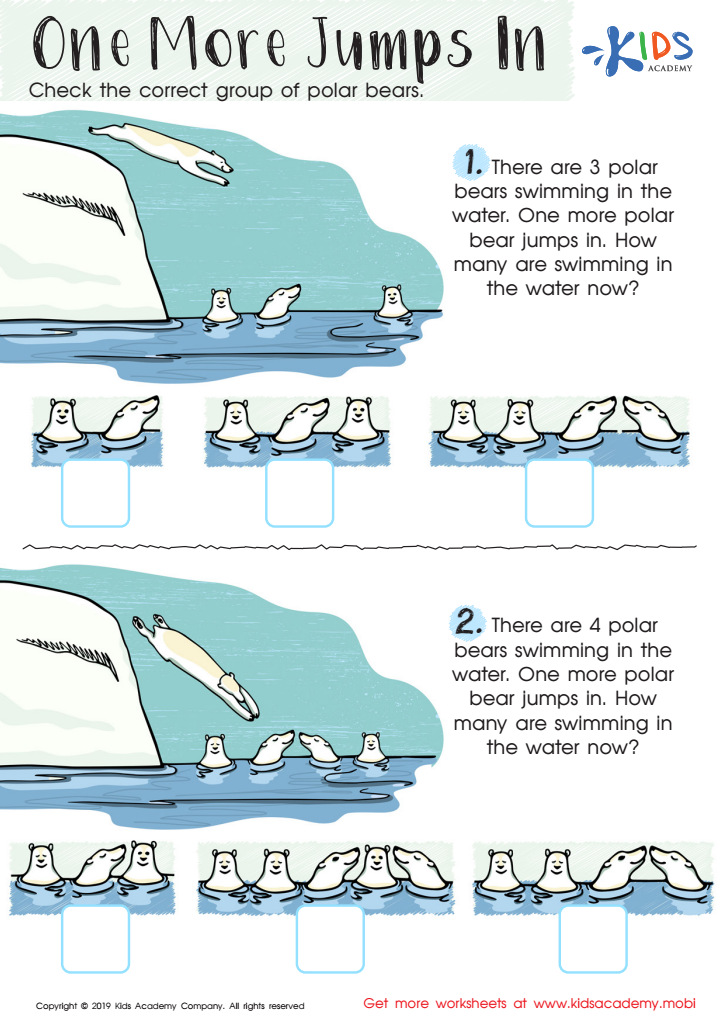
One More Jumps In Worksheet
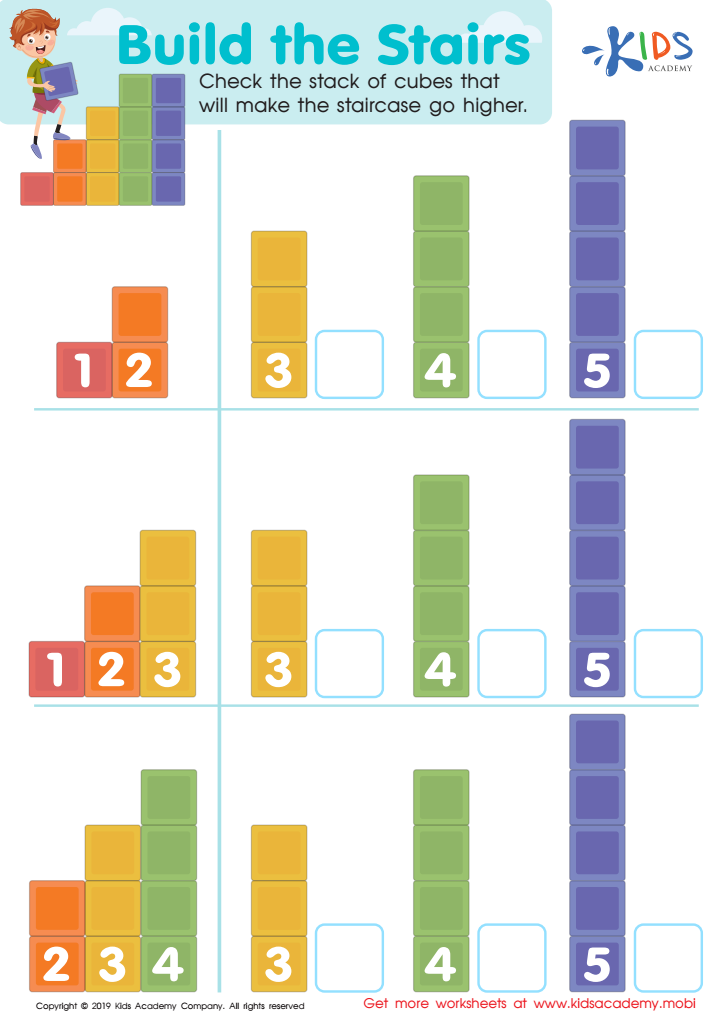
Build the Stairs Worksheet
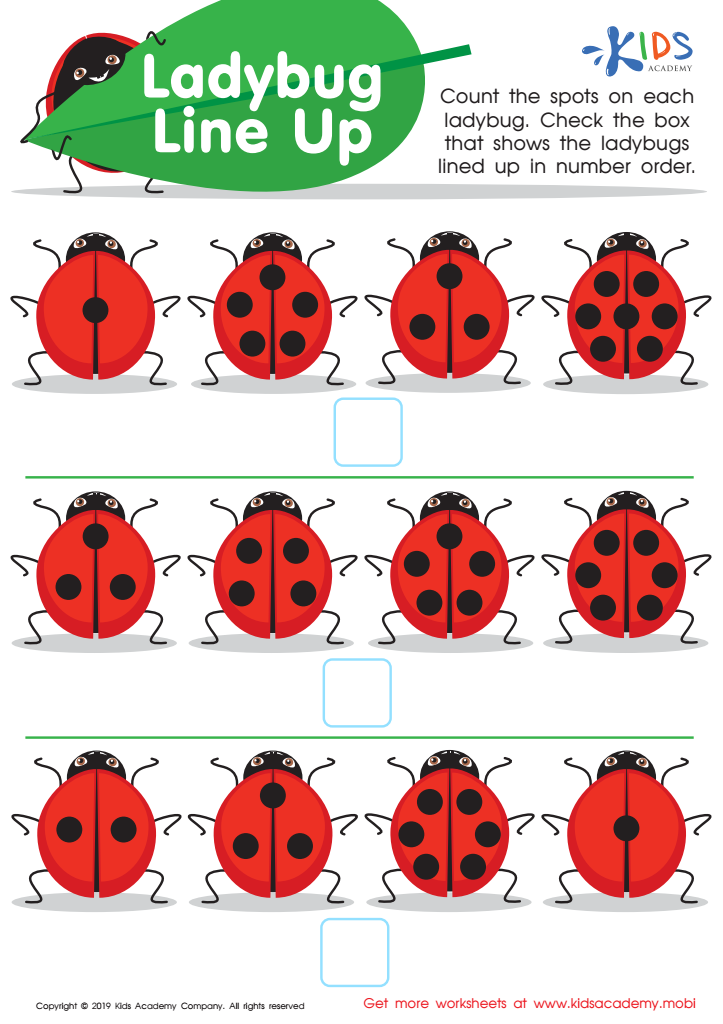
Ladybug Line Up Worksheet







Understanding sequencing in math for children aged 3-8 is crucial for their cognitive development and foundational learning. Sequencing involves recognizing and organizing patterns, which helps young learners make sense of the world. This skill is not only essential for mathematics but also for reading, problem-solving, and critical thinking.
Parents and teachers should prioritize sequencing because it enhances children's ability to follow directions, understand chronological order, and solve problems methodically. For example, sequencing activities can include arranging objects by size, recognizing patterns in music or art, or understanding the steps in a daily routine. These early experiences lay the groundwork for more complex mathematical concepts such as addition, subtraction, and later algebra, which all rely on sequencing skills.
Moreover, learning to sequence fosters creativity and innovation, giving children tools to express their ideas more systematically. For parents and teachers, supporting children in mastering sequencing can boost their confidence in academic settings, resulting in a deeper interest in learning.
In summary, understanding sequencing is key to children's overall development, helping them succeed not just in math, but in future academic and everyday challenges. Investing time in these foundational skills is essential for nurturing well-rounded, competent learners.








