Visual discrimination Matching Worksheets for Ages 3-8
3 filtered results
-
From - To
Boost early learning with our Visual Discrimination Matching Worksheets designed for ages 3-8. These exercises foster critical observation skills by helping children identify similarities and differences among shapes, objects, and patterns. Ideal for preschool to early elementary students, these engaging worksheets enhance focus, attention to detail, and cognitive development. Whether at home or in the classroom, our expertly-crafted activities provide fun, interactive learning experiences that build a strong foundation in visual discrimination. Prepare your child for success in reading and math with these essential tools. Download now and let your little ones explore the joy of learning through visual games!
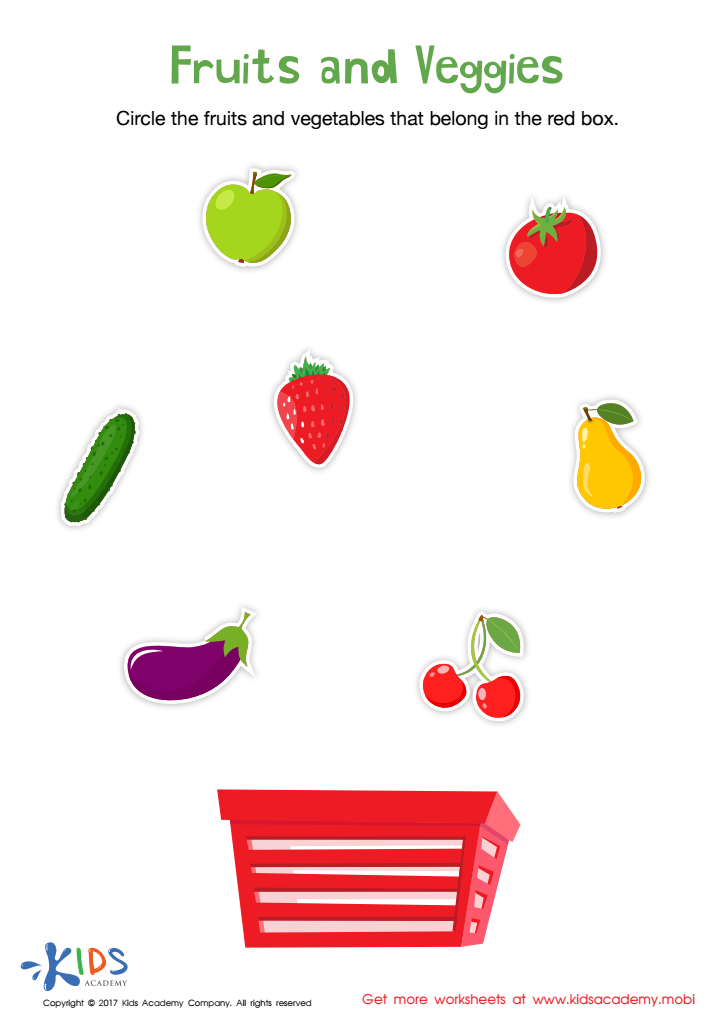
 Assign to My Students
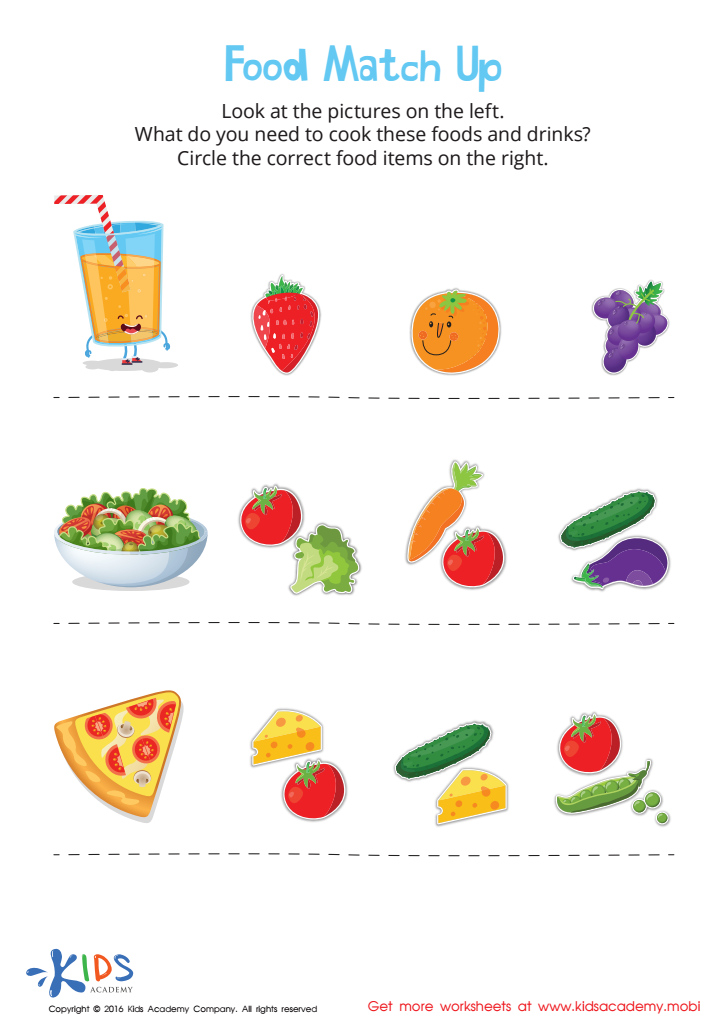
Food Match Up Worksheet
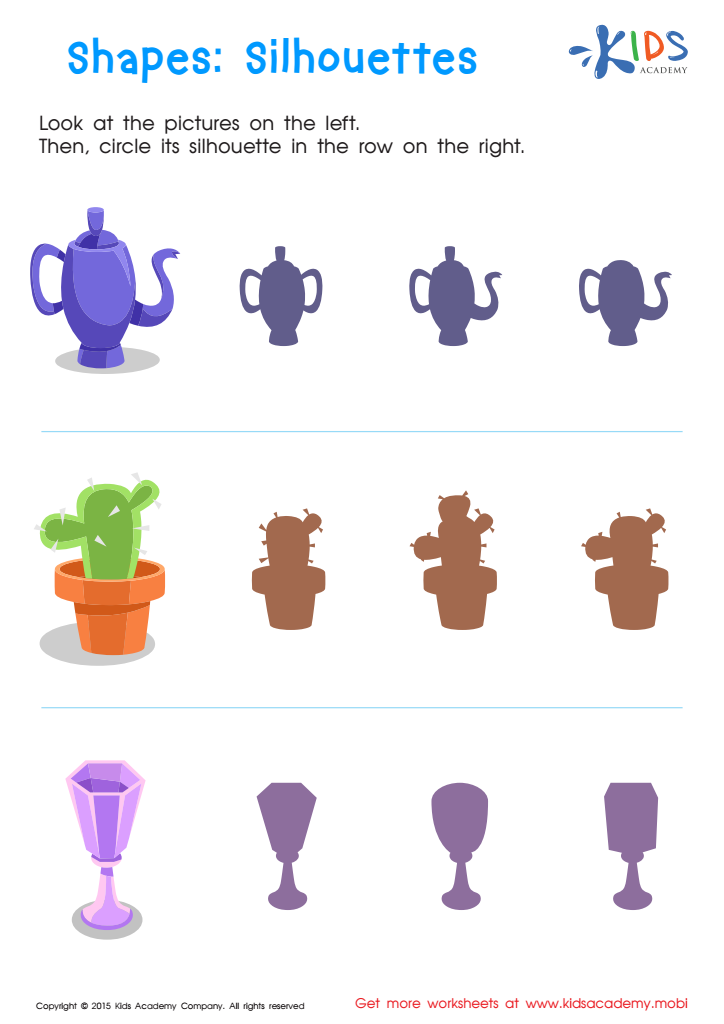
Silhouettes – Shapes Worksheet








Visual discrimination matching is crucial because it forms the foundation for many essential cognitive and academic skills in young children ages 3-8. This developmental stage is vital as it is when children start to engage more deeply with their environments and learning materials.
Firstly, visual discrimination helps children differentiate between objects, letters, numbers, and shapes. This ability is paramount for reading readiness as children need to distinguish between similar-looking letters (like 'b' and 'd') and numbers (like '6' and '9'). Fine-tuned visual discrimination makes this task easier, thereby supporting early literacy.
Secondly, this skill aids in mathematical competence. Recognizing and matching shapes, patterns, and sequences lay the groundwork for understanding more complex mathematical concepts as children grow older. For example, the ability to see differences and similarities in patterns is a precursor to learning about sorting and classifying, crucial skills in mathematics.
Furthermore, strong visual discrimination skills enhance problem-solving abilities and critical thinking. Matching exercises encourage focus and concentration, both important for academic success. They also foster an understanding of spatial relationships, which is foundational in both the natural and built environments.
In conclusion, parents and teachers should care about developing visual discrimination skills through matching activities because they play a pivotal role in a child's overall cognitive development, directly impacting their learning abilities and academic achievement in crucial early years.








