
Basic Addition Measurement Worksheets for Ages 3-8
3 filtered results
Difficulty Level
Grade
Age
-
From - To
Subject
Activity
Standards
Discover our engaging Basic Addition Measurement Worksheets designed specifically for children ages 3-8! These fun and interactive worksheets introduce young learners to the fundamentals of addition while integrating measurement concepts. Each worksheet is crafted to enhance counting skills, promote number recognition, and encourage problem-solving abilities through age-appropriate exercises. With colorful illustrations and clear instructions, kids will enjoy practicing their addition skills in a playful way. Perfect for home or classroom use, these worksheets provide a valuable resource for early math education, fostering a strong foundation in both math and measurement. Start your child’s math journey today with our educational materials!
Favorites
With answer key
Interactive
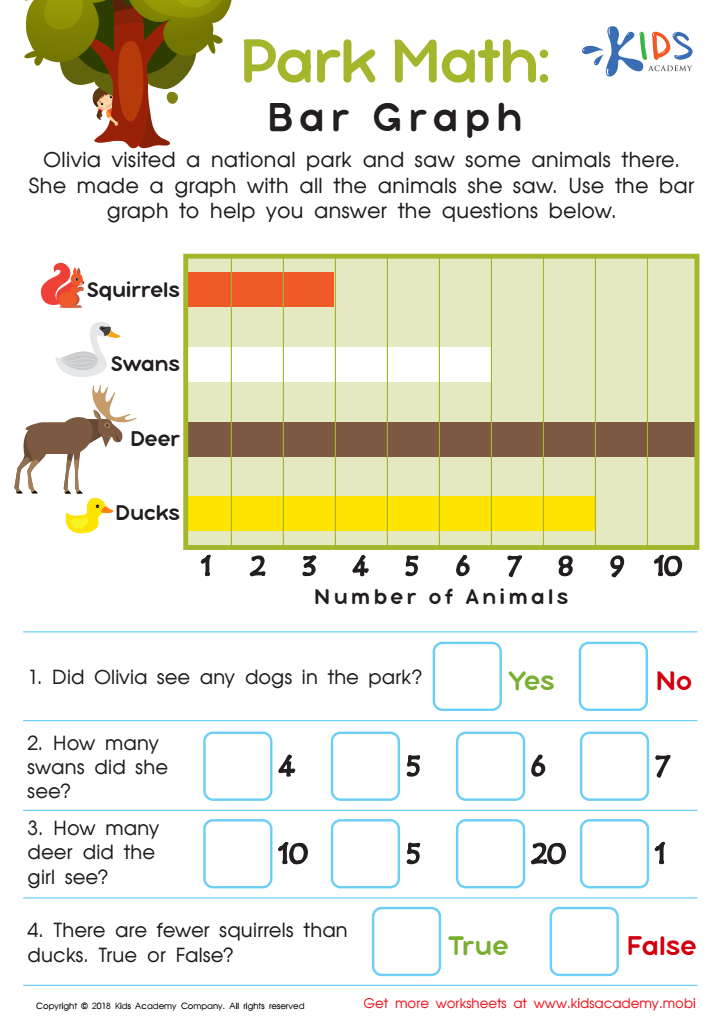
Park Math: Bar Graph Worksheet
Do your children love the park? Ask them to tell you some of their favorite animals. Then, have them look at Olivia's graph. She visited a National Park and recorded all the animals she saw. Use the graph to answer the questions given.
 Assign to My Students
Park Math: Bar Graph Worksheet
Worksheet
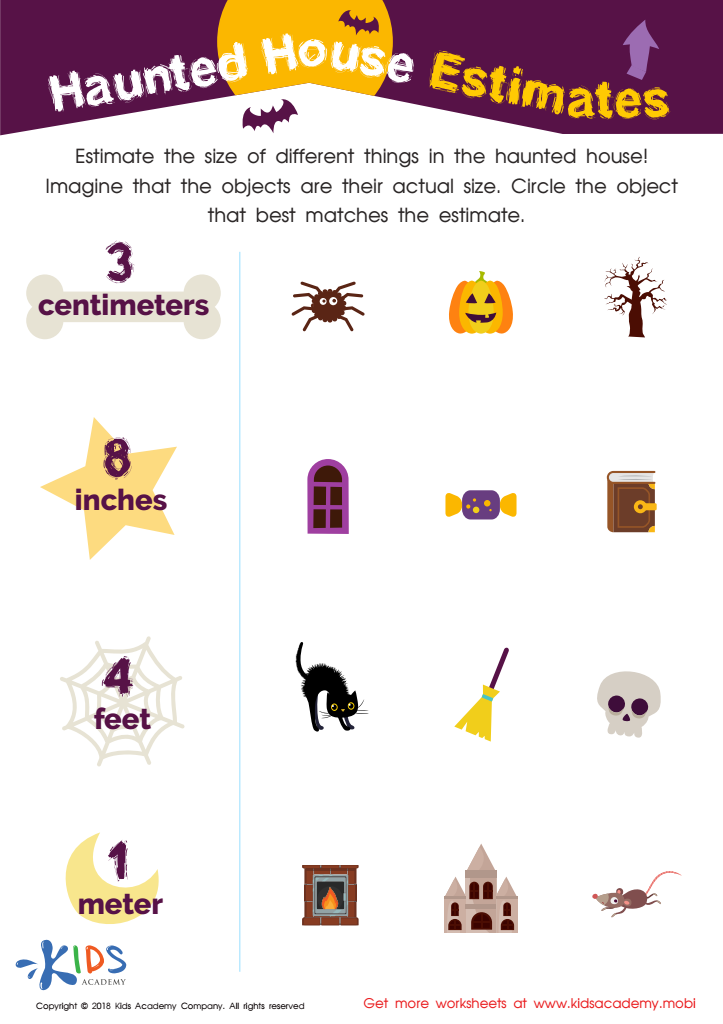
Haunted House Estimates Worksheet
Enliven your kid's learning with this printable worksheet! Have them estimate the size of objects and creatures in a haunted house, then circle the ones that match their estimates. They'll need to understand different measuring units beforehand. It's an exciting way to learn!
Haunted House Estimates Worksheet
Worksheet
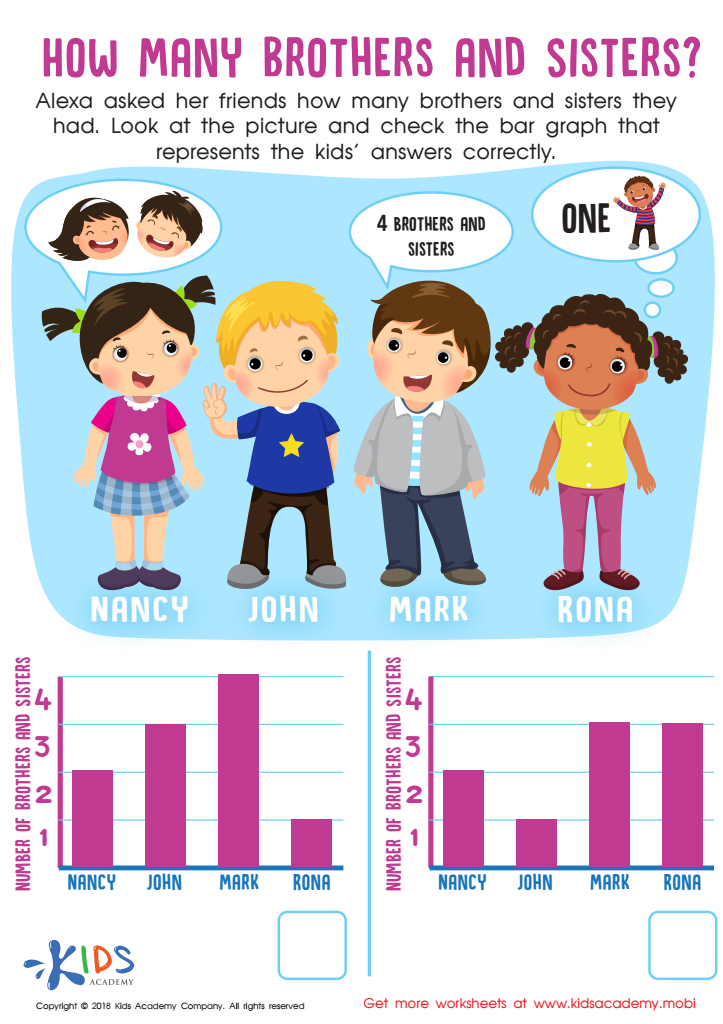
How Many Brothers and Sisters? Worksheet
With this worksheet, Alexa has asked her friends how many siblings they have. Have your child look at the picture and use it to answer the bar graph correctly. Can they tell you how many siblings their friends have? See if they can get it right!
How Many Brothers and Sisters? Worksheet
Worksheet
Join Kids Academy for Free
Who is primarily going to use this learning content?








Understanding basic addition is essential for children aged 3 to 8, as it lays the foundation for future math skills. During these formative years, children develop critical cognitive abilities, and the introduction of fundamental math concepts such as addition enhances their problem-solving and logical thinking skills. Early math knowledge directly impacts a child’s confidence and enjoyment of learning, making it a vital area for both parents and teachers to focus on.
Moreover, early experiences with addition foster numerical fluency, enabling children to manipulate numbers effectively as they progress in grade levels. Engaging with basic addition also supports development in other areas such as language skills and spatial awareness. For instance, counting items, recognizing numbers, and solving simple addition problems encourage language development as children articulate their mathematical reasoning.
In collaborative environments between parents and teachers, foundational skills can be reinforced, creating a consistent learning experience for the child. These learning moments, whether through play, everyday activities, or structured instruction, make math relatable and fun, nurturing a lifelong interest in the subject. Ultimately, prioritizing basic addition helps secure not only academic success in mathematics but also equips children with essential life skills.








