Enhancing observation skills Measurement Worksheets for Ages 3-8
3 filtered results
-
From - To
Enhance your child's observation skills with our engaging Measurement Worksheets tailored for ages 3-8. Designed to foster analytical thinking, these worksheets encourage young learners to compare, measure, and observe various objects effectively. Each activity is crafted to stimulate curiosity and develop critical reasoning through the exploration of size, length, and weight. Perfect for home or classroom settings, our worksheets are user-friendly and visually appealing, making learning enjoyable and interactive. Help your child build a strong foundation in measurement concepts while honing their observational abilities. Dive into our collection and watch your little one grow with confidence in their learning journey!
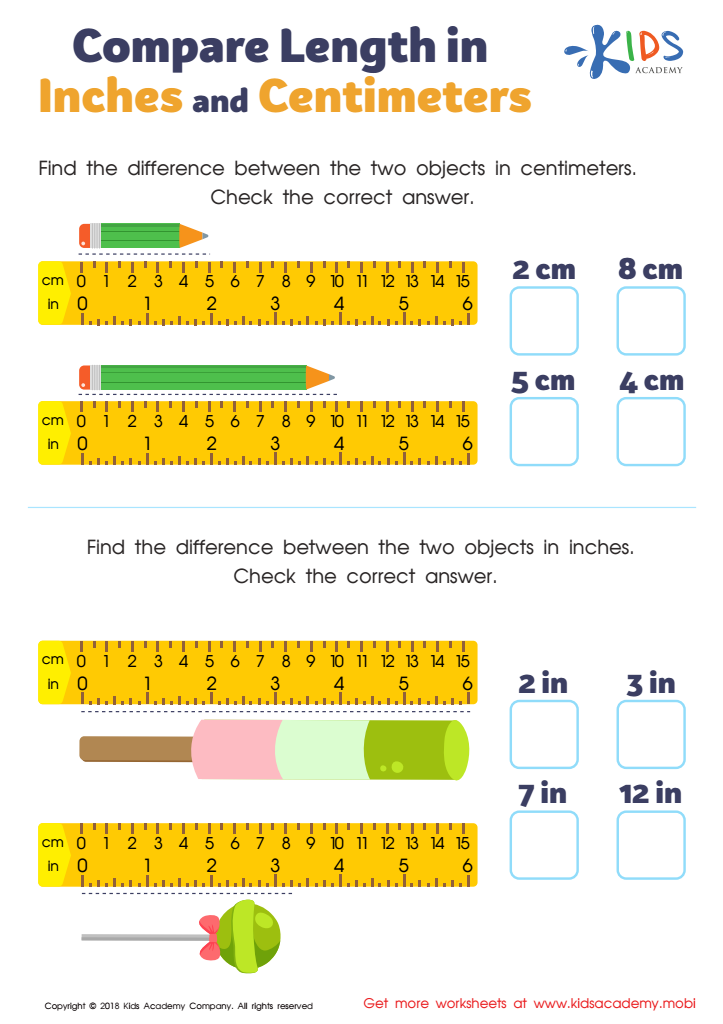
Compare Length in Inches and Centimeters Worksheet
 Assign to My Students
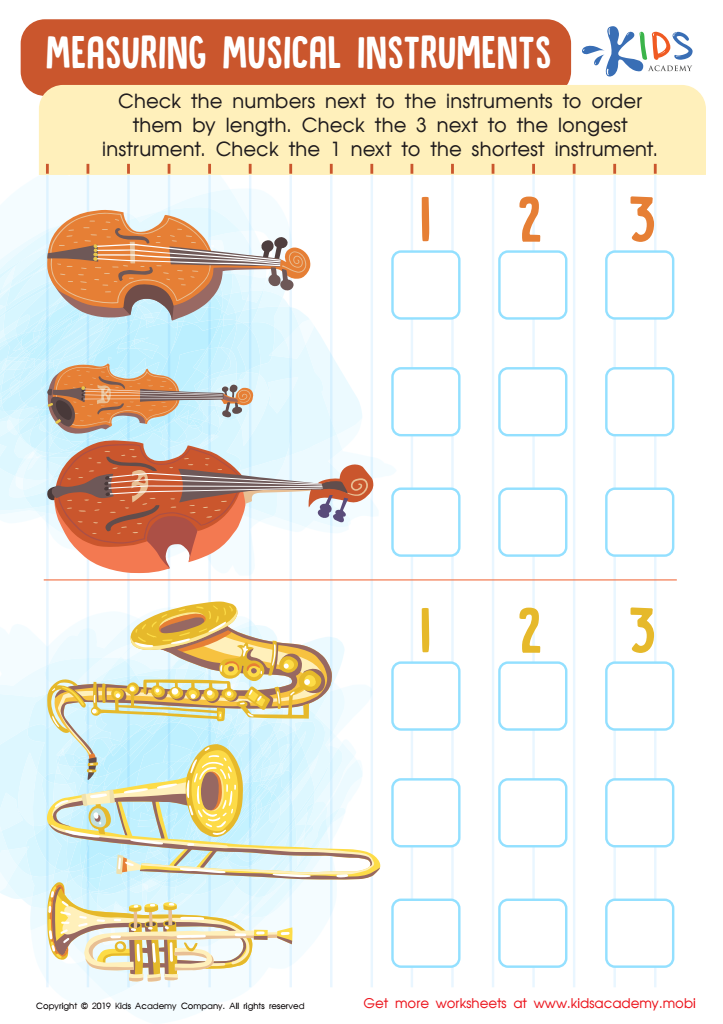
Measuring Musical Instruments Worksheet
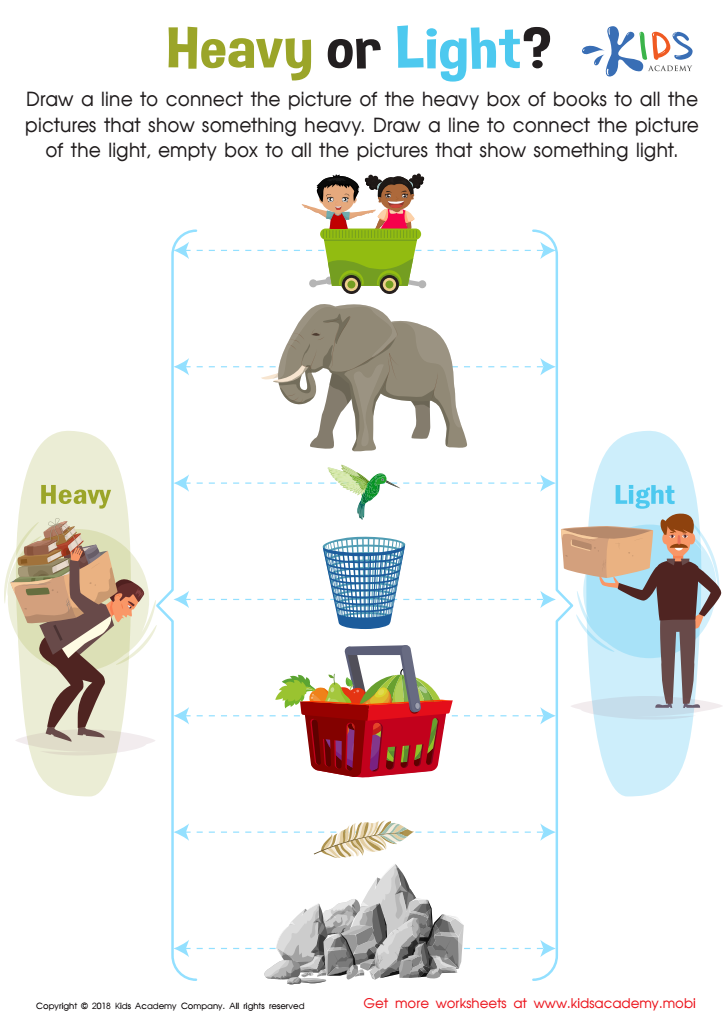
Heavy or Light? Worksheet







Enhancing observation skills in young children aged 3-8 is crucial for their development, and both parents and teachers play a pivotal role in this process. First, strong observation skills help children to notice details in their environment, which fosters curiosity and critical thinking. When children learn to observe carefully, they become better learners, as they can identify patterns and relationships in the world around them.
Additionally, developing observational skills contributes significantly to social-emotional growth. Kids who can effectively observe and interpret social cues are more likely to relate empathetically with peers, enhancing communication and conflict resolution skills. This can result in healthier relationships and emotional intelligence as they progress into adulthood.
Moreover, systematic observation allows teachers and parents to better understand children’s individual learning styles, strengths, and areas that need support. When adults observe children’s behaviors and interactions, they are better equipped to tailor educational strategies that promote growth.
Ultimately, investing in observation skills not only enriches a child's educational experience but also sets a solid foundation for lifelong learning and adaptability. Therefore, parents and teachers should prioritize activities and strategies that nurture these essential skills, ensuring that children thrive in their formative years.








