
Time reading skills Measurement Worksheets for Ages 3-8
3 filtered results
Difficulty Level
Grade
Age
-
From - To
Subject
Activity
Standards
Welcome to our Time Reading Skills Measurement Worksheets for Ages 3-8! These engaging and interactive worksheets are designed to help young learners master the essential skill of telling time. Tailored for children aged 3 to 8, our printable resources include fun activities such as matching clocks to times, filling in the blanks, and drawing hands on clocks, making learning enjoyable. These worksheets not only build foundational math skills but also enhance critical thinking as children learn to read both analog and digital clocks. Perfect for home or classroom use, these resources support early education and boost your child’s confidence in time management.
Favorites
With answer key
Interactive
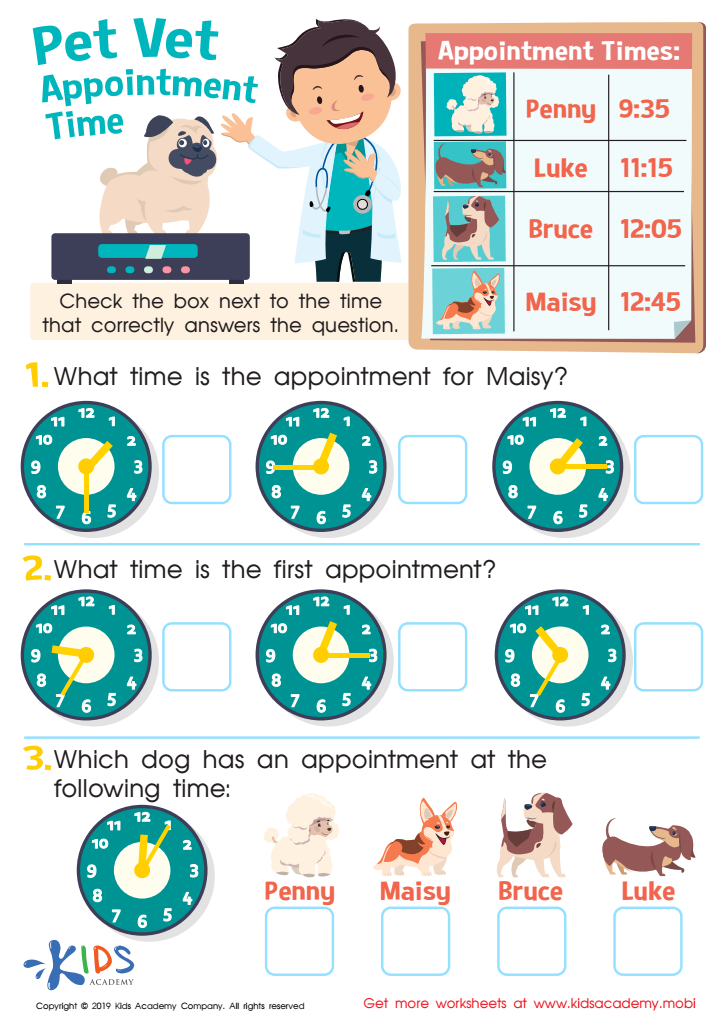
Pet Vet Appointment Time Worksheet
Teach your child how to read the time early, so they can master it. Explain the importance of being able to tell the time. Use this worksheet to have your child practice. Have them look at the clocks and check the box of the time that correctly answers the three questions.
 Assign to My Students
Pet Vet Appointment Time Worksheet
Worksheet
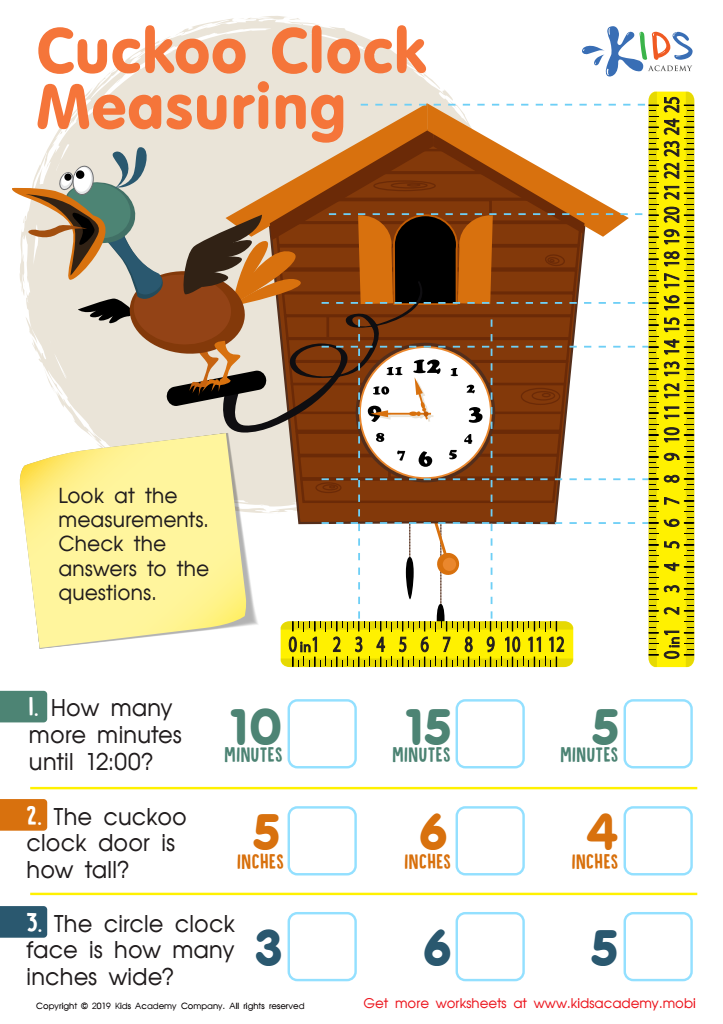
Cuckoo Clock Measuring Worksheet
Check out the fun picture in this worksheet. Ask your kids to identify the object. It's a cuckoo clock - the bird pops out every hour to announce the time. See if your child knows how to measure the clock. Help them answer the 3 questions and test their knowledge of time!
Cuckoo Clock Measuring Worksheet
Worksheet
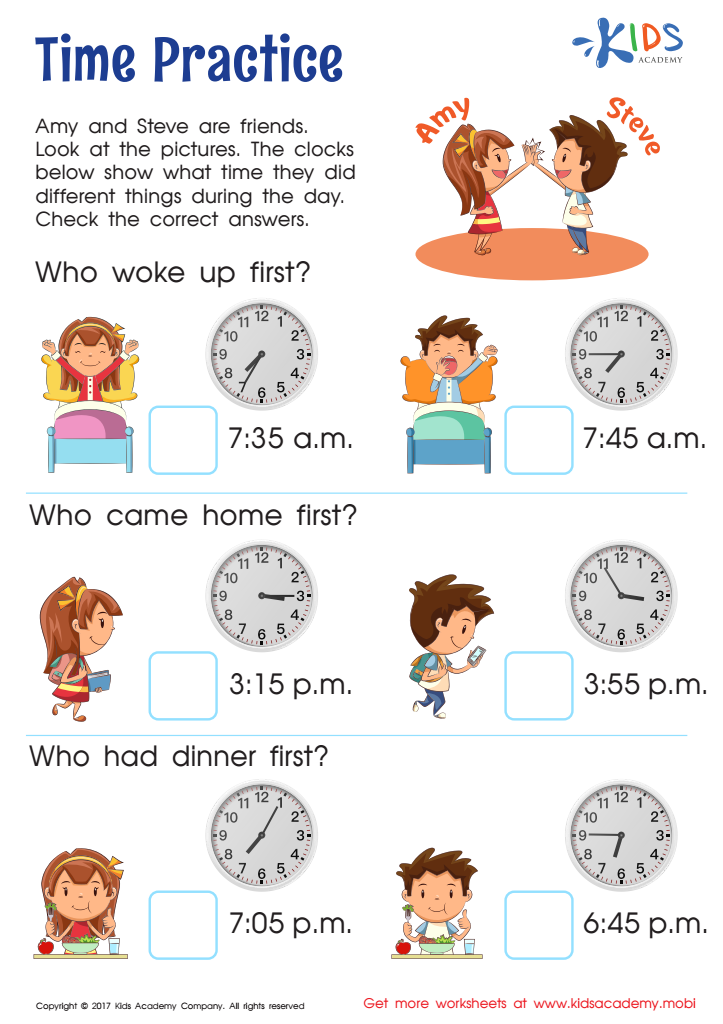
Time Practice Worksheet
It's perfect for 2nd graders as they gain a better understanding of time. Get them to tell the time on analog clocks, improve their math skills, and boost their confidence!
Second graders can brush up on timekeeping with our time practice worksheets. They'll learn to read minutes on analog clocks, honing math and confidence. Perfect for mastering this tricky concept!
Time Practice Worksheet
Worksheet
Join Kids Academy for Free
Who is primarily going to use this learning content?








Time reading skills measurement for children ages 3-8 is vital for several reasons. First, these formative years lay the foundation for future academic success. By assessing reading skills early, parents and teachers can identify strengths and weaknesses, allowing for targeted interventions that support developing proficient readers. As literacy is deeply linked to cognitive development, improving reading skills can enhance a child's overall learning capability.
Second, measurement of reading skills can foster a love for reading. When children experience success and recognize their progress, they build confidence and are more likely to engage with books. This positive reinforcement encourages lifelong habits of reading.
Furthermore, early reading assessments can help identify children who may need additional support due to learning difficulties or disabilities. Early intervention, when implemented promptly, can significantly improve outcomes and prevent struggles later in school.
Finally, as collaborative partners in a child’s education, parents and teachers can use reading assessments as a shared tool to ensure a consistent approach to literacy development at home and in the classroom. Ultimately, prioritizing reading skills measurement helps cultivate well-rounded learners, sets the stage for academic achievement, and promotes enjoyment of literature.








