
Mental math improvement Multiplication Worksheets for Ages 3-8
5 filtered results
Difficulty Level
Grade
Age
-
From - To
Subject
Activity
Standards
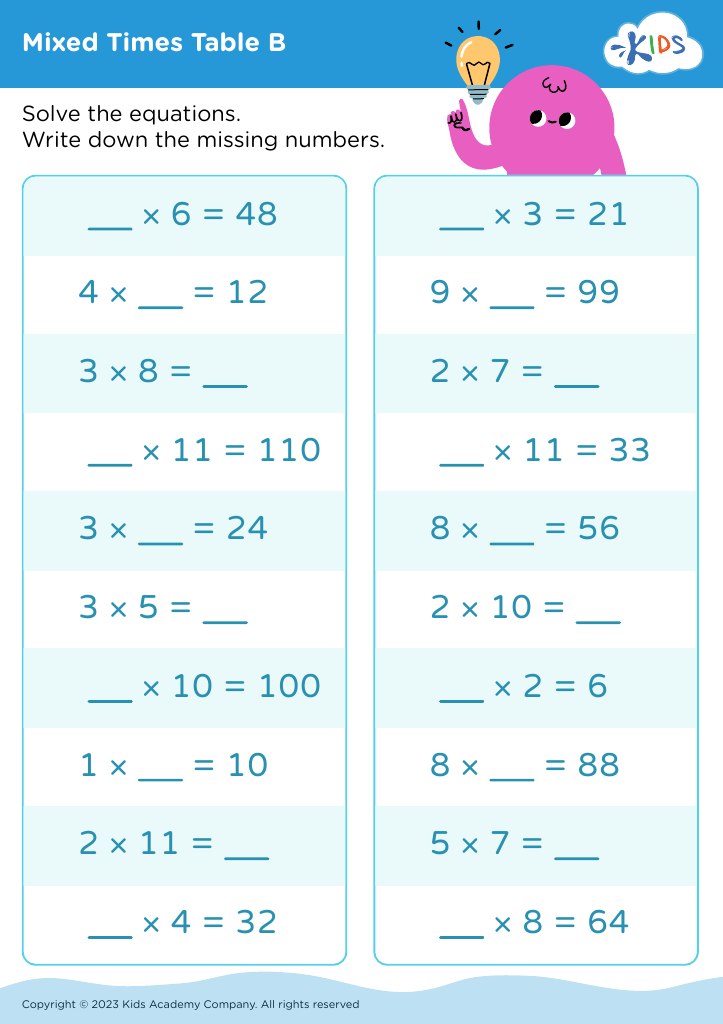
Boost your child's math skills with our engaging Mental Math Multiplication Worksheets, designed for ages 3-8. These worksheets provide a fun and interactive way to enhance multiplication abilities, fostering quick mental calculations and boosting confidence. Our carefully crafted exercises cater to different learning paces, making them perfect for early learners. With vibrant illustrations and age-appropriate problems, children will develop a solid foundation in multiplication while enjoying the learning process. Perfect for home or classroom use, these worksheets promote critical thinking, problem-solving, and independent learning. Start your child's mathematical journey today with our captivating mental math resources!
Favorites
With answer key
Interactive
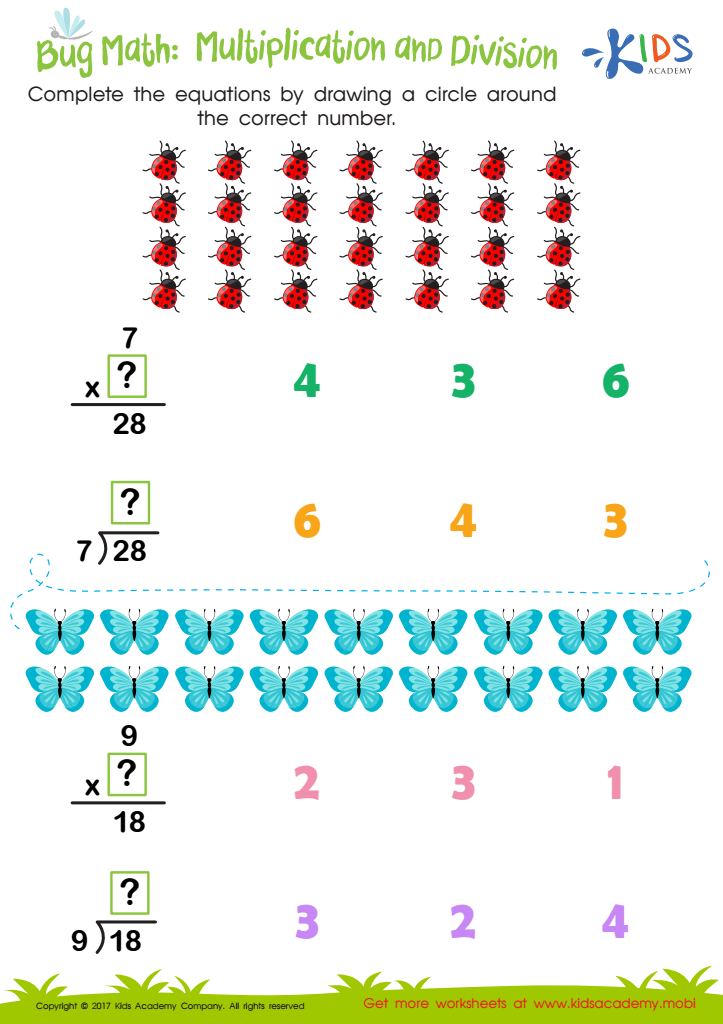
Multiplication and Division Worksheet
Third graders can solve tricky multiplication and division problems with visuals of springtime bugs. Pictures guide them through the process, making it easier to understand. Plus, it's fun!
 Assign to My Students
Multiplication and Division Worksheet
Worksheet
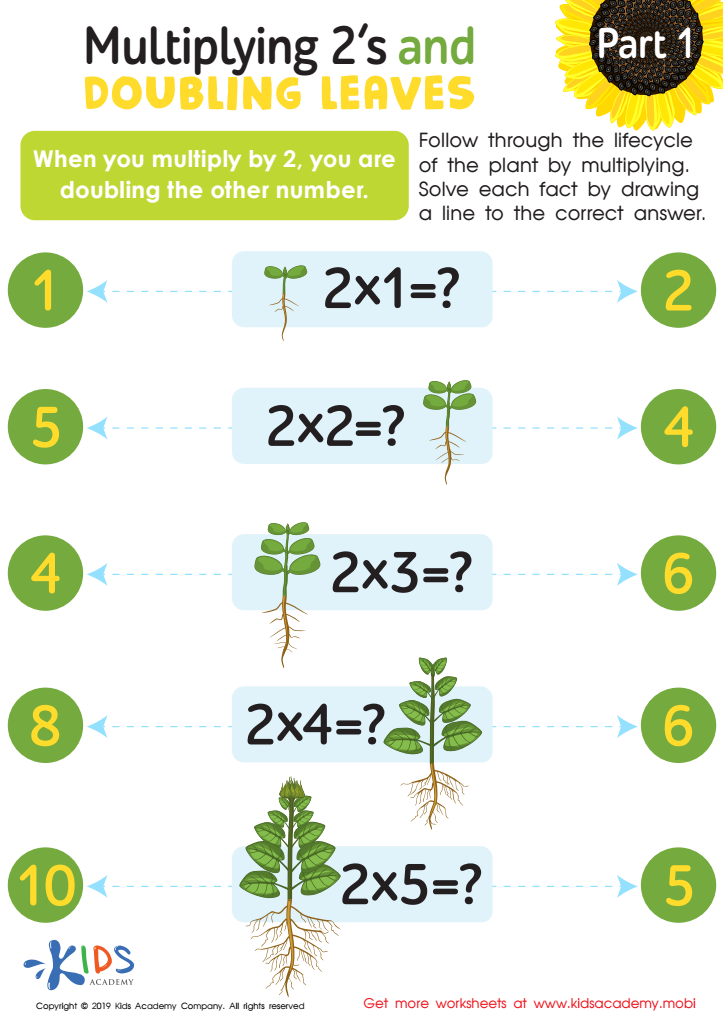
Multiplying 2’s and Doubling Leaves Part 1 Worksheet
If your students still struggle with multiplication, use this worksheet to help them master it. For multiplying by 2, double the original number. Give them this tracing sheet; they'll solve each fact by drawing a line to the right answer. This worksheet will help them learn multiplication tricks and tips.
Multiplying 2’s and Doubling Leaves Part 1 Worksheet
Worksheet
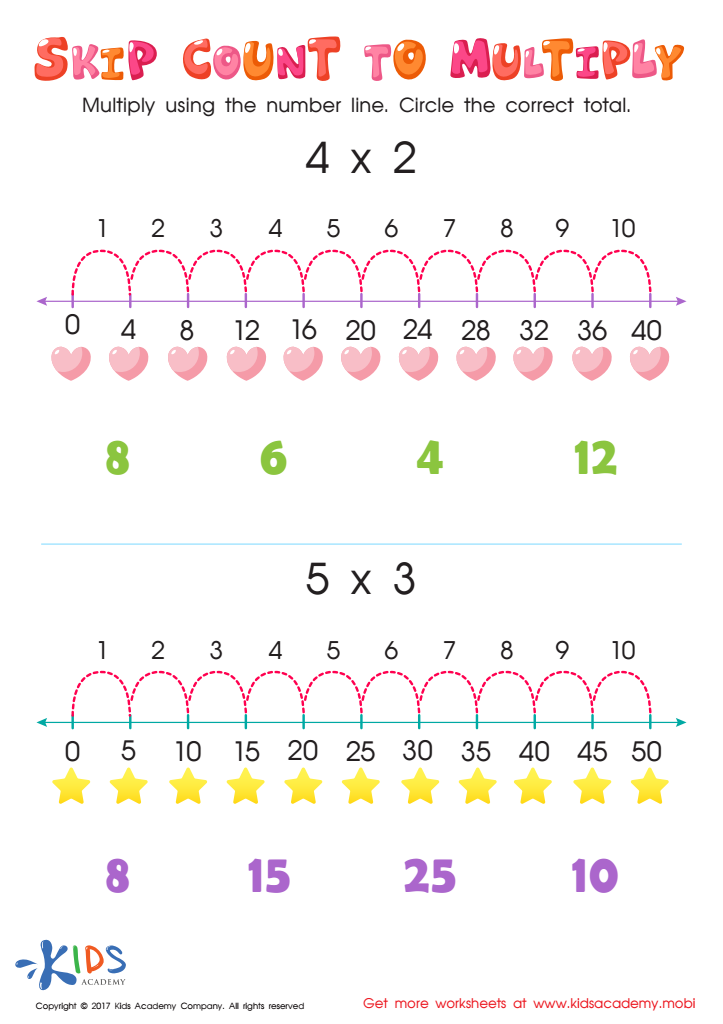
Skip Count Multiplication Worksheet
This colorful worksheet helps kids multiply by skip counting on a number line. Kids gain a better understanding of multiplication by seeing how the answer is calculated.
Skip Count Multiplication Worksheet
Worksheet
Join Kids Academy for Free
Who is primarily going to use this learning content?







Mental math improvement, especially in multiplication, is crucial for children aged 3-8, as it lays the foundation for their future academic success. Developing strong mental math skills promotes higher cognitive functions, including problem-solving, critical thinking, and number sense. When children practice multiplication mentally, they become more confident in their abilities and can tackle more complex math concepts later on.
Additionally, mental math nurtures a child's ability to see relationships between numbers, enhancing their understanding of patterns and enhancing their overall mathematical fluency. This early proficiency builds a positive attitude toward math, encouraging children to engage with the subject more thoroughly.
Parents and teachers play a crucial role in fostering these skills through consistent practice and enjoyable activities. By integrating mental math exercises into daily routines—such as games, songs, or real-life situations—children learn to apply multiplication in various contexts rather than simply memorizing facts. Engaging young learners in this manner not only helps them retain information better but also prepares them for more advanced mathematical concepts.
Ultimately, investing in mental math improvement helps nurture a mathematically literate generation and equips children with essential life skills that extend far beyond the classroom. When children struggle with math early on, it can lead to long-term aversions or difficulties, making this area of growth particularly vital.








