Number Sequencing Skip Counting Worksheets for Ages 3-8
4 filtered results
-
From - To
Unlock your child's mathematical potential with our engaging Number Sequencing Skip Counting Worksheets, specially designed for ages 3-8. These worksheets introduce the foundational concepts of skip counting, enabling young learners to develop essential number sense and sequencing skills. Through various fun and interactive activities, children will practice counting by twos, fives, and tens, fostering their ability to recognize patterns in numbers. Ideal for parents and educators alike, our thoughtfully crafted resources promote independent learning and boost confidence in early math. Enhance your child’s educational journey today, making math enjoyable and accessible with our printable worksheets!
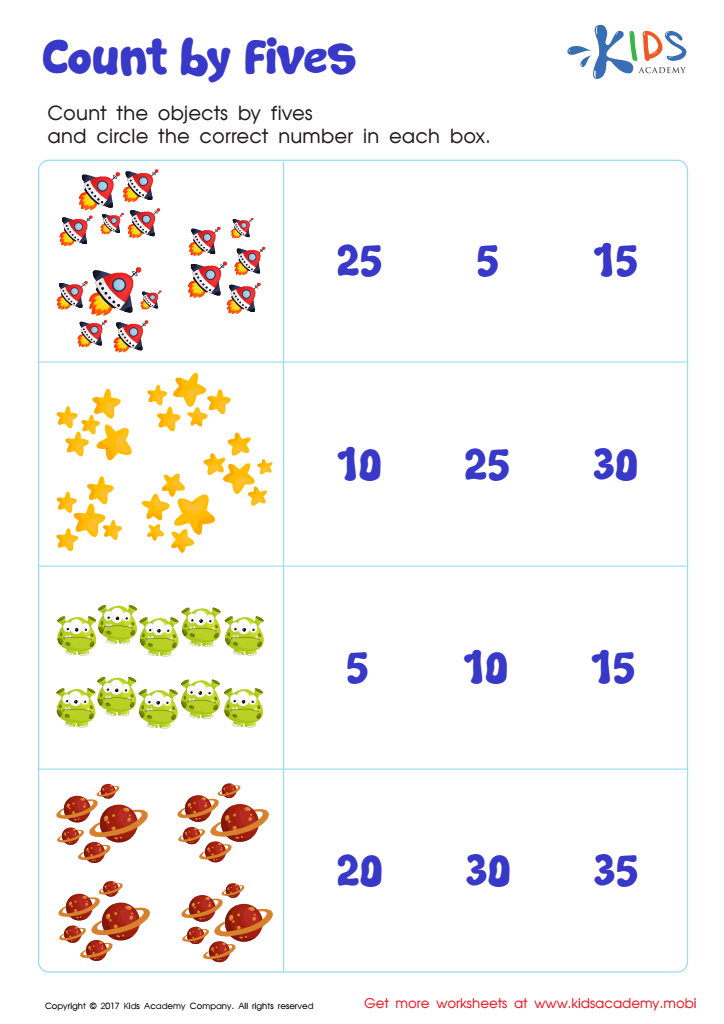
Skip Counting by 5s: Space Math Printable
 Assign to My Students
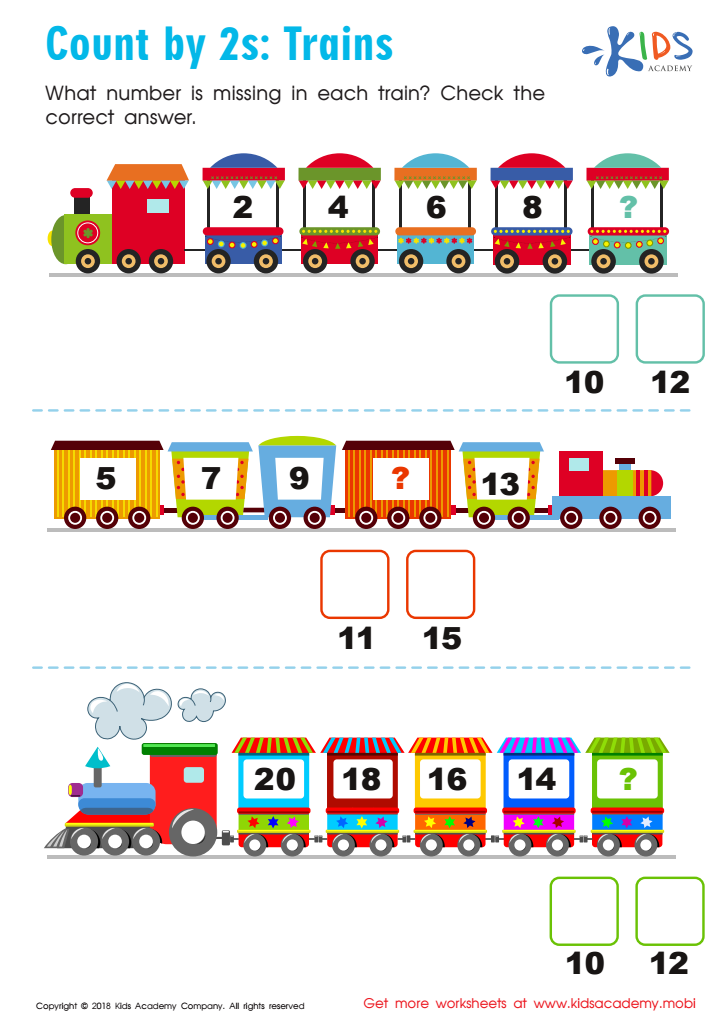
Count by 2's: Trains Worksheet
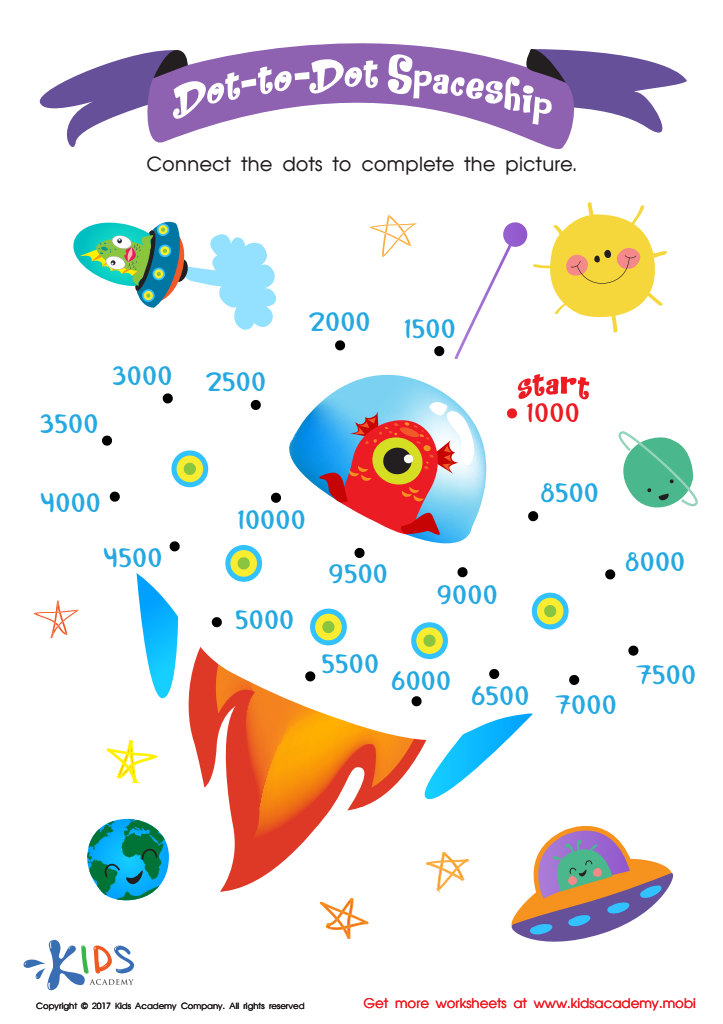
Dot to Dot Worksheet for 3rd Grade
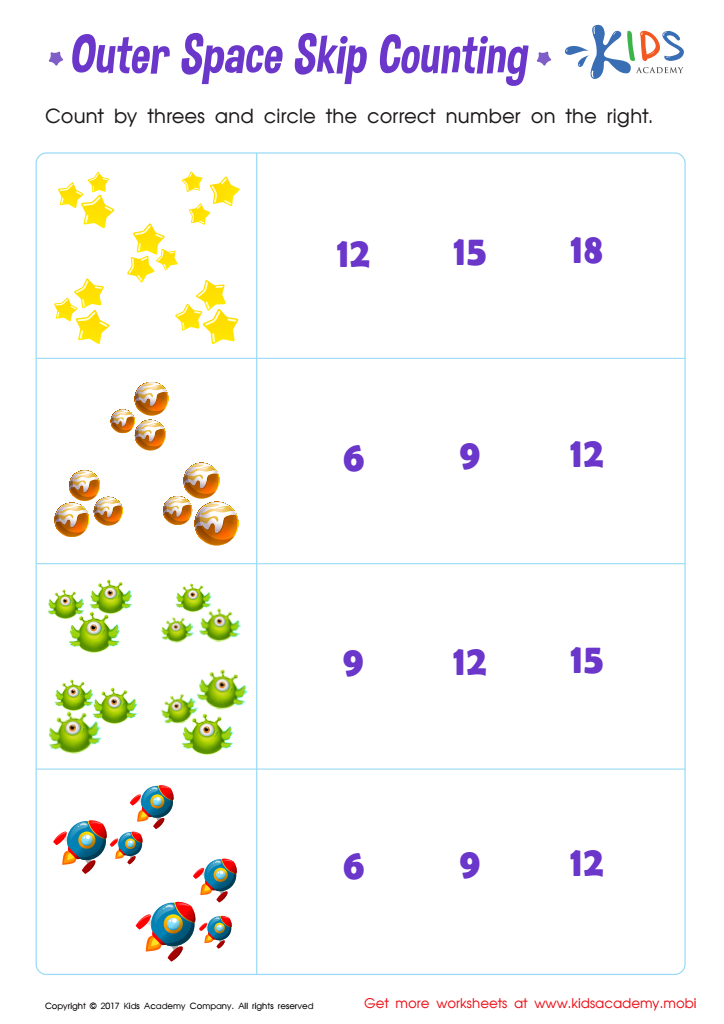
Skip Counting by 3s: Outer Space Skip Counting Printable








Number sequencing and skip counting are vital foundational skills for children ages 3-8, serving as building blocks for mathematical understanding and critical thinking. Engaging in these activities helps young learners develop a grasp of numerical orders, recognize patterns, and develop a sense of number relationships. For parents and teachers, understanding the importance of these skills is crucial.
Firstly, skip counting—such as counting by twos, fives, or tens—not only aids in multiplication and division concepts but also enhances memory retention and cognitive development. It encourages kids to visualize numbers in groups, making complex calculations easier as they advance in their math journey.
Additionally, mastering number sequencing fosters organizational skills that apply universally, from math to daily life tasks. By focusing on these foundational skills, educators and parents can effectively identify areas where children may need additional support, fostering a positive attitude towards math from an early age.
Encouraging fun and engaging activities around number sequencing and skip counting can also promote social interaction and cooperative learning. Ultimately, nurturing these skills supports children's overall academic success and confidence in their mathematical abilities, paving the way for future learning adventures.








