Problem-Solving Skills Skip Counting Worksheets for Ages 3-8
4 filtered results
-
From - To
Enhance your child's math abilities with our Problem-Solving Skills Skip Counting Worksheets, designed specifically for ages 3 to 8! These engaging worksheets teach children the vital concept of skip counting while fostering critical thinking and problem-solving skills. Each activity encourages fun and interactive learning, allowing young learners to master counting by 2s, 5s, and 10s. With colorful illustrations and age-appropriate exercises, your child will enjoy building confidence in their math abilities. Perfect for home or classroom use, our worksheets are an excellent resource to support early education and prepare your little one for future math challenges. Explore the world of skip counting today!
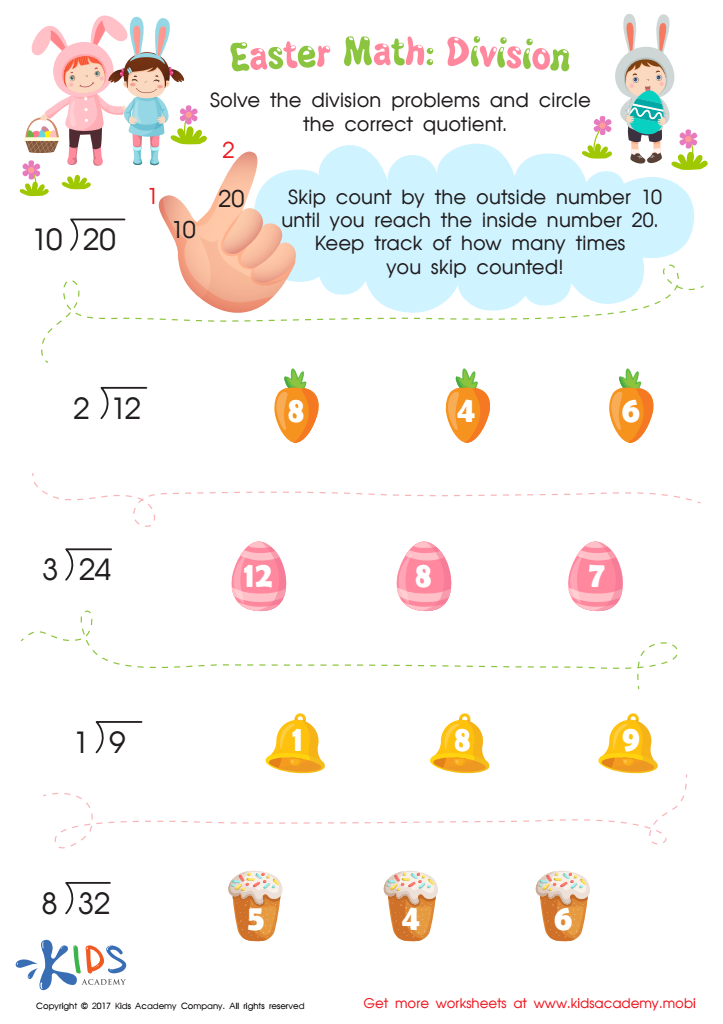
Division Worksheet
 Assign to My Students
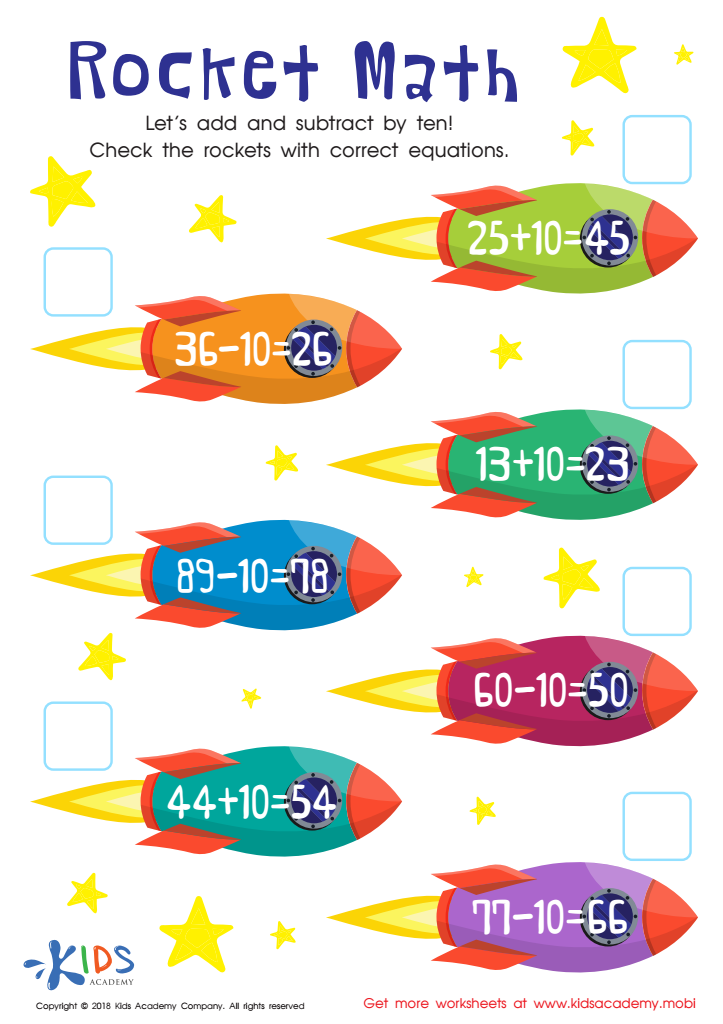
Rocket Math Worksheet
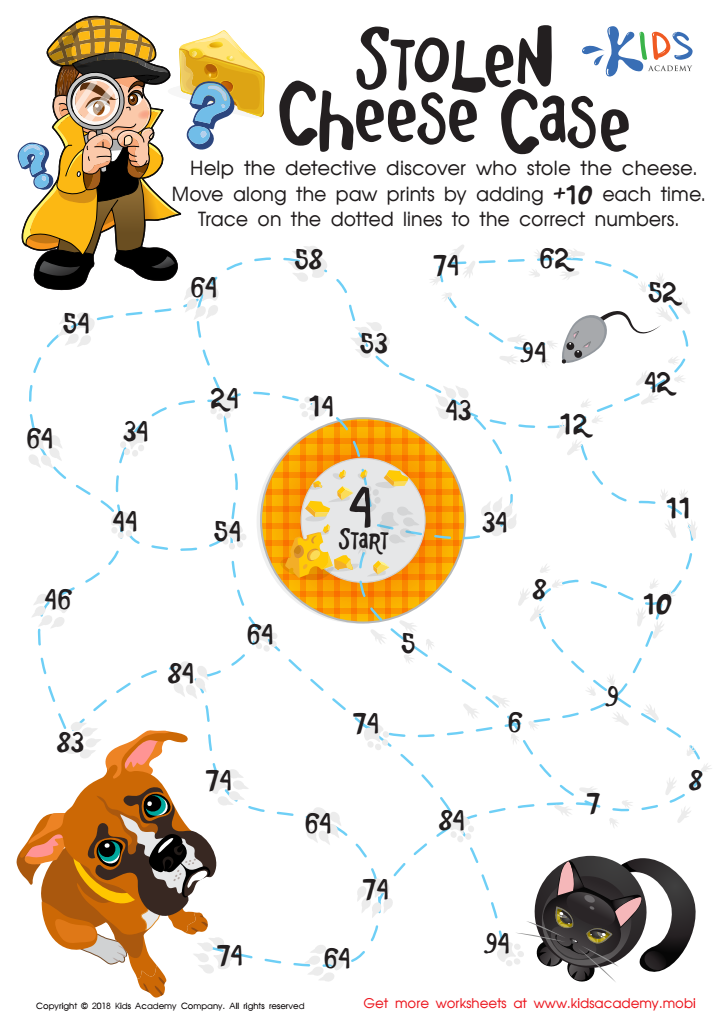
Stolen Cheese Case Maze Worksheet
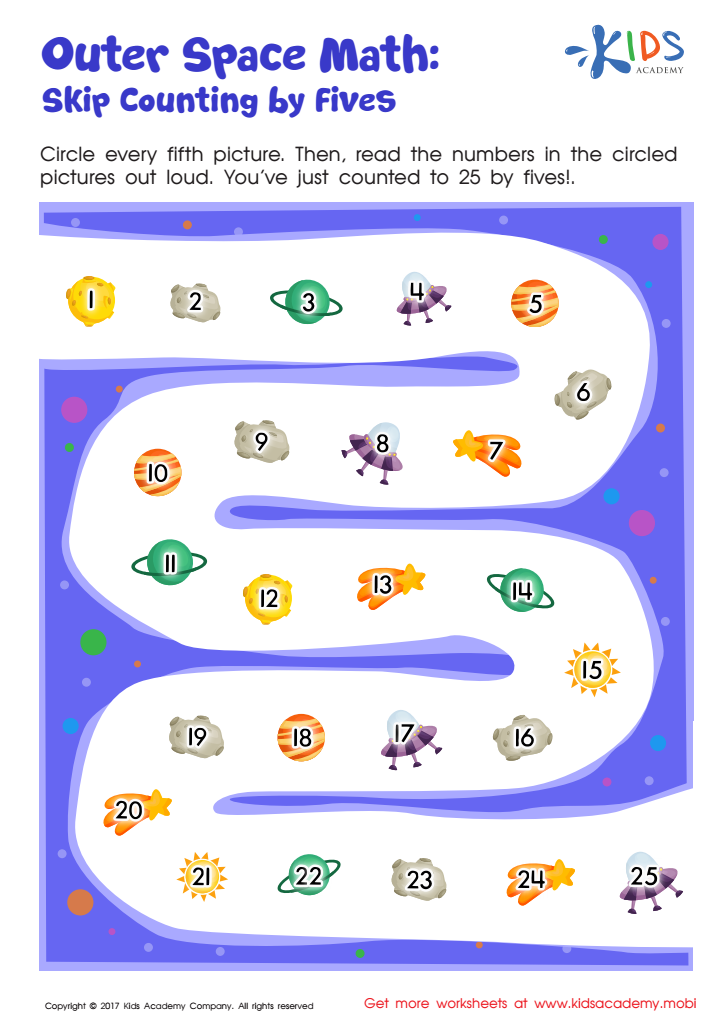
Skip Counting by 5s: Outer Space Math Printable





%20(1).jpg)


Problem-solving skills and skip counting are essential components of early childhood development that parents and teachers should prioritize. For children ages 3-8, developing these skills lays a critical foundation for future learning in mathematics and beyond.
Problem-solving skills empower young learners to think critically and approach challenges confidently. When children engage in problem-solving activities, they learn to analyze situations, propose solutions, and assess outcomes. These skills foster independent thinking, creativity, and persistence—qualities vital for success in school and everyday life.
Skip counting, the practice of counting by numbers other than one, introduces children to numerical patterns and lays the groundwork for more complex math concepts like addition, multiplication, and division. It enhances number sense and improves mathematical fluency, enabling students to perform calculations more efficiently. Moreover, skip counting boosts memory and concentration skills, as children learn to retain and recall sequences.
Integrating problem-solving and skip counting into learning experiences creates a richer educational environment. It encourages collaboration, communication, and cognitive flexibility. As these skills manifest, children develop a positive attitude toward math and problem-solving, establishing lifelong learning habits that will benefit them throughout their academic journeys. Therefore, both parents and teachers should actively support these crucial developmental areas.








