Fine Motor Skills Sorting Worksheets for Ages 3-8
3 filtered results
-
From - To
Enhance your child's fine motor skills with our engaging sorting worksheets designed for ages 3-8. These interactive activities not only make learning enjoyable but also promote hand-eye coordination, dexterity, and concentration. Perfect for preschool and early elementary educators, our worksheets feature captivating illustrations and versatile sorting tasks that cater to various learning levels. Kids can sort by size, shape, color, and more, providing a comprehensive learning experience. As they practice, children will build essential skills that lay the foundation for future academic success. Discover the perfect blend of fun and education with our Fine Motor Skills Sorting Worksheets today!
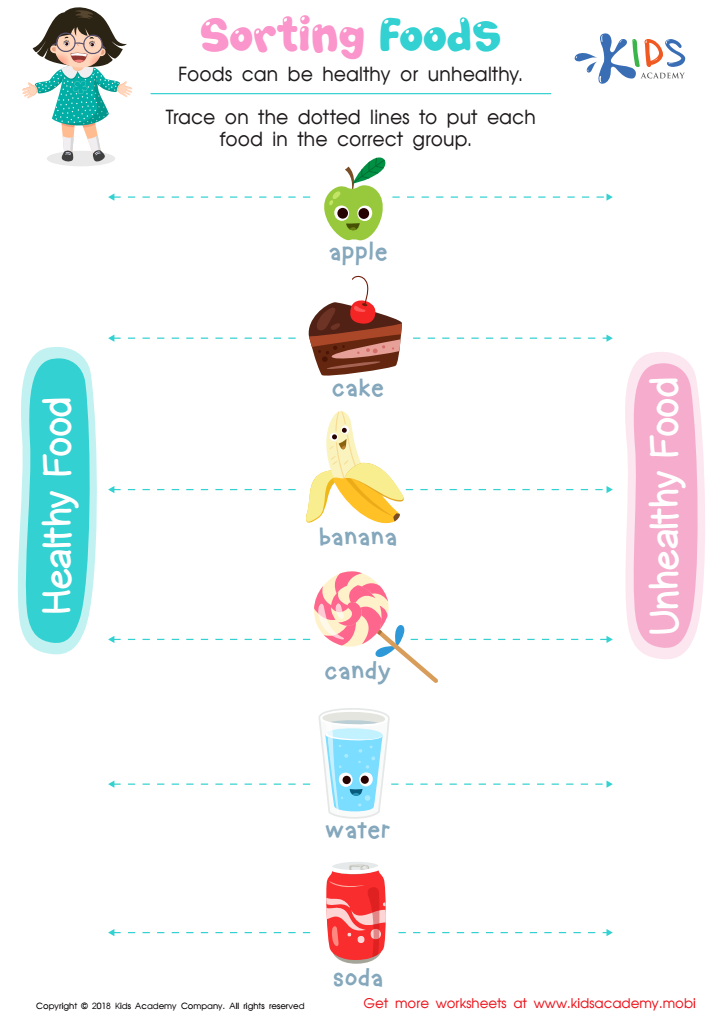
Sorting Food Worksheet
 Assign to My Students
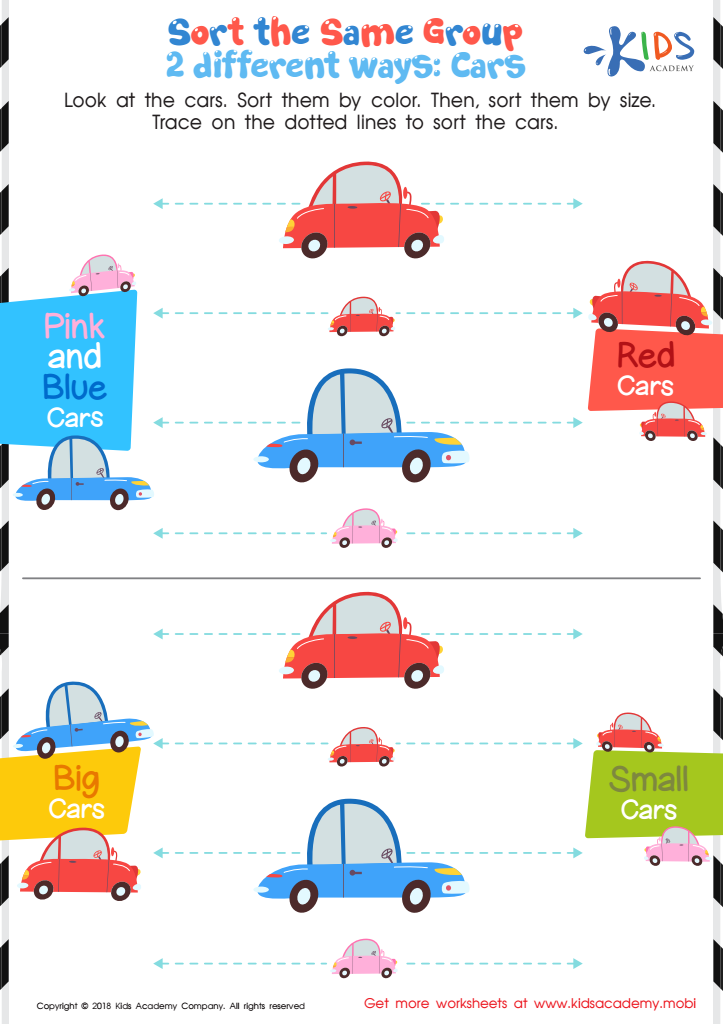
Sort the Same Group 2 Different Ways: Cars Worksheet
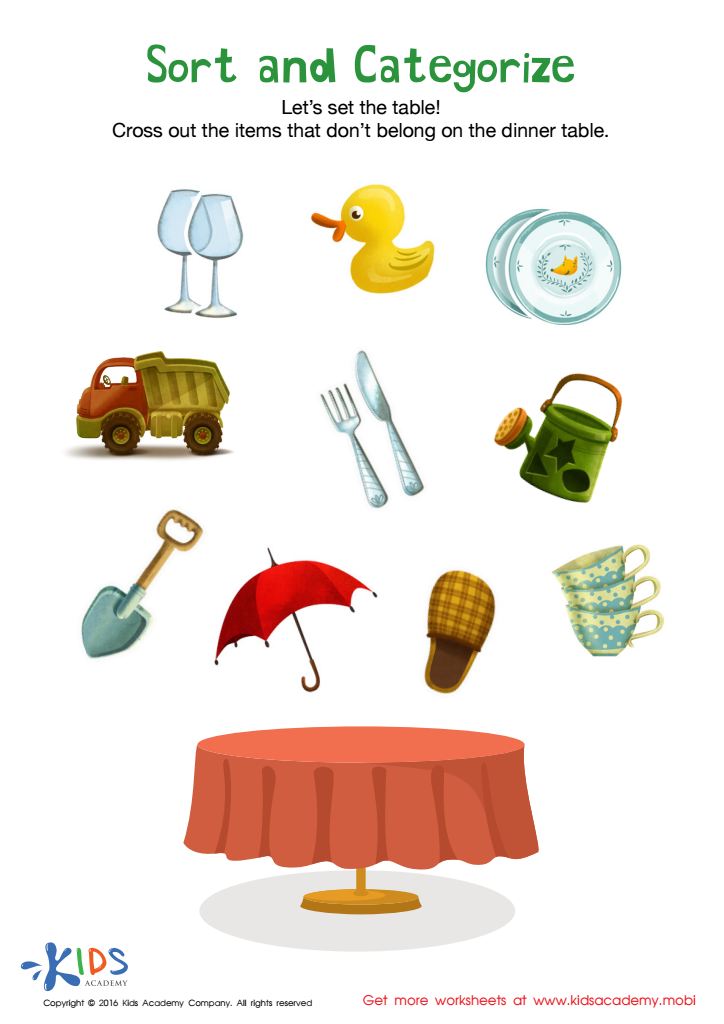








Fine motor skills are essential for a child's overall development, particularly between the ages of 3-8. These skills involve the coordination of small muscles in the hands and fingers, which are crucial for everyday tasks. Parents and teachers should care about fine motor skills sorting activities as they enhance a child's physical dexterity and hand-eye coordination. Engaging in sorting promotes fine motor skills through handling small objects, which helps children develop the grip and control necessary for writing, drawing, and using tools.
Additionally, sorting activities can aid cognitive development. Children learn to categorize, compare, and analyze objects, activities that are foundational for critical thinking and problem-solving. Through sorting, they also gain a sense of organization and order, which translates to better organizational skills in later life.
Moreover, fine motor skills are linked to emotional growth, as children often build self-confidence through accomplishing tasks that require precision. All these skills contribute to a child's readiness for school and succeed in academic activities.
Involving children in fine motor skill sorting not only nurtures their physical and cognitive abilities but also fosters independence and confidence, which are crucial for lifelong learning and development. Therefore, prioritizing these activities is vital for parents and educators alike.








