Enhancing calculation skills Subtraction Worksheets for Ages 3-8
3 filtered results
-
From - To
Welcome to our collection of "Enhancing Calculation Skills: Subtraction Worksheets for Ages 3-8". Designed to support young learners, these engaging worksheets provide a fun and interactive way for children to build a strong foundation in subtraction. Tailored for ages 3 to 8, our exercises encourage problem-solving, improve number recognition, and reinforce basic math concepts through lively illustrations and relatable scenarios. Teachers and parents will find these resources essential for fostering mathematical confidence and skills in early learners. Help your child master subtraction, develop critical thinking abilities, and spark a love for math with our comprehensive worksheets—ideal for classroom or home use.
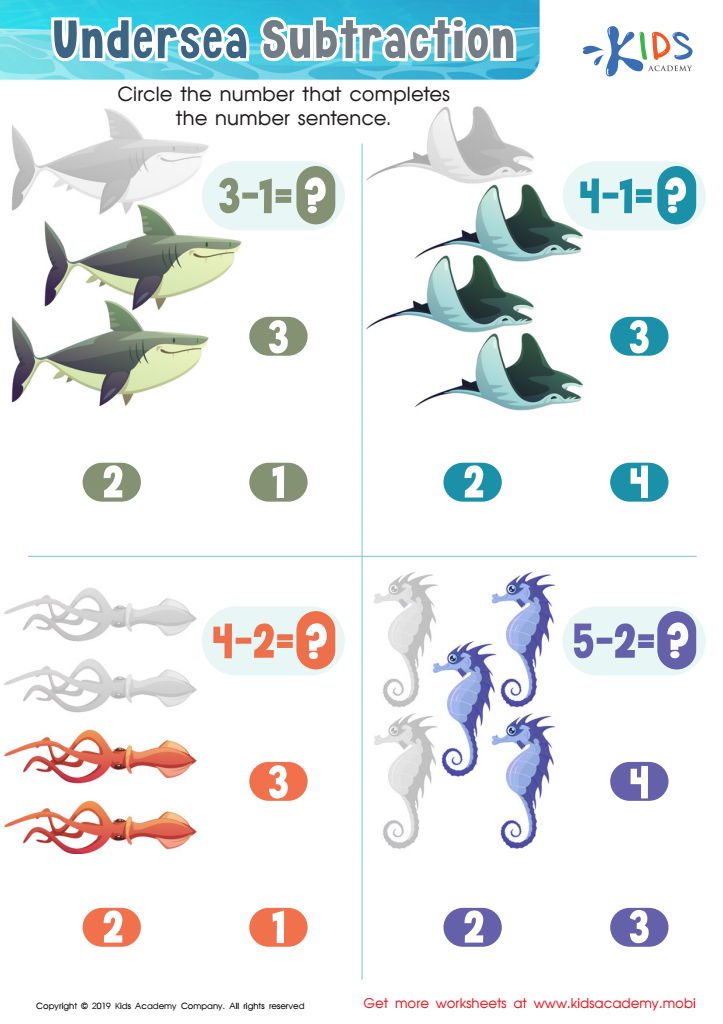
Undersea Subtraction Worksheet
 Assign to My Students
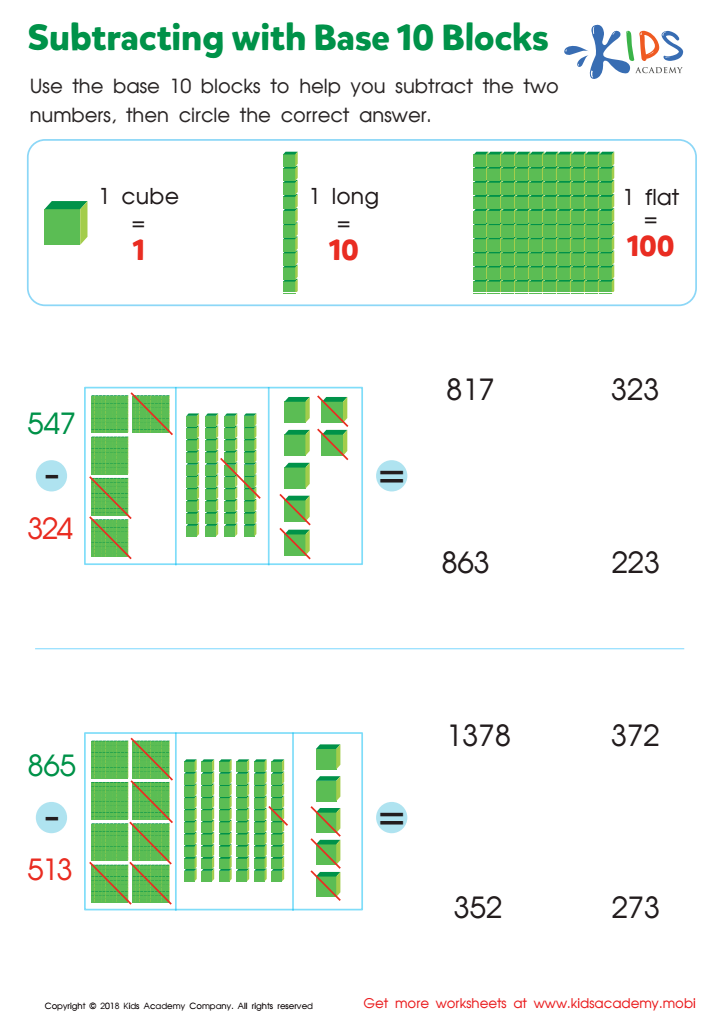
Subtracting with Base 10 Blocks Worksheet
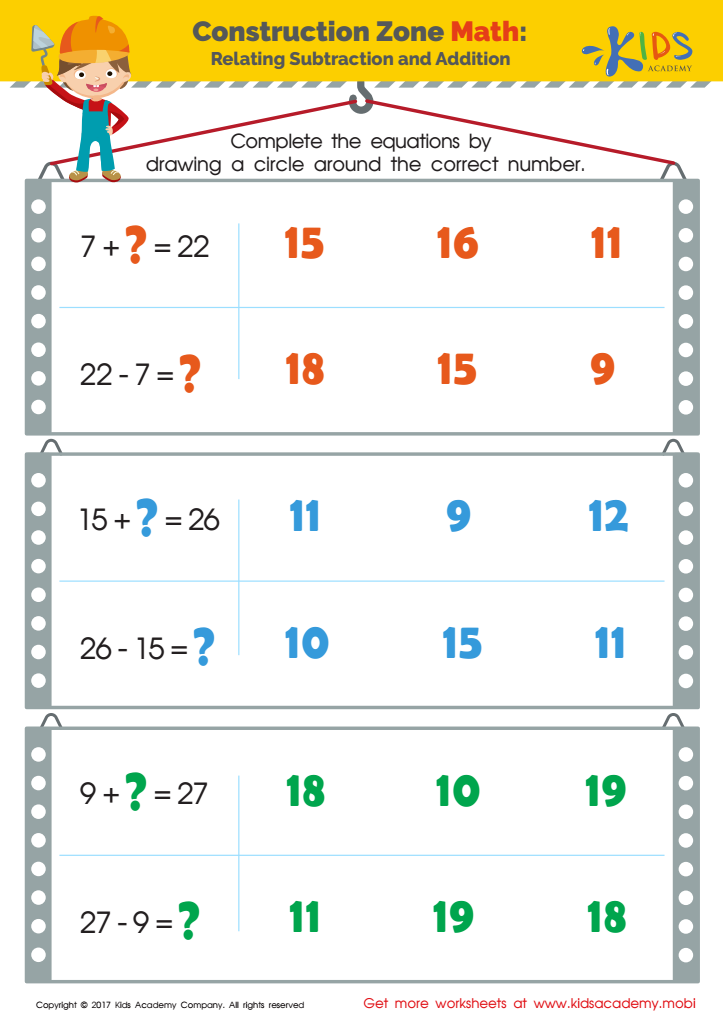
Related Addition and Subtraction Facts Worksheet








Enhancing subtraction skills in children aged 3-8 is crucial for their cognitive development and future academic success. At this stage, children are developing foundational mathematical concepts, and a strong grasp of subtraction helps them understand more complex arithmetic in later years. Effective subtraction skills foster a sense of accomplishment and confidence, encouraging children to engage with math positively.
Subtraction is not only a mathematical operation but also fosters critical thinking and problem-solving abilities. It introduces children to concepts of 'taking away' and 'finding the difference' which are fundamental in real-world scenarios, be it sharing toys or figuring out how many cookies remain. Early subtraction skills promote numerical fluency and equip children with strategies to tackle daily life situations.
For parents and teachers, prioritizing subtraction instruction through engaging activities creates an interactive learning environment. This early focus strengthens children’s overall mathematical foundation, preparing them for more advanced concepts in school. Moreover, nurturing these skills cultivates a lifelong interest in learning. Ultimately, strong subtraction abilities are an indicator of future mathematical readiness, making it essential for teachers and parents to invest time in this critical area of development.








