Mental arithmetic Subtraction Worksheets for Ages 3-8
3 filtered results
-
From - To
Unlock your child's potential with our engaging Mental Arithmetic Subtraction Worksheets designed for ages 3-8. These resources help young learners master the art of subtraction through fun and interactive exercises. Our worksheets utilize colorful visuals and playful themes to make learning enjoyable while building foundational math skills. Perfect for home or classroom use, they encourage children to solve problems mentally, boosting confidence and computational fluency. With a variety of levels to suit different abilities, these worksheets provide the perfect balance of challenge and support, making subtraction an exciting adventure. Start your child's math journey today and watch them thrive!
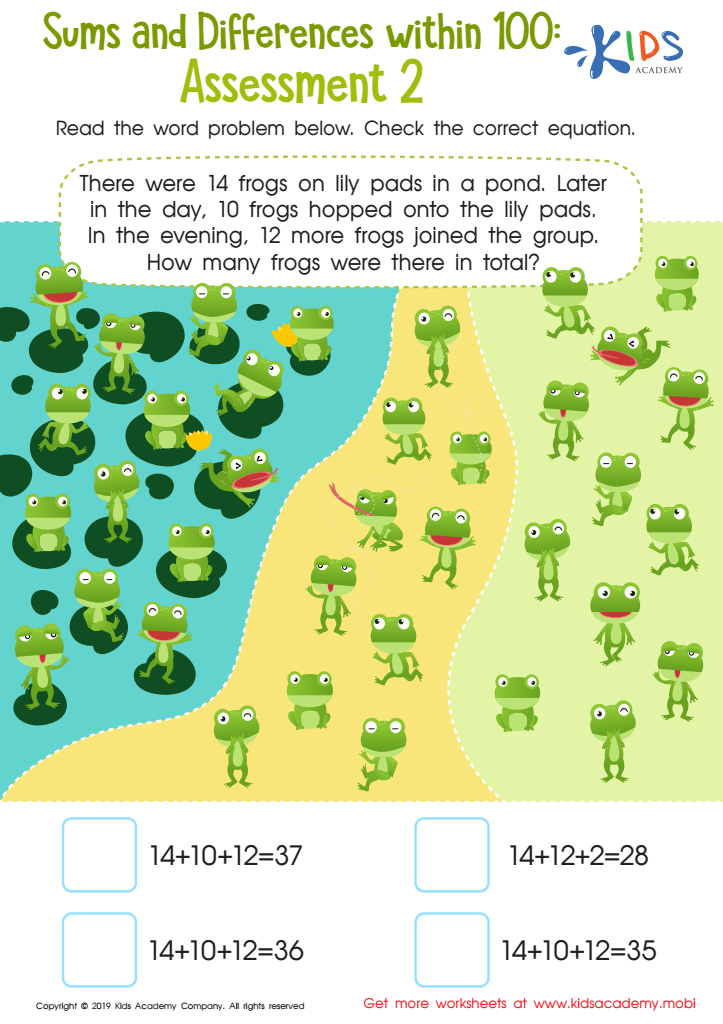
Sums and Differences Within 1 - Assessment 2 Worksheet
 Assign to My Students
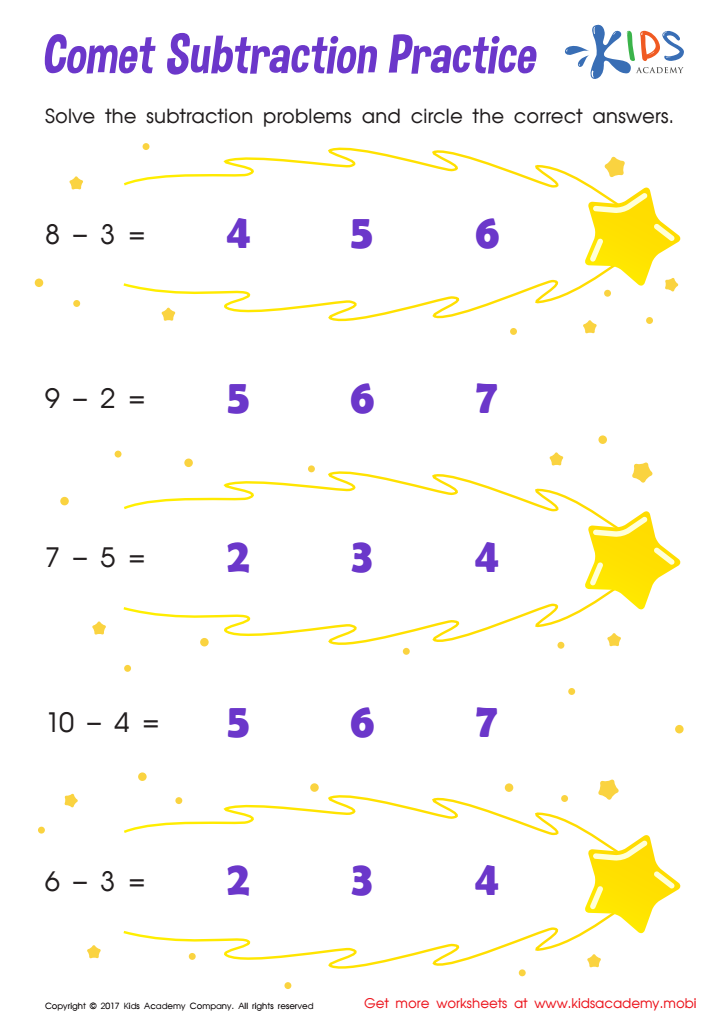
Comet Subtraction Practice Substraction Worksheet
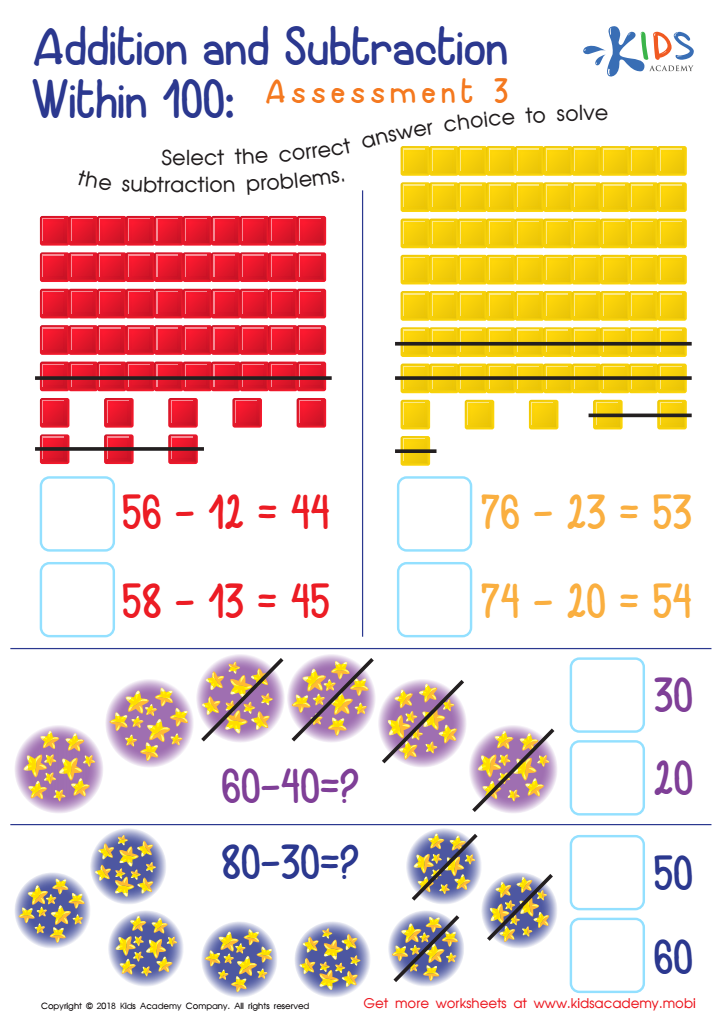
Addition and Subtraction Within 1: Assessment 3 Worksheet








Mental arithmetic subtraction is a foundational skill that plays a crucial role in a child's overall academic development, especially for those aged 3-8. During these formative years, children are highly receptive to learning complex concepts, and acquiring mental arithmetic skills lays the groundwork for future mathematical understanding.
First, mastering subtraction enhances critical thinking. As children tackle subtraction problems mentally, they learn to visualize numbers and develop strategies for problem-solving, which can translate to broader cognitive skills. This helps young learners build confidence and a sense of achievement whenever they accomplish substantial mental calculations.
Second, fluency in subtraction promotes better performance in more advanced math competencies. Concepts like addition, multiplication, and even fractions rely on a solid understanding of subtraction. Early exposure helps create a more profound comprehension of these concepts, preventing future struggles in math.
Furthermore, fostering mental arithmetic subtraction skills can also support children's emotional and social development. As they engage in math-related activities, they often collaborate with peers, learning the value of teamwork and communication.
Investing in mental arithmetic subtraction through targeted practice, encouragement, and games can create a strong foundation for children's mathematical journey, ultimately nurturing a lifelong love for learning.








