Multiplication practice Building Vocabulary Worksheets for Ages 3-8
5 filtered results
-
From - To
Discover our engaging "Multiplication Practice Building Vocabulary Worksheets" designed for children aged 3-8. These worksheets combine essential multiplication practice with vocabulary-building activities, making math fun and accessible. Each resource is carefully crafted to enhance numeracy skills while enriching children's language abilities. Perfect for early learners, our worksheets include colorful illustrations, relatable scenarios, and interactive tasks that foster understanding. Watch your child's confidence grow as they solve multiplication problems and expand their vocabulary simultaneously. Ideal for use at home or in the classroom, these worksheets will inspire a love for learning through engaging content tailored for young minds. Start their educational journey today!











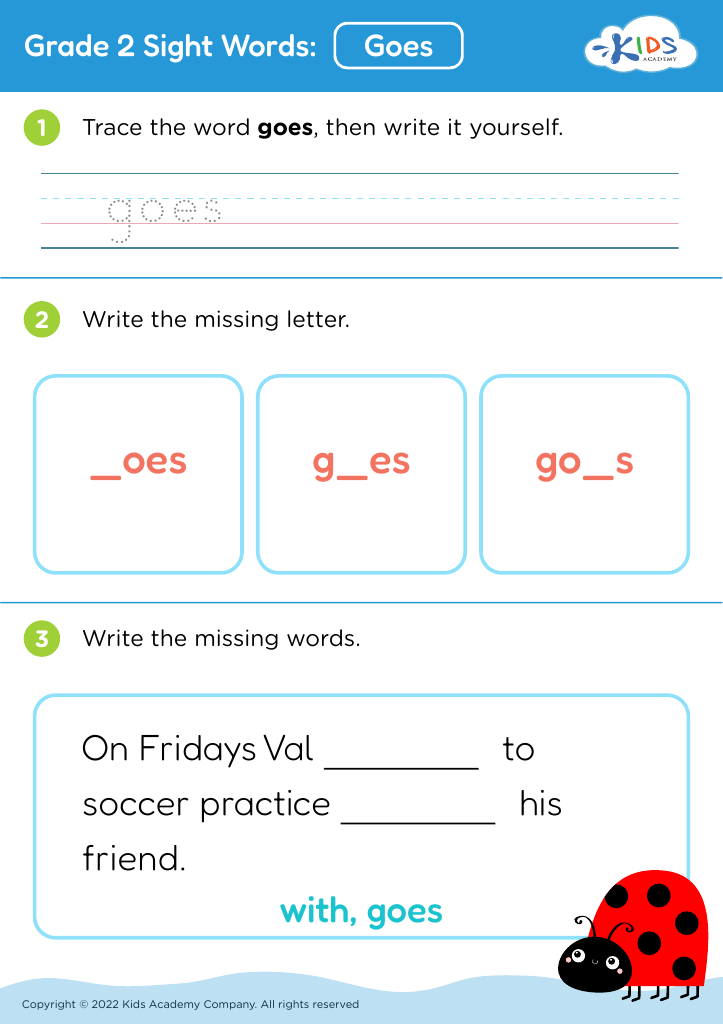








Parents and teachers should prioritize multiplication practice and vocabulary building for children aged 3-8 because these foundational skills are crucial for academic success. Early exposure to multiplication concepts helps develop essential number sense, enhancing children's ability to understand more complex mathematical ideas in later grades. Engaging in multiplication practice using interactive games, visual aids, and hands-on activities makes learning enjoyable and memorable, fostering a positive attitude towards mathematics.
Additionally, building vocabulary around mathematical concepts enables children to articulate their understanding, ask questions, and engage in discussions about math, reinforcing their learning. The ability to explain and discuss math promotes critical thinking skills and helps children connect ideas across subjects. Teaching multiplication alongside rich, age-appropriate vocabulary also encourages language development, which is essential for overall cognitive growth.
Furthermore, instilling these skills early aids in reducing math anxiety in later years, creating a strong foundation that will benefit children as they progress through school. A collaborative approach where parents and teachers work together to incorporate multiplication and vocabulary practice into everyday routines can greatly enhance a child's confidence and competence in math. Ultimately, prioritizing these skills ensures a well-rounded education, enabling young learners to thrive academically and personally.








