Reading skills improvement Building Vocabulary Worksheets for Ages 3-8
5 filtered results
-
From - To
Unlock your child's reading potential with our Building Vocabulary Worksheets designed for ages 3-8. These expertly crafted worksheets focus on enhancing vocabulary, comprehension, and overall reading skills. Through fun, engaging activities, children will expand their word knowledge, strengthen their language foundations, and boost their confidence in reading. Our diverse range of age-appropriate exercises ensures young learners remain motivated and eager to learn. Perfect for home or classroom use, these worksheets lay the groundwork for a lifelong love of reading and academic success. Discover the joy of learning with our tailored resources that make reading improvement an enjoyable adventure.
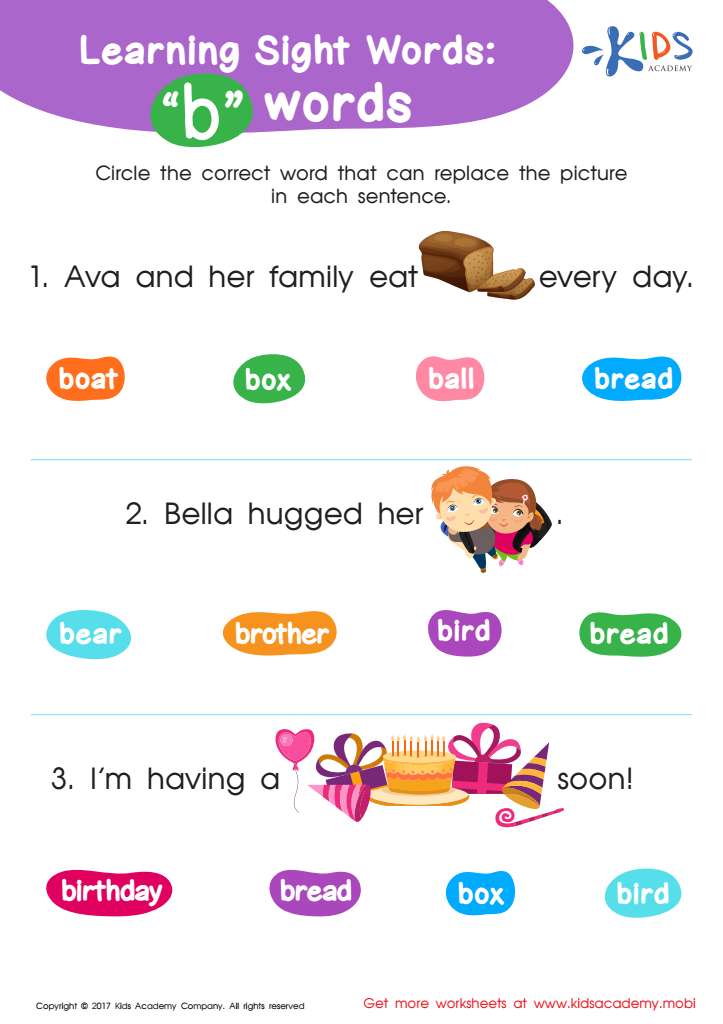
Sight Words Free Worksheet – B Words
 Assign to My Students











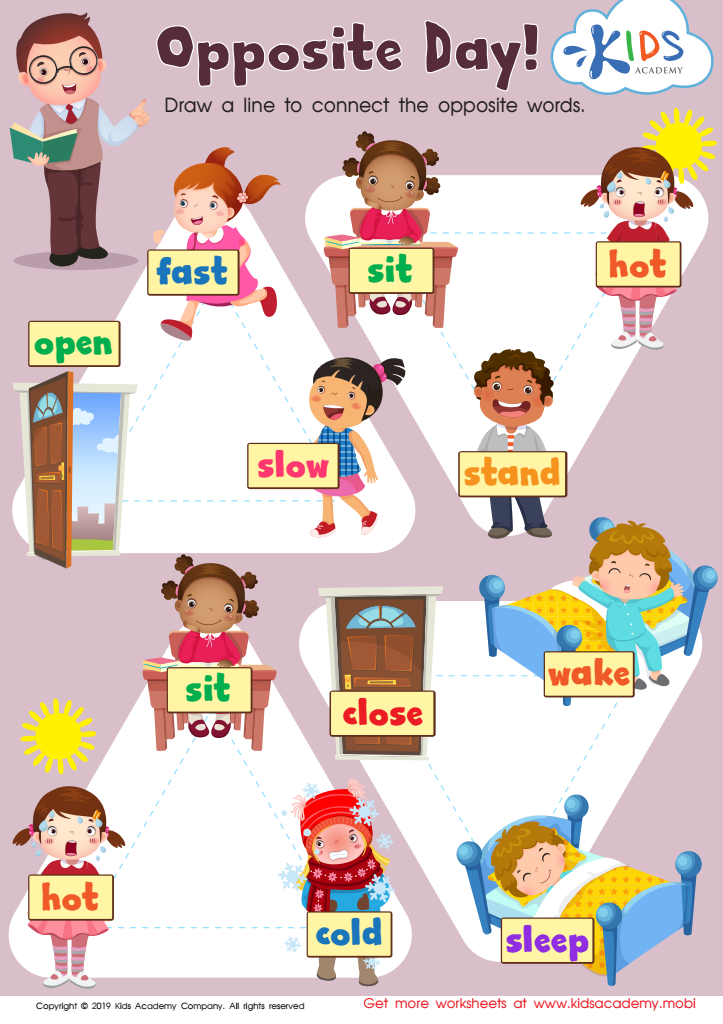
Opposite Day Worksheet
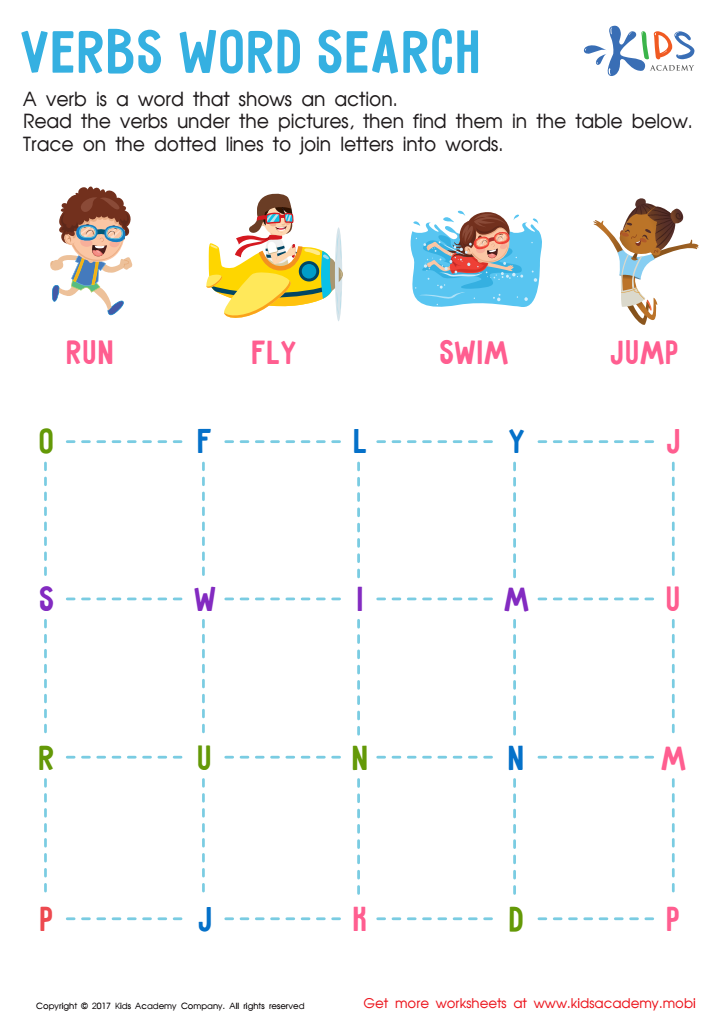
Verbs Word Search Worksheet
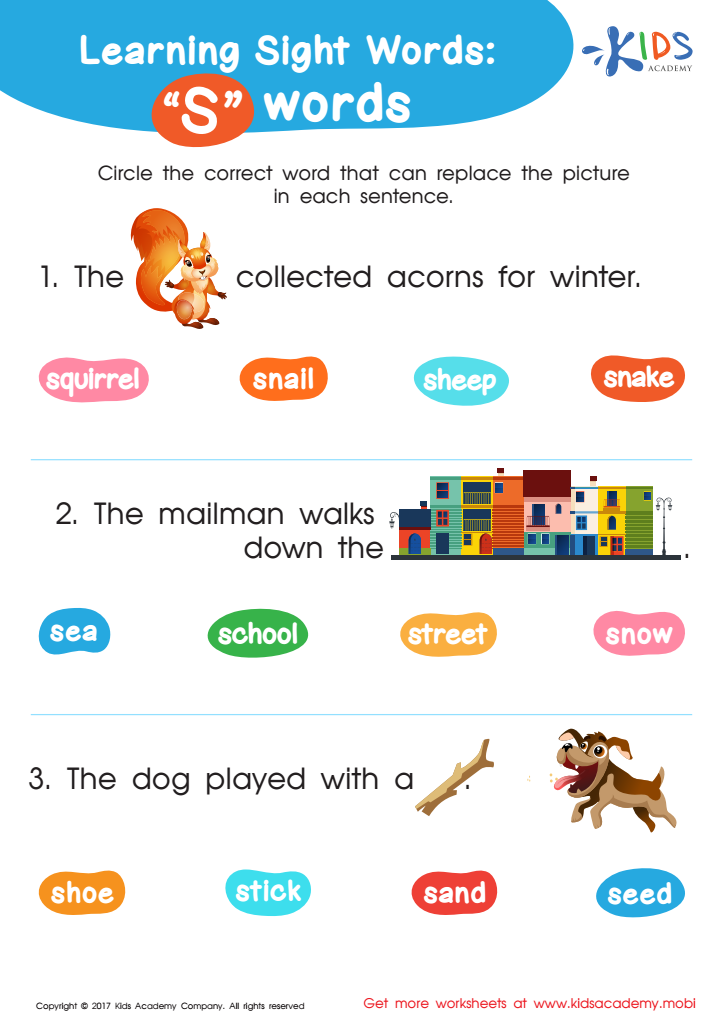
S Words Sight Words Worksheet
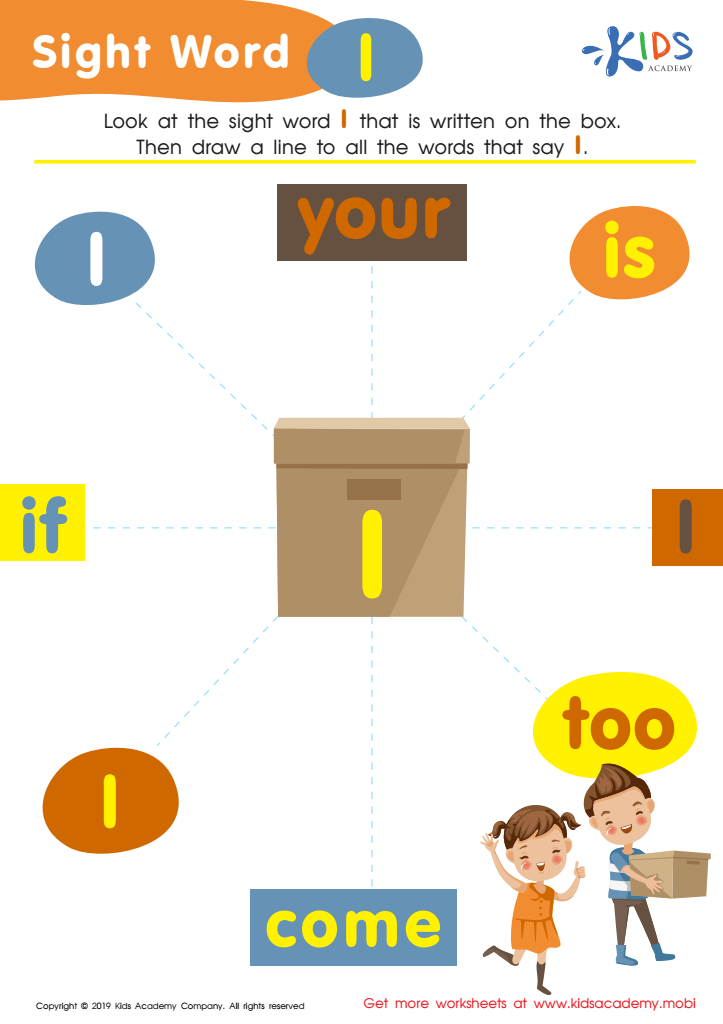
Sight Word I Worksheet





.jpg)

Developing reading skills and building vocabulary from ages 3 to 8 sets a crucial foundation for a child's overall academic and personal growth. During these early years, children's brains are highly receptive to absorbing new information, making it the ideal time to introduce rich language experiences.
First and foremost, systematic reading and exposure to a wide array of vocabulary significantly enhance comprehension abilities. As children learn new words and see them in context, they start understanding more complex ideas and narratives. This not only makes them better readers but also improves their critical thinking and problem-solving skills.
Moreover, a strong vocabulary and good reading skills directly impact other areas of learning, including math and science. When children can easily grasp and use language, they’re more likely to excel in instructional settings where following directions and understanding terminology is crucial.
Reading also fosters emotional and social development. Being able to express thoughts and feelings accurately helps children build better relationships and resolve conflicts more effectively. It empowers them with confidence, paving the way for academic and social success.
For these reasons, parents and teachers should seize every opportunity to read with young children and introduce them to diverse vocabulary, thereby laying a strong foundation for lifelong learning and development.








